How AI Is Used in Cyberattacks
A clear guide to how attackers use artificial intelligence — for phishing, malware, deepfakes, and attacks on AI systems — and how organizations can defend.

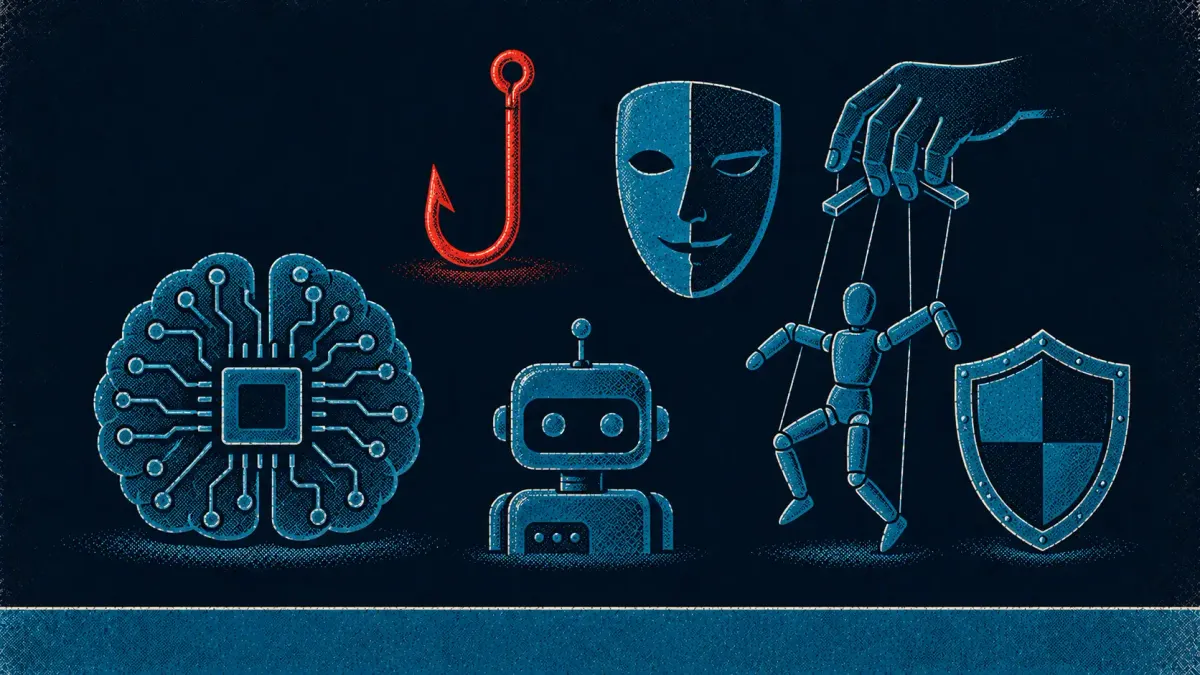
Artificial intelligence has become one of the most consequential forces in cybersecurity — and it cuts both ways. The same capabilities that help defenders detect threats faster also hand attackers a powerful new toolkit. Understanding how AI is used in cyberattacks is now essential for anyone trying to make sense of the modern threat landscape.
AI does not, for the most part, invent entirely new categories of attack. What it does is make existing attacks faster, cheaper, more convincing, and far more scalable. A phishing email that once took effort to craft can now be generated flawlessly in seconds; a voice that once could not be faked can now be cloned from a short clip.
This guide explains how attackers use AI: to power phishing and social engineering, to generate malware, to create deepfakes, and to attack AI systems themselves — along with how organizations can defend. It is part of our broader guide to the types of cyberattacks.
How AI Is Changing Cyberattacks
The core impact of AI on offense comes down to four shifts. AI makes attacks more scalable, generating thousands of unique, tailored attacks at once. It makes them more convincing, producing text, voices, and video that are hard to distinguish from the real thing. It makes them faster, compressing work that took days into minutes. And it lowers the barrier to entry, letting less-skilled attackers carry out operations that once required real expertise.
None of this requires exotic technology. Much of it relies on the same widely available AI tools everyone else uses — simply turned to malicious ends.
AI-Powered Phishing and Social Engineering
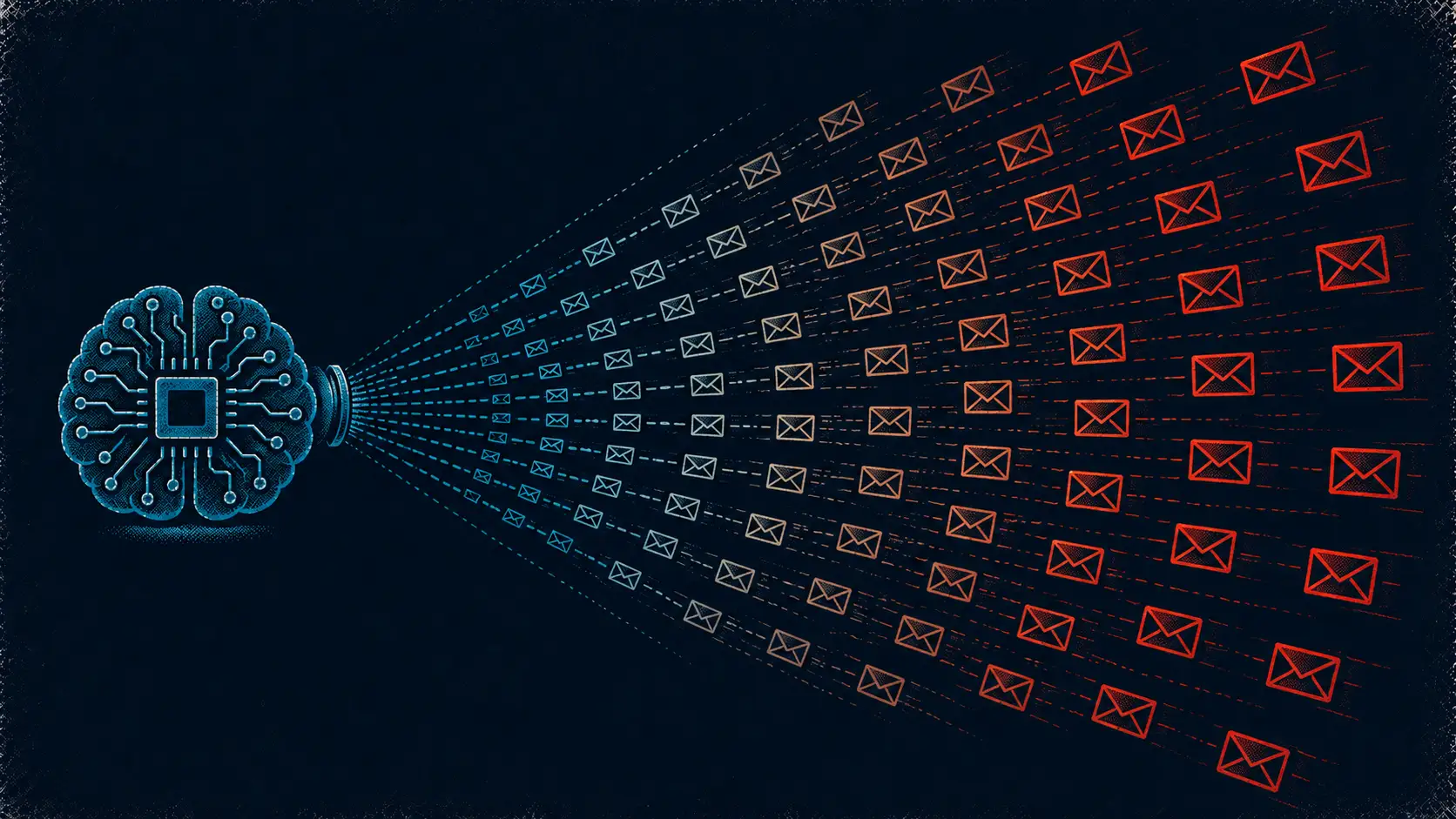
Phishing is the area where AI has had the most immediate effect. Traditional phishing emails were often betrayed by clumsy wording, spelling errors, and awkward grammar. AI language models erase those tells, producing fluent, professional, perfectly targeted messages at scale — in any language.
AI also supercharges spear phishing, the targeted form of the attack. By drawing on public information about a victim, an attacker can have AI craft a message tuned to that person's role, employer, and interests. The result is highly personalized lures produced at a scale that manual effort could never match. For the fundamentals of these attacks, see our essential guide to phishing and our explainer on what social engineering is.
AI-Generated Malware and Malicious Code
Attackers also use AI to help write and adapt malicious code. AI coding assistants can speed up the development of malware, help translate it between programming languages, and generate many slightly different variants of the same threat to evade signature-based detection.
It is important to be measured here: most mainstream AI tools have guardrails against producing outright malware, and AI is currently more of an accelerant for capable attackers than a way for novices to conjure sophisticated threats from nothing. But the trend is clear — AI lowers the time and skill required, and that alone increases the volume of malware defenders face. Our guide to what malware is covers the underlying threat in depth.
Deepfakes and Synthetic Media Fraud
Among the most striking uses of AI in attacks is the deepfake — synthetic audio or video that convincingly impersonates a real person. Attackers use deepfakes to make fraud far more believable: a cloned voice of an executive authorizing an urgent payment, or a fabricated video used to lend credibility to a scam.
Deepfake fraud is especially dangerous because it defeats a defense people have always relied on — recognizing a familiar face or voice. Our guide to deepfake technology, risks, and detection explores how these are made and spotted.
Attacks That Target AI Systems
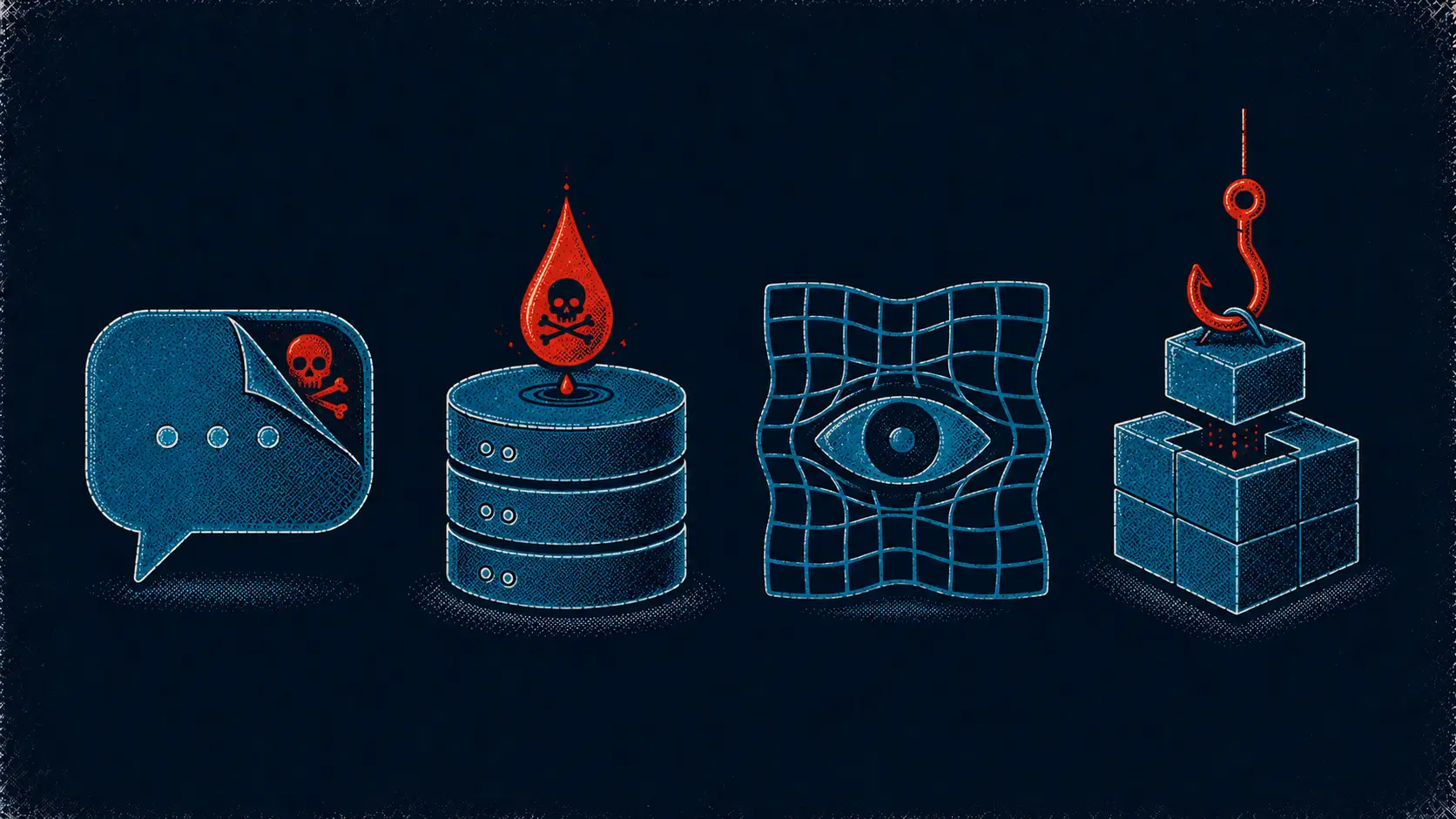
As organizations adopt AI, the AI systems themselves become a target. This is a genuinely new category of attack, and it includes several techniques:
- Prompt injection — feeding an AI system hidden or malicious instructions that override its intended behavior, causing it to leak data or take unintended actions. See our explainer on what prompt injection is.
- Data poisoning — corrupting the data an AI model is trained on, so the finished model behaves incorrectly or contains a hidden flaw. Our guide covers data poisoning in machine learning.
- Adversarial inputs — carefully crafted inputs designed to fool an AI model into making a wrong classification or decision. This is explored in our guide to adversarial machine learning.
- Model theft and abuse — extracting or misusing a proprietary model, or abusing a deployed AI feature in ways its designers never intended.
As AI becomes embedded in business systems, securing the AI itself becomes part of cybersecurity rather than a separate concern. Our complete guide to AI security covers how to protect these systems.
Faster, Cheaper, and More Scalable Attacks
Beyond any single technique, AI's biggest effect is on the economics of attack. Reconnaissance that once took an analyst hours can be automated. Convincing lures can be mass-produced. Routine steps of an intrusion can be scripted and accelerated. Each of these makes attacks cheaper to run and easier to scale — which means defenders should expect a higher volume of more polished attacks, not necessarily a wave of entirely new ones.
How to Defend Against AI-Enabled Attacks
AI changes the texture of attacks, but the foundations of defense still hold — with a few added emphases:
- Strengthen verification. Because AI can fake messages, voices, and video, verify unusual or high-value requests through a separate, trusted channel — never act on a single message or call alone.
- Update awareness training. Teach people that fluent, polished, personalized messages can still be phishing, and that a familiar voice is no longer proof of identity.
- Enforce phishing-resistant MFA. Strong authentication limits the damage when a convincing lure does succeed.
- Use AI on defense. AI-driven detection helps security teams match the speed and scale of AI-driven attacks.
- Secure your own AI systems. Treat AI tools as part of your attack surface — control their access, validate their inputs, and monitor how they are used.
Conclusion
AI has not rewritten the rules of cybersecurity so much as it has raised the stakes. Phishing is more convincing, malware is faster to produce, fraud is harder to spot, and a new class of attacks targets AI systems directly. The barrier to launching a capable attack has fallen.
The reassuring part is that defense has not been left behind. Strong verification habits, modern awareness training, phishing-resistant authentication, and AI-assisted detection all work against AI-enabled attacks. The organizations that stay safe will be the ones that treat AI as both a tool to use and a threat to plan for.
Frequently Asked Questions (FAQ)
How is AI used in cyberattacks?
Attackers use AI to write convincing phishing messages at scale, help develop and disguise malware, create deepfake audio and video for fraud, automate reconnaissance, and carry out attacks against AI systems themselves.
Does AI create new types of cyberattacks?
Mostly, AI makes existing attacks faster, cheaper, more convincing, and more scalable rather than inventing new categories. The clearest genuinely new area is attacks that target AI systems directly, such as prompt injection and data poisoning.
What is AI-powered phishing?
AI-powered phishing uses AI language models to generate fluent, error-free, highly personalized phishing messages quickly and at scale, removing the spelling and grammar mistakes that once helped people spot a scam.
What is a deepfake attack?
A deepfake attack uses AI-generated synthetic audio or video to impersonate a real person — for example, cloning an executive's voice to authorize a fraudulent payment — making social engineering far more convincing.
What is prompt injection?
Prompt injection is an attack on AI systems in which hidden or malicious instructions are fed to an AI model to override its intended behavior, potentially causing it to leak data or perform unintended actions.
How can organizations defend against AI-enabled attacks?
Key defenses include verifying high-value requests through a separate trusted channel, updating security awareness training, enforcing phishing-resistant multi-factor authentication, using AI-driven detection, and securing the organization's own AI systems.



