Cursor "git.exe" Auto-Execute Vulnerability Detailed Across Multiple Vendor Publications
More technical detail on the Cursor IDE auto-execute finding — defender review for Cursor-using teams this week.

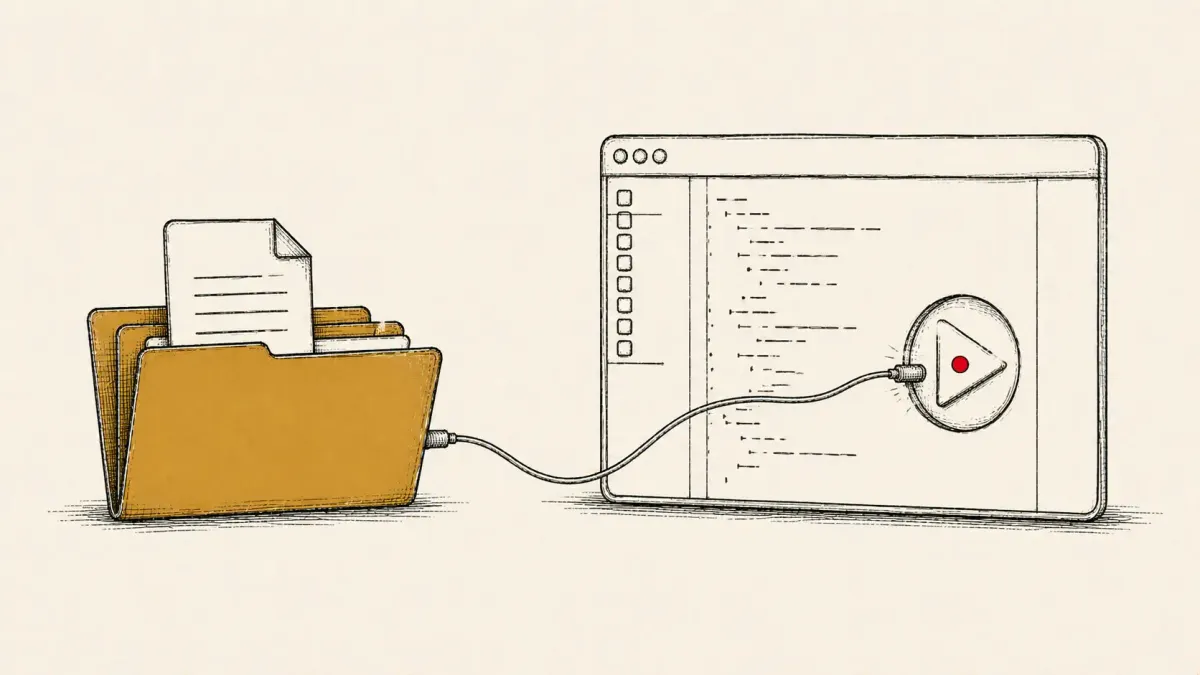
A well-worn Windows search-path weakness lands inside a heavily used AI code editor — and this week's detailed coverage turns it into a defender review item.
SAN FRANCISCO, CALIF. — Multiple security publications on July 15, 2026 added detailed technical framing to an unpatched vulnerability in Cursor, the widely used AI-native code editor, describing how opening a repository in Cursor on Windows can reportedly auto-execute a file named git.exe placed in the project root. According to the reporting, the behavior requires no click, no approval dialog, and no warning: the act of opening the folder is reportedly enough to run the binary in the developer's own session. For defenders, the significance is not an exotic technique but a trust-boundary problem in a tool that millions of developers now point at code they did not write.
The detailed accounts — carried by SecurityWeek, The Hacker News, and Dark Reading — build on the initial Cursor disclosure The CyberSignal covered when researchers first reported that Cursor can auto-execute code embedded in poisoned repositories. This piece is a defender-review item, not an active-exploitation alert: there is no public indication of in-the-wild abuse, and the reported behavior is best understood as a default that favors convenience over caution. What the newer coverage adds is specificity about the mechanism and the fact that, months after the report, no fix or advisory is public.
What Multi-Source Research Documented
The detailed technical framing appeared across three vendor publications on July 15, 2026, each describing the same core behavior. As reported by The Hacker News, opening a repository in Cursor on Windows can auto-execute a file named git.exe sitting in the project root — with no click, no approval dialog, and no warning that anything in the folder is about to run. Per the reporting, the binary reportedly runs as the logged-in user, with access to that user's source, SSH keys, and cloud tokens, and Cursor reportedly keeps re-running it for as long as the project stays open. The reporting frames the significance plainly: no prompt injection, no agent, no model in the loop, and no prior access to the machine — opening the folder is the reported trigger.
The coverage attributes the finding to AI security firm Mindgard, which reportedly reported the issue to Cursor in December 2025 and published full technical details on July 14, 2026 after, in its account, other disclosure paths stalled. SecurityWeek's report characterized the issue as an unpatched vulnerability that exposes users to code execution, and Dark Reading framed it as a low-interaction path to developer-environment takeover. In defender terms, the mechanism is a familiar one: a Windows search-path weakness in which an unqualified helper binary is resolved from the working directory before trusted system paths, so a binary named git.exe in the project root is found and run in place of the real tool.
For defenders, the mechanism matters less than the boundary it crosses. The concern is not a memory-corruption bug or a network-facing service but a default posture: the editor treats a freshly opened folder as trusted enough to resolve and run a project-local executable without a gating prompt. That collapses the distinction between reading unfamiliar code and running it. When the act of opening the folder is enough to trigger execution, the developer's workstation — with its credentials, tokens, and network access — becomes reachable by whoever authored the repository. The defensive takeaways do not depend on the exact code path; what matters is that a popular editor can run code from a repository the user has not yet chosen to trust.
Continuation Context: The Initial Cursor Disclosure
This coverage does not stand alone. It extends The CyberSignal's earlier reporting on the initial Cursor disclosure, in which researchers first documented that Cursor auto-executes code embedded in poisoned repositories the moment a developer opens the project. The July 15 accounts sharpen that earlier finding with the specific technical detail that the auto-executed artifact is a file named git.exe placed in the project root, and that the underlying weakness is an untrusted-search-path issue on Windows rather than any AI-model behavior.
It is also the newest data point in a research thread The CyberSignal has tracked across 2026, in which independent teams keep finding that AI-era developer tools mishandle untrusted input in ways that convert a developer's convenience into a foothold. The pattern has appeared in supply-chain research on AI coding agents being fed poisoned packages and in worm research targeting AI coding agents across GitHub repositories. The Cursor finding is a particularly clean example because it involves no model behavior at all — just an editor default that resolves and runs a project-local executable without asking.
Defender Posture for Organizations Using Cursor
For teams that have standardized on Cursor, the response does not require waiting for a vendor fix. The most durable control is to treat a cloned repository as executable content, because — on Windows, with this behavior reachable — that is what it is. Untrusted code from an unknown author, an unsolicited pull request, or a proof-of-concept from a forum should never be opened directly in a developer's primary editor on a machine that holds live credentials.
The safer pattern, echoed across the reporting, is to review such code in a disposable, isolated environment first: a throwaway virtual machine, Windows Sandbox, or a container with no access to production secrets or internal networks. On managed Windows fleets, the coverage notes that application-control deny rules can block execution by name and path under workspace roots, and that parent-aware enforcement generally requires endpoint detection and response tooling. A simple pre-open hygiene check also helps — as The Hacker News relays from other researchers, executables such as git.exe have no business sitting in a project root, and their presence is a signal to stop and inspect before opening.
None of these steps are novel, and that is the point. The developer endpoint is a high-value target precisely because it concentrates source access, cloud credentials, and network reach in one place, and vulnerability exploitation has become a leading way into organizations. The controls that bound this class of risk — isolation of untrusted input, least-privilege handling of secrets, and keeping long-lived tokens off the machine used to browse unfamiliar projects — are the same ones that bound supply-chain risk generally.
Cursor's Response and What to Watch For
The public picture on remediation remains incomplete. As reported by The Hacker News, a review of Cursor's published security advisories as of July 15 found no entry covering this issue, no CVE assigned, and no patch identified — and the vendor had not published an advisory for the reported behavior. The CyberSignal has not independently confirmed an official Cursor response, a released fix, a version number that resolves the behavior, or an assigned identifier, and treats those as open items rather than settled facts.
The reporting also situates the finding in a broader disclosure debate: the research firm reportedly characterized publishing full technical detail as a last resort after other paths stalled, a stance that echoes the industry's ongoing argument over the tension between coordinated and uncoordinated vulnerability disclosure. The watch items are concrete: whether Cursor ships a change that stops resolving a project-local git.exe on open, whether a CVE is assigned so vulnerability-management teams gain a tracking hook, and whether the vendor publishes guidance for administrators of managed deployments. Until those land, the interim guidance stands on its own — treat cloned repositories as executable content and open untrusted code in a sandbox.
Open Questions
Several facts remain unresolved and should be treated as open rather than assumed. No CVE or other vulnerability identifier has been confirmed for the reported behavior. There is no confirmed official response from Cursor, and it is not confirmed whether a patch or fixed version is available or when one will ship. The number of affected users is not disclosed, and the reporting notes some uncertainty about which exact versions remain vulnerable.
The detailed coverage rests on the researchers' full disclosure and the accounts of SecurityWeek, The Hacker News, and Dark Reading, with the vendor's position on remediation not publicly settled at the time of this writing. That posture is normal for freshly detailed research and is not a reason to doubt the core claim, but it does mean specifics may evolve — including any eventual identifier, the fix version, and refined guidance on which settings neutralize the behavior. Readers running Cursor on Windows should watch the vendor's advisories for the definitive remediation, and can weigh this finding against the broader trend in which vulnerability exploitation has overtaken credential theft as the top way attackers get in.
The CyberSignal Analysis
The reported facts above come from the researchers' full disclosure and the July 15 vendor-publication coverage; what follows is The CyberSignal's editorial reading of what defenders should take from them. None of the judgments below are new reported facts.
Signal 01 — Treat a Cloned Repository as Executable Content
The most durable lesson here is that on Windows, with this behavior reachable, a cloned repository is not inert text — it is executable content, and opening it in Cursor can be enough to run it. Our reading is that any tool which resolves and runs a project-local binary on open should hold that execution behind an explicit, per-project trust decision, and that teams should treat the presence and enforcement of such a boundary as a procurement and configuration requirement rather than a preference.
The practical consequence is that defenders should not accept "it just works on open" as a feature. On a developer endpoint — where credentials, tokens, and network reach are concentrated — the marginal cost of a trust prompt or a pre-open inspection is trivial next to the cost of running hostile code. A git.exe in a project root is not a convenience; it is a warning sign.
Signal 02 — Untrusted Repositories Belong in a Sandbox, Full Stop
This finding is a clean argument for a rule many teams state but few enforce: code you did not write does not get opened on a machine that holds live secrets. The safe pattern is to review untrusted repositories in a disposable, isolated environment first — a throwaway VM, Windows Sandbox, or an equivalent with no path to production credentials or internal networks. That single habit neutralizes not only this behavior but an entire category of open-on-run weaknesses in modern developer tooling.
Our assessment is that isolation is the control that ages best. Vendor fixes come and go, defaults change between versions, and new AI-assisted features keep expanding what a tool will do with input on its own initiative. A workflow that routes anything unfamiliar through a sandbox is resilient to all of that, because it stops assuming the tool will be careful and instead makes carelessness survivable.
Signal 03 — Old Weaknesses Keep Resurfacing in New Tools
Step back and the Cursor finding is an old Windows search-path weakness wearing a new coat. Resolving an unqualified helper binary from the working directory before trusted system paths is a decades-old class of bug, and it has resurfaced here inside a heavily used AI code editor that runs the probe for the developer the moment a folder opens. Our view is that the AI-tooling wave is re-importing well-understood weaknesses faster than vendors are re-applying the well-understood fixes.
For security leaders, the forward-looking implication is to evaluate these tools on how they handle hostile input by default, not on the features they demo well. The question to ask of any AI coding tool is simple: what will it do, on its own, with a repository that was crafted to abuse it? Until vendors can answer that with an explicit trust model rather than a convenient default, defenders should assume the answer is "more than you want," and isolate and vet accordingly.