Microsoft Publishes Deep-Dive Analysis of AsyncAPI npm Supply-Chain Compromise
Microsoft goes deep on the AsyncAPI npm compromise — a defender review for CI/CD workflows and @asyncapi dependencies this week.

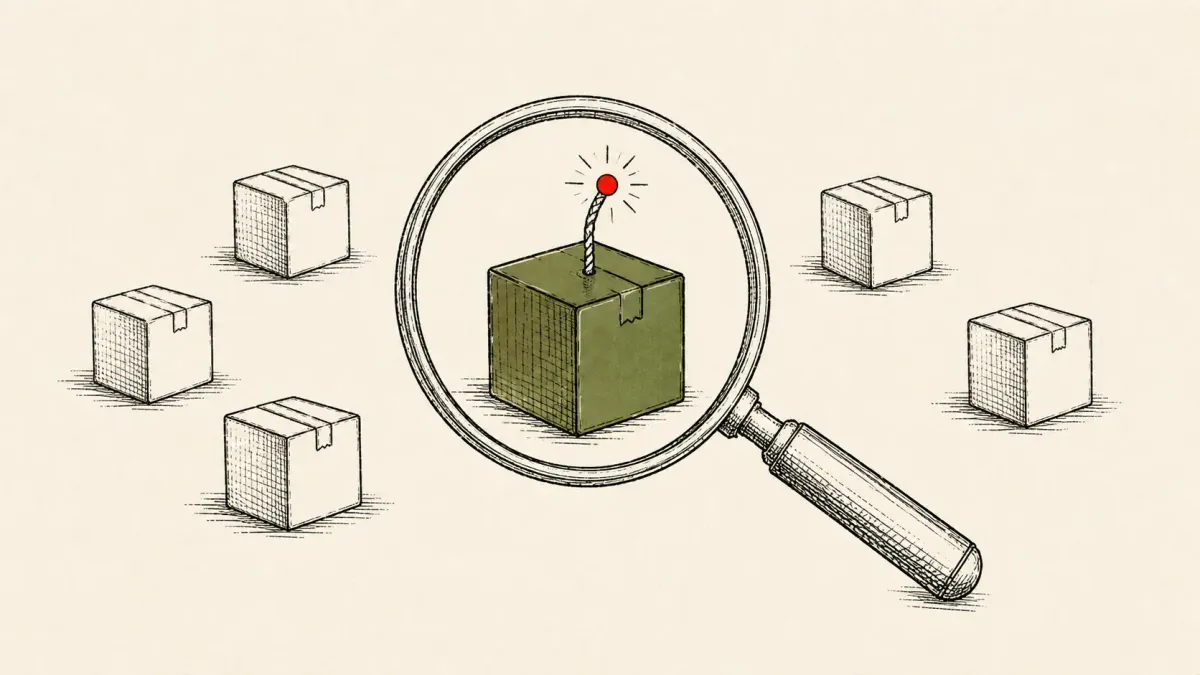
A vendor deep-dive that reframes the @asyncapi compromise around two defender-relevant facts: CI/CD workflow weaponization, and a payload that fires at import time, not install time.
REDMOND, WASH. — Microsoft on July 15-16, 2026 published a deep-dive analysis of the AsyncAPI npm supply-chain compromise, giving defenders a detailed, vendor-attested account of an incident that was first documented last week. The write-up, from Microsoft Threat Intelligence, centers on two facts that shape the defensive response more than any other: the malicious packages were distributed by weaponizing the project's trusted CI/CD release workflows, and the injected code executes at import time rather than through an npm install hook. For teams that depend on @asyncapi tooling, the analysis is less a new disclosure than a sharper map of where exposure lives and what to check.
The full analysis, titled "Unpacking the AsyncAPI npm supply chain compromise and import-time payload delivery," is published on the Microsoft Security Blog. It builds on The CyberSignal's earlier coverage of the same event — the compromised @asyncapi packages that were observed distributing a multi-stage botnet loader — and reads, deliberately, as a defender document: an attack-chain narrative followed by mitigation, hunting, and hardening guidance. The CyberSignal is summarizing that guidance in defender terms and is not reconstructing how the loader operates once resident; that mechanism is the attacker's concern, not the defender's checklist.
What Microsoft Published
According to the Microsoft Security Blog, Microsoft Threat Intelligence identified a coordinated supply-chain compromise of the @asyncapi npm organization and, within days, published a full attack-chain analysis. The account confirms the shape already reported last week: five malicious versions across four package names, republished in a short window, each carrying the same injected loader. Because one of the affected packages sits as a transitive dependency beneath much of the AsyncAPI project's code-generation tooling, Microsoft notes the exposure reached developer workstations, CI/CD pipelines, container builds, and production services that resolved and imported an affected version during the window.
What makes the write-up useful to defenders is not fresh indicators alone but the structure. Microsoft frames the incident as a CI/CD pipeline compromise first and a malicious-package problem second. In its telling, the poisoned versions were not slipped past npm through a stolen registry token; they were published through the AsyncAPI project's own legitimate release workflows, which is why the resulting artifacts carried valid provenance built from unauthorized source commits. That distinction — legitimate pipeline, unauthorized trigger — is the analysis's throughline, and it is the reason provenance alone did not stop the campaign.
The Import-Time Payload Delivery Framing
The single most consequential technical point in Microsoft's analysis, from a defender's seat, is where the code runs. Unlike the more familiar postinstall-hook pattern, this campaign uses import-time payload delivery: the injected block executes when a consuming build or application loads the module, not when the package is installed. Microsoft is explicit about the operational consequence — the common npm install --ignore-scripts mitigation does not neutralize the code, because the trigger is a module load rather than a lifecycle script.
Restated as a defender fact, that reframing changes the scoping question. The presence of an affected version in a lockfile is not the same as execution; exposure depends on whether a build or developer workflow actually imported the library. Microsoft also observes that the affected packages declared no install hooks at all — a deliberate choice that sidesteps scanners focused on preinstall and postinstall auditing. The practical takeaway is to stop treating install-script controls as sufficient and to scope by execution: enumerate the affected versions, then determine which endpoints loaded them. The CyberSignal is deliberately not detailing the loader's later stages; the defender-relevant fact is the trigger, and that is import, not install.
Continuation Context: Brief #208 (Initial Disclosure)
This analysis is a continuation, not a new event. The CyberSignal documented the initial disclosure last week, when multiple vendors reported that four compromised @asyncapi packages were distributing a multi-stage botnet loader and that the malicious versions had since been unpublished from npm. Microsoft's deep-dive corroborates that account and adds a vendor's forensic reconstruction of how the packages came to be published in the first place.
The mechanism Microsoft describes will read as familiar to anyone following this beat. The compromise is said to have originated from a pwn request against a misconfigured GitHub Actions workflow — the same class of pull_request_target pwn request that has now hit multiple major vendors — which exposed a privileged bot credential and enabled unauthorized pushes to auto-publish branches. From there the project's own trusted release pipeline did the distribution. It is the same structural lesson The CyberSignal drew when a GitHub CI/CD workflow backdoor reached thousands of repositories, and when Shai-Hulud generated valid Sigstore provenance badges for its malicious npm packages: provenance attests to the build, not to the legitimacy of the commit that triggered it.
Defender Posture for Organizations Depending on @asyncapi Packages
Microsoft's mitigation guidance maps cleanly onto an inventory-first response, and none of it requires knowledge of how the payload works internally. Start by reviewing dependency trees, lockfiles, artifact repositories, and CI caches for the five named malicious versions, including transitive references — then pin known-good releases in their place. Purge npm and Yarn caches on affected developer endpoints and build hosts, especially where a poisoned tarball may have been written into a shared CI cache, since a golden build runner can silently reinfect later jobs.
Because the trigger is a module load, Microsoft is emphatic that npm install --ignore-scripts is not a valid mitigation here. Where an affected version was actually imported, treat the host as potentially exposed: hunt on that endpoint, and rotate any credentials and secrets reachable from it, from a clean system. Microsoft also points defenders to registry-side hardening — moving to a current npm CLI and using the npm min-release-age setting to add a cooling-off window before newly published versions are eligible for install. That control is a direct echo of the ecosystem's broader move toward safer defaults, as when npm disabled install scripts by default for newly published packages — though this incident is a pointed reminder that a load-time trigger sidesteps exactly that install-script hardening.
Finally, Microsoft frames a second audience: organizations that publish their own software. Because the incident is consistent with CI/CD pipeline abuse through trusted publishing, defenders who ship artifacts should review token scopes, workflow approvals, protected environments, release provenance, and anomaly detection around automated package publication. That is the reusable lesson The CyberSignal has drawn from the wider Miasma-lineage npm activity tracked earlier this year and the Microsoft-tracked mini Shai-Hulud typosquatting campaign that targeted cloud and CI/CD secrets: supply-chain response cannot stop at host triage; it must also verify that the release process itself has not been subverted.
Open Questions
Even with a vendor deep-dive in hand, several material facts remain unresolved. Microsoft's analysis does not name a threat actor, and its focus is on the tradecraft and defensive coverage rather than attribution. It is also not established whether the AsyncAPI project itself has issued a formal maintainer or incident advisory laying out its own timeline and remediation, nor are total downstream infections quantified — the affected package list is precise, but the campaign's real-world reach is not.
What is firm enough to act on is the shape Microsoft has now documented in detail: a trusted CI/CD release pipeline turned into a distribution channel, and a payload that fires at import time rather than install time. Those two facts are the ones defenders should carry out of the analysis. The attribution, the project's formal response, and the true blast radius may all be refined as the investigation evolves, but none of those gaps changes the inventory-and-scoping work in front of teams that depend on @asyncapi tooling.
The CyberSignal Analysis
The facts above are drawn from Microsoft's published analysis and The CyberSignal's prior reporting on the same event; what follows is The CyberSignal's editorial reading of what defenders should take from the deep-dive. None of the judgments below are new reported facts.
Signal 01 — Read the Deep-Dive as a Scoping Aid, Not a Novelty
The value of a vendor deep-dive on an already-disclosed event is that it hardens the scoping questions. Microsoft names the malicious versions and, crucially, insists that a lockfile match is only step one — the endpoint that actually imported an affected version is what matters. Teams that treat this analysis as a checklist rather than a headline will move faster: match the named versions verbatim across lockfiles, artifact stores, and CI caches, then determine execution. The organizations that respond fastest are the ones that can answer both questions from current inventory instead of rebuilding it under pressure.
Signal 02 — Import-Time Delivery Retires the Install-Script Reflex
The detail we would dwell on is Microsoft's explicit statement that npm install --ignore-scripts does not help here. A great deal of supply-chain hygiene has been built around auditing install hooks, and this campaign was designed precisely to sidestep it by declaring no hooks and firing on module load instead. The lesson is not that install-script controls are worthless — they still blunt a large class of attacks — but that they cannot be the last line. Defenders should assume a poisoned dependency can execute the moment it is imported, and should pair install-time controls with execution-aware monitoring and a release-age cooling window.
Signal 03 — The Pipeline Question Is the Durable One
Our assessment is that the reusable lesson from Microsoft's write-up is not the specific loader but the delivery path: a legitimate, provenance-signed release pipeline triggered by an unauthorized push. That pattern has now recurred often enough to be treated as a design assumption rather than an anomaly. For teams that consume @asyncapi packages, the near-term work is cleanup and inventory. For teams that publish anything, the deep-dive is a prompt to audit the trusted-publishing path — token scopes, workflow approvals, and anomaly detection on automated releases — before a similar pwn request routes malware through your own attestations.



