Cisco Secure Workload Has a CVSS 10.0 Flaw — Unauthenticated Attackers Can Seize Site Admin of the Tool Built to Contain Them
Cisco patched CVE-2026-20223, a CVSS 10.0 flaw in Cisco Secure Workload: insufficient authentication on internal REST API endpoints lets an unauthenticated attacker seize Site Admin — full control of the microsegmentation platform built to contain attackers.

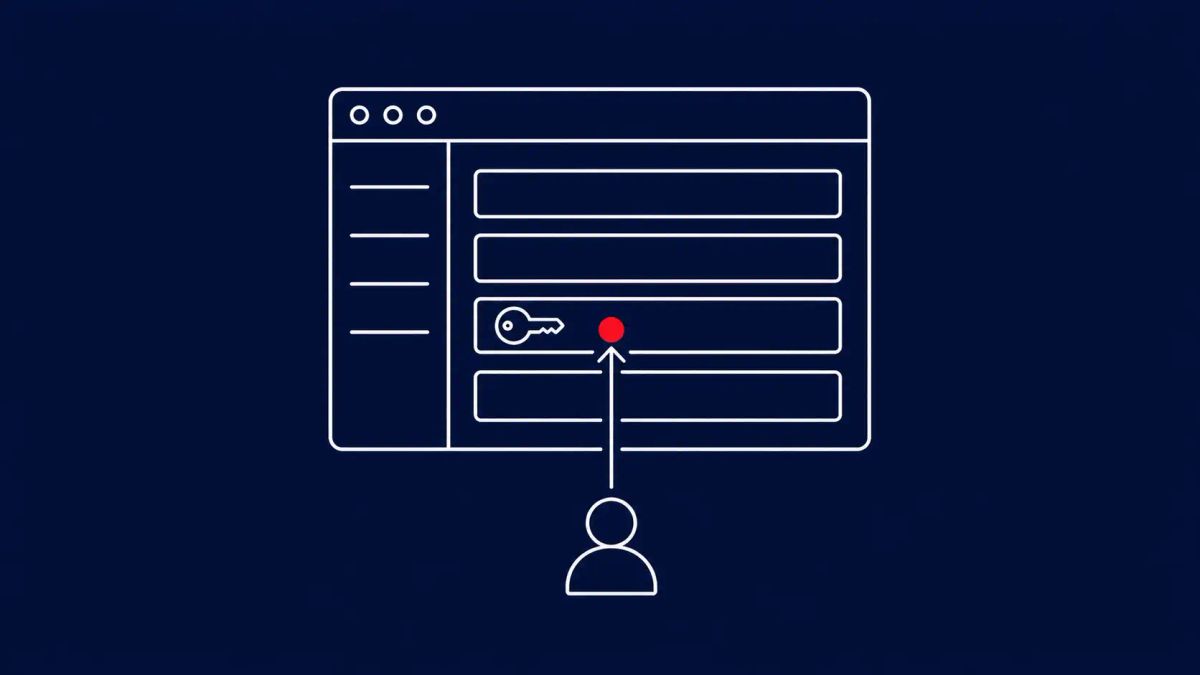
A maximum-severity flaw in Cisco Secure Workload — the platform whose entire job is to contain attackers through microsegmentation — lets an unauthenticated attacker seize Site Admin, its highest privilege tier. A successful exploit hands the adversary the segmentation console itself: the tool meant to stop lateral movement becomes a map and a master key for it.
SAN JOSE, CALIFORNIA — On May 20-21, 2026, Cisco disclosed and patched CVE-2026-20223, a maximum-severity vulnerability — CVSS 10.0 — in Cisco Secure Workload, the company's workload-protection and microsegmentation platform. The flaw stems from insufficient validation and authentication in internal REST API endpoints, and it allows an unauthenticated, remote attacker to gain Site Admin-level privileges on an affected system. Site Admin is the highest privilege tier in Secure Workload, giving an attacker full control of the platform enterprises rely on to enforce segmentation policy and contain lateral movement across data-center and cloud workloads. Cisco has released patches; as of disclosure there is no confirmed in-the-wild exploitation. The vulnerability is the latest in a heavy 2026 run of Cisco critical flaws — following the Catalyst SD-WAN authentication bypass CVE-2026-20182, itself a CVSS 10.0 flaw, weaponized as a zero-day by the threat actor UAT-8616.
What Happened
What CVE-2026-20223 Actually Lets an Attacker Do
The flaw lives in Secure Workload's internal REST API. Cisco's advisory traces it to insufficient validation and authentication on those API endpoints — meaning requests that should require an authenticated, authorized identity can be made without one. The consequence is severe enough to earn the maximum CVSS score of 10.0: an unauthenticated, remote attacker can obtain Site Admin privileges. Site Admin is not an ordinary account; it is the top privilege tier in Secure Workload, with full control of the platform. An attacker at that level does not merely read data — they own the console that defines and enforces the organization's segmentation policy. There is no authentication step for them to defeat first; the missing authentication is the vulnerability.
A Security Product Whose Compromise Helps the Attacker
Secure Workload's purpose is to contain attackers. It enforces microsegmentation — the practice of dividing data-center and cloud workloads into tightly controlled zones so that an intruder who lands in one place cannot freely move to another. The platform is, in effect, the map of what is allowed to talk to what, and the enforcement engine that holds that map in place. CVE-2026-20223 hands an unauthenticated attacker the administrative control of exactly that. With Site Admin access, an adversary can read the segmentation policy — learning the network's internal structure — and alter it, carving the openings they need for lateral movement. The tool deployed to stop an intruder from spreading becomes, once compromised, the thing that shows them where to go and clears the path.
What Cisco Has Confirmed — and What It Has Not
Cisco has released patches, and the fix is the unambiguous priority for any Secure Workload operator. What Cisco has not reported is in-the-wild exploitation: as of disclosure, none is confirmed. That is a meaningful distinction from Cisco's other recent CVSS 10.0 flaw — the Catalyst SD-WAN bypass — which was exploited as a zero-day before its patch. CVE-2026-20223 is, so far, a patch-ahead-of-attackers situation. But a maximum-severity, unauthenticated flaw in a widely deployed enterprise security product is precisely the kind of vulnerability that attracts rapid reverse-engineering once a patch is public. The specific affected version ranges should be confirmed against Cisco's security advisory, and the patch window should be treated as short.
Scope and Impact
CVE-2026-20223 does not stand alone. It is the latest entry in a 2026 run of critical flaws in the network- and security-infrastructure products enterprises trust most. The CyberSignal has tracked the CVSS 10.0 Cisco Catalyst SD-WAN authentication bypass that UAT-8616 exploited as a zero-day; the Palo Alto PAN-OS firewall zero-day exploited since April by a likely state-sponsored cluster; and the third Ivanti EPMM zero-day of the year, which CISA gave federal agencies three days to patch. The throughline is uncomfortable: the products positioned at the center of enterprise defense — firewalls, VPN and device-management gateways, segmentation platforms — are themselves a concentrated, high-value attack surface, and 2026 has been a relentless demonstration of it.
The specific danger of a compromised segmentation console is that its damage is quiet and durable. An attacker who alters a firewall rule is often noticed; an attacker who subtly rewrites a microsegmentation policy may not be, because the platform itself keeps reporting the network as correctly segmented. Any organization running Secure Workload should, after patching, treat the integrity of its current segmentation policy as an open question — validating it against the intended baseline rather than trusting the console's own view. This is the same patch-and-then-verify discipline The CyberSignal urged around the chained MOVEit Automation flaws: for a critical infrastructure-software vulnerability, applying the patch is the start of remediation, not the end.
Response and Attribution
For Cisco Secure Workload customers, the immediate action is to patch — confirm the deployment is updated to the fixed version per Cisco's advisory. A CVSS 10.0 unauthenticated flaw in a security product is a patch-today item regardless of whether exploitation is yet confirmed. Alongside patching, restrict network access to Secure Workload's management interface and REST API endpoints: they should not be internet-reachable and should be firewalled to administrative networks only. Audit Site Admin activity logs for anomalous administrative actions, policy changes, or new accounts created since the platform was last patched. And because an attacker at Site Admin level could have altered segmentation rules, validate the current segmentation policy against the intended baseline rather than assuming it is intact.
For SOC and incident-response teams, the hunt is for anomalous REST API calls to Secure Workload endpoints — in particular, unauthenticated requests that succeeded — and any unexpected Secure Workload policy change should be treated as a possible indicator of compromise. Incident-response plans should absorb the assumption that a compromised microsegmentation console is a force multiplier for lateral movement, and prioritize Secure Workload integrity accordingly in data-center incident response. For CISOs and security architects, the recurring 2026 pattern is the real lesson: a security product with a critical unauthenticated flaw is no longer an exception. Treat the attack surface of your own security tooling as a Tier 1 risk-register item, avoid single-threading containment on one vendor's segmentation product, and fold Cisco's 2026 critical-flaw cadence into vendor-risk reviews.
The CyberSignal Analysis
Signal 01 — When the Containment Tool Is the Breach, Containment Is the Attacker's
Microsegmentation exists to make a breach survivable — it is containment in cybersecurity expressed as architecture, ensuring that an intruder who compromises one workload cannot reach the next. CVE-2026-20223 inverts that guarantee. An unauthenticated attacker who reaches Site Admin does not have to defeat the segmentation; they own the system that defines it. They can read the policy to understand exactly how the network is partitioned, then edit the policy to open the routes they want. The control designed to be the wall becomes the door — and worse, the floor plan. The lesson is not that microsegmentation is a bad idea; it remains a strong one. It is that the platform enforcing it has to be treated as one of the most sensitive systems in the estate, hardened and monitored as such, because its compromise does not just remove a defense — it converts that defense into an asset for the attacker.
Signal 02 — Security Products Are a Concentrated Attack Surface in 2026
CVE-2026-20223 is one more data point in a pattern that has defined the 2026 vulnerability cycle: the products at the center of enterprise defense keep turning out to have critical, often unauthenticated flaws. Paired with the Cisco Catalyst SD-WAN bypass, the Palo Alto PAN-OS firewall zero-day, and the Ivanti EPMM zero-day under CISA mandate, the picture is consistent enough that security teams should plan around it. Defense-in-depth has always been advice about not trusting a single control; the 2026 evidence extends it — do not trust a single security vendor as a single point of failure either. When the firewall, the VPN gateway, and the segmentation console can each individually be the breach, the architecture has to assume any one of them might be.
Signal 03 — Patch Fast, but Verify the Policy the Console Was Guarding
For most vulnerabilities, applying the vendor patch closes the incident. For a flaw that grants administrative control of a policy-enforcement platform, the patch closes the door but does not answer the question of what happened while the door was open. Any organization that ran an unpatched, internet-reachable Secure Workload instance has to consider that its segmentation policy may have been read or rewritten — and a rewritten policy will not announce itself, because the compromised console will keep reporting the network as properly segmented. The remediation that actually matters is the audit: compare the live segmentation policy against the intended baseline, review Site Admin activity, and confirm no accounts or rules were added. With security tooling, 'patched' and 'clean' are two separate findings, and only the second one ends the incident.



