Showboat: A China-Affiliated Espionage Backdoor Has Been Inside Middle East and Central Asia Telcos Since 2022
Lumen's Black Lotus Labs disclosed Showboat, a modular Linux backdoor a China-affiliated espionage operation has used to sit inside Middle East and Central Asia telecom networks for roughly four years. A SOCKS5-proxy foothold inside a carrier is a persistent window into a region's traffic.

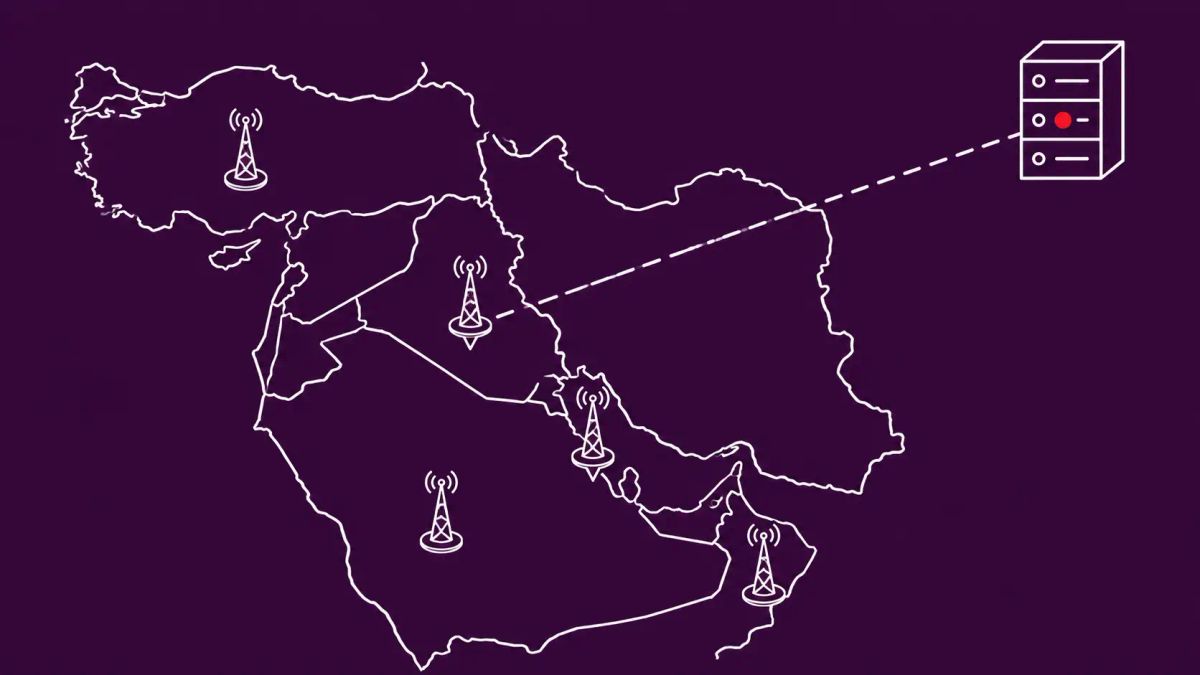
A China-affiliated espionage operation has held a quiet, modular foothold inside Middle East and Central Asia telecom networks for roughly four years. Telecoms are the surveillance jackpot — they carry everyone else's communications — and a SOCKS5-proxy backdoor inside one is a persistent window into an entire region's traffic.
DENVER, COLORADO — On May 20-21, 2026, Lumen Technologies' Black Lotus Labs disclosed Showboat, a modular Linux post-exploitation framework used in a long-running cyber-espionage campaign against telecommunications providers. Showboat can spawn a remote shell, transfer files, and operate as a SOCKS5 proxy — its primary purpose being to establish a persistent foothold that lets attackers reach internal machines not exposed to the internet, pivoting across the victim's LAN. The campaign has targeted a Middle East telecommunications provider since at least mid-2022, with additional confirmed victims including an Afghanistan-based ISP and an entity in Azerbaijan; a secondary command-and-control cluster surfaced possible compromises in the United States and Ukraine. Black Lotus Labs assesses the malware is used by at least one — possibly more — threat-activity clusters affiliated with China, citing command-and-control infrastructure correlations to IP addresses geolocated in Chengdu, the capital of China's Sichuan province. To conceal itself on infected hosts, Showboat retrieves a code snippet hosted on Pastebin, created on January 11, 2022. The campaign also uses a companion Windows backdoor, JFMBackdoor.
What Happened
Showboat: Built for Patient Lateral Reach
Showboat is a modular post-exploitation framework for Linux systems — not a smash-and-grab tool but an instrument of patient persistence. Its documented capabilities are deliberately general: it can spawn a remote shell, transfer files, and function as a SOCKS5 proxy. The proxy capability is the operationally important one. Showboat's primary purpose, in Black Lotus Labs' account, is to establish a foothold from which attackers can interact with machines that are not exposed to the public internet — systems reachable only from inside the victim's local network. From a compromised host, Showboat can scan for other devices and connect to them through its SOCKS5 proxy, turning a single beachhead into a route across the internal network. It is infrastructure for staying, mapping, and moving sideways, slowly.
Four Years Inside Regional Telecoms
The campaign's defining number is its dwell time. Black Lotus Labs traced Showboat activity against a Middle East telecommunications provider back to at least mid-2022 — roughly four years of presence. Additional confirmed victims include an Afghanistan-based internet service provider and an entity in Azerbaijan, and a secondary command-and-control cluster surfaced possible compromises in the United States and Ukraine. The targeting is not random. Telecommunications providers are the highest-value espionage target available short of a government itself, because they carry everyone else's communications — a foothold inside one carrier is a window into the call records, routing, and traffic metadata of every subscriber, business, and agency that depends on it. A SOCKS5-proxy backdoor that has lived inside a regional carrier for four years is, in effect, a sustained intelligence-collection platform.
The Attribution — and the Hedge
Black Lotus Labs assesses that Showboat is used by at least one — and possibly more — threat-activity clusters affiliated with China. The basis for that assessment is infrastructure analysis: correlations between the campaign's command-and-control nodes and IP addresses geolocated in Chengdu, the capital of Sichuan province and a recognized hub of China-nexus cyber operations. The wording matters and should be preserved precisely. Black Lotus Labs says 'affiliated with China,' not attributed to the Chinese government — an alignment assessment grounded in technical correlation, not a formal state attribution. The Chengdu correlation is a meaningful corroborating signal, consistent with known China-nexus operational geography, but it is a signal, not a verdict. Showboat also travels with a companion Windows backdoor, JFMBackdoor, used in the same campaign. Separately, SentinelOne documented suspected China- and India-aligned espionage against Pakistan's Balochistan police, another example of the same regional cyber-espionage pressure.
Scope and Impact
Showboat does not stand alone. It extends a documented 2026 pattern of China-aligned operations against telecommunications and critical infrastructure worldwide. The CyberSignal has tracked the China-linked Shadow-Earth-053 group found inside critical networks across Poland and Asian nations and Trend Micro's confirmation that the same group reaches journalists and civil-society activists alongside governments, defense, and one NATO member state. The throughline runs back to the UK NCSC's assessment naming China as the most prolific driver of supply-chain and infrastructure infiltration facing the West. Telecom-sector targeting recurs in that pattern for a specific reason: the signals-intelligence yield. Compromise a single carrier and you gain visibility into the communications of everyone who routes through it — which is why a four-year foothold inside a regional telecom is a strategic asset, not an incident.
Several things are not confirmed and should be held open. Black Lotus Labs has not named the targeted Middle East provider; the possible U.S. and Ukraine compromises remain 'possible,' not confirmed; the initial-access vector into the telecom networks is not public; and the volume and type of data exfiltrated across four years are not detailed. It is also not established whether Showboat and JFMBackdoor are operated by a single cluster or shared across several, nor whether the campaign continues or has been disrupted by disclosure. What the disclosure does add is one more entry to a fast-moving nation-state cluster The CyberSignal has been documenting — a cluster that, in pieces like Kimsuky's PebbleDash backdoor with its apparently LLM-written code comments, increasingly shows state-aligned operators industrializing and modernizing their tooling. Showboat's modular, persistence-first design fits that trajectory.
Response and Attribution
For telecommunications and ISP security teams, this is an active-threat hunt rather than a theoretical one — the campaign has run since 2022 and may still be live. Hunt for Showboat by looking for unexplained SOCKS5 proxy processes on Linux hosts, outbound connections to Pastebin originating from server-side processes, and Linux processes performing internal network scans. Audit Windows hosts in the same environments for the JFMBackdoor companion. Review east-west, LAN-internal traffic for proxied connections, because reaching internal, non-internet-exposed machines is Showboat's entire purpose and lateral SOCKS5 traffic is its signature. Organizations operating in the Middle East or Central Asia should treat the hunt as a priority. Pull the Black Lotus Labs indicator set — Showboat and JFMBackdoor hashes, the C2 IP addresses, the Pastebin snippet URL — and sweep historical telemetry back to mid-2022.
For SOC and threat-hunting teams more broadly, two detections generalize beyond the telecom sector: treat Pastebin retrieval by a server-side process as suspicious, because legitimate servers rarely fetch from Pastebin, and treat SOCKS5 proxy binaries on Linux servers as suspicious-by-default unless explicitly inventoried. For critical-infrastructure and government CISOs, a four-year undetected dwell time inside regional carriers is a supply-chain-of-trust problem: if an organization's communications transit an affected carrier, metadata exposure should be assumed, and telecom-sector boards should treat nation-state persistence as the baseline threat model rather than the worst case. For threat-intelligence and policy teams, Showboat is a corroborating data point for the documented China-nexus focus on global telecom infrastructure — useful in regional-risk briefings, provided the 'affiliated,' not 'attributed,' distinction is carried through.
The CyberSignal Analysis
Signal 01 — Telecoms Are the Espionage Multiplier, and Four Years Is the Tell
The reason a telecom backdoor matters more than an equivalent backdoor in most other organizations is leverage. A carrier does not just hold its own data; it carries the communications of every subscriber, business, and government office that routes through it. An espionage actor inside one telecom has, in a single position, partial visibility into the metadata of an entire customer base — and Showboat's design, built around a SOCKS5 proxy for patient internal pivoting, is optimized for exactly that kind of quiet, sustained collection rather than a fast theft. The four-year dwell time is not a footnote; it is the headline. It tells you the operation's goal was never a smash-and-grab — it was a standing window into a region's communications, kept open and unnoticed for as long as possible. Defenders in the sector should internalize that the metric that matters is time-to-detection, and four years is a failing grade.
Signal 02 — Living Inside Trusted Services: Pastebin and SOCKS5 as Tradecraft
Showboat's concealment design is a small but instructive piece of tradecraft. Rather than carry its hiding logic inside the malware where a defender could find it, Showboat retrieves a code snippet from Pastebin — a legitimate, ubiquitous service that almost no egress filter blocks. The pattern echoes a broader nation-state shift toward operating inside trusted infrastructure: traffic to Pastebin, like traffic to a major cloud, does not look malicious on its face. The defensive answer is behavioral, not reputational. A workstation fetching from Pastebin is unremarkable; a production server-side process doing the same is not, and that distinction is a high-fidelity detection. The same logic applies to the SOCKS5 proxy at the core of Showboat's lateral movement — a proxy binary on a Linux server is either inventoried and expected, or it is an intrusion, and an organization that cannot tell which has a visibility gap worth closing.
Signal 03 — Hold the China Attribution as 'Affiliated,' and Treat Persistence as the Baseline
Black Lotus Labs' attribution is careful, and reporting on it should be too: Showboat is assessed as affiliated with China, on the basis of command-and-control correlations to Chengdu, not formally attributed to the Chinese state. The Chengdu signal is consistent with known China-nexus operational geography and is a reasonable corroborating data point — but corroboration is not a verdict, and the honest framing keeps the hedge. The larger takeaway is strategic rather than forensic. Paired with the Shadow-Earth-053 intrusions across Poland and Asia and the NCSC's 'perfect storm' assessment, Showboat reinforces that state-aligned espionage against telecom and critical infrastructure is continuous, well-resourced, and patient. Critical-infrastructure CISOs should plan for it as the baseline condition — not an exceptional event to be survived once, but a standing pressure to be detected, scoped, and evicted on a recurring basis.



