Palo Alto Firewall Zero-Day Has Been Exploited Since April 9. Patches Don't Land Until May 13.

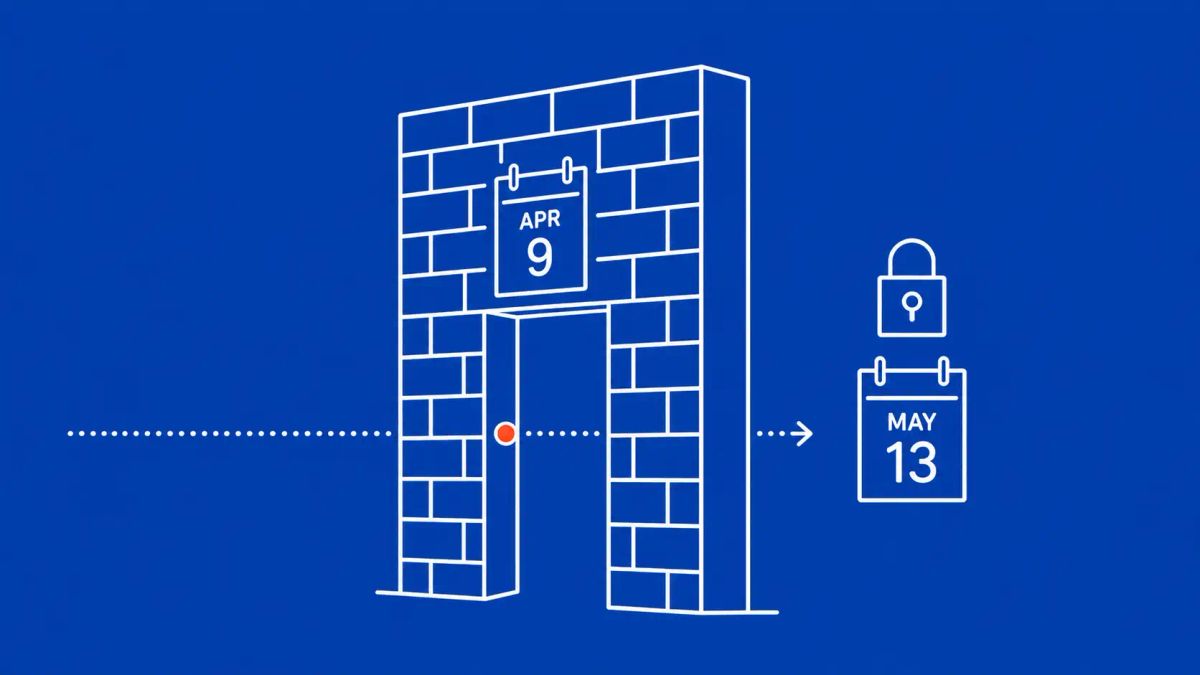
Palo Alto Networks disclosed CVE-2026-0300 on May 5, 2026 — a CVSS 9.3 buffer overflow zero-day in PAN-OS that lets unauthenticated attackers execute code as root on internet-exposed PA-Series and VM-Series firewalls. Unit 42 has tracked exploitation by a likely state-sponsored cluster (CL-STA-1132) since April 9. CISA added the CVE to the KEV catalog on May 6. A public PoC dropped the same day. Patches don't begin rolling out until May 13. Around 5,400 PAN-OS VM-Series firewalls are exposed online right now.
Palo Alto Networks publicly disclosed CVE-2026-0300 on May 5, 2026 — a critical buffer overflow vulnerability in the User-ID Authentication Portal (Captive Portal) service of PAN-OS that allows unauthenticated remote code execution with root privileges. The CVSS 4.0 score is 9.3. The underlying weakness is an out-of-bounds write (CWE-787) caused by insufficient validation of incoming data length in the portal service. Affected products are PA-Series and VM-Series firewalls running PAN-OS with the User-ID Authentication Portal enabled and reachable from untrusted networks. Prisma Access, Cloud NGFW, and Panorama appliances are not affected.
The single most important fact is the timeline gap. Palo Alto Networks's threat intelligence team Unit 42 has tracked exploitation of this vulnerability — by an actor cluster they designate CL-STA-1132 ("likely state-sponsored") — since at least April 9, 2026. That gives the attackers nearly a month of operational use before public disclosure. SecurityWeek reports the campaign bears the hallmarks of Chinese state hacking; Palo Alto and Unit 42 have not formally attributed it to a specific country. CISA added CVE-2026-0300 to the Known Exploited Vulnerabilities catalog on May 6. A public proof-of-concept exploit was published the same day. Patches do not begin landing until May 13, 2026, with additional updates rolling through May 28.
Why the April 9 Date Matters
Most zero-day disclosures arrive with the assumption that defenders have a few days to respond. CVE-2026-0300 reverses that. By the time Palo Alto Networks went public on May 5, the actor cluster Unit 42 designates CL-STA-1132 had been attempting exploitation for nearly a month. Unit 42's telemetry shows the earliest unsuccessful exploitation attempts on April 9. The successful exploitations — and the depth of access they produced — are not detailed in the public advisory. What Palo Alto has confirmed is that post-exploitation behavior includes shellcode injection into the nginx worker process running on compromised devices; that detail came via The Register's reporting on the campaign and provides defenders with a concrete hunting indicator.
The implication is that any internet-exposed Captive Portal during the April 9 to May 5 window may have been targeted. Telemetry on exposed instances is approximately 5,400 PAN-OS VM-Series firewalls per Shadowserver scans on May 6 — concentrated in Asia (about 2,466) and North America (about 1,998) — but how many of those have configured access restrictions to trusted internal IP addresses, and how many have already been compromised, is unknown publicly. Per Palo Alto's advisory: "Limited exploitation has been observed targeting Palo Alto Networks User-ID Authentication Portals that are exposed to untrusted IP addresses and/or the public internet. Customers following standard security best practices, such as restricting sensitive portals to trusted internal networks, are at a greatly reduced risk."
The Patch Gap and the PoC
Palo Alto's planned patch cadence is staged: the first updates land May 13, with additional version-specific patches rolling through May 28. That means defenders have roughly six to twenty-one days between disclosure and patch availability. During that window, a public proof-of-concept exploit has been circulating since May 6. The PoC was published with research-framing language and legal disclaimers, but the practical effect is well-understood: PoC publication compresses the window between targeted exploitation and broader opportunistic exploitation by hours-to-days for this class of vulnerability.
VulnCheck VP of security research Caitlin Condon told CyberScoop: "It's likely rules will also start to fire in third-party organizations and honeypots shortly. Management interfaces, login pages, and authentication portals have been common adversary targets for both opportunistic and targeted campaigns in recent years." Benjamin Harris of watchTowr framed the disclosure trade-off: "In a bad situation, that is the best they can do immediately. However, that also alerts everyone to the existence of a vulnerability." The defender takeaway from both observations is that the population of attackers actively targeting CVE-2026-0300 will widen substantially over the next several days, before patches close the window. CyberSignal's vulnerability coverage tracks this same compress-and-cascade pattern across recent edge-device disclosures.
What to Do Before the Patch Lands
Palo Alto Networks's primary mitigation guidance, in its own advisory, is to restrict access to the User-ID Authentication Portal to trusted internal networks only — and if that is not possible, to disable the portal entirely until patches are deployed. Both are configuration changes, not code changes; both can be applied immediately. The verification path in the admin UI is Device > User Identification > Authentication Portal Settings, where the Enable Authentication Portal flag should be toggled or its source IPs restricted. Palo Alto also released a Threat Prevention signature on May 5 that detects or blocks exploitation attempts on PAN-OS 11.1 or newer, which is a useful in-line control for defenders who cannot immediately disable the portal.
Beyond the immediate mitigation, the threat-hunting requirement is concrete. Pull packet captures for any internet-exposed Captive Portal interfaces back to April 9, 2026. Look for unusual long-payload requests to the portal endpoints. Review nginx worker process behavior for anomalous child processes, unexpected outbound connections, or filesystem writes outside the nginx user's expected scope — Unit 42 has confirmed this as the post-exploitation behavior, which means it is the highest-confidence signal for a compromise. Any firewall showing those indicators should be treated as fully compromised: root-level compromise means attackers may have implanted persistence, harvested credentials, modified configurations, or pivoted to interior networks. Recovery is firmware re-flash from known-good media, full configuration audit, and credential rotation for any account that touched the appliance — not patch and reboot.
The Recurring Pattern of PAN-OS Edge-Device Exploitation
This is not the first PAN-OS zero-day to follow this pattern, and the cumulative tally now matters. There are 13 Palo Alto product vulnerabilities currently in CISA's KEV catalog excluding CVE-2026-0300. Two PAN-OS vulnerabilities were exploited in the wild in 2025; seven were exploited in 2024, including by state-sponsored actors. November 2024 saw thousands of PAN-OS firewalls compromised via chained zero-days (CVE-2024-0012 authentication bypass plus CVE-2024-9474 privilege escalation). December 2024 added a separate denial-of-service flaw exploited to force PA-Series, VM-Series, and CN-Series firewalls to reboot. February 2025 produced three additional PAN-OS flaws abused against firewalls with internet-facing management interfaces.
The pattern is clear: edge security devices — firewalls, VPN concentrators, load balancers, and management interfaces — are now first-class targets for state-sponsored campaigns specifically because they sit at the perimeter, run complex code that handles untrusted input, and frequently have the credentials needed to access deeper infrastructure once compromised. CVE-2026-0300 is the latest data point in a now-well-documented trend. Defenders running internet-exposed PAN-OS, Citrix, Fortinet, Ivanti, or Cisco appliances should plan their 2026 patching cadence with the assumption that several more zero-days in this class will land before year-end.
Defender Actions for This Week
- Today, in priority order: (1) restrict User-ID Authentication Portal access to trusted internal IP ranges only by blocking untrusted-IP and internet access at the firewall edge; (2) if you cannot restrict access, disable the User-ID Authentication Portal entirely until patches deploy; (3) apply Palo Alto's Threat Prevention signature (released May 5) on PAN-OS 11.1 or newer to detect or block exploitation attempts in flight.
- Hunt for compromise indicators going back to April 9, 2026. Pull packet captures from your authentication portal interfaces for the period; review for unusual long-payload requests; look for anomalous nginx worker process behavior — unusual child processes, unexpected outbound connections, file system writes outside the nginx user's expected scope. Unit 42 has confirmed this as the post-exploitation indicator; it is the highest-confidence detection signal available.
- Patch promptly when fixes drop. Palo Alto's staged patch schedule starts May 13, 2026 with additional updates through May 28 depending on PAN-OS version. Schedule patch windows now; verify your maintenance contracts; do not wait for the CISA KEV deadline to act.
- Treat any firewall showing compromise indicators as fully compromised. Root-level compromise means attackers may have implanted persistence, harvested credentials, modified configurations, or pivoted to interior networks. Recovery requires firmware re-flash from known-good media, full configuration audit, and credential rotation for any account that touched the appliance — not patch and reboot.
- Federal civilian agencies must remediate by the CISA-specified deadline (verify against the live KEV entry; standard BOD 22-01 timeline would set deadline around May 27). Private organizations should treat KEV inclusion as a de facto emergency directive given the severity, the public PoC, and the active exploitation evidence.
The CyberSignal Analysis
Signal 01 — The April 9 to May 13 gap is the operational reality, not the patch date
Defender mental models for zero-day response often anchor on patch availability. CVE-2026-0300 makes plain why that anchor is misleading. The real timeline runs from earliest exploitation (April 9) through public disclosure (May 5) through patch availability (May 13 onward). That is a 34-day window during which a known state-sponsored cluster has been operating against exposed instances, and during which any organization that did not have access restrictions in place was effectively undefended. The lesson is structural: edge-device security postures cannot rely on patch cadence as the primary control. Configuration hardening — restricting management and authentication interfaces to trusted internal networks by default — is the load-bearing control. Patching is the cleanup. Organizations that had User-ID Authentication Portals exposed to the internet on April 8 are now in incident-response posture regardless of whether they patch on May 13.
Signal 02 — The state-sponsored attribution shapes what comes next
SecurityWeek's framing of "hallmarks of Chinese state hacking" is editorial, not vendor-confirmed; Palo Alto and Unit 42 say "likely state-sponsored" without naming a country. The distinction matters operationally. State-sponsored campaigns that successfully establish presence on edge devices typically pursue persistent access, lateral movement to high-value targets, and selective data exfiltration over months — not opportunistic ransomware deployment. For organizations whose Palo Alto firewalls were exposed during the April 9 to May 5 window, the threat model is not "we need to clean up an infection." It is "we need to assess whether a state-sponsored actor established persistence in our environment and is currently positioned to escalate." That assessment requires more than firewall patching — it requires looking inward from the firewall to interior networks, credential stores, and lateral-movement evidence over the same time window.
Signal 03 — The PoC compression cycle is now part of every edge-device disclosure
The May 5 disclosure-to-May 6 PoC publication cycle is now standard for high-CVSS edge-device vulnerabilities. Researchers monitor vendor advisories, reverse-engineer the patches or signatures within hours, and publish PoC code framed as "research" but functionally usable by any reasonably skilled operator. The defender response cannot be to ask researchers to delay publication — that ship has sailed. The response has to be to compress your own response cycle: patch windows scheduled within 72 hours of vendor advisories on KEV-listed edge devices, configuration mitigations applied within hours, and threat-hunting cycles spun up immediately rather than waiting for in-house research to confirm exploitation patterns. Organizations whose change-management process cannot accommodate emergency patches on edge security devices have a process problem, not a security problem. Both need to be solved.