Critical Kirki WordPress Flaw CVE-2026-8206 Enables Unauthenticated Admin Account Takeover
A critical flaw in the Kirki WordPress plugin (CVE-2026-8206, CVSS 9.8) lets an unauthenticated attacker send any account's password-reset link — including an admin's — to their own email and seize it. Versions 6.0.0–6.0.6 are fixed in 6.0.7; BleepingComputer reports exploitation.

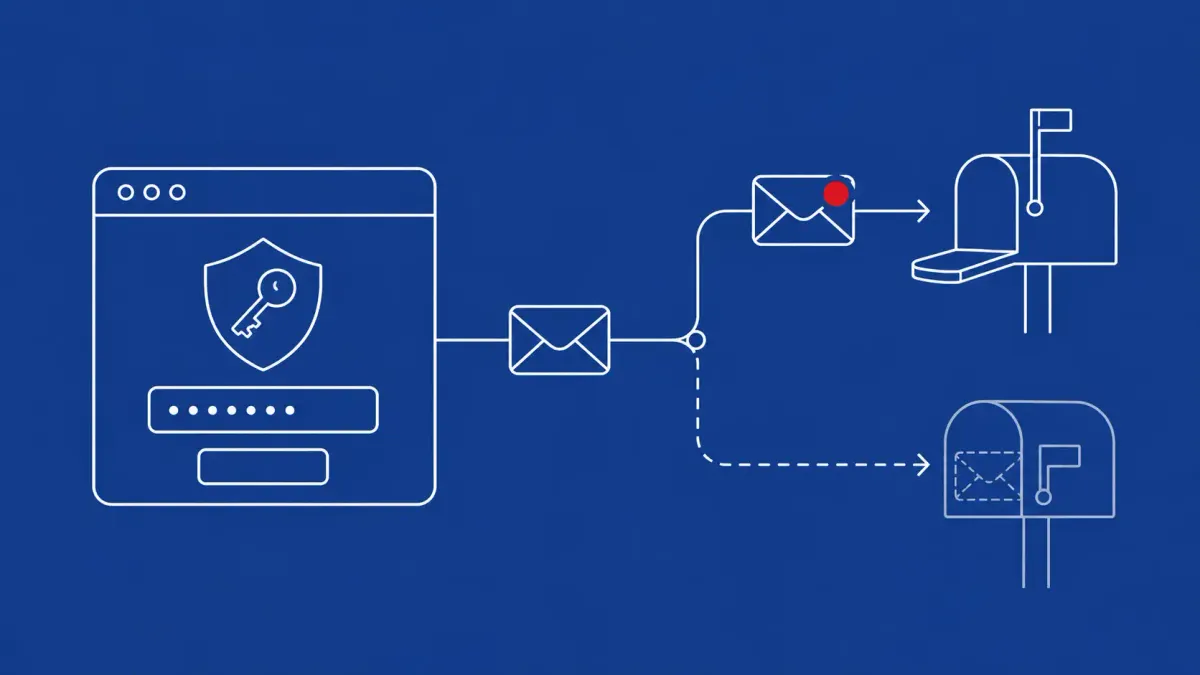
The most dangerous WordPress flaws are rarely exotic. This one is a forgot-password form that will mail anyone's reset link to whatever address you ask it to — and on a content-management system, the admin account is the whole site.
SAN FRANCISCO — A critical vulnerability in the widely used Kirki WordPress plugin, tracked as CVE-2026-8206 and rated CVSS 9.8, lets an unauthenticated attacker take over any account on an affected site — including administrator accounts — by abusing the plugin's password-reset flow. Wordfence and Patchstack documented the flaw on June 1, 2026, and BleepingComputer reports it is being exploited to hijack admin accounts.
Kirki — full name 'Kirki – Freeform Page Builder, Website Builder & Customizer' — is a framework many theme developers rely on for unified customization controls, which puts it on a large number of WordPress sites, including ones where it is bundled invisibly inside a theme rather than installed as a visible plugin.
What Happened
On June 1, 2026, Wordfence and Patchstack published advisories for CVE-2026-8206, a critical privilege-escalation vulnerability in the Kirki WordPress plugin that carries a CVSS score of 9.8. The flaw lets an unauthenticated attacker take over any account on a vulnerable site, administrators included, and BleepingComputer subsequently reported that it is being exploited in the wild to hijack WordPress admin accounts. The vulnerable code is the plugin's password-reset handling: its handle_forgot_password routine accepts an arbitrary email address when a username is supplied, instead of verifying that the email belongs to the named account.
The practical consequence is as simple as the bug. An attacker submits a single HTTP request naming a known username — 'admin' is a common default — and an attacker-controlled email address; the plugin dutifully sends the password-reset link for that user to the attacker's inbox. With the reset link in hand, the attacker sets a new password and owns the account. No authentication, no stolen credential, and no victim interaction is required. The flaw affects Kirki versions 6.0.0 through 6.0.6; the development team's 6.0.7 release fixes it by validating that the supplied email actually matches the user account before issuing a reset link. Versions earlier than 6.0.0 are not affected. The bug class is an old and well-understood one — failing to bind a password-reset request to the verified owner of the account — which is part of what makes it so dangerous: it requires no novel exploitation technique, only the recognition that the reset endpoint will trust whatever email it is handed.
Why a Forgot-Password Bug Is a Total-Takeover Bug
It is worth being precise about why a password-reset flaw rates a 9.8. On most software a single account compromise is bad but bounded; on a content-management system, the administrator account is effectively root. An attacker who takes over a WordPress admin can install plugins and themes, inject arbitrary code, create more admin accounts for persistence, exfiltrate the database, deface or redirect the site, and turn it into malware-hosting or phishing infrastructure. CVE-2026-8206 hands that over through the most mundane door imaginable — the forgot-password form — and it does so without authentication. The lesson the CVSS score encodes is that on a CMS, 'reset any user's password to an address I control' and 'own the entire site' are the same sentence.
The Theme-Bundle Blind Spot
The detail most likely to trip up defenders is that Kirki is not only a standalone plugin; it is a customization framework that theme developers embed inside their themes. That means a site can be running vulnerable Kirki code without showing 'Kirki' anywhere in its installed-plugins list, because the framework is loaded as a dependency of the active theme. Any inventory that only checks the plugins screen will therefore undercount exposure. A complete sweep has to look for Kirki loaded through themes as well — and because theme-bundled copies update on the theme author's schedule rather than the site owner's, those embedded instances can lag the 6.0.7 fix even after a site operator believes they have patched. This embedded-dependency pattern is the WordPress ecosystem's quiet version of the software-supply-chain problem: you are exposed to the security of code you did not knowingly install.
A Sub-Weekly WordPress Admin-Takeover Cadence
CVE-2026-8206 is the second WordPress plugin admin-takeover flaw The CyberSignal has covered in a matter of days, arriving right behind the WP Maps Pro plugin that was actively exploited to create rogue administrator accounts. Widen the lens and it sits in a steady run of web-platform plugin and CMS exploitation: the Ghost CMS flaw that hijacked hundreds of sites in a ClickFix campaign, the LiteSpeed cPanel plugin flaw that let any account run code as root, the KnowledgeDeliver LMS MachineKey compromise, the Gitea unauthenticated private-image-pull flaw, and the Microsoft SharePoint deserialization RCE. The cadence is the point: plugin and CMS admin-takeover has become a near-weekly event, which changes what kind of asset a marketing-managed WordPress site is.
Scope and Impact
The exposed population is large but bounded by version: any site running Kirki 6.0.0 through 6.0.6, whether the plugin is installed directly or pulled in through a theme. Kirki's role as a theme-developer customization framework means its install base spans a substantial number of WordPress sites, and the theme-bundle dynamic means the true exposure is wider than a plugin-directory headcount would suggest. The flaw's triviality compounds the risk: there is no exploit-development barrier to clear, because the attack is a single well-formed HTTP request against a public endpoint, which is exactly the kind of thing opportunistic scanners weaponize at internet scale within hours of disclosure. The economics favor the attacker here: a public, unauthenticated endpoint reachable on a large population of sites, an exploit that fits in one request, and a payoff — full administrative control — that is worth far more than the negligible cost of trying it against every WordPress host a scanner can find.
On exploitation status, the honest framing matters. BleepingComputer reports the flaw is being used to hijack admin accounts, and the Wordfence and Patchstack advisories establish that it is trivially exploitable and now patched. Defenders should treat active exploitation as the working assumption given the low bar and the public disclosure, while attributing the in-the-wild claim to the reporting rather than asserting independent confirmation. Either way the defensive action is identical and urgent — the distinction between 'confirmed exploited' and 'imminently exploitable' does not change the patch timeline for a CVSS 9.8 unauthenticated account-takeover bug.
Response and Attribution
The immediate action for any WordPress operator is to update Kirki to 6.0.7 across every site within the next 24 hours, and to deactivate the plugin as an interim measure anywhere the update cannot be applied immediately. Crucially, the inventory must reach past the installed-plugins screen to themes that bundle Kirki, since those embedded copies are the ones most likely to be missed. On any potentially exposed site, audit the WordPress user list for administrator accounts created in the last several days and remove anything that does not map to a known, legitimate user; review recent password-reset activity if logs capture it; and on any site showing signs of takeover, treat it as fully compromised — rotate all admin credentials and API keys, review posts and pages for injected content, and restore from a known-good backup. Hosting providers and managed-WordPress fleets should push the update-and-audit playbook tenant-wide and, where a WAF is available, block the malicious forgot-password request pattern at the edge.
For SOC and threat-hunting teams responsible for corporate WordPress and marketing sites, hunt for unexpected administrator-account creation in the WordPress audit log over the past week, watch for outbound connections from WordPress hosts to unfamiliar destinations — compromised sites are routinely repurposed as malware-hosting and phishing infrastructure — and add Kirki to the plugin-monitoring watchlist alongside WP Maps Pro. For CISOs, the recurring signal is organizational rather than technical: a marketing-team WordPress estate that produces a near-weekly admin-takeover emergency is Tier 1 application-security inventory, not Tier 3 shadow IT, and plugin maintenance velocity and disclosure history deserve real weight as procurement criteria.
The CyberSignal Analysis
Signal 01 — On a CMS, Account Takeover Is Site Takeover
The instinct to read 'account takeover' as a contained, one-user problem is exactly wrong on a content-management system. The administrator account on WordPress is the keys to the kingdom: code execution via plugin and theme installation, database access, persistence through new admin accounts, and conversion of the site into attacker infrastructure. That is why a forgot-password logic error scores a 9.8 — the severity is not about the elegance of the bug but about what the compromised account controls. For defenders, the takeaway is to stop triaging CMS account-takeover flaws as identity issues and start treating them as remote-code-execution-equivalent, because on a CMS that is functionally what they are.
Signal 02 — You Are Exposed to Code You Didn't Install
The theme-bundle dimension of this flaw is the part worth carrying to other contexts. A site owner who never installed Kirki, and who sees no Kirki entry on the plugins screen, can still be fully vulnerable because the active theme carries Kirki inside it. That is the WordPress ecosystem's version of a transitive dependency, and it has the same consequence as the npm and supply-chain incidents this cycle: your attack surface includes the security posture of components you adopted indirectly and may not even know you are running. The defensive implication is that asset inventory for WordPress cannot stop at the plugins list; it has to enumerate what themes pull in, and patch management has to account for embedded copies that update on someone else's schedule.
Signal 03 — The WordPress Plugin Surface Is a Tier 1 Program Now
Two actively-exploited WordPress plugin admin-takeover flaws inside a week is not noise; it is a cadence, and it should reset how organizations classify their WordPress footprint. The marketing-managed WordPress site has long lived in a governance gap — too peripheral for the AppSec program, too public to ignore — and that gap is exactly where this class of flaw operates. The practical response is to fold WordPress plugin inventory, patch SLOs, and disclosure-history monitoring into the same first-tier application-security program that covers custom apps, and to weight a plugin's maintenance velocity and security track record as primary selection criteria. When admin-takeover bugs ship weekly, the marketing site is no longer a marketing problem; it is an enterprise attack surface.



