Gitea CVE-2026-27771 Lets Anyone on the Internet Pull Your Private Container Images

Gitea disclosed CVE-2026-27771, a registry authorization flaw that lets unauthenticated attackers pull private container images from any self-hosted Gitea below 1.26.2. It collapses the security premise of self-hosting: keeping images off public registries.

Share
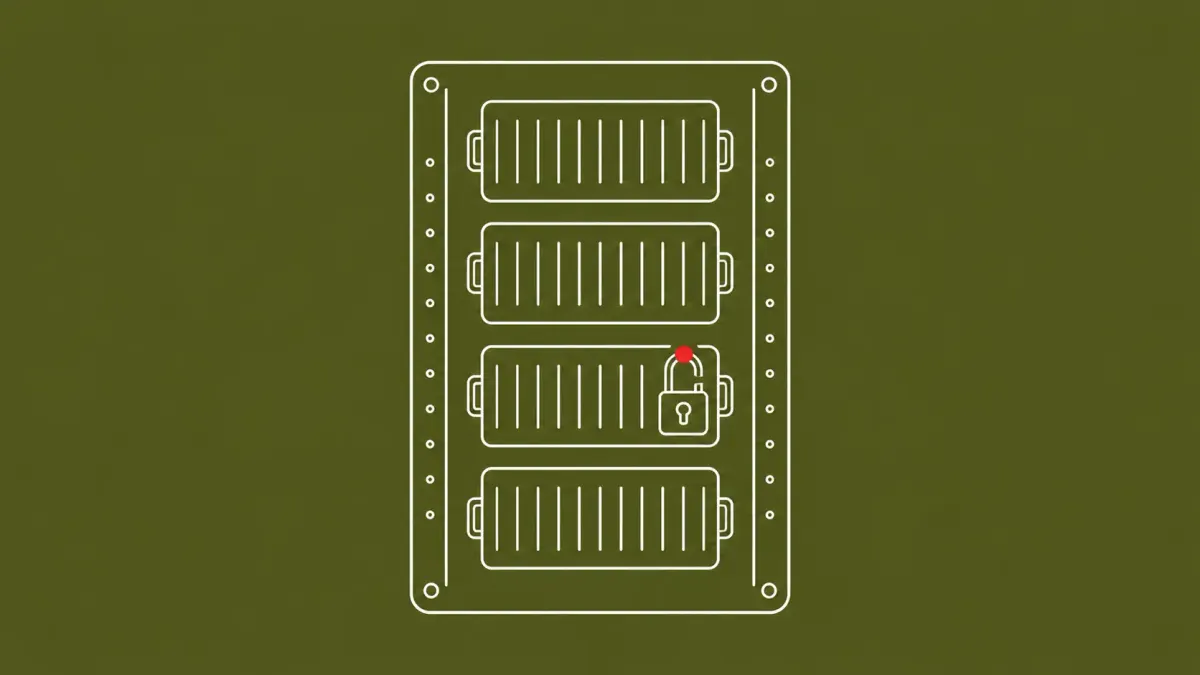
Line-art server rack holding stacked container boxes, one container's padlock hanging open and carrying a single flat red dot at its shackle.

Key Takeaways

  • Gitea disclosed CVE-2026-27771, a container-registry authorization flaw that lets unauthenticated remote attackers pull private container images from any internet-reachable Gitea instance running a version below 1.26.2.
  • The flaw inverts the security premise of self-hosting Gitea — organizations run it specifically to keep code and container images off public registries, and CVE-2026-27771 has been making those private images reachable without an account for the duration any unpatched instance has been online.
  • Operators must upgrade to Gitea 1.26.2 immediately, audit Gitea access logs for unauthenticated pulls during the exposure window, and rotate every secret that could be embedded in possibly-leaked images — cloud credentials, API keys, and signing material.

CVE-2026-27771 is not just a missing access check — it collapses the reason organizations run self-hosted Gitea in the first place, turning every internet-reachable, unpatched instance into a public mirror of the private container images it was deployed to keep off the public internet.

SAN FRANCISCO, CALIFORNIA — Gitea disclosed CVE-2026-27771, an authorization flaw in its container-image registry that allows unauthenticated remote attackers to pull private container images from any affected Gitea deployment without an account, password, or other credential. The flaw affects every Gitea version prior to 1.26.2 and is fixed in that release, which Gitea — the popular open-source, self-hosted version-control and code-collaboration platform — published as the remediation.

The vulnerability was reported by Gitea's own security advisory and covered by The Hacker News and the National Vulnerability Database. No public proof-of-concept code has been released at disclosure, and there is no confirmed in-the-wild exploitation. The technical class of the flaw is a container-image-pull authorization defect: the registry-side access check is missing or bypassable on the affected endpoints.

Disclosure Overview
FieldDetails
CVECVE-2026-27771 — container-registry authorization defect in Gitea
VendorGitea — open-source, self-hosted Git platform and code-collaboration server
Vulnerable VersionsAll Gitea versions prior to 1.26.2
Patched VersionGitea 1.26.2
ImpactUnauthenticated remote attackers can pull private container images from the Gitea container registry without an account, password, or any credential
ExploitabilityRemote, unauthenticated — no account required; affected Gitea instances reachable over the internet are reachable by any attacker
Public PoCNone at disclosure — no public proof-of-concept code and no confirmed in-the-wild exploitation reported

What Happened

Gitea published the security advisory for CVE-2026-27771 and released Gitea 1.26.2 as the fix. The vulnerability sits in the container-image-pull authorization path of Gitea's built-in container registry — the OCI-style artifact endpoints that Gitea exposes alongside its Git repositories so teams can host private container images next to the source that produces them. The advisory describes the defect as an authorization check that is either missing or bypassable on the affected pull endpoints, with the consequence that an unauthenticated remote attacker can request and receive private container images from any Gitea instance that has not been upgraded.

The flaw affects every Gitea version prior to 1.26.2 — there is no narrower vulnerable range — and 1.26.2 is the patched release. Coverage was anchored by Gitea's own security advisory and reporting from The Hacker News, with the National Vulnerability Database providing the CVE record. No public proof-of-concept code has been released, and there is no confirmed in-the-wild exploitation at the time of disclosure. The class of flaw — a container-image-pull authorization defect — does not change with or without a PoC: any attacker who can reach the Gitea registry endpoints over the network can attempt the same unauthenticated pull, with or without sample exploit code in front of them.

The Inversion: A 'Private' Designation That Was Never Enforced

The reason CVE-2026-27771 is more consequential than a typical authorization bug is what it does to the deployment's design intent. Organizations choose to run self-hosted Gitea specifically to keep code and container images off public registries. The decision to deploy on owned infrastructure, behind an organization's own perimeter, with a 'private' visibility setting on its repositories and artifacts, is the security premise of the entire architecture — the answer to a question that begins, 'we cannot put this on a SaaS registry because…' CVE-2026-27771 collapses that answer. Private container images stored in any unpatched, internet-reachable Gitea instance have been pullable by anyone who knows the right endpoint URL, for the duration that instance has been online below 1.26.2. The 'private' designation was, in practice, only ever as strong as the authorization check guarding the pull endpoint, and on the affected versions that check was missing or bypassable. The deployment did not fail to be secret — it failed to be private.

Why Container Images Make This Worse Than a Source Leak

A second reason this flaw deserves attention beyond its modest technical description is what tends to live inside container images. The build-time content of a container — base layers, application binaries, configuration files, and the intermediate files left behind by a Dockerfile — is a frequent and well-documented place where secrets end up by accident. Cloud credentials, API tokens, database connection strings, signing keys, certificate material, and even private SSH keys baked into build images are all routine findings in container-secret audits. An attacker who can pull an organization's private images is not only exfiltrating proprietary application code; they are pulling the build-time secret hygiene of every team that pushed an image to the registry. That is what turns CVE-2026-27771 from a confidentiality problem into a credential-exposure problem, and it is why the defender response below has to include secret rotation, not just patching.

The 2026 Developer-Platform Pattern, Continued

CVE-2026-27771 also does not arrive in isolation. It is the latest entry in a 2026 pattern The CyberSignal has tracked closely: the developer toolchain — registries, build systems, version-control servers, and the platforms that knit them together — has become a primary attack surface in its own right. In the preceding week alone, GitHub confirmed that the actor TeamPCP exfiltrated 3,800 internal repositories through a single poisoned VS Code extension, the npm registry rolled out staged publishing with 2FA-gated release approval as a direct response to a string of supply-chain compromises, and the automated Megalodon campaign backdoored 5,561 GitHub repositories in six hours by injecting payloads into CI/CD workflow files, and the Laravel-Lang compromise carried the same playbook into PHP and Composer. CVE-2026-27771 extends the pattern from SaaS providers and public registries to self-hosted developer platforms — the deployments organizations chose precisely because they did not trust the SaaS option. The same defect class can plausibly exist in other self-hosted platforms with bolted-on container registries, and the Gitea advisory is reason enough to audit them.

CVE-2026-27771 — Vulnerability Profile
FieldDetails
CVECVE-2026-27771
ProductGitea — open-source, self-hosted Git platform with built-in container registry
Affected ComponentContainer-image-pull authorization path on Gitea's container registry endpoints
ClassAuthorization defect — the registry-side access check is missing or bypassable on the affected endpoints
Vulnerable VersionsAll Gitea versions prior to 1.26.2
Patched VersionGitea 1.26.2
Authentication RequiredNone — exploitation is unauthenticated
Public PoCNone at disclosure; no confirmed in-the-wild exploitation reported

Scope and Impact

The exposure window is a function of how long an affected Gitea instance has been running below 1.26.2 with its container registry reachable over the internet. For organizations that have run Gitea on-premises for months or years and exposed it to the internet for developer convenience, that window is potentially long. The advisory describes an authorization defect on the pull path, which means a successful attempt does not require an account, a session, a token, or any artifact a security team would typically expect to find in an access log. From the defender's vantage point, the relevant indicator is an unauthenticated pull request reaching the container-registry endpoint at all — and on the affected versions, the registry would have served the response.

Several specifics are genuinely not yet public, and this account does not imply otherwise. Whether the flaw is being actively exploited in the wild has not been reported. The discovering researcher or organization has not been named. The number of internet-exposed unpatched Gitea instances is not stated. Whether the defect exposes only pull operations on existing private images, or also enables enumeration of images and tags an attacker did not know about in advance, has not been fully characterized in public reporting. The exact CVSS score should be verified against the Gitea advisory and the NVD record. Whether CISA will add CVE-2026-27771 to the Known Exploited Vulnerabilities catalog is unknown at the time of this writing.

One important boundary: Gitea has a fork, Forgejo, which periodically syncs with Gitea's upstream code. Whether Forgejo is affected by CVE-2026-27771 depends on where Forgejo's sync point sits relative to the introduction of the defect and the patch, and that determination has to come from Forgejo's own advisory rather than be inferred from this one. Until Forgejo publishes guidance, operators of Forgejo deployments should treat the question as open and follow their vendor's notice. The broader 2026 context is unambiguous: the Verizon DBIR 2026 found that vulnerability exploitation just overtook credential theft as the number-one initial-access method, and authorization defects on self-hosted developer platforms — exactly the class CVE-2026-27771 falls into — are the kind of finding that pattern predicts will be moved on quickly once a flaw is public.

Response and Attribution

For any organization running self-hosted Gitea, the action is immediate and specific: upgrade to Gitea 1.26.2 today. If a Gitea instance is internet-reachable and currently below 1.26.2, the operating assumption should be that every private container image hosted in its registry is potentially leaked, and the response should match. Audit the Gitea access logs for unauthenticated pulls of private container images across the entire window the affected version has been online — that is the indicator most likely to be present, given the defect class. Where patching cannot be applied immediately, place an authentication-required reverse proxy in front of the Gitea container-registry endpoints, or take the registry offline entirely until the upgrade is complete; do not rely on network segmentation or perimeter assumptions that may not hold for a service that has been internet-reachable.

The credential-hygiene response is the part that is easy to under-prioritize and the part that matters most. Treat secret hygiene for every image that was reachable during the exposure window as compromised: rotate cloud credentials, API tokens, database passwords, signing keys, and any SSH or certificate material that could plausibly have been embedded at build time, and re-baseline image-scanning to catch the secrets that should not have been there in the first place. For DevSecOps teams more broadly, the structural lesson generalizes — for every self-hosted developer platform, audit the authentication state of every registry, artifact, and asset endpoint, because the same defect class can exist in other platforms with bolted-on registries. Consider VPN-only or air-gapped access for self-hosted developer platforms whenever internet exposure is not operationally required.

On attribution and exploitation: Gitea has not named a threat actor; no public reporting ties exploitation of CVE-2026-27771 to any named group; and there is no confirmed in-the-wild exploitation at disclosure. SOC and threat-hunting teams should still hunt for unauthenticated pulls of private container images in Gitea registry access logs across the exposure window, add CVE-2026-27771 to external attack-surface scanning, and treat any anomalous pull from an unfamiliar IP during that window as an investigation lead rather than a closed event.


The CyberSignal Analysis

Signal 01 — Self-Hosting Was Always a Trust Decision, and CVE-2026-27771 Just Cashed It In

The instinct to self-host a developer platform — Gitea, GitLab CE, Bitbucket Server, Nexus, Artifactory — is almost always rooted in a security argument. The argument is that owning the deployment, controlling the network, and keeping the artifacts off third-party SaaS is safer than trusting a vendor's cloud. That argument is real, but it carries an obligation: the operator has to ensure that the platform's own access controls hold up, because nothing else is enforcing them. CVE-2026-27771 is what happens when that obligation is broken by a single missing or bypassable authorization check on a high-value endpoint. The 'private' designation on a Gitea container image was only ever as strong as the registry-side check guarding the pull path, and on affected versions that check did not enforce. The lesson is not that self-hosting is wrong — it is that self-hosting is a higher-effort security posture than its proponents sometimes argue, because the burden of every access decision sits on the operator's shoulders rather than the vendor's.

Signal 02 — Container Images Are an Underrated Secret-Exfiltration Target

Most coverage of CVE-2026-27771 will focus on the leak of proprietary code inside container images, and that is genuine harm. The deeper and less-visible problem is what else lives in those images. Build pipelines routinely bake secrets into container layers — cloud credentials in environment variables, API tokens written into config files, signing keys copied into intermediate stages, even private SSH keys included to clone dependencies — and image-scanning programs at most organizations are still catching up to how often this happens. An attacker who can pull every private image from an exposed Gitea registry is not just walking out with code; they are walking out with the secret-hygiene failures of every developer who has pushed an image. That is why the defender response has to include secret rotation, and why a 'just patch' framing of CVE-2026-27771 underestimates the cleanup required.

Signal 03 — Self-Hosted Developer Platforms Are Now a Tier-1 Attack Surface

CVE-2026-27771 is the latest data point in a pattern The CyberSignal has tracked through 2026: the developer toolchain has become a primary, named target, and the self-hosted half of that toolchain is no longer the safe haven its operators sometimes treated it as. In the same month, Packagist absorbed a supply-chain attack carried in a package.json payload, RubyGems suspended new signups in response to a major malicious-package campaign, and GitHub confirmed the TeamPCP exfiltration of 3,800 internal repositories through a poisoned VS Code extension. Gitea now joins them. The patch-SLA implication for security leaders is concrete: self-hosted developer platforms should be patched on the same clock as production servers, not on the longer clocks often applied to internal tooling. The era in which an internal Gitea instance was 'just a developer convenience' that could wait for next quarter's maintenance window ended somewhere in the run-up to this CVE; CVE-2026-27771 just makes that ending impossible to ignore.


Sources

TypeSource
PrimaryGitea — Security Advisories
PrimaryNVD — CVE-2026-27771
ReportingThe Hacker News — Gitea Vulnerability Exposes Private Container Images