South Korea's Foreign Ministry Confirms Nine-Month Breach of Diplomatic Training System
A nine-month South Korean foreign-ministry breach — allied foreign-ministry defender posture review this week.

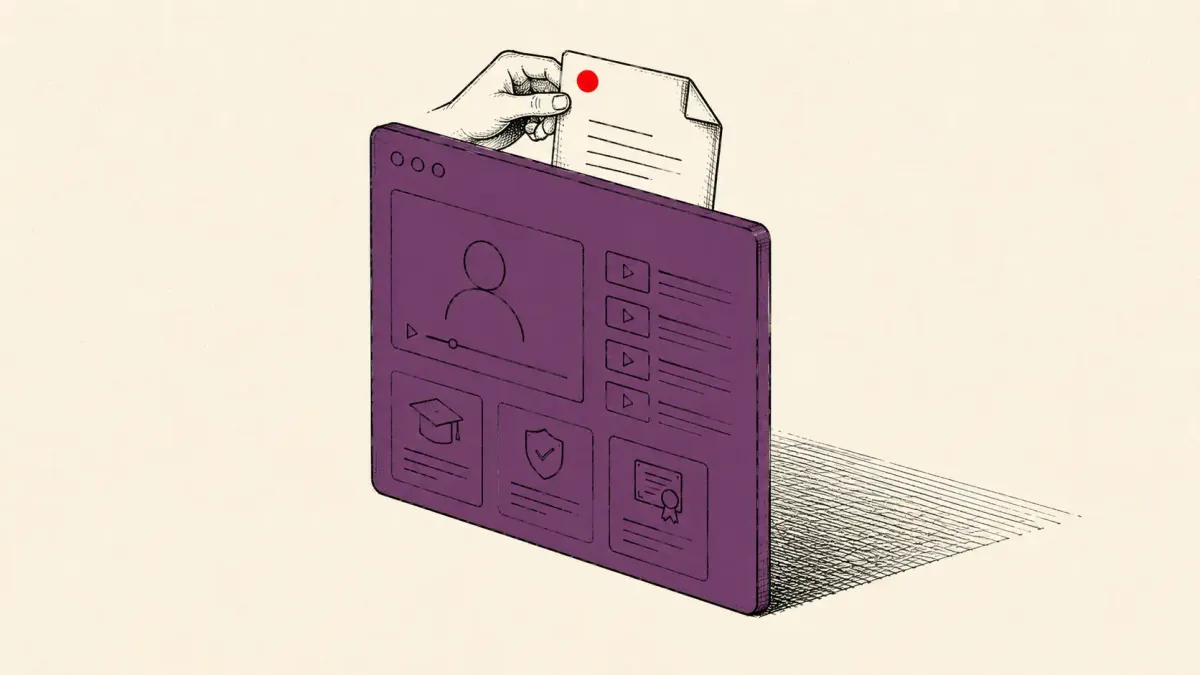
South Korea's Ministry of Foreign Affairs confirmed attackers spent nine months inside a diplomatic academy education system — a government disclosure that reads, for defenders at allied foreign ministries, as a posture prompt rather than a forensic account.
SEOUL — South Korea's Ministry of Foreign Affairs (MOFA) disclosed on July 20, 2026 that unidentified attackers had access to an online education system used by the country's diplomatic academy for nine months, and that the intrusion exposed personal information belonging to former and current MOFA employees. The CyberSignal is tracking it as a defender-oriented government disclosure rather than a forensic account of how the intrusion unfolded.
The reporting, published by The Record, frames a familiar problem for national foreign ministries: a long-dwell intrusion in an ancillary system — here, a training and education platform run for the diplomatic academy — rather than in the ministry's core diplomatic networks. Much of what would ordinarily anchor a breach story, including who was behind it and how they got in, is not established, and this piece keeps those items as open questions.
What MOFA Disclosed
According to the reporting, South Korea's Ministry of Foreign Affairs confirmed that an online education system used by the country's diplomatic academy was accessed by unidentified attackers, and that the intrusion exposed personal information of former and current MOFA employees. That confirmation — a long-dwell intrusion in a training and education platform tied to the diplomatic academy, affecting employee data — is the core reported fact.
The distinction between an ancillary education platform and the ministry's core diplomatic systems matters, and MOFA's disclosure keeps to the former. For defenders, the useful reading is that peripheral training, learning-management, and HR-adjacent systems frequently hold real personal data while sitting outside the tightest monitoring perimeter — the same pattern that made government registry and records systems attractive in earlier incidents such as the Lithuania Centre of Registers exposure. South Korea has also reckoned with large-scale personal-data exposure before, as with the record penalty in the Coupang data-breach case.
The Nine-Month Timeline in Defender-Team Terms
The single most instructive figure in the disclosure is the dwell time: attackers reportedly retained access to the diplomatic academy's education system for nine months. In defender-team terms, nine months is not primarily a story about how the intruders got in; it is a story about detection and the visibility gap that let access persist through what would normally be multiple monitoring, review, and credential-rotation cycles.
A nine-month window on an ancillary system usually points to the quiet economics of peripheral infrastructure: education and training platforms are often less instrumented than core networks, generate logs that fewer analysts watch, and are reviewed on longer cycles. Long-dwell access to personal data is exactly the outcome that steady logging, periodic access reviews, and anomaly detection on secondary systems are meant to shorten. The lesson is not tied to any specific technique — none has been confirmed — but to the discipline of treating training and learning systems as monitored assets rather than set-and-forget utilities.
Sector-Advisory Implications for Allied Foreign Ministries
For defenders at allied foreign ministries and diplomatic institutions, this disclosure is a prompt to revisit posture on the systems that surround core diplomatic networks rather than to react to specifics that have not been released. Diplomatic academies, training portals, and staff education platforms are attractive precisely because they hold personnel data and often sit adjacent to more sensitive environments. The prudent response mirrors the guidance defenders drew from the CISA SASE and zero-trust federal guidance: segment and monitor secondary systems, tighten identity and access controls, and shorten review cycles so that a months-long dwell time cannot go unnoticed.
Foreign ministries are also a durable target for state-aligned collection, and South Korean institutions in particular have featured in recent nation-state activity — from the backdoor campaign detailed in the Kimsuky HttpSpy South Korean military disclosure to the defense-sector tooling described in the Kimsuky PebbleDash reporting. That context does not amount to attribution here — none has been reported — but it underscores why allied ministries should treat personnel and training data as a collection target worth defending. Government messaging and collaboration platforms carry the same exposure, as the Tchap French government messenger breach illustrated.
Concretely, that means confirming that logging and alerting are turned up on training, education, and HR-adjacent systems; that access to those platforms is inventoried, least-privileged, and reviewed on a defined cadence; and that incident-response paths can act quickly if a similar long-dwell pattern surfaces. None of it depends on knowing who was behind the MOFA intrusion — only on the confirmed fact that a nine-month intrusion in a peripheral government system exposed employee data.
Open Questions
Several central aspects of this disclosure are unresolved at the time of writing. No named threat cluster has been tied to the intrusion, and no attribution has been reported. The specific weakness the attackers exploited has not been confirmed. The total number of former and current MOFA employees whose personal information was affected has not been established, so the scale of the data exposure is unknown. It is also not confirmed whether allied intelligence services have issued advisories in response. These items are bounded by the reporting by The Record.
The CyberSignal will update this coverage as those specifics are confirmed. Until then, the responsible reading is the one taken throughout: treat the confirmed nine-month breach of the diplomatic academy education system as a posture prompt for defenders at allied foreign ministries, and let attribution and scope follow the evidence.
The CyberSignal Analysis
The reported facts above come from The Record's account of MOFA's disclosure; what follows is The CyberSignal's editorial reading of what defenders should take from it. None of the judgments below are new reported facts, and none assume specifics that have not been confirmed.
Signal 01 — Dwell Time Is the Story, Not the Entry Point
The nine-month figure is the part of this disclosure defenders should sit with. Our reading is that a long dwell time in an ancillary system says more about detection and visibility than about any particular intrusion technique. Whatever the initial access, months of undetected presence indicate that monitoring on the affected platform was not catching what it needed to.
That reframing is deliberately technique-agnostic. Shortening dwell time on peripheral systems is a function of instrumentation, log review, and access hygiene, all of which pay off regardless of how any specific intruder gets in. The durable takeaway is that secondary systems need detection coverage proportional to the data they hold.
Signal 02 — Ancillary Government Systems Are First-Class Targets
Training portals, education platforms, and HR-adjacent systems tend to be governed as utilities rather than as sensitive assets, yet they routinely hold real personnel data. The MOFA disclosure is a clean illustration of why that governance gap matters: the intrusion did not need to reach core diplomatic networks to expose employee information, because a peripheral education system already held it.
The implication is that foreign ministries and comparable institutions should extend their crown-jewel treatment — segmentation, monitoring, access review — outward to the systems that orbit the core. Data value, not network centrality, is the better guide to where detection coverage belongs.
Signal 03 — Attribution Can Wait; Posture Cannot
No threat cluster has been named, and we are not going to supply one. The right response to a freshly disclosed government breach with no attribution is disciplined posture work, not speculation. South Korean institutions have featured in recent state-aligned activity, but that is a reason to defend personnel data carefully, not a basis to assign this intrusion to any actor.
The steadier practice is to act on what is confirmed — a nine-month exposure of employee data in a diplomatic academy system — and to let attribution follow evidence if it arrives. Allied foreign-ministry defenders lose nothing by tightening monitoring and access on adjacent systems now, and gain a shorter dwell time if a similar pattern reaches them.