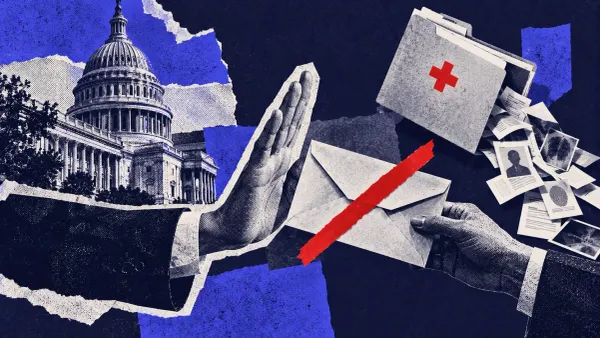
FBI Warns of Deepfake Videos Impersonating IC3 Leadership in Fraud-Revictimization Campaign
An FBI advisory on deepfake-driven revictimization of fraud victims — consumer awareness this week.


An FBI warning about AI-generated deepfake video of IC3 leadership puts the spotlight on a scam built to reach people at their most vulnerable — those who have already been defrauded once.
WASHINGTON — The FBI warned on July 20, 2026 that scammers are impersonating the personnel who handle Internet Crime Complaint Center (IC3) complaints, using AI-generated deepfake video of FBI officials and spoofed copies of the IC3 website to deceive and revictimize people who have already lost money to fraud. The bureau framed the notice as a consumer-awareness advisory: an alert about a social-engineering scheme aimed at the public, not a disclosure of any technical flaw. For readers, the distinction matters because the response lives entirely in verification habits rather than in any patch or product setting.
The warning was published as a public service announcement by the IC3 and reported by Infosecurity Magazine and Help Net Security, which noted the alert builds on an earlier FBI warning from April 2025 about the same core scheme. Beyond the confirmed facts — a deepfake-and-spoofed-site campaign that targets prior fraud victims — several specifics are not established at the time of writing, and The CyberSignal is treating those as open questions while focusing this coverage where consumers can act.
What the FBI Warned About
In a public service announcement issued on July 20, 2026, the FBI warned that scammers are posing as bureau personnel who supposedly handle Internet Crime Complaint Center (IC3) complaints, and using that disguise to defraud people a second time. As Help Net Security reported, the update builds on an April 2025 alert about the same scheme, but the bureau says the operators have added new elements since then — most notably AI-generated deepfake video of FBI officials and spoofed versions of the IC3 website itself.
The FBI's framing is important. This is a consumer-awareness advisory, not a report of a compromised system or a software weakness. IC3.gov is doing what it is designed to do; the scheme works entirely by manufacturing the appearance of an official identity and then trading on the trust that the FBI name carries. That is why the bureau's guidance centers on how people verify who they are dealing with, rather than on any technical fix.
The FBI also emphasized what the real IC3 does not do. According to the advisory, the IC3 maintains no social media presence, never initiates contact by phone, email, or chat application, and never asks for payment to recover lost funds. Any message that breaks those rules — an unsolicited call from an FBI agent, a direct message on a social platform, a request for a fee — is, on its face, a reason to stop.
The Deepfake and IC3-Website-Spoofing Framing
The most notable escalation is the use of AI-generated deepfake video. Both Infosecurity Magazine and Help Net Security reported that scammers circulated deepfake clips of a senior FBI leader urging people to file complaints through what appears to be the official IC3 site. Paired with that video is a spoofed portal that closely mimics the design of ic3.gov but exists only to harvest information — a stripped-down page that collects a name, phone number, email, scam type, and estimated loss, then issues a reference number and promises a follow-up that never comes in good faith.
The CyberSignal is deliberately not reconstructing the step-by-step lure. For a consumer-awareness story, describing the exact script offers little protective value; what matters is recognizing the shape of the scheme. A convincing-looking official video, a site that looks like the real thing, and an appeal aimed squarely at someone hoping to recover a loss — that combination is the signal, and it is enough to prompt the right caution without turning the coverage into a manual.
The through-line worth naming is that AI-generated video lowers the cost of manufacturing authority. A recognizable face and voice, delivered on a familiar-looking platform, is exactly the kind of cue people are trained to trust. That is why the FBI's advice is not to trust the appearance at all, but to verify the channel: reach the IC3 the way you know is real, not the way a video or link invites you to.
Consumer-Awareness Implications
For the public, the FBI's practical guidance is concrete and worth repeating. Type www.ic3.gov directly into the browser rather than following a link, skip sponsored search results, and confirm that any IC3 web address ends in a .gov domain before entering any information. Those three habits defeat the spoofed-site half of the scheme, because they move the interaction onto a channel the scammer does not control.
The second half is knowing what legitimate contact looks like. Because the real IC3 does not call, message, or email people out of the blue and never charges to recover funds, an unexpected approach that claims to be from the FBI is a reason to slow down, not to comply. The FBI's advice for spotting a manipulated clip — watching for distorted hands or facial features, mismatched shadows, unnatural movement, and lag in voice calls — is useful, but the more durable instinct is to verify authenticity through official channels before acting on any surprising video or message.
There is a human dimension the advisory speaks to directly. This scheme targets people who have already been defrauded, at a moment when the wish to recover a loss is strongest, which is precisely what makes revictimization so effective. The consumer-awareness message is therefore also a message to friends and family: someone who has been scammed once is a priority target for the next approach, and a second opinion from a trusted person can break the spell that urgency creates.
Continuation Context: Broader Deepfake-Fraud Thread
This advisory sits within a widening pattern of AI-assisted consumer fraud that The CyberSignal has tracked across the year. The FBI has issued similar public-facing scam warnings before, including its alert to fans about lookalike domains ahead of the 2026 World Cup, and the broader question of how AI is being used in cyberattacks has moved steadily from the theoretical to the routine.
The deepfake element rhymes with the AI-enabled offense documented in Google's report on the first AI-developed zero-day and 2FA-bypass activity, while the revictimization-of-past-victims angle echoes recovery-flow lures such as the Signal recovery-key phishing wave and high-volume consumer schemes like the fake-CAPTCHA and IRSF crypto-fraud campaigns. Different mechanics, same objective: manufacture trust cheaply, then convert it into money or data.
Open Questions
Several specifics are unresolved at the time of writing, and none of them change the consumer takeaway.
Scale: the total number of people revictimized through this IC3-impersonation scheme is not disclosed, so the campaign's real-world footprint cannot be quantified from the available information.
Attribution: this coverage does not independently confirm a named threat actor behind the deepfake videos or the spoofed site. Any single-source designation should be treated as provisional.
Domain status: whether the spoofed IC3 domain has been seized or taken offline is not confirmed here, so readers should assume lookalike sites may still be reachable.
Platform response: whether social platforms such as Meta and X have coordinated takedowns of the AI-generated video is not established. As with any freshly published warning, these particulars may firm up as further reporting emerges.
The CyberSignal Analysis
The advisory above is the FBI's; what follows is The CyberSignal's editorial reading of what it signals. None of the judgments below are new reported facts.
Signal 01 — Deepfakes Turn Authority Into a Cheap Consumable
The durable lesson is not that the FBI name was misused but how easily its authority was reproduced. AI-generated video makes a recognizable official face and voice inexpensive to fabricate, and that collapses the old assumption that seeing a familiar figure deliver a message is evidence the message is real. Our reading is that any fraud model still treating video as inherently more trustworthy than text is now measurably out of date.
The practical consequence for consumers is a shift in the unit of trust — from the content of a message to the channel it arrived on. A video can be forged; the path you take to reach ic3.gov cannot be forged for you if you type it yourself. That is the habit worth internalizing before the next convincing clip appears.
Signal 02 — Revictimization Is a Deliberate Targeting Strategy
The choice to aim this scheme at people who have already lost money is not incidental. Prior victims are motivated, emotionally invested in recovery, and often already known to have been defrauded, which makes them a high-yield audience for a second approach. Our assessment is that revictimization should be understood as a design decision, not an accident of who happened to click.
That reframing changes who needs the warning most. The people at greatest risk are precisely those least likely to be reading security coverage in a clear-headed moment, which is why this advisory is best delivered person-to-person — a call to check in with anyone in your circle who has recently reported a scam, before the next fake agent reaches them first.
Signal 03 — Verification Habits Beat Detection Skills
The FBI's tells for spotting a manipulated clip are useful, but detection is a losing race as generation quality improves — today's distorted hands are tomorrow's fixed render. Our reading is that the resilient defense is procedural rather than perceptual: verify the channel, not the content, and treat any unsolicited official contact as unproven by default.
The forward-looking watch item is that this same playbook — a forged authority figure plus a lookalike destination — generalizes far beyond the IC3. Banks, tax agencies, and courts are equally impersonable, so the single transferable rule is the one that costs nothing to practice: reach the institution the way you already know is real, and let the surprising video wait until you have.