Multi-Source Detail on White House ‘Gold Eagle’ AI Vulnerability Clearinghouse
Fresh detail on the White House Gold Eagle program — federal-adjacent organizations align this week.

A federal coordination push gains definition: multi-source reporting fills in what “Gold Eagle” is for, even as the operational specifics stay open.
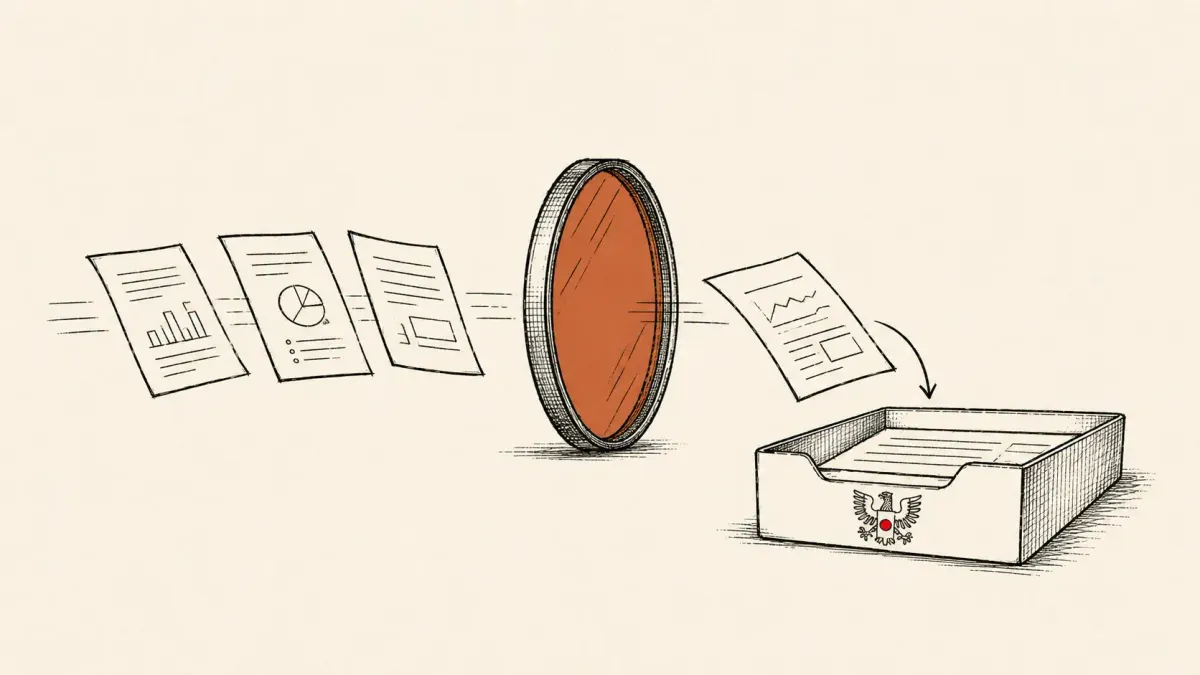
WASHINGTON — Fresh multi-source reporting on July 15 and 16, 2026 added substantive detail to “Gold Eagle,” the White House initiative for coordinating cyber-vulnerability management that was first announced on July 14. Two outlets — Infosecurity Magazine and The Record — independently described the program as an AI-supported clearinghouse intended to speed how vulnerabilities are discovered, prioritized, and patched across government and the private sector, giving defenders a clearer read on an effort that landed last week as little more than a name and a stated goal.
For The CyberSignal's audience, the significance remains a policy and coordination story rather than a technical disclosure. The new reporting describes no attacker activity; it fills in the contours of a federal mechanism that federal-adjacent organizations — contractors, critical-infrastructure operators, and regulated sectors — will want to understand as it takes shape. What the coverage confirms is narrow but useful; what it leaves open is still substantial.
What the Fresh Reporting Added
The clearest additions came from two outlets publishing on July 15 and 16, 2026. Infosecurity Magazine reported that the White House positioned Gold Eagle to accelerate the discovery, prioritization, and patching of software flaws, and quoted the White House’s own description of the program as “a coordinated system to receive and patch cyber vulnerabilities at a speed and scale never seen before using the existing authorities and resources of the federal government.” The Record, covering the same window, characterized Gold Eagle as an AI-supported clearinghouse and named industry, critical-infrastructure operators, and government as the groups expected to participate.
Infosecurity Magazine added further texture, reporting that the program was trailed in an executive order in June and, according to its account, involves collaboration among the Cybersecurity and Infrastructure Security Agency (CISA), the Treasury, and the Department of Defense alongside private-sector partners. The outlet also reported that Gold Eagle is believed to draw on an existing government–academic coordination environment for vulnerability reporting and triage, and quoted Treasury Secretary Scott Bessent describing the department as “working hand in hand with the private sector to safeguard our financial institutions.” The CyberSignal is presenting these as reported details rather than settled facts: the account describes agencies as collaborating, but does not establish which body leads Gold Eagle operationally, and the reliance on any specific reporting platform is described as expected, not confirmed.
The stated throughline across both outlets is the same one the Trump administration used at launch — reducing duplicate scanning effort and delivering actionable remediation intelligence to defenders in government and industry. That framing is what elevates this from a naming exercise to a coordination program with a described purpose. It does not, on its own, resolve how the clearinghouse will operate day to day.
Continuation Context: The Initial Announcement
This week’s coverage builds directly on the White House’s July 14 announcement of Gold Eagle, which introduced the program as a federal clearinghouse for AI-related cyber risk but left the operational machinery undefined. The fresh reporting narrows some of that gap — supplying a stated purpose, a set of participant groups, and reportedly a set of collaborating agencies — while leaving the governance and timeline questions from the original announcement unresolved.
Gold Eagle continues to sit inside an active AI-and-cybersecurity policy thread. It follows the Five Eyes frontier-AI cybersecurity statement and the Trump administration’s earlier executive order on covered frontier models, and it responds to a practical pressure the sector is already feeling: the volume of machine-found bugs is climbing, as underscored by Google’s report of the first AI-developed zero-day used in mass exploitation. A clearinghouse aimed at faster, de-duplicated vulnerability handling is a logical policy response to that trend — provided the pipeline behind it can keep pace.
Industry Participation and What to Watch For
The industry dimension is where the new detail is most concrete and most contested. The Record named industry, critical-infrastructure operators, and government as participating groups, and Infosecurity Magazine reported that open-source maintainers are expected to be closely involved, given how many projects are struggling to keep pace with AI-discovered bugs. But the same reporting surfaced pointed skepticism from practitioners who argued that Gold Eagle risks optimizing the wrong bottleneck. Their common critique: discovery has not been the hard part for some time; the constraint is remediation capacity and clear ownership of who patches what by when.
That critique lands against a familiar backdrop. CISA’s Known Exploited Vulnerabilities catalog already carries a large and growing set of entries with mandatory federal deadlines, and the agency’s risk-based patching directive BOD 26-04 reflects how much pressure defenders are already under to close known flaws quickly. The trend line reinforces the point: this year’s Verizon DBIR found vulnerability exploitation overtaking credential theft as the top way attackers get in. Better prioritization helps, but coordination alone does not create the engineers, maintenance windows, or vendor resources needed to deploy fixes. The near-term watch items are concrete: the governance model, the participation rules for each group, and whether the program pairs faster discovery with a measurement and accountability model on the remediation side.
Open Questions
Several consequential questions remain open after this week’s coverage. The specific governance mechanism is still unconfirmed — the reporting describes agencies as collaborating but does not establish how threat and vulnerability information is submitted, validated, and routed, nor which body leads the clearinghouse operationally. The CyberSignal is not attributing operational leadership to any single agency on the strength of the accounts published so far. The industry-participation criteria are likewise undefined: naming industry, critical-infrastructure operators, and government as participants is not the same as spelling out how each qualifies, contributes, or is held to account. And the timeline for operational launch has not been disclosed; a described program is not yet a running capability.
What is confirmed is enough to justify continued defender attention without over-reading it. The White House has named and described an AI-supported clearinghouse for cyber vulnerabilities, multiple outlets have independently reported its stated purpose and participant groups, and named agencies are reported to be involved. The CyberSignal will update this coverage as the governance, participation model, and timeline are clarified — the details that will decide whether Gold Eagle becomes a working fixture in the AI-defense landscape or a well-framed marker of intent that others must still build out.
The CyberSignal Analysis
The reporting above belongs to the outlets cited; what follows is The CyberSignal's editorial reading of what defenders should take from this week’s detail. None of the judgments below are new reported facts.
Signal 01 — Detail Confirms Intent, Not Yet Capability
The value of this week’s coverage is that it moves Gold Eagle from a single-line announcement to a program with a stated purpose and named participants. Our reading is that this confirms genuine intent — the White House is describing a coordination mechanism, not just floating a label. But a described purpose is still upstream of an operating capability. Defenders should treat the added detail as confirmation to keep watching, not as a signal that an on-ramp exists today. The organizations best positioned to benefit are those mapping their AI-related vulnerability exposure now, so they can connect quickly once participation rules are published.
Signal 02 — The Remediation Bottleneck Is the Real Test
The most useful thing in the fresh reporting is the practitioner skepticism, not the program framing. Multiple experts made the same point: discovery is not the constraint — remediation capacity and clear ownership are. Our assessment is that Gold Eagle’s practical weight will be decided downstream of discovery, by whether it pairs faster, de-duplicated findings with an accountability model for who fixes what by when. A clearinghouse that pours more validated findings into pipelines that are already backed up could sharpen prioritization without moving throughput. Security leaders should watch specifically for the remediation half of the design, because that is where comparable programs tend to succeed or stall.
Signal 03 — Watch How It Threads Into the Wider AI-Cyber Effort
Gold Eagle should be read as one node in a widening web that already includes the Five Eyes frontier-AI statement, the administration’s frontier-model executive order, and a measurable rise in AI-discovered vulnerabilities. The question we would put at the center of any assessment is integration: whether the clearinghouse connects cleanly to allied and existing coordination efforts or duplicates them. AI-related cyber risk does not respect the lines between a domestic program, an allied alliance, and the open-source projects carrying much of the load, so the initiatives that bound this risk will be those that share signal across those lines. We will be watching whether Gold Eagle plugs into that broader thread or stands apart from it.