White House Details ‘Gold Eagle’ Clearinghouse for AI Cyber Threats
A White House policy signal on AI cyber threats — federal-adjacent organizations align this week.

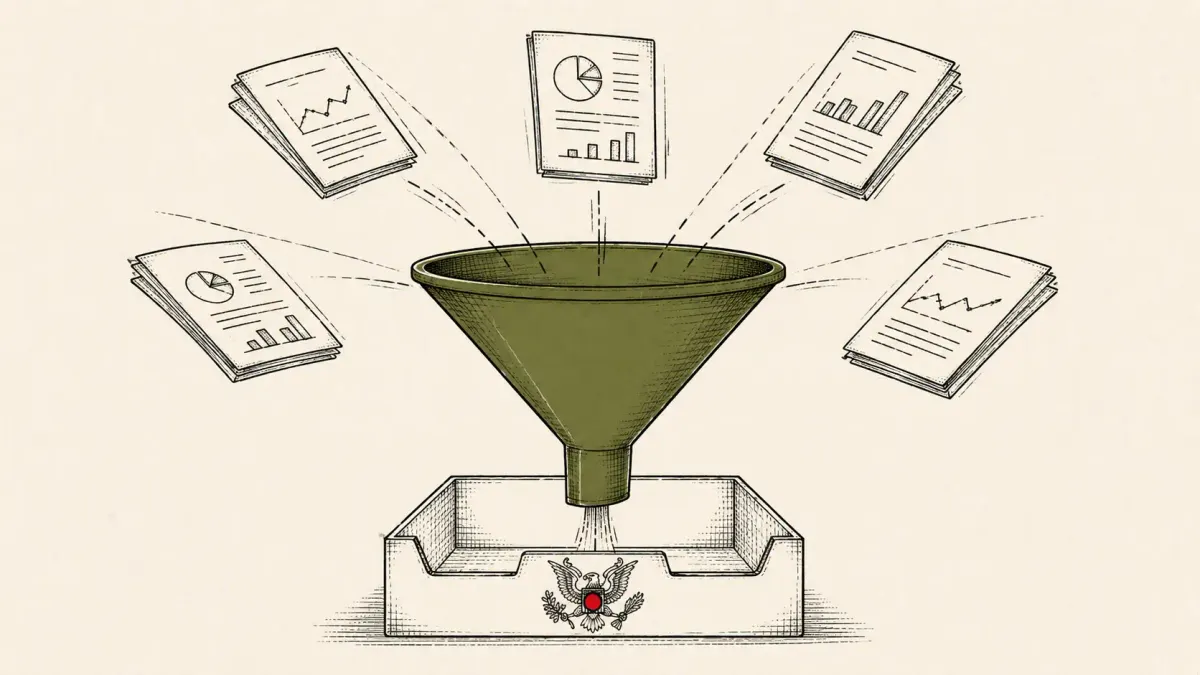
A federal-adjacent policy signal: the White House put a name — “Gold Eagle” — to a clearinghouse for AI cyber threats, while the operational specifics stay open.
WASHINGTON, D.C. — The White House on July 14, 2026 detailed “Gold Eagle,” a clearinghouse for AI cyber threats intended to organize how AI-related cybersecurity risks move between the federal government and the private sector. The announcement puts an official name and a stated purpose to a coordination effort that defenders across regulated and critical-infrastructure sectors will watch closely.
For The CyberSignal's audience, the significance is a policy one rather than a technical disclosure. Gold Eagle signals that AI cyber threats now carry a dedicated federal coordination label, arriving alongside a run of allied and intelligence-community moves. What is left unstated — who runs the clearinghouse, how organizations feed into it, and when it becomes operational — matters as much to defenders as what was named.
What the White House Announced
The White House on July 14, 2026 detailed “Gold Eagle,” describing it as a clearinghouse for AI cyber threats meant to coordinate how AI-related cybersecurity risks are surfaced and shared across the federal government and the private sector. The initiative was first reported by CyberScoop, which described it as a federal effort to centralize information on AI cyber threats. What has been made public is the name, the framing as a clearinghouse, and the stated goal of coordination — a policy signal more than a technical disclosure.
The word clearinghouse carries most of the weight here. In practice it implies a central point where reports about AI-related cyber risk are aggregated, de-duplicated, and routed to the parties best positioned to act — but the announcement as covered here does not spell out the machinery behind that word: which body operates it, how submissions are validated, and what obligations attach to participants. The CyberSignal is not characterizing Gold Eagle's governance, leadership, reporting mechanics, or timeline, because those specifics are not established in the material underpinning this report. The confirmed facts are narrow: the White House has named a federal clearinghouse for AI cyber threats and framed it as a coordination vehicle spanning government and industry — the rest remains to be defined.
Where Gold Eagle Sits in the AI-Cyber Policy Thread
Gold Eagle does not arrive in isolation. It lands in an active thread in which AI has moved to the center of national cybersecurity thinking. Earlier this cycle, allied governments issued the Five Eyes frontier-AI cybersecurity statement, a coordinated signal that the intelligence alliance sees frontier AI as both a defensive tool and a security concern, while CIA Director Ratcliffe's framing of AI as a national-security priority underscored how seriously the U.S. intelligence community treats AI's role in the threat landscape. A named federal clearinghouse is a logical next beat: where those efforts were declarations of intent and strategic stakes, a clearinghouse promises an operational mechanism, continuing a clear line that AI cyber threats are a coordination problem no single agency or company can solve alone.
What It Means for Federal-Adjacent Organizations
For organizations that sit adjacent to the federal government — contractors, critical-infrastructure operators, and regulated sectors — a clearinghouse for AI cyber threats is the kind of structure that can eventually reshape reporting expectations. The pattern is familiar from allied efforts such as the U.K. Cyber Shield agentic-AI defense pledge, where a government put its weight behind a coordinated approach to AI-era defense. When a national government names a coordination mechanism, the organizations in its orbit tend to be the first asked to feed it and the first measured against it. The practical obligations here remain undefined, so the prudent posture is preparatory rather than reactive: understand where AI-related risk already surfaces in your environment, and be ready to connect to a federal clearinghouse if and when the on-ramp is defined.
Industry Participation and What to Watch
The industry side of Gold Eagle is where much of the uncertainty concentrates, and recent AI-security developments give a sense of the terrain. Model providers have been tightening access and adding safeguards around advanced capabilities — as seen when OpenAI restricted access to GPT-5.6 under its Sol cyber-safeguards — while researchers have been mapping fresh classes of AI-agent risk, such as Microsoft's work on tool-poisoning attacks against AI agents. A clearinghouse that hopes to be useful will need to accommodate both the vendors building the models and the researchers probing their weaknesses. The near-term watch items are concrete: governance (who operates the clearinghouse and resolves disputes), the feed-in model (voluntary channel, structured program, or existing sharing bodies), and timeline (when Gold Eagle becomes a functioning mechanism defenders can use). Each will decide whether the initiative becomes an operational fixture or a policy marker.
Scope and Impact
The immediate impact of Gold Eagle is signaling, not enforcement. By putting an official name to a clearinghouse for AI cyber threats, the White House has created a reference point that industry, allied governments, and regulators can orient around — a shared label for a problem addressed until now in scattered advisories. The disclosed scope is deliberately broad: AI cyber threats spanning government and industry. Breadth is a strength for a coordination vehicle but also where such efforts can stall, because a mechanism meant to serve everyone must still define who does what. The impact that matters for defenders will be measured not by the announcement but by whether the clearinghouse shortens the distance between an emerging AI-related threat and the people who need to know about it.
Open Questions
Several consequential questions are unresolved at announcement. The governance and reporting mechanism has not been established here — it is not clear how threat information is submitted, validated, or routed, nor which body leads the clearinghouse, whether a cybersecurity agency, a national-security body, or a new construct; The CyberSignal is not attributing leadership without confirmation. The industry-participation model is likewise undefined, and the operational-launch timeline is undisclosed — an announcement is not an operating capability, and the gap between the two is where many coordination initiatives live for extended periods.
What is confirmed is enough to justify defender attention without over-reading it: the White House has named a federal clearinghouse for AI cyber threats and framed it as a government-and-industry coordination effort. The CyberSignal will update this coverage as the governance, participation model, and timeline are clarified — the details that will decide whether Gold Eagle becomes a working part of the AI-defense landscape or a marker of intent that others must still build out.
The CyberSignal Analysis
The announcement above is the White House's; what follows is The CyberSignal's editorial reading of what defenders should take from it. None of the judgments below are new reported facts.
Signal 01 — A Named Mechanism Is Itself a Signal
The most useful thing about Gold Eagle right now is not what it does but that it exists under a name. Federal coordination on AI cyber threats has been diffuse — spread across allied statements, agency advisories, and intelligence-community messaging — and a single label concentrates that intent. Our reading is that the naming is deliberate and usually precedes more concrete programs, so defenders should treat the announcement as an early-warning indicator, not an action item. The organizations that benefit are those that start mapping their AI-related risk now, so they can connect quickly once the on-ramp is defined.
Signal 02 — The Feed-In Model Will Decide Its Value
A clearinghouse is only as useful as what flows into it. The single variable most likely to determine whether Gold Eagle matters is the participation model: how AI cyber threat information is contributed, by whom, and under what incentives. Voluntary sharing venues can wither without reciprocity; structured programs can bog down in process. Our assessment is that the feed-in mechanism, more than the announcement's framing, will decide the initiative's practical weight — so security leaders should watch for the participation rules and prepare to engage early, since the value of a clearinghouse compounds with quality contributions.
Signal 03 — Watch How It Threads Into Allied and IC Efforts
Gold Eagle should be read as one node in a widening web that already includes the Five Eyes frontier-AI statement and intelligence-community warnings about AI's strategic stakes. The question we would put at the center of any assessment is integration: whether the clearinghouse connects cleanly to allied and intelligence-community efforts or duplicates them, because a mechanism that fragments the landscape it was meant to unify would undercut its own purpose. AI cyber threats do not respect the boundaries between a domestic clearinghouse, an allied alliance, and an intelligence service, so the initiatives that bound this risk will be those that share signal across those lines. We will be watching whether Gold Eagle plugs into that broader thread or stands apart from it.



