Trump Signs a Scaled-Back AI Executive Order Built Around Sharing AI-Found Vulnerabilities With Critical Infrastructure
Trump signed an executive order on June 2 setting up a voluntary framework for the government to vet 'covered frontier' AI models for up to 30 days before release and to share AI-found vulnerabilities with critical-infrastructure operators — notably narrower than an earlier draft.

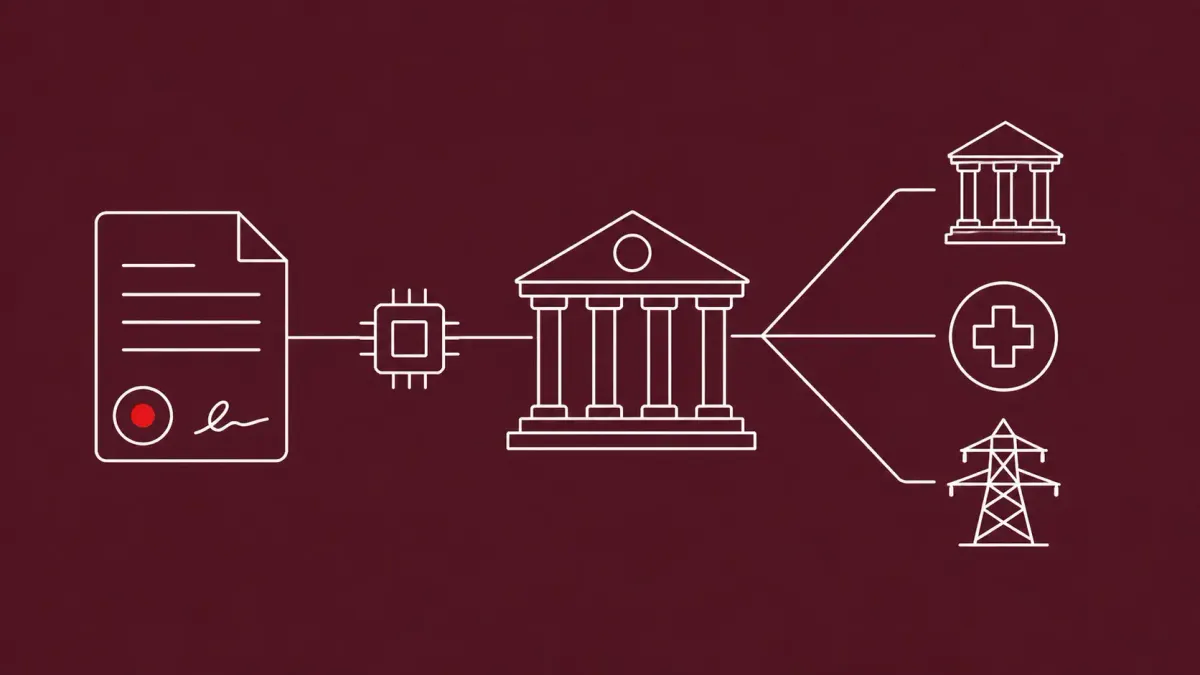
Strip away the politics and the AI executive order is, at its core, a cybersecurity document: it is mostly about getting AI-discovered vulnerabilities into defenders' hands faster — and about how much the government can ask of model-makers to make that happen without mandating anything.
WASHINGTON — President Trump on June 2, 2026 signed an executive order titled 'Promoting Advanced Artificial Intelligence Innovation and Security,' establishing a voluntary framework for the federal government to evaluate powerful AI models for their cyber capabilities and to coordinate the discovery and patching of software vulnerabilities with industry and critical-infrastructure operators, according to the order's text and reporting by CyberScoop, Axios and Fortune.
The order is widely described as scaled back from earlier drafts: reporting says a prior version would have asked developers to give the government access to 'covered frontier models' up to 90 days before release, while the signed order shortens that to up to 30 days and makes participation voluntary. The signing had also been postponed from a planned May date following pushback from parts of the technology industry. The text is explicit that nothing in it authorizes a mandatory licensing, preclearance, or permitting requirement for developing or releasing AI models.
What Happened
The executive order sets two tracks with near-term deadlines. The first, due within 30 days, is government self-defense: the Committee on National Security Systems must prioritize the cyber defense of national-security systems; the Secretary of War — the title the administration now uses for the head of the Defense Department — must do the same for defense information systems; and the Department of Homeland Security, through CISA and in consultation with OMB and the National Cyber Director, must issue Binding Operational Directives to expedite civilian federal cyber defense, expand AI-enabled defensive tools, and facilitate access to cybersecurity tools — including, where appropriate, 'covered frontier models' — for agencies, state and local authorities, and operators of critical infrastructure such as rural hospitals, community banks and local utilities. The same section directs Treasury, with the National Cyber Director, NSA and CISA, to form an 'AI cybersecurity clearinghouse' — a voluntary collaboration with the AI industry and infrastructure operators to coordinate and deconflict vulnerability scanning, validate flaws, and coordinate the distribution of patches.
The second track, due within 60 days, is the 'Secure Frontier Model Deployment' framework that drew the most attention. NSA, with the National Cyber Director, the science adviser, CISA and NIST, is to develop a classified benchmarking process to assess the cyber capabilities of AI models and set the threshold at which a model is designated a 'covered frontier model.' The order then directs the design of a voluntary framework under which a developer could ask the government whether a model qualifies, provide access to such a model for up to 30 days before releasing it to other trusted partners (subject to confidentiality, cybersecurity, insider-risk and intellectual-property protections), and help the government choose the trusted partners who get early access. Crucially, Section 3(c) states that nothing in the section authorizes a mandatory governmental licensing, preclearance, or permitting requirement for the development, publication, release or distribution of AI models. A separate provision directs the Attorney General to prioritize prosecuting people who use AI to illegally access or damage computers under existing law.
Read As Cyber Policy, Not Just AI Policy
Beneath the AI-governance headlines, the operational heart of this order is a vulnerability-sharing pipeline. The clearinghouse and the covered-frontier-model framework are both aimed at the same goal: getting vulnerabilities that powerful AI models can find — and the patches for them — to the defenders of banks, hospitals and utilities before those models, and the capability to find such flaws, become widely available. That goal is not abstract; it mirrors what is already happening in the private sector, where Anthropic this week expanded Project Glasswing and its Claude Mythos model to about 150 critical-infrastructure organizations in collaboration with, among others, the US government. The order effectively gives that kind of public-private vulnerability-finding effort a federal coordinating structure, and arrives against the backdrop security leaders have described — the warning, covered by The CyberSignal, that the next two years of AI-accelerated cyber threats will be 'insane'. Whatever one thinks of the politics, the cyber-defender read is that the document is mostly plumbing for moving vulnerability intelligence to the people who have to patch.
Why 'Scaled Back' and 'Voluntary' Are the Operative Words
Two design choices define the order's reach, and they cut in opposite directions depending on who is assessing them. The first is that it is voluntary: developers are 'asked,' not required, to submit covered models for pre-release government review, and the clearinghouse is a voluntary collaboration. The second is the shortened window — up to 30 days of pre-release access, down from the 90 days an earlier draft reportedly contemplated. Supporters of the approach argue this is the right balance: it preserves the innovation and speed the administration says it wants to protect, avoids a licensing regime that could slow US developers against foreign competitors, and still creates a channel for defenders and critical-infrastructure operators to benefit from AI-found vulnerabilities. Skeptics counter that a voluntary, 30-day framework has limited teeth — that developers can simply decline, that a month may be too short to meaningfully benchmark a frontier model's cyber capabilities, and that the order leans on cooperation it cannot compel. Both readings are grounded in the same text; which one proves right depends on how many developers actually participate.
Where the Burden Lands — and the Capacity Question
Much of the order's near-term work falls on agencies that are themselves stretched. CISA is tasked with issuing Binding Operational Directives, expanding AI-enabled defensive tools and facilitating frontier-model access for a broad set of recipients within 30 days; Treasury, NSA and the National Cyber Director must stand up a clearinghouse; OPM must expand cyber hiring pathways. That is an ambitious set of deadlines for institutions whose capacity has been a live question — The CyberSignal has covered the assessment that, across party lines, observers concluded CISA was under strain. None of that is a verdict on the policy; it is a reminder that an executive order sets direction, and the result depends on funding, staffing and execution. The order itself notes it is 'subject to the availability of appropriations,' which is the standard caveat that the directives still need resources behind them to matter.
Scope and Impact
For most organizations, the order changes nothing immediately and obligates nothing: it directs federal agencies, and its industry-facing components are voluntary. The groups most directly affected are AI developers building the largest models (who must decide whether to engage the covered-frontier-model framework), the federal agencies on 30- and 60-day clocks, and the critical-infrastructure sectors the order names as intended recipients of AI-enabled defensive tools and vulnerability information — rural hospitals, community banks and local utilities among them. State and local governments are also named as potential beneficiaries of the cybersecurity tools the directives are meant to facilitate.
The realistic near-term scope is therefore a set of processes to be designed rather than protections that exist today. The benchmarking standard for a 'covered frontier model' does not yet exist; the clearinghouse has to be built; the Binding Operational Directives have to be written. For defenders, the practical question over the next one to two months is whether these structures materialize on schedule and with enough resourcing to function — and, for the vulnerability-sharing pipeline specifically, whether it can route AI-discovered flaws and patches to under-resourced infrastructure operators who are exactly the organizations least able to act on a raw firehose of findings.
Response and Attribution
For CISOs at critical-infrastructure operators — especially the rural hospitals, community banks and local utilities the order names — the actionable step is to watch for the CISA Binding Operational Directives and clearinghouse details over the next 30 days and to position to consume what they offer: confirm your organization can receive and act on government vulnerability advisories, that your patch-management and asset-inventory programs can absorb an increased flow of validated findings, and that you have a point of contact for federal cyber resources. The order's value to a small utility or hospital is only realized if that organization can operationally ingest the help; the bottleneck, as with AI-found vulnerabilities generally, will be remediation capacity, not the supply of findings.
For AI developers and security-policy teams, the near-term work is to engage with the benchmarking and 'covered frontier model' definition as it is developed, since that classified threshold will determine which models fall within the voluntary framework, and to weigh participation against the confidentiality, IP and insider-risk protections the order says will govern government access. More broadly, the responsible posture for the security community is to track execution rather than rhetoric: the order's effect will be measured by how many developers opt in, whether the clearinghouse meaningfully speeds patching, and whether the agencies hit their deadlines with real resources. This is one piece of a wider government push the same week — it pairs with the Pentagon's stated drive to build security into its AI from the outset, which The CyberSignal covers separately — and the throughline across all of it is that AI-and-cyber policy is moving from speeches to deadlines, even where the mechanisms remain voluntary.
The CyberSignal Analysis
Signal 01 — The Vulnerability Pipeline Is the Point
It is easy to cover this order as a fight over AI regulation, but the durable substance for defenders is the machinery for moving vulnerabilities and patches. The clearinghouse that 'coordinates and deconflicts' scanning, validates flaws and coordinates remediation is, if it works, a genuinely useful piece of national cyber infrastructure — the kind of coordination that has been missing as AI makes vulnerability discovery cheap. The open question is execution, but the intent is squarely defensive, and security teams should evaluate the order on whether it delivers faster, better-coordinated patching for the sectors that need it, not on the AI-governance debate around it.
Signal 02 — Voluntary Frameworks Live or Die on Participation
The single most consequential design choice is that the frontier-model review is voluntary and capped at 30 days. That makes the order's real-world weight entirely dependent on developer cooperation — which means the story to watch is not the signing but the opt-in rate. If major developers engage, the government gets a genuine pre-release window to assess and distribute defensive value from the most capable models; if they decline, the framework is a channel with little traffic. Supporters see voluntariness as the feature that keeps US AI competitive and avoids a licensing chokepoint; critics see it as the feature that lets the most safety-relevant cases slip through. Defenders should reserve judgment until participation data exists.
Signal 03 — Direction Set, Resources Pending
An executive order is a steering mechanism, not a budget, and this one says as much by noting it is subject to the availability of appropriations. The aggressive 30- and 60-day deadlines land on agencies — CISA, Treasury, NSA, OPM — whose capacity is already a question, so the gap between the order's ambitions and what actually ships will be determined by funding and staffing more than by the text. For the security community, the practical takeaway is to treat the deadlines as milestones to verify rather than outcomes to assume: track whether the Binding Operational Directives, the clearinghouse and the benchmarking process actually appear, and resourced, on schedule. That follow-through, not the signing ceremony, is where this order's cyber impact will be decided.



