VMware Patches Seven Severe Avi Load Balancer Vulnerabilities
A seven-flaw Avi Load Balancer patch cycle from VMware — defender verification this week.

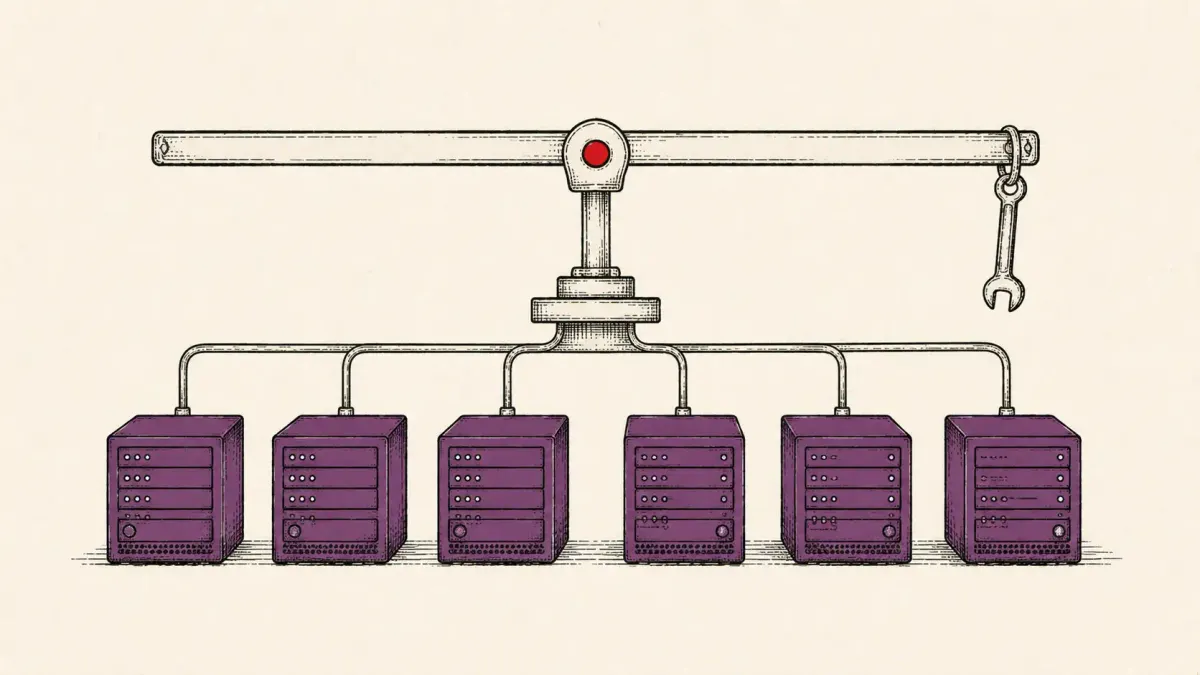
A software-defined load balancer sits in the traffic path of everything it fronts — which is why a seven-flaw patch cycle from VMware is a fleet-wide verification exercise, not a routine footnote.
PALO ALTO, CALIFORNIA — VMware on July 14, 2026 published patches for seven severe vulnerabilities in Avi Load Balancer, its software-defined application-delivery platform, and urged customers to update to the fixed releases. Avi Load Balancer provides load balancing, application security, and analytics for workloads spread across hybrid and multi-cloud environments, which places its controllers and service engines squarely in the path of production application traffic. The advisory is a defender-facing patch notice: it directs administrators to install the latest updates and does not describe any observed exploitation.
The disclosure was corroborated by independent reporting from SecurityWeek, which noted that external researchers reported the seven issues and that the vendor's advisory did not cite in-the-wild exploitation. The CyberSignal is reporting only what VMware published and what that reporting confirms; specific vulnerability identifiers, severity scores, and attack mechanics are not restated here where they could not be independently verified. What is clear is the shape of the work now facing defenders — a full-fleet patch-verification pass on an appliance that fronts other systems.
What VMware Published
VMware's advisory announces fixes for seven severe vulnerabilities in Avi Load Balancer and recommends that customers install the latest updates. The company frames the release as a standard security update: administrators are directed to the patched builds, and the notice does not report that any of the seven issues have been exploited in the wild. That is the appropriate reading at disclosure — a vendor closing reported flaws before, rather than after, evidence of abuse.
Avi Load Balancer is not an endpoint agent or a back-office tool; it is application-delivery infrastructure. Its controllers manage policy and configuration, while distributed service engines sit in the live traffic path, terminating connections, applying security policy, and balancing load across application pools in hybrid and multi-cloud deployments. Vulnerabilities in that class of product matter out of proportion to their raw count because the appliance is trusted by everything behind it, and because it is reachable, by design, from the networks it serves.
The advisory arrived in the same mid-July patch window as other significant enterprise-software fixes, including SAP's critical July patch set spanning NetWeaver, AppRouter, and Commerce Cloud. For teams that triage by product exposure rather than by vendor, the Avi Load Balancer update belongs in the same batch as those fixes: infrastructure that sits in front of business-critical applications and therefore earns priority in the queue.
Defender Posture for Avi Load Balancer Customers
For organizations running Avi Load Balancer, the defensive posture is straightforward to state and easy to under-scope. The first move is to treat the controllers and service engines as tier-one assets rather than as network plumbing. A load balancer that terminates traffic and enforces policy is effectively part of the application's security boundary; when it is patchable, patching it promptly is the control that most directly bounds the risk from the seven fixed issues.
Beyond applying the update, defenders should tighten management-plane exposure while they are in the console. Administrative interfaces for application-delivery controllers should not be reachable from general user networks or the public internet, and access to them should be gated behind strong authentication and segmented management paths. Reviewing who and what can reach the Avi control plane — and pruning anything that does not need to — reduces the attack surface for this advisory and for the next one, independent of the specific flaws being fixed today.
The same posture applies across the wider crop of network-appliance advisories defenders have absorbed this year, from Palo Alto Networks' thirteen-vulnerability patch batch to Cisco's Secure Workload site-admin flaw. The recurring lesson is that infrastructure in the traffic path is judged by how fast it is patched and how tightly its management plane is fenced, not by whether it was ever attacked.
Verifying the Patch Across the Fleet
Applying a patch and verifying it across an entire fleet are different exercises, and the gap between them is where infrastructure risk lingers. Avi Load Balancer deployments tend to sprawl: multiple controllers, many service engines, and instances spun up across on-premises data centers and more than one cloud provider. A verification pass has to reach all of them, not just the deployments a central team remembers owning.
Practically, that means reconciling a live inventory of every Avi controller and service-engine tier against the vendor's fixed build numbers, then confirming version state on each — rather than assuming an update pushed to one region propagated everywhere. Shadow or forgotten instances, common in multi-cloud estates, are exactly the ones that stay unpatched. Teams should also capture a before-and-after record of versions so that a later KEV listing or incident can be answered with evidence rather than assumption.
This fleet-wide discipline is the same one that separated well-handled from ragged responses in other 2026 appliance cycles, such as the Progress Kemp LoadMaster patch — another load-balancer advisory where verifying the fix everywhere, not just somewhere, was the whole job.
Why This Belongs on the CISA KEV Watchlist
At disclosure, VMware's advisory does not report in-the-wild exploitation, and the seven Avi Load Balancer vulnerabilities are not listed on CISA's Known Exploited Vulnerabilities catalog. That status is a snapshot, not a guarantee. VMware and Broadcom products have a track record of drawing attacker attention after patches ship, as threat actors reverse-engineer fixes to build exploits against organizations that have not yet updated.
The prudent defender move is to keep this advisory on a KEV watch. If any of the seven issues is later added to the catalog, the calculus shifts from a recommended update to a mandated, deadline-bound one for federal agencies — and a strong signal for everyone else that exploitation is real. Teams that have already completed a verified fleet-wide update will treat such a listing as a non-event; those that have not will be racing a clock. The pattern of a quiet vendor patch preceding broader urgency has recurred across the year, including in multi-product pushes like Ubiquiti's UniFi critical patches.
Scope and Impact
The confirmed scope is bounded and specific: VMware has published patches for seven severe vulnerabilities in Avi Load Balancer and is urging customers to update. There is no disclosed victim, no reported exploitation, and no claim of data loss attached to this advisory. Read plainly, it is a defender-favorable event — the flaws were reported and fixed before any public sign of abuse.
The impact, such as it is, falls on operations teams rather than on incident responders. Every organization running Avi Load Balancer inherits a patch-and-verify task whose difficulty scales with how widely the product is deployed and how well that deployment is inventoried. Because the appliance sits in front of the applications it serves, the downside of leaving an instance unpatched is not contained to the load balancer itself; a compromised control or data plane can affect the confidentiality, integrity, or availability of everything routed through it. That is the reason a seven-flaw advisory on this class of product warrants priority even without an exploitation report.
Open Questions
Several details are unresolved at the time of disclosure and are deliberately left open here rather than guessed. The specific CVE identifiers and CVSS severity scores for the seven vulnerabilities are not independently confirmed in this coverage; the precise vulnerability classes and exploitation prerequisites for each issue are likewise not restated where they could not be verified. Whether any of the seven requires authentication, network adjacency, or specific configuration to trigger is not established here.
It is also not confirmed whether any of the seven issues will see in-the-wild exploitation or a subsequent CISA KEV listing; VMware's advisory reports neither at disclosure. The exact affected and fixed version ranges, and the completeness of the fix, will be clarified by the vendor advisory itself, which administrators should treat as the authoritative source for build numbers. As with any freshly published patch, these specifics may sharpen as researchers and the vendor add detail; the confirmed core — seven severe flaws fixed, update urged, no reported exploitation — is enough to act on now.
The CyberSignal Analysis
The facts above are VMware's advisory and independent reporting; what follows is The CyberSignal's editorial reading of what defenders should take from them. None of the judgments below are new reported facts.
Signal 01 — A Load Balancer Is Part of the Security Boundary, Not Plumbing
The most useful reframing here is architectural. Avi Load Balancer terminates connections, applies security policy, and sits in the live path of application traffic — which makes it a component of the application's trust boundary, not a neutral pipe behind it. Our reading is that organizations which model application-delivery controllers as crown-jewel infrastructure will consistently patch and fence them faster than those which file them under generic networking gear.
That distinction changes triage. A seven-flaw advisory on an endpoint tool might reasonably wait for a maintenance window; the same advisory on an appliance that fronts production applications should jump the queue, because a compromise there inherits the trust of everything downstream. The count of vulnerabilities is almost beside the point — the asset's position in the traffic path is what sets the priority.
Signal 02 — Verified-Everywhere Beats Patched-Somewhere
The failure mode we would watch for is not ignoring the advisory but half-applying it. Avi deployments sprawl across controllers, service engines, and multiple clouds, and the instances that stay vulnerable are almost always the forgotten ones. Our assessment is that the teams who come out of this cleanly are the ones who reconcile a live inventory against the vendor's fixed build numbers and confirm version state on every node, rather than trusting that one push propagated everywhere.
The practical discipline is evidence over assumption: capture before-and-after version records so that a later KEV listing or incident can be answered with proof of state. A patch you cannot demonstrate you applied fleet-wide is, for risk-accounting purposes, a patch you have not finished applying.
Signal 03 — Treat the Quiet Advisory as a Countdown
No reported exploitation at disclosure is good news, but we would not read it as permission to defer. VMware and Broadcom products have repeatedly drawn attacker interest after patches shipped, as adversaries diff the fixes to build exploits against the unpatched. The absence of a KEV listing today is a snapshot, and snapshots of this kind have a history of changing.
Our forward-looking watch item is simple: keep this advisory flagged, and let a completed, verified update turn any future KEV addition into a non-event. The organizations that treat a quiet vendor patch as the start of a countdown — rather than the end of the story — are the ones that are never racing a deadline they could have retired weeks earlier.