Cursor IDE Auto-Executes Malicious Code in Poisoned Repositories, Researchers Say
An AI-IDE supply-chain finding — defender review for organizations using Cursor this week.

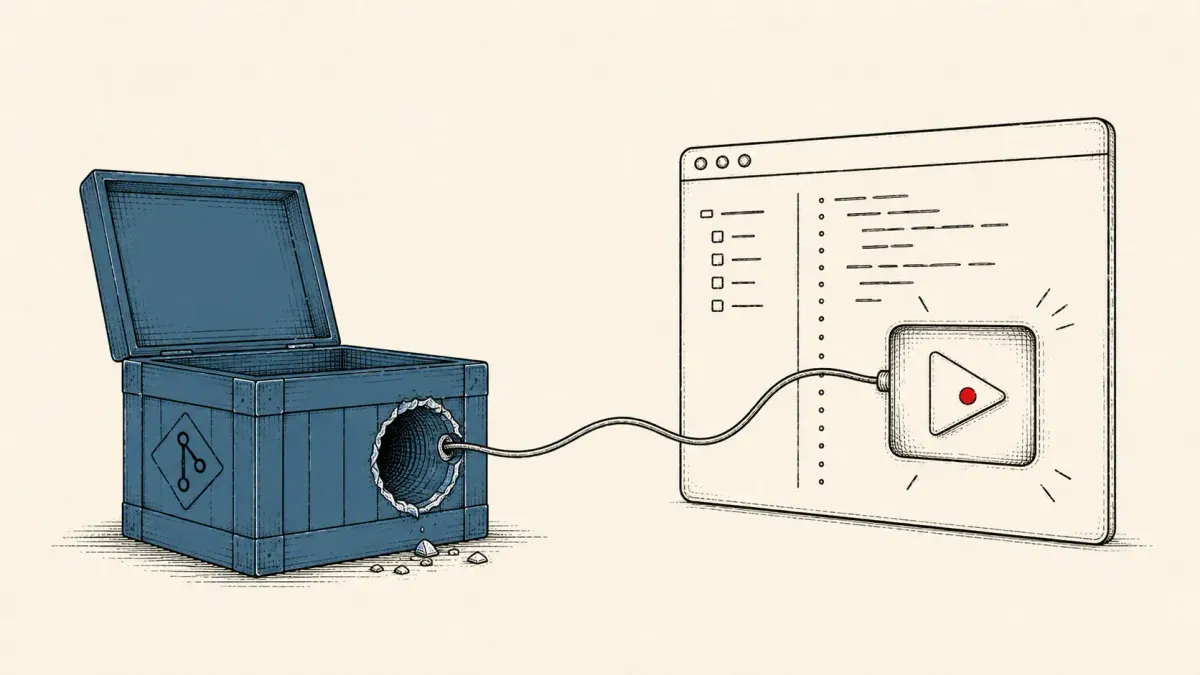
A new AI-IDE supply-chain finding puts the spotlight back on workspace trust — and on the developers who open untrusted repositories every day.
SAN FRANCISCO, CALIFORNIA — Researchers on July 14, 2026 disclosed that Cursor IDE, the widely used AI-native code editor, reportedly auto-executes malicious code embedded in poisoned repositories as soon as a developer opens the project. The finding was reported by Dark Reading under the headline "Cursor IDE Auto-Executes Malicious Code in Poisoned Repos." For defenders, the significance is not an exotic exploit but a trust-boundary problem in a tool that millions of developers now point at code they did not write.
The disclosure lands as a defender-review item rather than an active-exploitation alert: there is no public indication of in-the-wild abuse, and the reported behavior is best understood as a default that favors convenience over caution. But the shape of the risk is familiar. An editor that opens a repository and runs code from it without an explicit trust prompt turns the routine act of cloning and browsing an unfamiliar project into a moment of exposure. It is the latest entry in a lengthening thread of research into how AI coding tools handle untrusted input, following earlier work on shell-injection paths in AI coding agents and on agentic GitHub workflows that leak data.
What Dark Reading Reported
According to Dark Reading's report, researchers found that Cursor IDE will auto-execute malicious code embedded in a poisoned repository when a developer opens the project in the editor. Cursor is an AI-native code editor built on the same open-source foundation as Microsoft's Visual Studio Code, and it has become one of the most widely adopted tools in the AI-assisted development wave. The reported issue is that Cursor does not present the workspace-trust confirmation that comparable editors use to hold code execution until a user explicitly vouches for a folder — so opening an untrusted repository can result in code running in the developer's own session.
In defender terms, the mechanism matters less than the boundary it crosses. The concern is not a memory-corruption bug or a network-facing service but a default posture: the editor treats a freshly opened folder as trusted enough to run project-configured actions without a gating prompt. That collapses the distinction between reading unfamiliar code and running it. When the act of opening the folder is enough to trigger execution, the developer's workstation — with its credentials, tokens, and network access — becomes reachable by whoever authored the repository. The defensive takeaways do not depend on the technical path that produces the behavior; what matters is that a popular editor can run code from a repository the user has not yet chosen to trust, and that the controls to prevent it are ones defenders already understand: trust prompts, vetting, and isolation.
Another Entry in the AI-Coding-Agent Thread
This disclosure does not stand alone. It is the newest data point in a research thread The CyberSignal has tracked across 2026, in which independent teams keep finding that AI coding tools mishandle untrusted input in ways that convert a developer's convenience into an attacker's foothold. The pattern has appeared in shell-injection research against AI coding agents, in "hallusquatting" that turns an AI assistant's invented package names into a botnet-delivery channel, and in research on cloud-credential exposure through the Amazon Q developer extension for VS Code.
The common denominator is trust granted implicitly rather than earned explicitly: these tools operate on content an attacker can shape, and the guardrails between "consider this input" and "act on this input" are thinner than developers assume. The Cursor finding is a particularly clean example because it involves no model behavior at all — just an editor default that runs project-configured code without asking. It rhymes with adjacent research on data exposure in agentic GitHub workflows and on persistent false memory planted in an AI agent, both of which turn on the same question of what an AI-assisted tool will do with input it should have treated as hostile. The CyberSignal later reported a comparable agentic-IDE finding in AWS Kiro, where a poisoned web page could rewrite the tool's config and run code.
Defender Posture for Organizations Using Cursor
For teams that have standardized on Cursor, the response does not require waiting for a vendor fix. The most direct control is workspace trust: where the editor exposes a trust or confirmation setting, defenders should ensure it is enabled so opening a folder does not automatically run its configured actions. Treat the trust prompt as a security boundary, and configure it centrally where managed settings allow so individual developers cannot quietly turn it off.
The second lever is repository vetting and workflow discipline. Untrusted code — a repository from an unknown author, an unsolicited pull request, a proof-of-concept from a forum — should never be opened directly in a developer's primary editor on a machine that holds live credentials. The safer pattern is to review such code in a disposable, isolated environment first: a throwaway virtual machine, a container, or another sandbox with no access to production secrets or internal networks. Disabling auto-run behaviors, and keeping long-lived tokens off the workstation used to browse unfamiliar projects, both shrink the blast radius if an editor runs something it should not have.
None of these steps are novel, and that is the point. The developer endpoint is a high-value target precisely because it concentrates source access, cloud credentials, and network reach in one place. The controls that bound this class of risk — explicit trust, isolation of untrusted input, and least-privilege handling of secrets — are the same ones that bound supply-chain risk generally.
Cursor's Response and What to Watch
Cursor acknowledged the research. As reported by Dark Reading, a company representative said the vendor is addressing the issue and would follow up with the researchers. At the time of this writing, The CyberSignal has not independently confirmed the availability of a released fix, a version number that resolves the behavior, or an assigned vulnerability identifier, and treats those as open items rather than settled facts.
The watch items are concrete: whether Cursor ships a change that makes workspace trust the default so opening a folder no longer runs configured actions without a prompt; whether a CVE is assigned and tracked, giving vulnerability-management teams a hook for detection and patch-compliance reporting; and whether the vendor publishes guidance for administrators of managed or enterprise deployments so trust behavior can be enforced by policy rather than left to each developer. Until those land, the interim guidance stands on its own: enable trust prompts, vet repositories, disable auto-run, and open unknown code in a sandbox.
Scope and Impact
The measured read is that this is a widely relevant configuration and default-posture issue in a heavily used tool, not a confirmed mass-exploitation event. There is no public evidence at disclosure of attacks in the wild, no reported victim count, and no disclosed figure for how many Cursor users are affected — which, given the editor's popularity, is potentially large but remains unquantified. The impact is best described as latent: the exposure exists wherever a developer opens an untrusted repository in a vulnerable configuration, and it is realized only when that repository is hostile.
That framing should not be mistaken for low severity. The developer workstation is among the most sensitive endpoints in most organizations, and a repository is one of the easiest artifacts for an attacker to place in front of a target. An editor that runs code from such a repository on open removes the step where a cautious developer would otherwise catch the problem. The appropriate posture is to assume the behavior is reachable, apply the interim controls now, and track the vendor's fix as it matures rather than waiting for exploitation to force the issue.
Open Questions
Several facts remain unresolved at disclosure and should be treated as open rather than assumed. No CVE or other vulnerability identifier has been confirmed for the reported behavior. It is not confirmed whether a patch or fixed version is available, or when one will ship. The number of affected users is not disclosed, and neither the specific configurations that are vulnerable nor those that are already safe have been enumerated in a way The CyberSignal can independently verify.
The reporting at this stage rests on the researchers' disclosure and Dark Reading's account, with the vendor acknowledging that it is addressing the matter. That single-source-at-disclosure posture is normal for freshly reported research and is not a reason to doubt the core claim, but it does mean specifics may evolve — including the eventual identifier, the fix version, and any refined guidance on which settings neutralize the behavior. Readers running Cursor should watch the vendor's advisories for the definitive remediation, and can weigh this finding alongside the broader body of AI-coding-tool research, including the shell-injection work on AI coding agents, to calibrate how much trust to extend to any tool that acts on code it did not write.
The CyberSignal Analysis
The reported facts above come from the researchers' disclosure and Dark Reading's account; what follows is The CyberSignal's editorial reading of what defenders should take from them. None of the judgments below are new reported facts.
Signal 01 — The Trust Prompt Is a Security Control, Not a Speed Bump
The most durable lesson here is that a workspace-trust confirmation is a boundary, not an annoyance. The reported behavior turns on an editor treating a freshly opened folder as trusted enough to run its configured actions without asking. That default optimizes for the developer who is impatient to start work, and against the developer who opened the folder to look before they leap. Our reading is that any tool which can execute code from a project should hold that execution behind an explicit, per-project trust decision, and that teams should treat the presence and enforcement of such a prompt as a procurement and configuration requirement rather than a preference.
The practical consequence is that defenders should not accept "it just works on open" as a feature. On a developer endpoint — where credentials, tokens, and network reach are concentrated — the marginal cost of a trust prompt is trivial next to the cost of running hostile code. Where the setting exists, enable it; where it can be enforced centrally, enforce it so it cannot be quietly disabled.
Signal 02 — Untrusted Repositories Belong in a Sandbox, Full Stop
This finding is a clean argument for a rule many teams state but few enforce: code you did not write does not get opened on a machine that holds live secrets. The safe pattern is to review untrusted repositories in a disposable, isolated environment first — a throwaway VM, a container, or an equivalent sandbox with no path to production credentials or internal networks. That single habit neutralizes not only this behavior but an entire category of open-on-run and act-on-input weaknesses in modern developer tooling.
Our assessment is that isolation is the control that ages best. Vendor fixes come and go, defaults change between versions, and new AI-assisted features keep expanding what a tool will do with input on its own initiative. A developer workflow that routes anything unfamiliar through a sandbox is resilient to all of that, because it stops assuming the tool will be careful and instead makes carelessness survivable.
Signal 03 — AI Coding Tools Keep Failing at the Same Boundary
Step back and the Cursor disclosure fits a pattern we have flagged repeatedly this year: AI-era developer tools that blur the line between considering input and acting on it. Whether the trigger is an editor default, an agent following a workflow file, or an assistant suggesting a package, the recurring failure is implicit trust granted to content an attacker can shape. Our view is that the industry is still treating that boundary as an edge case when it is, in fact, the central design problem of AI-assisted development.
For security leaders, the forward-looking implication is to evaluate these tools on how they handle hostile input by default, not on the features they demo well. The question to ask of any AI coding tool is simple: what will it do, on its own, with a repository or file that was crafted to abuse it? Until vendors can answer that with an explicit trust model rather than a convenient default, defenders should assume the answer is "more than you want," and configure, isolate, and vet accordingly.