Symantec Confirms Fast16: The 2005-Era Sabotage Tool That Quietly Poisoned Nuclear Weapon Simulations
Symantec independently confirmed Fast16, a 2005-era pre-Stuxnet sabotage framework first disclosed by SentinelOne. It silently corrupted LS-DYNA and AUTODYN finite-element solver outputs for nuclear weapons design, acting only when material density crossed 30 g/cm cubed.

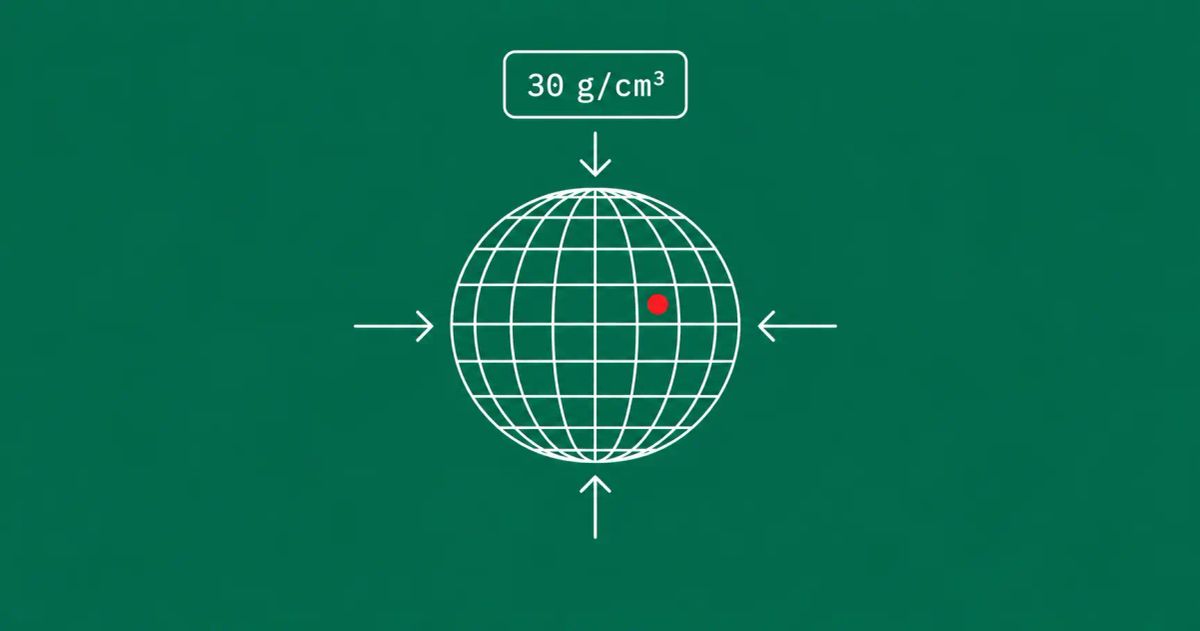
Symantec's threat intelligence team independently confirmed Fast16 on May 18, 2026 — a previously undocumented pre-Stuxnet sabotage framework first disclosed by SentinelOne in April. The oldest components date to roughly 2005, two years before Stuxnet. Fast16 silently corrupts the output of LS-DYNA and AUTODYN finite-element solvers used to model uranium compression in implosion-type nuclear weapons, acting only when material density crosses 30 g/cm³. The doctrine of "data sabotage as the operational goal" was operational at nation-state scale 20 years ago.
MOUNTAIN VIEW, CALIFORNIA — On May 18, 2026, Symantec's threat intelligence team — publishing via SECURITY.COM, the post-Broadcom Symantec research channel — released an independent confirmation of Fast16, a previously undocumented pre-Stuxnet sabotage framework first publicly disclosed by SentinelOne in April 2026. The oldest Fast16 components date to approximately 2005, roughly two years before the Stuxnet operation against Natanz. The framework's purpose was narrow and surgical: it silently corrupted the output of engineering simulations for nuclear-weapon design, specifically the LS-DYNA and AUTODYN finite-element solvers (the latter built by Ansys) used to model uranium compression during implosion-type nuclear weapons. Fast16 used rule-level precision — it acted only when material density in a simulation crossed 30 g/cm³, a threshold uranium reaches only under implosion compression — meaning it ignored benign engineering simulations and selectively poisoned weapons-design ones. The framework also auto-propagated laterally to other endpoints on the same network. Independent coverage from The Hacker News, Cybersecurity News, Kim Zetter's Zero Day, and fyself News confirms the Symantec analysis.
What Happened
The SentinelOne Disclosure
In April 2026, SentinelOne Labs published the first public technical disclosure of Fast16 — a sabotage framework whose oldest components dated to roughly 2005. The SentinelOne writeup characterized Fast16 as a pre-Stuxnet operation, predating the Natanz centrifuge campaign by approximately two years, and described its narrow targeting: the framework was engineered to silently corrupt the output of finite-element method (FEM) simulations used to model the implosion physics of nuclear weapons. The disclosure raised the question every reader of Stuxnet-era operations had to ask: if Fast16 was running in 2005, the doctrine of using cyber operations to sabotage critical-infrastructure modeling outputs was operational two years earlier than the public timeline acknowledged.
Symantec's Independent Confirmation
On May 18, 2026, Symantec's threat intelligence team published its own independent analysis via SECURITY.COM, the research channel that has carried Symantec threat content since Broadcom's acquisition. Symantec's analysis corroborates SentinelOne's findings on the framework's age, targeting, and trigger logic. The two confirmations together establish Fast16 as a documented historical operation rather than a single-vendor disclosure that might be incomplete or contested. The Hacker News, Kim Zetter's Zero Day, Cybersecurity News, fyself News, and Aardwolf Security all picked up the Symantec confirmation within hours.
The 30 g/cm³ Trigger
Fast16's most operationally distinctive characteristic is its trigger condition. The framework hooks the LS-DYNA and AUTODYN solver runtime and watches the per-cell material density values the solver computes during each step. If no cell ever crosses 30 g/cm³, Fast16 stays inert. If a cell crosses that threshold, Fast16 begins silently corrupting subsequent output values. Uranium reaches 30 g/cm³ only under the kind of implosion compression that occurs during a weapons-design simulation — not in the routine industrial finite-element work that LS-DYNA and AUTODYN are otherwise used for (automotive crash simulation, civil engineering, aerospace structural analysis). The trigger functions as a precision filter: the framework ignores legitimate Ansys workloads and acts only on nuclear-weapons modeling.
Scope and Impact
Fast16 reshapes the timeline of cyber-physical operations against critical infrastructure. The conventional public history places Stuxnet — disclosed in 2010, operationally active against Natanz from approximately 2007 onward — as the first nation-state cyber sabotage operation targeting a strategic nuclear program. Fast16 sits two years earlier and operates on a different layer of the kill chain: not the physical centrifuges, but the engineering data scientists use to design what the centrifuges produce. The implied target is Iran's nuclear program; there has been no public US or Israeli government acknowledgment of either attribution or operation.
The framework is also a case study in operational subtlety. Stuxnet eventually announced itself by triggering measurable equipment failures. Fast16 was designed to never announce itself — the corrupted simulation outputs look correct enough to pass review, but the underlying design decisions made on those outputs would have been wrong in ways that only show up in a physical test. That posture connects to the broader nation-state cyber-physical lineage CyberSignal has tracked across 2026, from Salt Typhoon's incursion into Azerbaijan energy infrastructure to Kazuar / Secret Blizzard's botnet abuse of Signal Desktop, to Kimsuky's LLM-developed PebbleDash malware, to Germany's warning about a China-linked AI Superhacker capability. Fast16 is the historical ancestor; the recent operations are the descendants.
Response and Attribution
Neither SentinelOne nor Symantec has publicly attributed Fast16 to a specific nation-state. Both researchers describe the implied target as Iran's nuclear program, consistent with the same operational logic that drove Stuxnet — but neither has named the operator. There has been no US or Israeli government acknowledgment of the framework's existence, of its operation, or of any continuity between Fast16-era doctrine and subsequent cyber-physical operations. That silence is its own signal. The 20-year retrospective disclosure pattern — independent vendor analyses confirming a 2005-era operation in 2026 — suggests Fast16 sat in classified threat-intelligence channels for most of its operational and post-operational life.
For defenders, the immediate operational question is whether Fast16-style data-sabotage frameworks have continued to operate against simulation, modeling, and design environments inside other critical-infrastructure verticals: aerospace, defense industrial base, energy, and pharmaceutical research and development. There is no public guidance from Symantec or SentinelOne on detection. The disclosed framework predates modern EDR telemetry by more than a decade, and the trigger logic — hook a solver runtime, watch a single physical-property value — is conceptually simple enough that variants could have shipped against any number of analytical workloads in the years since.
The CyberSignal Analysis
Signal 01 — Data Sabotage Is Older Than the Industry Says It Is
The defining lesson from Fast16 is not the trigger condition or the simulation-poisoning mechanism — it is the timeline. A nation-state in 2005 was running a precision data-sabotage operation against a specific scientific workload, designed never to be noticed by the analyst at the console. That is the operational posture critical-infrastructure defenders have been told to expect "in the future." It has been the actual posture for 20 years. Recent disclosures of LLM-developed malware like Kimsuky's PebbleDash and Germany's China AI Superhacker warning are evolutions of the same doctrine, not new chapters. CISOs in any sector running scientific or engineering simulation workloads should assume their software is in scope for nation-state operators today.
Signal 02 — The Solver Runtime Is a Critical-Infrastructure Asset
Fast16 hooked LS-DYNA and AUTODYN at the runtime level — the same finite-element solvers used across automotive, civil, aerospace, and weapons-design workflows. That is a category of software that almost no security organization treats as critical infrastructure. EDR telemetry on solver processes is minimal-to-nonexistent. Code-signing checks on solver binaries are rare outside the largest defense primes. Patch and supply-chain controls on Ansys and LS-DYNA installations are a sub-domain of IT, not security. The same operational logic that put Salt Typhoon inside Azerbaijan's energy operators and Kazuar inside Signal Desktop deployments — quiet persistence inside the software the target trusts — applies just as cleanly to the simulation stack.
Signal 03 — Retrospective Disclosure Is the Norm and a Strategic Problem
Fast16 was operational in 2005. The first public disclosure was April 2026 — a 21-year gap. The pattern is consistent across the nation-state cyber-physical canon: Stuxnet went public years after operational deployment, Olympic Games-era operations went public later still, and Fast16 only surfaces now because two independent vendors chose to publish in 2026. For the policy and defender community, that gap is structural. The threat models the industry develops today are calibrated against operations the industry was allowed to learn about a decade or more after they ran. Whatever 2026-era operations are running today against simulation, modeling, and design environments — by Iran, China, Russia, the US, Israel, or anyone else — will likely surface for the first time in the 2040s.