Russian Intelligence Is Running Cyber Spies and Fake Companies Against the Same Western Tech
Three senior European intelligence officials told The Associated Press that Russian services are building fake companies, recruiting middlemen, and deploying cyber spies to take Western technology — and treating the cyber and human lines as one operation.

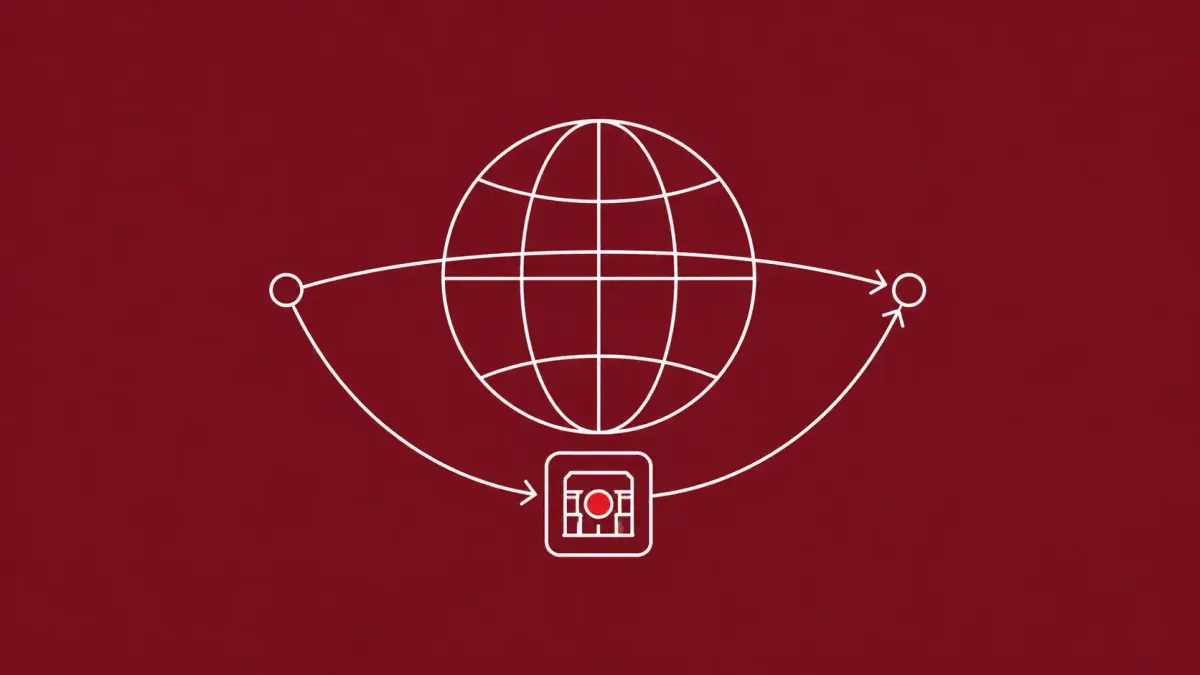
The most useful frame for defenders is not the headline that Russian intelligence is stealing Western technology, which is not new. It is that European intelligence chiefs are describing a cyber line and a human-intelligence line running in parallel against the same Western IP target set — and most CISOs do not have a counter-intelligence model for the IP they hold.
WASHINGTON, D.C. — On May 30, 2026, The Associated Press reported that three senior European intelligence officials say Russia's intelligence agencies have grown more aggressive in trying to steal Western technology and defense secrets as sanctions squeeze the country's wartime economy.
The officials — Christoffer Wedelin, deputy head of operations at the Swedish Security Service; Juha Martelius, director of Finland's Security and Intelligence Service; and Kaupo Rosin, head of Estonia's Foreign Intelligence Service — said Moscow's agents are building fake companies, recruiting middlemen, and deploying cyber spies and hackers who gather information that could also be used to attack key infrastructure. None of the officials named a specific Russian intelligence service.
What Happened
In a story published on May 30, 2026, The Associated Press — carried by SecurityWeek, Fortune, The Washington Times, and other outlets — reported that three senior European intelligence officials say Russia's intelligence services have grown more aggressive in their efforts to steal Western technology and defense secrets as four years of international sanctions continue to constrain Moscow's wartime economy. The officials named in the reporting are Christoffer Wedelin, deputy head of operations at the Swedish Security Service; Juha Martelius, director of Finland's Security and Intelligence Service; and Kaupo Rosin, head of Estonia's Foreign Intelligence Service. The officials told the AP that Moscow's agents are 'building fake companies, recruiting middlemen and deploying cyber spies and hackers' who gather information that 'could also be used to attack key infrastructure.'
None of the officials named a specific Russian intelligence service — SVR, GRU, or FSB. Wedelin told the AP that 'all of the security and intelligence services in Russia are helping out on the state's efforts to get this,' framing the activity as a whole-of-state effort rather than the work of any one agency. Separately, on May 27, Anne Keast-Butler, director of the U.K.'s signals intelligence agency GCHQ, accused Russia of 'relentlessly targeting' the U.K. and its European allies by stealing technology and plotting sabotage. The European framing — multiple national services briefing in coordination, with the U.K. signals chief speaking publicly in the same week — is itself the headline; the technical claims are deliberately broad rather than tied to a single incident.
What the Officials Said Russia Is Trying to Take
The officials gave the AP an unusually specific target list. Wedelin said Sweden is seeing Russia target the defense industry and high-end research on the country's most advanced weaponry, citing the Gripen fighter jet by name, and also targeting camera and laser technology developed for civilian purposes that could be integrated into Russian weapons systems. Martelius, of Finnish intelligence, said Russia is trying to acquire technology to keep pace with the West in the decades ahead — 'space technology, quantum … arctic technology, marine technology' — and added that space technology is something Russia needs 'right now,' without elaborating. Martelius also said Russia needs sanctioned computer technology and software updates for machine tools. The common thread is a sanctions-coverage list: anything that is hard to import legally, with civilian or dual-use applications that translate to Russian military or industrial capacity, is in scope.
The 'Fake Companies and Middlemen' Pattern in Practice
The fake-company and recruited-middleman half of the operation is the part most security programs do not see, because it does not show up in a SIEM. Wedelin gave the AP a concrete example: in May, Swedish police arrested two people on suspicion of violating sanctions in relation to a company in Turkey that, per the reporting, has made dozens of shipments of metalworking and metal-turning machine tools to Russia. 'As the schemes to acquire technology grow more complex, companies need to be more aware they could unwittingly become part of Russia's war supply chain,' Wedelin said. That is the operational pattern the broader brief asks defenders to recognize: a familiar-looking customer, supplier, or freight forwarder in a third country whose purchase profile, payment routing, or shipping destinations do not match the cover story. The procurement and KYC functions that touch onboarding are where the human-intelligence line is fought, not the SOC. The cyber pattern shows up elsewhere — the same week's Russia-linked stories include GreyVibe, the Russia-aligned operation that abused ChatGPT and Gemini to support attacks tied to Ukraine, and the Netherlands' seizure of Stark Industries bulletproof-hosting infrastructure used by Russian-aligned actors.
The Cyber Line: Reconnaissance Plus a 'Switch' in Modus Operandi
Wedelin told the AP that Moscow is also deploying cyberattacks against European firms and critical infrastructure to gather information that Russia could exploit 'when they get the chance and when it serves their purpose.' He pointed to an attack last year on a Swedish power plant in which Russia-linked actors tried to 'destroy' the plant but failed because the system detected the intrusion. Before that incident, Wedelin said, Sweden's security services had mostly observed reconnaissance for potential attacks, intelligence gathering, or activity linked to cybercriminals. The destructive attempt marked what he called a 'switch' in Russia's modus operandi: 'They're no longer caring as much about potential attribution after their activities, so they are taking greater risks to achieve their goals.' That framing is consistent with the cyber picture other Western agencies have laid out in recent months — the U.K. NCSC chief identifying Russia, China, and Iran as the primary drivers of U.K. cyber threats, ESET's APT report covering October 2025 through March 2026, which documented Sandworm's DynoWiper campaign against Ukraine, the Kazuar / Secret Blizzard cluster tied to a Russian nation-state botnet abusing Signal Desktop, and Germany's attribution of Signal-phishing attacks on members of the Bundestag to Russia. The European reporting threads pull in the same direction.
Scope and Impact
The scope of this story is deliberately broad because the officials made it broad. There is no single named incident behind the briefing, no single named victim company, and no specific Russian intelligence service identified — Wedelin attributed the effort to all of Russia's security and intelligence services collectively. That hedge matters. It is consistent with the way SVR (foreign intelligence), GRU (military intelligence), and FSB (domestic and counter-intelligence with growing external functions) operate as overlapping rather than separated services, but the public reporting does not let anyone narrow the actor further, and this account preserves the officials' framing as 'Russian intelligence services.' Anyone who reads the story as a single-agency attribution is reading more into it than the sourcing supports.
The defender-utility framing is more useful than the geopolitical one. The list of Russian intelligence targets the AP printed maps directly onto a recognizable Western technology footprint: semiconductors and EDA tooling sit inside 'sanctioned computer technology'; the Gripen example covers defense electronics and weapons-systems R&D; camera and laser technology covers civilian optical-systems firms whose work is dual-use the moment it is in a Russian weapons platform; space, quantum, arctic, and marine technology cover advanced-research IP across the European and U.S. industrial base. If your company sits inside any of those categories, the briefing is not a geopolitical story — it is a current-adversary statement. The defensive surface is not just your network: it includes your procurement onboarding, your sales pipeline for unfamiliar customers in third countries, your conference and recruiting exposure to engineering staff with technical access, and any supplier or freight relationship that touches export-controlled items.
Several things this story does not say are worth noting carefully. It does not say any specific Western company has been compromised by the cyber line — the framing is general. It does not name a specific Russian intelligence service. It does not provide indicators of compromise; the AP's reporting is a strategic-context piece, not a technical disclosure. The Swedish power-plant example Wedelin cited is a year old, and the AP did not name the plant or the actor more specifically than 'Russia-linked.' And the human-intelligence side, where the operational signal for procurement and KYC teams is strongest, is described in pattern rather than case-file detail — Wedelin's Turkey-routed machine-tool example is the most specific single illustration in the public reporting.
Response and Attribution
For CISOs at Western technology firms holding export-controlled or dual-use IP — semiconductors, EDA, advanced manufacturing, dual-use AI, defense electronics, optical and laser systems, advanced materials, space, quantum, marine, and arctic technology — the action is to read this briefing as a current-adversary statement and brief the security committee accordingly. Treat any unfamiliar inbound contact from any third country as elevated-risk, particularly unusual export-control-evading purchase requests, third-country shipment routing, and payment flows through unfamiliar intermediaries. Brief engineering and procurement leaders on the fake-company pattern specifically and instruct staff to escalate rather than respond directly to unsolicited supplier, customer, or recruiter outreach. Train engineering staff with technical access on recruiter-impersonation and conference-recruitment patterns, and pull HR and corporate-security into the same review cycle as the SOC.
For SOC and threat-hunting teams, the AP reporting is not a hunt package, but it sharpens the priority list. Hunt for Russian-attributed intrusions against IP repositories — design files, source code, manufacturing IP, R&D communications, and CAD and EDA environments — and treat recruiter or supplier impersonation against engineering staff as a credible spear-phishing vector against IP-holding employees. Coordinate with insider-threat, corporate-security, and personnel-security functions so the cyber and human lines are watched on a single timeline. Wedelin's observation that Russia-linked actors are 'no longer caring as much about potential attribution' should be taken at face value: the calculus has shifted toward more aggressive and more disruptive operations, and the cyber-reconnaissance feed into 'attack key infrastructure' contingencies should be treated as the officials described it.
For CISOs at firms in the middleman layer — suppliers, freight, payments, and trading firms that touch Western technology firms — the recruited-middleman pattern is the one to audit against. Review unfamiliar customer onboarding requests in the past 12 months for fake-company indicators: very recent registration, no operational footprint or web presence, single-product purchase patterns, evasive sanctions-disclosure responses, and shipping addresses inconsistent with the stated end use. Implement enhanced KYC and sanctions screening on onboarding for export-control-sensitive categories, and route ambiguous cases to compliance and legal rather than letting sales close them. For CISOs broadly, the structural takeaway is the editorial one: most cybersecurity programs are not architecturally connected to insider-threat, counter-intelligence, or corporate-security functions, and a state adversary running cyber and human-intelligence lines against the same IP target set is exactly the case the integrated model is for.
The CyberSignal Analysis
Signal 01 — Cyber and Human Intelligence Are One Operation, Not Two
The most important shift this briefing asks defenders to make is conceptual. The cyber line — deployed spies and hackers gathering information that could later be used to attack key infrastructure — and the human-intelligence line — fake companies, recruited middlemen, sanctions-evading procurement — are being described by European intelligence chiefs as parallel lines of effort against the same Western IP target set. They share targets, they share collection priorities, and in Wedelin's framing they share a single state-level direction. Most CISOs do not have a counter-intelligence model for the IP they hold. The cyber program watches the SIEM; insider-threat watches HR signals; corporate security watches physical access; procurement and compliance watch supplier and customer onboarding. When the adversary is running both lines against the same target, those programs need a shared timeline and a shared escalation path, not just shared logo slides at the annual offsite.
Signal 02 — The Middleman Layer Is a Defender, Whether or Not It Knows It
Wedelin's specific example — a Swedish criminal case tied to a company in Turkey routing dozens of machine-tool shipments to Russia — is the operational pattern most security programs are not built to detect. The middleman layer is not a hostile actor; it is the suppliers, freight forwarders, trading firms, and payments providers who, in Wedelin's words, 'could unwittingly become part of Russia's war supply chain.' That makes the customer-onboarding and KYC functions a first-line counter-intelligence control surface — not a back-office task. The operational asks are practical: enhanced KYC for export-control-sensitive categories, sanctions-screening cycles that catch the recent-shell-company pattern, escalation paths to compliance and legal rather than to a sales close, and a willingness to walk away from revenue that does not pass scrutiny. For middleman-layer firms, this is not a future regulatory burden — the European reporting says it is a current adversary.
Signal 03 — 'Caring Less About Attribution' Is the Threat Model Shift
Wedelin described the Swedish power-plant attack as a 'switch' in Russia's modus operandi — actors taking greater risks because they care less about being attributed. That sentence is the threat-model update. The prior baseline for Russian-aligned cyber activity in Western tech environments was reconnaissance, intelligence gathering, and cybercrime-linked activity that was largely deniable. A move toward attempted destructive impact, with less concern for attribution, raises the ceiling on what a Russian-linked intrusion against a Western technology firm could be used for — from quiet IP collection to dormant access positioned for later disruptive use. For defenders, that means the case for assume-breach planning, segmentation between IT and OT environments, and tabletop exercises that include destructive-impact scenarios is not academic. The same operations that look like espionage when they begin can be repurposed; the Swedish power-plant example is the public proof of concept.



