Progress Confirms Zero-Day Vulnerability Behind ShareFile Disruption and Ships Fix
Progress closes the ShareFile emergency with a confirmed zero-day and shipped fix — Storage Zones Controller customers apply and restore this week.

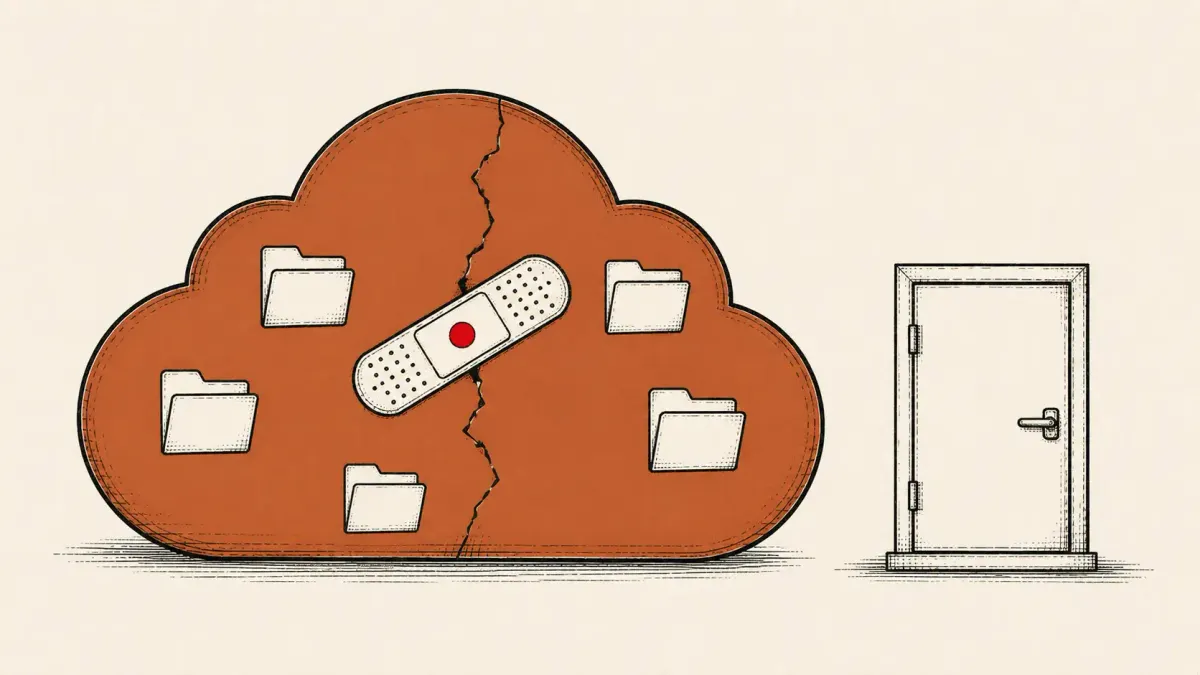
The Progress ShareFile emergency closes with a confirmed zero-day and a shipped fix — and a patch-and-verify job for every Storage Zones Controller operator.
BURLINGTON, MASS. — Progress Software on July 15, 2026 confirmed that a zero-day vulnerability was behind the ShareFile disruption that began on or about July 10 and stretched across the following week, and said it has rolled out a fix and is restoring access for Storage Zones Controller customers who apply it. The confirmation resolves the central question that had hung over the episode since Progress first told customers to shut down the Windows servers running their Storage Zones Controllers: the “external security threat” the vendor had described in guarded terms was a previously unknown, unpatched vulnerability in its own file-sharing product, and the company now has a patch to close it.
The confirmation was reported by SecurityWeek, to which Progress said that “as of Tuesday, July 14th, access has been restored for Progress ShareFile Storage Zones Controller customers following the service disruption we communicated previously.” The company said it prompted the shutdown because of a high-severity vulnerability in versions 5.x and 6.x of the product, developed and released patched versions, and stated that patched Storage Zones Controllers would return to normal operation. It added that it has “no evidence of unauthorized access to any ShareFile customer account or data” and had not identified an active threat.
What Progress Confirmed
Progress’s July 15 statement did three things the earlier advisories had not. It named the cause — a zero-day vulnerability rather than the deliberately vague “external security threat” language the vendor used when it first told customers to power down their servers, a step SecurityWeek and others reported at the time. It confirmed a remedy, in the form of patched Storage Zones Controller versions the company said it had developed and released. And it set a restoration marker: access was back as of Tuesday, July 14 for customers who applied the fix, converting an open-ended outage into a bounded, patch-gated recovery.
The vendor scoped the flaw to versions 5.x and 6.x of the Storage Zones Controller and characterized it as high severity. Progress also offered a reassurance that matters to every affected customer’s incident assessment: it said it has no evidence of unauthorized access to any ShareFile account or data, and that it had not identified an active threat. That is a vendor statement about its own visibility rather than an independent all-clear, and defenders should read it as one input to their own scoping rather than a substitute for it.
What Progress has not published is as notable as what it has. The company has not released a CVE identifier, a CVSS score, or technical detail on the vulnerability, and it has not said whether the flaw was exploited before the shutdown. Those gaps leave the most consequential forensic question — whether any environment was reached before servers went dark — formally open, even as the operational emergency closes.
From Emergency Directive to Confirmed Fix
The confirmation closes a thread that began with an emergency directive on July 10, when Progress told ShareFile customers to shut down — not patch — the Windows servers running their Storage Zones Controllers over a credible external security threat, and temporarily disabled access to affected accounts. The shut-down-rather-than-update framing was the tell that no fix existed yet, and it defined the defender posture through the days that followed.
That posture carried into the new week without an all-clear, keeping the on-premises component offline and affected accounts disabled while Progress investigated. The July 15 confirmation is the resolution the earlier coverage flagged as the awaited signal: a vendor that holds a production component offline for days, without offering a fix, is signaling it has no remediation ready — and the arrival of patched versions is the moment that judgment lifts. The through-line across all three stages is consistent: isolate first, wait for a verified fix, then restore on the vendor’s cue.
Defender Posture: Patch, Verify, Restore
With a fix now available, the defender action shifts from isolate-and-wait to patch-and-verify. Storage Zones Controller operators should apply Progress’s update to every affected instance, confirm each server is running a patched version before returning it to service, and restore ShareFile account access on the vendor’s schedule rather than ahead of it. Treat the update as the gate that reopens the component, and log the version and timestamp for each controller so the fleet’s patch state is auditable — the discipline the patch-management fundamentals prescribe for exactly this kind of vendor-directed remediation.
Patching should not end the investigation. Because the servers were offline for days on a credible-threat judgment, teams should treat the shutdown window as a preserved evidence set and finish the incident-response work that isolation bought time for: review authentication and file-access records for the period before the directive, confirm the controller’s service account was not used to touch files outside expected paths, and validate that no unexpected content was written to disk while the component was reachable. Progress’s statement that it sees no evidence of compromise is a reason to calibrate, not to skip the check — its visibility ends at its own telemetry, and each customer’s environment is its own to clear.
Ownership and communication remain part of the close-out. A single owner should track Progress’s advisories for any follow-on guidance or a later CVE assignment, and stakeholders who were briefed that the outage was a deliberate safety measure should now be told the component is patched, verified, and back in service. Documenting the timeline — directive, shutdown, patch, restoration — turns a disruptive week into a reusable playbook for the next vendor-led emergency.
The Zero-Day Framing and Disclosure Timeline
The value of the “zero-day” label is that it fixes the sequence. A zero-day is a vulnerability that is being addressed with no prior patch available — the defender is at day zero of having a fix. That is precisely why Progress told customers to power servers off rather than update them on July 10: there was nothing to install. The July 15 confirmation and the shipped patch mark the day-zero clock ending, and they retroactively explain the aggressiveness of the original containment. A vendor does not ask customers to take a business-critical component offline for days over a routine issue.
Reporting has added texture that Progress has not confirmed on the record. According to SecurityWeek, a customer email shared on Reddit described the defect as a path-traversal issue requiring an authenticated administrative user, and WatchTowr founder Benjamin Harris reportedly questioned why an admin-only flaw would trigger such an aggressive response — suggesting there may be more to the story than has been disclosed. Those are attributed characterizations, not vendor statements, and The CyberSignal restates them only to note the open questions they raise. The defender takeaway does not depend on resolving them: apply the fix, verify it, and assume exposed systems warrant a closer look until an environment is cleared.
What a CISA KEV Addition Would Signal
The indicator worth tracking now is whether the ShareFile flaw is assigned a CVE and whether it reaches CISA’s Known Exploited Vulnerabilities catalog. As of July 15, no CVE had been published and there was no KEV entry, so the issue sits at the advisory stage. A KEV listing would convert this into a formally tracked exploitation case and, for federal agencies, trigger remediation deadlines under CISA’s risk-based patching directive BOD 26-04. Private-sector teams tend to treat KEV additions as a de facto priority signal, so a listing here would sharpen urgency well beyond ShareFile’s installed base.
Recent edge-software cases show how fast that can happen. The Ivanti EPMM zero-day added to CISA KEV moved from advisory to KEV entry to an enforced federal deadline in a compressed window, and the ShareFile matter could follow a similar path if exploitation is ever confirmed. Until then, the absence of a CVE is a status marker rather than reassurance, and the prudent move is to patch now and keep watching both Progress’s advisories and the KEV catalog rather than waiting for one to reference the other.
Open Questions
Several core facts remain undisclosed even with the emergency closed. Progress has not published a CVE identifier, a CVSS score, or technical detail on the vulnerability, and it has not said whether the flaw was exploited against any customer before the shutdown. Whether the “external security threat” reflected observed activity, a private pre-disclosure report, or an internal discovery has not been stated, and the company had not, as of July 15, quantified how many Storage Zones Controller deployments were affected.
The regulatory picture is likewise unformed: there was no CISA advisory tied to the ShareFile matter and no KEV entry as of July 15, leaving the federal-tracking status open. What is confirmed is enough to act on — a major vendor found a zero-day serious enough to take a file-transfer component offline for days, then shipped a fix and restored access to patched customers. That pattern fits a wider shift Verizon’s latest breach research documented, in which vulnerability exploitation has overtaken credential theft as the top initial-access vector, putting internet-reachable enterprise software squarely on the front line. For defenders, the close-out task is unchanged by the missing details: patch every controller, verify the version, finish the evidence review, and stay ready for a CVE or KEV update that could reframe the urgency.
The CyberSignal Analysis
The reported facts above are Progress’s confirmation and the reporting around it; what follows is The CyberSignal’s editorial reading of what defenders should take from them. None of the judgments below are new reported facts.
Signal 01 — A Shipped Fix Reframes the Job, Not the Risk
The arrival of a patch is the moment a containment emergency becomes a remediation project, and the temptation is to treat the two as the same milestone. They are not. A fix reopens the component; it does not answer whether an environment was reached during the days it was exposed. Our reading is that the teams handling this well are the ones treating July 15 as the start of a verification phase — patch applied, version confirmed, logs reviewed — rather than the end of the incident.
The forward-looking lesson is that vendor reassurance and defender clearance are different artifacts. Progress reporting no evidence of compromise is a genuine and useful signal, but it describes the vendor’s telemetry, not each customer’s. Organizations that close the loop themselves — confirming their own environment rather than inheriting the vendor’s conclusion — are the ones that will be able to say, credibly, that they are clear.
Signal 02 — The Shutdown-Then-Patch Sequence Was the Right Call
This episode is a clean case study in the value of ordering containment ahead of remediation. Progress had no patch on July 10, so it chose the only lever available: take the component offline. Days later it shipped a fix. Our assessment is that the sequence — isolate first, patch when a verified fix exists, restore on the vendor’s cue — is the model to internalize for the next zero-day in an internet-facing enterprise product, because it bounds the exposure window without waiting on a fix that may not exist yet.
The lesson for defenders is to pre-authorize that sequence before the emergency. The organizations that held the shutdown cleanly were those that had already accepted vendor-directed downtime as a legitimate operational event, with fallbacks and stakeholder messaging ready. When the fix arrived, they could move straight to patch-and-verify rather than relitigating whether the outage had been justified.
Signal 03 — The CVE-and-KEV Trajectory Still Governs the Urgency
The confirmed fix does not settle the exploitation question, and the more informative indicators over the coming days remain whether a CVE is assigned and whether the issue reaches CISA’s KEV catalog. Either would formalize the status and, for federal agencies, start a remediation clock the advisory stage does not. Our judgment is that the withheld technical detail — and the outside commentary questioning why an admin-only flaw drew such an aggressive response — is a reason to finish patching quickly, not to relax because access is restored.
The watch item is trajectory. Recent edge-software cases have compressed the path from advisory to KEV entry to enforced deadline into days, and there is little reason to expect this one to behave differently if exploitation is confirmed. We would treat the current information gap as a prompt to complete verification now, so that a later CVE or KEV addition finds the fleet already patched rather than starting the clock.