Progress Tells ShareFile Customers to Shut Down Storage Zone Controllers Over Threat
An emergency vendor directive landed this week: Progress Software told ShareFile customers to shut down the Windows servers running their Storage Zone Controllers, citing a credible external security threat and temporarily disabling access to affected accounts out of an abundance of caution.

An emergency vendor directive — ShareFile customers shut down Storage Zone Controllers this week.
BURLINGTON, MASSACHUSETTS — Progress Software on or about July 10, 2026 urgently directed ShareFile customers to shut down the Windows servers running their Storage Zone Controllers, telling operators of the on-premises component that it was responding to what it called a “credible external security threat.” The company said it had also temporarily disabled access to affected ShareFile accounts “out of an abundance of caution,” and — the detail that matters most to defenders — instructed customers to power the servers off rather than patch and restart, an unusual step that signals no remediation was available when the directive went out.
The directive was reported by The Hacker News, which described Progress emailing ShareFile customers who use Storage Zone Controllers to immediately shut down their servers. Progress did not publish a CVE, name a threat actor, or confirm that any customer environment had been exploited, and the shut-down-not-patch framing is the single most consequential detail for security teams: it tells defenders to prioritize immediate isolation of the affected component over remediation until Progress provides further guidance. For an on-premises file-transfer component from the same vendor behind MOVEit, an instinct to over-communicate and contain early is a defensible one.
What Progress Directed
According to reporting by The Hacker News, Progress Software emailed ShareFile customers who run Storage Zone Controllers and told them to immediately shut down the Windows servers hosting that component. Progress said it was responding to a “credible external security threat” and that it had temporarily disabled access to affected ShareFile accounts “out of an abundance of caution” while it investigated. The company framed the action as precautionary rather than a confirmation of compromise, and directed customers to its official channels for updates.
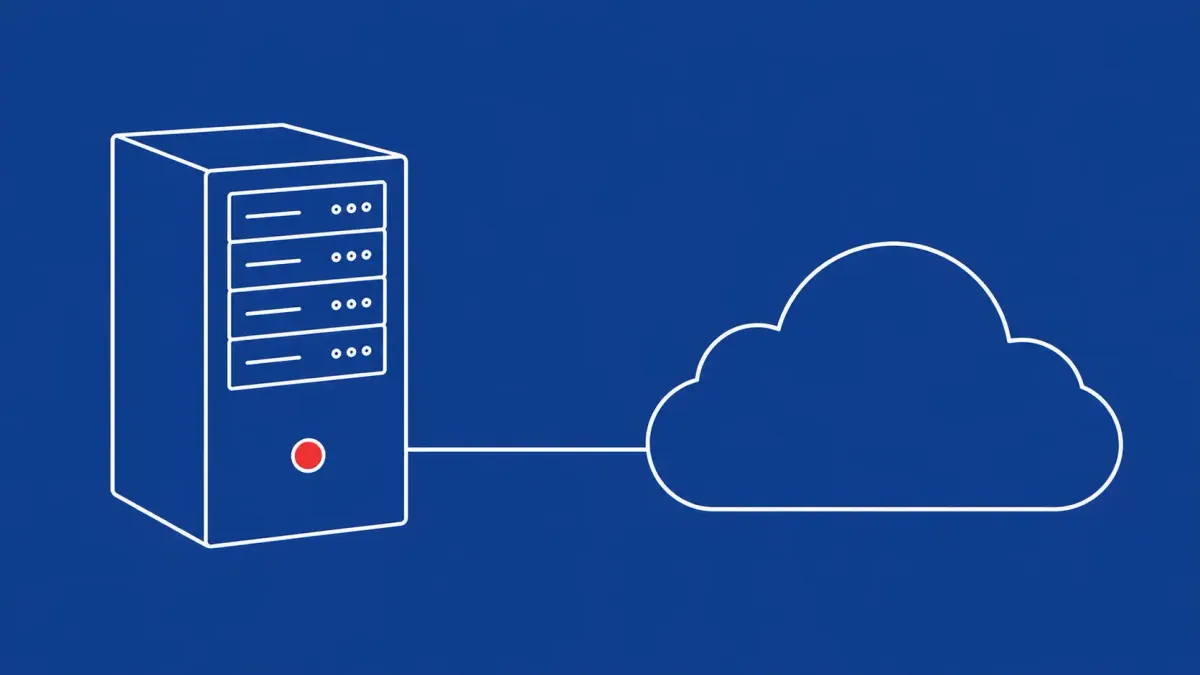
Storage Zone Controllers are the on-premises piece of ShareFile’s architecture. Organizations deploy them to Windows servers so that files can remain hosted locally, within the organization’s own storage, while ShareFile’s cloud platform continues to handle authentication, user management, sharing, and collaboration. That design makes the controller an internet-reachable bridge between a company’s private file storage and a hosted service — exactly the kind of edge component that draws attacker attention, and exactly the kind that a vendor would move to isolate first when it judged a threat credible.
The most instructive part of the guidance is what it did not include: a patch. Progress instructed customers to power the servers off rather than update and restart them, which tells defenders that no fix was available at the moment the directive was issued. A shut-down-first instruction is a containment measure, not a remediation, and it is the clearest available indicator that Progress treated the risk as immediate. Progress did not, at the time of the directive, publish a CVE, name a threat actor, or state that any customer environment had been exploited.
Immediate Steps for ShareFile Storage Zone Controller Operators
For organizations running Storage Zone Controllers, the defender action is unusually unambiguous: follow the vendor’s directive and shut the affected Windows servers down now, rather than attempting to patch, harden, or keep them online behind additional controls. Because Progress issued a power-off instruction instead of an update, there is no interim fix to apply; the only sanctioned mitigation is removing the component from service until Progress provides further guidance. Teams should also expect the temporary loss of access to affected ShareFile accounts, since Progress disabled that access itself, and treat that disruption as expected behavior rather than a second incident.
Beyond the shutdown, incident-response fundamentals apply. Preserve server and application logs before decommissioning anything, capture forensic images where practical, and review authentication and file-access records for anomalous activity in the days preceding the directive. An isolate-first, investigate-second posture is the same one defenders have taken with other edge-facing appliances placed under emergency guidance this year, including the Check Point VPN zero-day exploited in Qilin ransomware activity and the actively exploited Palo Alto GlobalProtect authentication-bypass flaw. In each case the fastest way to bound the damage was to take the exposed component offline first and reason about scope afterward.
Communications matter as much as the technical steps. Storage Zone Controllers sit in front of business-critical file stores, so a full shutdown will interrupt workflows for the people who depend on them. Security teams should brief stakeholders that the outage is a deliberate, vendor-directed safety measure, route users to sanctioned alternatives where they exist, and designate a single owner to watch Progress’s advisories so the organization can act the moment a patch or all-clear is published.
Why Progress’s MOVEit Playbook Frames This Response
Progress is not a newcomer to file-transfer security emergencies. The company is the vendor behind MOVEit Transfer, whose 2023 mass-exploitation event became one of the defining supply-chain breaches of the decade and forced Progress to build considerable muscle memory around customer communication under pressure. Read against that history, the ShareFile directive looks less like panic and more like a vendor applying a hard-won playbook: communicate early, communicate bluntly, and choose aggressive containment over a slower, tidier response when the software in question is an internet-facing conduit to customer data.
That pattern also situates the ShareFile action within a broader run of emergency guidance around edge and access infrastructure. Defenders have absorbed a steady cadence of vendor directives on appliances that concentrate access to internal resources — among them the Progress Kemp LoadMaster flaw from Progress’s own portfolio, the Citrix NetScaler CitrixBleed-style disclosure, and the BeyondTrust Remote Support authentication-bypass issue. The common thread is that edge components which broker access to sensitive systems are where vendors now move first and most decisively — and where an early, blunt shutdown directive has become an accepted, if disruptive, tool.
The CISA KEV Signal Defenders Should Watch
The next indicator worth tracking is whether a CVE is assigned to the ShareFile issue and whether it lands in CISA’s Known Exploited Vulnerabilities catalog. A KEV listing would convert an advisory-stage event into a formally tracked exploitation case and, for federal agencies, trigger remediation deadlines under the agency’s risk-based patching directive BOD 26-04. Private-sector teams tend to treat the same KEV additions as a de facto priority signal, so a listing here would sharpen the urgency well beyond ShareFile’s installed base.
Until then, the absence of a CVE is a status marker rather than reassurance. Recent edge-device cases have shown how quickly a disclosure can move from advisory to KEV entry to enforced deadline — the Ivanti EPMM zero-day added to CISA KEV is a representative example of that compressed timeline. Defenders should assume the ShareFile matter could follow a similar path and keep an eye on both Progress’s advisories and the KEV catalog rather than waiting for one to reference the other.
Scope and Impact
The directive is scoped to customers who run Storage Zone Controllers on their own Windows servers — the on-premises deployment model — rather than to every ShareFile user. Organizations using ShareFile’s cloud-managed storage without the on-premises controller are not the subject of the shutdown instruction, though Progress’s decision to temporarily disable access to affected accounts means some customers will feel the disruption regardless of how directly they operate the component. Because Progress has not quantified the number of affected deployments, the true footprint is not yet public.
The impact profile fits a now-familiar pattern in which internet-facing enterprise software is the front line. Verizon’s latest breach research documented that vulnerability exploitation has overtaken credential theft as the top initial-access vector, and file-transfer and remote-access products sit squarely in that crosshair. A component that bridges private storage to a cloud service, is reachable from the internet, and carries business-critical data is precisely the asset class attackers prioritize — which is why a credible-threat judgment against it warrants the aggressive response Progress chose.
For most affected organizations, the practical impact over the coming days will be operational rather than forensic: interrupted file workflows, temporary loss of ShareFile account access, and the overhead of standing up alternatives while the servers stay dark. The security impact — whether any environments were actually reached before the shutdown — will not be clear until Progress or independent responders publish more detail.
Open Questions
Several core facts remain undisclosed at the advisory stage. Progress has not published a CVE for the issue, has not named a threat actor, and has not confirmed whether exploitation occurred against any customer environment; whether the incident involves a vulnerability, a credential-based threat, or another vector is not stated. It is also unclear whether Progress’s “credible external security threat” language reflects pre-disclosure intelligence — for instance a private report or observed activity — or a more general assessment, and the company has not detailed how it reached that judgment.
The regulatory picture is likewise unformed. There is no CISA advisory tied to the ShareFile matter at the time of the directive and no KEV entry, so the federal-tracking status is open. Progress has not published a restoration timeline, a patch schedule, or an estimate of how many Storage Zone Controller deployments are affected, and it has not said when access to disabled accounts will be restored. Each of those gaps is expected this early in a vendor-led response and any of them could change quickly as the investigation proceeds.
What is confirmed is enough to act on: a major software vendor judged the threat to its on-premises file-transfer component serious enough to tell customers to power it off rather than patch it, and to disable account access itself as a precaution. For defenders the takeaway does not depend on the missing details — the sanctioned response is isolation now, close monitoring of Progress’s channels, and readiness to apply a fix the moment one exists.
The CyberSignal Analysis
The reported facts above are Progress’s directive and the reporting around it; what follows is The CyberSignal’s editorial reading of what defenders should take from them. None of the judgments below are new reported facts.
Signal 01 — Shut Down, Not Patch, Is the Whole Story
The most important word in this event is the one Progress did not use: patch. A vendor that tells its customers to power a production component off rather than update it is telling defenders, without saying so directly, that it has no fix ready and judges the risk too urgent to wait for one. That single choice reframes the event from a routine advisory into an emergency containment action, and it is the detail security leaders should carry into their own triage.
Our reading is that the shut-down-first instruction should be treated as a high-confidence severity signal in its own right. When a vendor with Progress’s file-transfer history chooses disruption over continuity, the prudent assumption is that the underlying threat is both real and unpatched — and that the cost of staying online exceeds the cost of the outage. Defenders who internalize that logic will move faster than those waiting for a CVE to make the risk feel official.
Signal 02 — The MOVEit Reflex Is Now the Industry Norm
Progress’s willingness to issue a blunt, early shutdown directive reads as institutional memory from MOVEit. The 2023 mass-exploitation event taught the company — and the wider vendor community — that slow, hedged communication around an internet-facing file-transfer product is a liability, and that aggressive containment communicated plainly ages better than a tidier response that arrives too late.
We assess that this reflex is becoming the default for edge and access infrastructure generally, not a Progress idiosyncrasy. The same pattern has played out across VPNs, load balancers, and remote-support tooling: vendors now move first and most decisively on the components that broker access to sensitive systems. For defenders, the implication is planning for vendor-directed shutdowns as a recurring operational event — with runbooks, stakeholder communications, and fallbacks prepared in advance rather than improvised under pressure.
Signal 03 — Watch the CVE-and-KEV Trajectory, Not the Silence
The absence of a CVE, a named actor, or a confirmed compromise is a snapshot of an early advisory, not evidence that the risk is contained. Our judgment is that the more telling indicators over the coming days will be whether a CVE is assigned and whether the issue reaches CISA’s KEV catalog, either of which would formalize the exploitation status and, for federal agencies, start a remediation clock.
The forward-looking watch item is trajectory. Recent edge-device cases have compressed the path from advisory to KEV entry to enforced deadline into a matter of days, and there is little reason to expect this one to behave differently if exploitation is confirmed. We would treat the current information gap as a reason to stay isolated and alert — not as a reason to bring Storage Zone Controllers back online before Progress says it is safe to do so.