The OnlyFans "340 Million-Record Leak" Was Compiled From Old Breaches, Not a Platform Hack
A threat actor advertised a 340 million-record OnlyFans dataset for 0.313 BTC on May 25, then privately admitted they did not breach the platform. The compilation stitches old breach data to public profiles, and the framing failure is itself the editorial story.

The headline is that OnlyFans was hacked. The story is that it wasn't — and that a viable 340 million-record "breach" can now be assembled from old leaks and public profile data, no platform intrusion required.
LONDON, ENGLAND — On May 25, 2026, a threat actor using the alias "Euphoric_Reply_5727" advertised what they described as a 340-million-record OnlyFans user database on a popular cybercrime forum, asking 0.313 BTC — roughly $76,000, or about £60,000. The listing went viral on social platforms within hours, framed as a catastrophic OnlyFans breach. It was not a breach. In private Telegram messages to Hackread, the seller said directly: "We didn't breach or hack OnlyFans. We used existing breaches and leaks databases and matched with users of the OnlyFans platform." Reporting from Hackread, Security Affairs, Cybernews, and IBTimes UK has converged on the same conclusion: the dataset is a compilation stitched together from older leaks — including breach corpora attributed to Twitter, Instagram, and Spotify — joined to publicly accessible OnlyFans profile data. OnlyFans has not responded to requests for comment, and no public reporting has demonstrated that an intrusion of OnlyFans systems occurred.
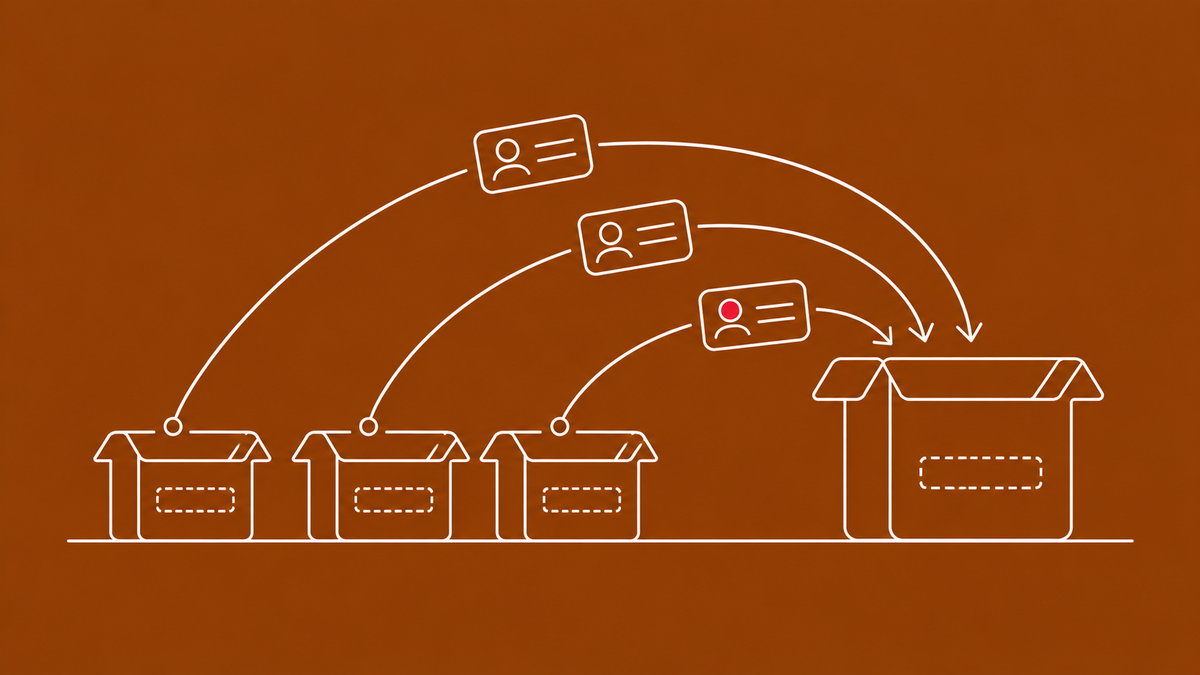
The editorial point is not the dataset. It is the technique. Joining old credential dumps to a target platform's public profile data to manufacture a marketable "breach" can be aimed at any consumer service whose users have appeared in historical breaches, with no platform intrusion required.
What Happened
The listing surfaced earlier in the week of May 25, 2026 on a well-known cybercrime forum, where a user operating under the alias "Euphoric_Reply_5727" advertised what they described as "340 Million User Records" linked to OnlyFans. The forum post framed the material as having been extracted from "internal OnlyFans databases," listed data fields including usernames, email addresses, phone numbers, follower counts, content statistics, linked social media profiles, and a field labelled "card" — described as the last four digits of a payment card linked to each account — and was priced at 0.313 BTC, about $76,000 (around £60,000). On X, the post was rapidly amplified as an OnlyFans hack, with at least one viral account claiming the platform had been compromised.
That framing collapsed when reporters reached the seller. In direct Telegram messages shared with Hackread, the seller clarified that no intrusion of OnlyFans had taken place: "We didn't breach or hack OnlyFans. We used existing breaches and leaks databases and matched with users of the OnlyFans platform." The sources the seller cited included previously compromised data from Twitter, Instagram, and Spotify, joined to publicly accessible OnlyFans profile information. Researchers reviewing the sample data noted irregularities consistent with that account: incomplete records, placeholder values such as "None," and a formatting style that, per Hackread, did not resemble how a modern consumer platform would store production database records internally. Cybernews observed that the sample records appear to date from around August 2025. OnlyFans did not respond to requests for comment from Hackread or Cybernews at the time of publication.
The Seller's Own Admission Is the Forensic Anchor
The single most important piece of evidence here is not technical — it is the seller's own statement. Asked directly about the origin of the data, the operator behind the listing told Hackread, on the record in a Telegram exchange the publication has shared, that they did not breach OnlyFans. "We used existing breaches and leaks databases and matched with users of the OnlyFans platform," the seller wrote. That is a direct denial of the very framing the listing's forum post was built on, and it inverts the burden of proof. The default reading of a 340-million-record dataset advertised as coming from "internal OnlyFans databases" is that OnlyFans has been breached; the seller's own words remove that default and replace it with a different claim — that the records were correlated, not stolen from the platform. The seller is also the worst possible witness against their own product: they have every incentive to inflate the dataset's perceived provenance, not undercut it. When the person trying to sell a "breach" volunteers that it isn't one, that is the strongest available signal that the breach framing should be rejected, not amplified.
Why the Sample Data Reads Like a Compilation, Not a Database Export
The other strand of evidence is the shape of the data itself. Hackread, which obtained sample records from the seller, described the material as a flat, text-based collection. Its review noted that several entries contained placeholder values such as "None," that records were incomplete, and that the formatting did not resemble how a modern consumer platform would store production database records internally. Many of the fields — follower counts, content statistics, linked social profiles — are attributes that an outside party can already read off a public OnlyFans profile page, which is exactly what one would expect if the dataset were built by scraping public profiles and joining them to credential records from elsewhere. Security researcher Troy Hunt, founder of Have I Been Pwned, publicly questioned the listing on X, noting that the "scrape" explanation did not align cleanly with the types of data being advertised unless OnlyFans were exposing personal details through public-facing endpoints. Hackread independently confirmed that several usernames in the sample matched real OnlyFans profiles, but attempts to validate associated email addresses did not produce account-exists confirmations on the platform — consistent with records pulled from elsewhere rather than from OnlyFans itself. None of that proves the entire dataset is authentic; what it demonstrates is that the data's shape, vintage, and field composition are compatible with a compilation built by correlation, not a clean modern database export.
Compilation-As-Breach Is Now a Repeatable Playbook
The reason this story matters beyond OnlyFans is that the technique generalizes cleanly. Any consumer-facing platform with publicly visible profile data and a userbase that historically appeared in major breaches can be the next "N-million-record leak" headline, with no intrusion of the platform required. The raw materials — old credential dumps, scraped public profile data, and a willingness to call the combination a "breach" — are abundant and cheap. The Verizon DBIR 2026 found that vulnerability exploitation just overtook credential theft as the number-one initial-access method, but credential reuse and the resulting reuseable corpora of usernames, emails, and phone numbers remain the building blocks of nearly every consumer-platform identity attack. The OnlyFans listing is a clean demonstration of how those corpora get repackaged. It also lands in the same week as third-party-blamed disclosures that genuinely required no intrusion of the named brand — Trump Mobile's confirmation that customer names, addresses, and phone numbers were exposed via a third-party platform provider rather than its own network — and continued reporting on real but vendor-mediated breaches such as the Vimeo data breach traced to third-party analytics vendor Anodot and attributed to ShinyHunters. The common thread is that the visible name on a viral breach headline is increasingly not the name of the system that was compromised, if any system was compromised at all.
Scope and Impact
The risk profile of a compilation is different from the risk profile of a breach, but it is not zero. The advertised dataset, even if entirely assembled from older sources, would correlate OnlyFans usernames to email addresses, phone numbers, and external social handles — and OnlyFans is a platform where many users rely on pseudonymity precisely so that their account cannot be linked to their real-world identity. A compilation that joins those identifiers undermines that protective separation regardless of how the records were obtained. The plausible downstream harms — targeted phishing against creators and subscribers, blackmail and extortion attempts, doxxing of pseudonymous accounts, credential stuffing against reused passwords — do not require the data to be fresh or sourced from an OnlyFans breach. They require only that enough of the join is real to be searchable.
Several specifics remain unconfirmed and should be flagged. Hackread verified that some usernames in the sample matched real OnlyFans profiles but did not confirm that the linked email addresses were actually registered on the platform, and the payment-card field's authenticity could not be independently validated. The 340-million record count is a seller's claim; no independent count has been published. Some observers, including the account IntCyberDigest on X, have suggested portions of the data may be AI-generated — a claim that has not been confirmed or ruled out. OnlyFans has not made an official statement as of reporting. What this analysis does not do is dismiss the listing: the risks attendant on a searchable identity database linking OnlyFans usernames to external identifiers are real. The narrow factual claim being rejected is the one that drove the listing's virality — that OnlyFans itself was hacked. On the available evidence, including the seller's own statement, that is not what happened.
The compilation-as-breach story sits at the intersection of two trends. The first is a steady shift in incident provenance — the company in the headline is increasingly not the company whose systems were compromised. The second is a journalistic problem: framing failures travel faster than corrections. A 340-million-record claim spreads across social media within hours, while the seller's denial and the researcher analysis that contextualize it land days later. The same dynamic distorted coverage of disclosures like the Radiology Associates, Docketwise, and Oncology Institute breaches attributed to third-party software providers, the Vimeo breach traced to third-party analytics vendor Anodot, and the Medtronic disclosure that followed ShinyHunters' nine-million-record claim. In each case, the question of what was actually compromised — and by whom — was answered correctly only after the headline had already taken its shape. For OnlyFans, the correction is on the record now: the seller said they did not breach the platform, and no public evidence has been produced that they did.
Response and Attribution
For communications, marketing, and security-leadership teams at consumer-facing platforms — particularly those whose users rely on pseudonymity — the immediate action is to build a response template for a compilation-as-breach event before one lands. The template should be ready to publish within hours of a viral claim and should do three things: state clearly whether the platform's systems were accessed and the basis for that finding, describe the platform's stance on data assembled from external sources without amplifying the seller, and direct users to concrete protective steps such as enabling MFA, rotating any reused passwords, and treating unsolicited messages referencing the platform as likely phishing. The template should be drafted by communications and legal in calm conditions, not improvised in a viral cycle, and it should be distinct from a real breach disclosure — because the worst outcome is a vague holding statement that reads, to users, as a confession.
For security and identity teams, the operational action is to audit what an attacker could rebuild about your users from publicly accessible material joined to known breach corpora. If your platform exposes usernames, follower counts, content metrics, or linked social handles on public profile pages, those fields are already the join keys for a future compilation listing. The defensive options are not all easy — many of these fields are core to the user experience — but the audit clarifies the trade-off: every public field is a potential row in someone else's "breach" dataset. Where pseudonymity is a core promise to users, security teams should also coordinate with breach-monitoring services on consistent classification standards. "Breach" and "compilation" are not interchangeable; the distinction is operationally and reputationally material.
For the broader CISO community, build the compilation-versus-breach distinction into incident-response triage and external-communications playbooks. Any "[Platform] N-million-record leak" claim should be tested on three questions before it is treated as a platform breach: does the schema match fields the platform is known to store internally rather than expose publicly, do the records' shape and freshness match a modern production export, and what does the seller themselves say about origin. Attribution and impact are best assessed slowly; framing decisions, unfortunately, are made fast. The defensive contribution security leaders can make is to ensure that, when a viral claim lands in their organization's news cycle, the team is equipped to ask the right questions rather than letting the loudest framing set the agenda.
The CyberSignal Analysis
Signal 01 — The Framing Failure Is the Story
Most coverage of this listing will report, with reasonable care, on what the seller is offering and what researchers have found. The detail that deserves the spotlight is the gap between the headline and the evidence. "OnlyFans hacked" is a story that wrote itself across social media in hours; "a threat actor compiled a 340-million-record dataset by joining old credential dumps to public profile data" is a longer, less viral, and far more accurate sentence. The framing failure is not a minor copy-editing issue — it materially changed what users, regulators, and reporters believed about a platform that had not, on the available evidence, been compromised. For an industry that has trained its incident-response muscle on real breaches, the compilation-as-breach event is a different problem and needs a different response. The seller's admission in this case makes the correction unusually clean, but the next compilation listing will not necessarily be so generous; the discipline has to be in the framing, not in waiting for the seller to confess.
Signal 02 — The Raw Materials for Compilation Breaches Are Already Public
The OnlyFans listing is uncomfortable not because it is unique but because it is repeatable. The components — historical breach corpora attributable to Twitter, Instagram, Spotify, and a long tail of other consumer platforms; publicly accessible profile pages on the target platform; and the operational willingness to call the combination a "breach" — are widely available. Any consumer-facing service whose users have appeared in major breaches over the past decade is, by that fact alone, eligible to be the subject of a future compilation listing. The defensive question for platform security teams is no longer whether your users' credentials have ever been compromised somewhere — almost universally yes — but how much of your public profile surface joins cleanly to those credentials, and how deliberate you have been about which fields you expose.
Signal 03 — A Same-Day Communications Template Is a Defensive Asset
The most useful operational lesson here is that consumer-facing platforms need a written, pre-approved response template for compilation-as-breach events, ready before the viral cycle begins. The template should be short, factual, and direct — distinguishing a real platform intrusion from a third-party-assembled compilation, declining to amplify the seller, and pointing users to MFA, password rotation, and phishing-awareness resources. The reason a template matters is timing. A 340-million-record claim spreads in hours; a response built from scratch under that pressure lands late and reads as ambiguous, which is functionally indistinguishable from confession in the eyes of an alarmed user. OnlyFans's silence here is a missed opportunity: a clear same-day statement would have given the correction a fighting chance. For every other consumer platform watching this story, the inexpensive defensive action is to write that statement now, in calm conditions.