Three Breaches in One Day Expose the Two Failures Driving 2026: Repeat Victims and Vendor Risk
Three breach disclosures landed in one cycle — Radiology Associates of Richmond (266,183 people), DocketWise (143,480), and a vendor breach at the Oncology Institute. None is a novel attack. Together they map 2026's two structural failures: repeat victimization and third-party risk.

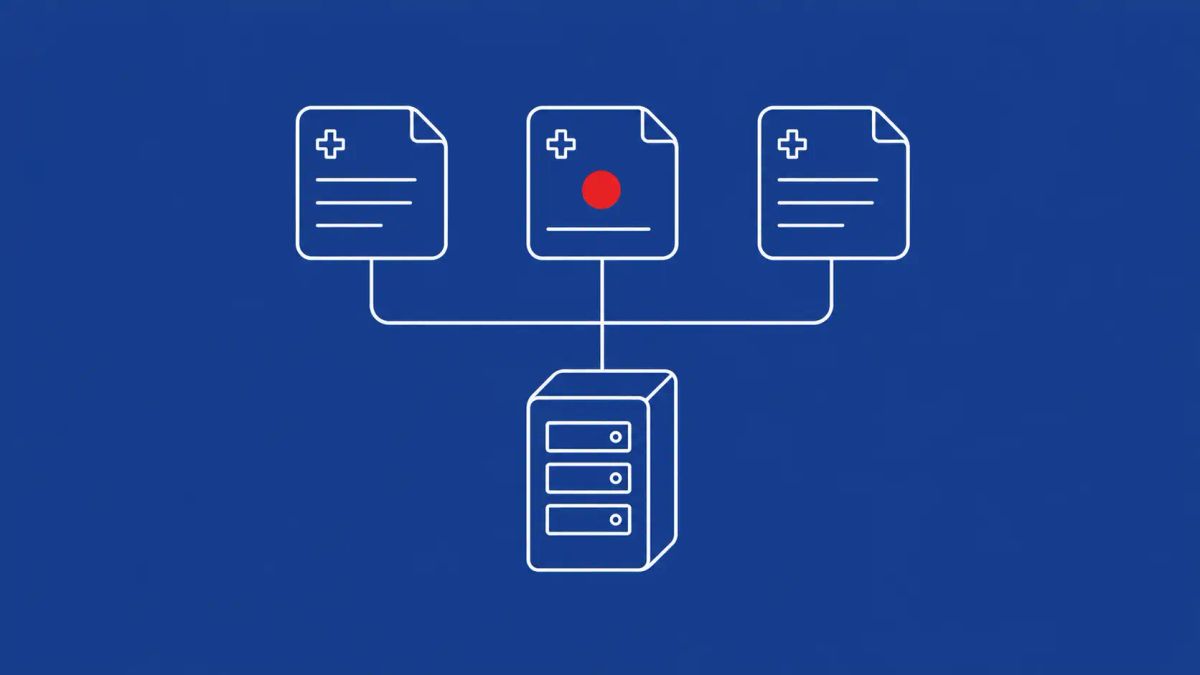
None of these three breaches is a clever new exploit, and that is precisely the point — the 2026 breach landscape is defined not by novel attacks but by two unsolved structural failures: organizations that do not remediate after a first breach, and sensitive data sitting in third-party systems the data owner does not control.
RICHMOND, VIRGINIA — Three breach disclosures involving highly sensitive personal, medical, and financial data surfaced in the same coverage cycle, and read together they illustrate two of 2026's most persistent breach patterns. Radiology Associates of Richmond, a Virginia radiology practice, disclosed a breach affecting 266,183 people — its second breach in roughly 14 months. DocketWise, an immigration and legal case-management platform, is notifying 143,480 people after a threat actor cloned third-party partner repositories using valid credentials. And a third disclosure — a breach at the Oncology Institute, attributed to a third-party vendor — was also reported.
The disclosures were anchored across the cycle by SecurityWeek, HIPAA Journal, ComplexDiscovery, state Attorney General breach filings in Maine and Vermont, and class-action investigation notices. No threat actor has been publicly attributed to any of the three.
What Happened
Radiology Associates of Richmond, a Virginia radiology practice, disclosed a data breach affecting 266,183 individuals, a figure drawn from its filing with the Maine Attorney General's Office. According to HIPAA Journal, files containing protected health information were accessed on or around July 25, 2025; the practice's investigation concluded April 6, 2026; and notifications to affected individuals began May 21, 2026. The Vermont Attorney General filing lists the exposed data as names, Social Security numbers, medical records, financial account codes, and credit and debit account information. This is the practice's second breach in roughly 14 months. The first, disclosed in April 2024, affected more than 1.4 million patients — a separate and far larger incident that should not be conflated with the new 266,183-person breach.
DocketWise, an immigration and legal case-management platform, is notifying 143,480 individuals after a threat actor cloned third-party partner repositories using valid credentials. The figure is the updated one reported by SecurityWeek; an earlier filing had cited roughly 116,666, and the number was revised upward. Some of the cloned repositories served as a data-migration pipeline for the DocketWise application and held law-firm records and personal information. According to the reported timeline, the incident occurred on or around September 1, 2025; a possible credential compromise was detected in October 2025; the scope was confirmed February 19, 2026; and consumer notifications began April 3, 2026. The exposed DocketWise data spans names, addresses, dates of birth, Social Security numbers, driver's license numbers, passport and government ID numbers, financial account numbers, payment-card numbers, tax ID numbers, health-insurance policy numbers, and medical condition and treatment information. DocketWise is offering 24 months of complimentary credit monitoring and identity restoration through IDX, with an enrollment deadline of July 3, 2026.
The third disclosure is the thinnest-sourced. A breach at the Oncology Institute was reported and attributed to a third-party vendor. Beyond that single confirmed fact — a vendor-mediated breach occurred — the specifics are not established in current sourcing, and this account does not assert a victim count, exact data types, the vendor's identity, or a timeline. The Oncology Institute matters here not for its details, which remain unverified, but as a third data point in the same pattern: sensitive data exposed because a third party that held it was compromised.
Radiology Associates of Richmond: A Second Breach in Fourteen Months
Radiology Associates of Richmond is the clearest illustration in this trio of the repeat-victimization problem. The practice disclosed a breach in April 2024 that affected more than 1.4 million patients. Roughly 14 months later, it is disclosing a second, distinct breach — this one affecting 266,183 individuals, with PHI files accessed on or around July 25, 2025. The two incidents are separate events with separate scopes and separate timelines, and current sourcing does not establish whether they share a root cause or a threat actor. What is established is the sequence: a major breach, then a second breach little more than a year later at the same organization — the kind of pattern that draws the regulatory consequences of healthcare security failures The CyberSignal has tracked through the year. For a security program, a first breach is supposed to function as a forcing event — the moment corrective actions are scoped, funded, and verified. A second breach 14 months later raises the unavoidable question of whether the remediation that should have followed the first one was actually completed. That question cannot be answered from the outside, but it is the question every healthcare board should be asking when a breach repeats.
DocketWise: When the Data Pipeline Is the Soft Spot
DocketWise's breach is the trio's clearest illustration of the third-party-data-pipeline problem. The platform serves immigration and legal practices, and the data it holds on their behalf is among the most sensitive any breach can expose: Social Security numbers, passports and government IDs, financial accounts, tax IDs, and medical and health-insurance details belonging to immigration clients. The vector was specific. A threat actor cloned third-party partner repositories — not DocketWise's primary production environment — using valid credentials. Some of those repositories served as a data-migration pipeline for the DocketWise application and held law-firm records. Data-migration pipelines are a recurring weak point because they often contain full copies of production data while sitting under weaker controls than the production system itself. The pattern echoes the healthcare breach disclosure-lag pattern The CyberSignal documented when Cerner's migrated-record storage was compromised — in both cases, data left behind in a migration tail became the breach surface. DocketWise's roughly seven-month gap from the September 2025 incident to April 2026 notifications fits the same long-lag profile.
The Oncology Institute and the 2026 Healthcare Breach Wave
The Oncology Institute disclosure is included here for one reason: it is a third independent data point confirming the same third-party-vendor vector, even though its specifics remain unverified. That vector is not an outlier — it is the dominant pattern of the cycle. These three breaches join a long 2026 run of healthcare and sensitive-data incidents The CyberSignal has tracked, including the largest healthcare third-party breach of the cycle at NYC Health + Hospitals, the broader 2026 healthcare-sector breach wave around Medtronic, and the recurring third-party-platform exposure vector seen outside healthcare entirely. The trend is quantified: the DBIR finding that third parties are involved in nearly half of all breaches — roughly 48 percent, up about 60 percent year over year — is the statistical backbone under every disclosure in this roundup.
Scope and Impact
The combined data set across the two detailed breaches is the kind that fuels identity theft for years. Radiology Associates exposed names, Social Security numbers, medical records, and financial account and card information for 266,183 people. DocketWise exposed a broader set still — names, addresses, dates of birth, Social Security numbers, driver's licenses, passports and government IDs, financial accounts, payment cards, tax IDs, health-insurance policy numbers, and medical condition and treatment data — for 143,480 people. Social Security numbers, government identification, financial accounts, and medical data are the highest-consequence categories a breach can expose, because they cannot be reissued the way a password can and they carry heightened regulatory obligations under HIPAA and state breach-notification law.
Several specifics across all three breaches are not established, and this account does not imply otherwise. No threat actor has been publicly attributed to any of the three. It is not known whether Radiology Associates' two breaches share a root cause or operator, how the DocketWise partner-repository credentials were obtained, or whether any of the exposed data has surfaced for sale or in downstream fraud. Whether ransomware was involved in any of the incidents is not confirmed. On the regulatory side, the established fact is narrow: class-action investigations are already being advertised for both Radiology Associates and DocketWise. Any HHS Office for Civil Rights review or state Attorney General action beyond the breach filings themselves is not confirmed.
The Oncology Institute portion warrants its own note on restraint. Current sourcing confirms only that a breach occurred and that it is attributed to a third-party vendor. The exact organization name, the number of individuals affected, the categories of data exposed, the vendor involved, and the timeline are all unverified. This roundup therefore treats the Oncology Institute as a single confirmed data point — a vendor-mediated breach — and nothing more. Readers should treat any more detailed account of that incident elsewhere as ahead of the available sourcing.
Response and Attribution
For healthcare and legal-sector CISOs, the two breaches with confirmed detail point to two distinct, concrete actions. Radiology Associates is the cautionary tale on repeat victimization: if your organization has had a breach, post-incident remediation is the control that prevents the next one — audit whether the corrective actions scoped after any prior incident were actually completed and independently verified, not merely planned. DocketWise is the cautionary tale on third-party data pipelines: inventory every third-party repository, pipeline, and vendor system that holds a copy of your data, and confirm credential hygiene across all of them — multi-factor authentication, credential rotation, and least-privilege access. Treat data-migration pipelines and partner repositories as high-value assets, because they frequently hold full copies of production data under weaker controls than production itself.
For privacy, compliance, and legal teams, both detailed breaches show the long disclosure lag that now characterizes 2026 healthcare incidents — roughly seven months from access to notification at DocketWise, and roughly ten months at Radiology Associates. Map your own incident-to-notification timeline against HIPAA and state-law deadlines before an incident forces the question. Exposed Social Security numbers, government IDs, financial accounts, and medical data carry heightened notification obligations and significant class-action exposure, a dynamic visible in the regulatory consequences of healthcare security failures that The CyberSignal has tracked through the year. For legal-sector firms specifically, the DocketWise breach carries a blunt lesson: the immigration clients whose passports and tax records were exposed are clients of the law firms that used the platform — when a legal-tech vendor is breached, the vendor's breach is the firm's clients' breach.
For SOC and incident-response teams, the DocketWise vector — repositories cloned with valid credentials — is a credential-hygiene and repository-access-monitoring problem. Alert on anomalous repository clone activity and on partner or service-account credential use from unexpected locations, and audit which third-party systems hold copies of sensitive data. On attribution, the honest position across all three breaches is that there is none; no operator has been named, and none should be inferred. The through-line for CISOs is structural rather than technical: repeat breaches and third-party exposure are not solved by a new tool. They are solved by disciplined remediation follow-through after a first incident and by sustained third-party risk management — unglamorous work that the 2026 breach record shows is still not being done.
The CyberSignal Analysis
Signal 01 — The Breach Landscape Is Not an Exploit Problem Anymore
The instinct in breach coverage is to look for the clever technique — the zero-day, the novel malware, the new evasion trick. These three disclosures offer none of that, and their shared ordinariness is the actual story. Radiology Associates was breached again. DocketWise's partner repositories were cloned with valid credentials. The Oncology Institute's vendor was compromised. There is no exotic exploit in any of it. What the trio demonstrates is that the dominant breach risk in 2026 is not technical sophistication on the attacker's side — it is unaddressed structural weakness on the defender's side. An organization that does not finish remediating after a first breach, or that cannot account for where its data physically sits across third parties, is exposed regardless of how good its endpoint tooling is. The takeaway for security leaders is uncomfortable: the breaches that will hurt most this year are the predictable, preventable ones, not the headline-grabbing novel attacks.
Signal 02 — A First Breach Should Be a Forcing Event, Not a Footnote
Radiology Associates of Richmond's second breach in 14 months is the part of this roundup that should land hardest with boards. A first breach is supposed to do something specific inside an organization: it scopes the gaps, justifies the budget, and creates the mandate to fix what failed. When a second breach follows roughly a year later, it raises a question that no external observer can answer but every internal stakeholder must — did the corrective actions from the first incident actually get completed and verified, or did they become a plan that quietly stalled once the headlines faded? The lesson is not specific to Radiology Associates, whose two breaches have no confirmed shared cause. It is general: post-incident remediation is itself a control, and like any control it can fail silently. Healthcare organizations that have had a breach should treat verification of their own corrective-action completion as a recurring audit item, not a one-time post-incident checkbox.
Signal 03 — Your Data Is Only as Secure as the Third Party Holding a Copy of It
DocketWise and the Oncology Institute were both compromised through third parties, and DocketWise's vector — cloned partner repositories serving as a data-migration pipeline — names the precise blind spot. Organizations invest heavily in securing their own production environments while sensitive data sits, often forgotten, in vendor systems, partner repositories, and migration pipelines that the data owner neither controls nor monitors. The Verizon DBIR 2026 put a number on it: third parties are now involved in roughly half of all breaches. The defensive response is not a product purchase. It is an inventory — a current, complete map of every third party that holds a copy of the organization's sensitive data, what controls protect it there, and what the contractual breach-notification obligations are. Data-migration pipelines and partner repositories deserve specific attention because they tend to hold full production copies under the weakest controls. The breach of a vendor that holds your data is your breach; the only way to manage that risk is to know, precisely, where your data lives.