Recorded Future: Iran's MOIS Has Expanded Its Handala Brand From Hacking Into Recruiting Proxies for Physical Attacks
Recorded Future's Insikt Group says Iran's intelligence ministry has expanded its Handala hacking brand into an umbrella for hybrid operations — uniting cyber, physical and influence personas that recruit proxies, for cash, to attack, surveil and sabotage US and Israeli interests.

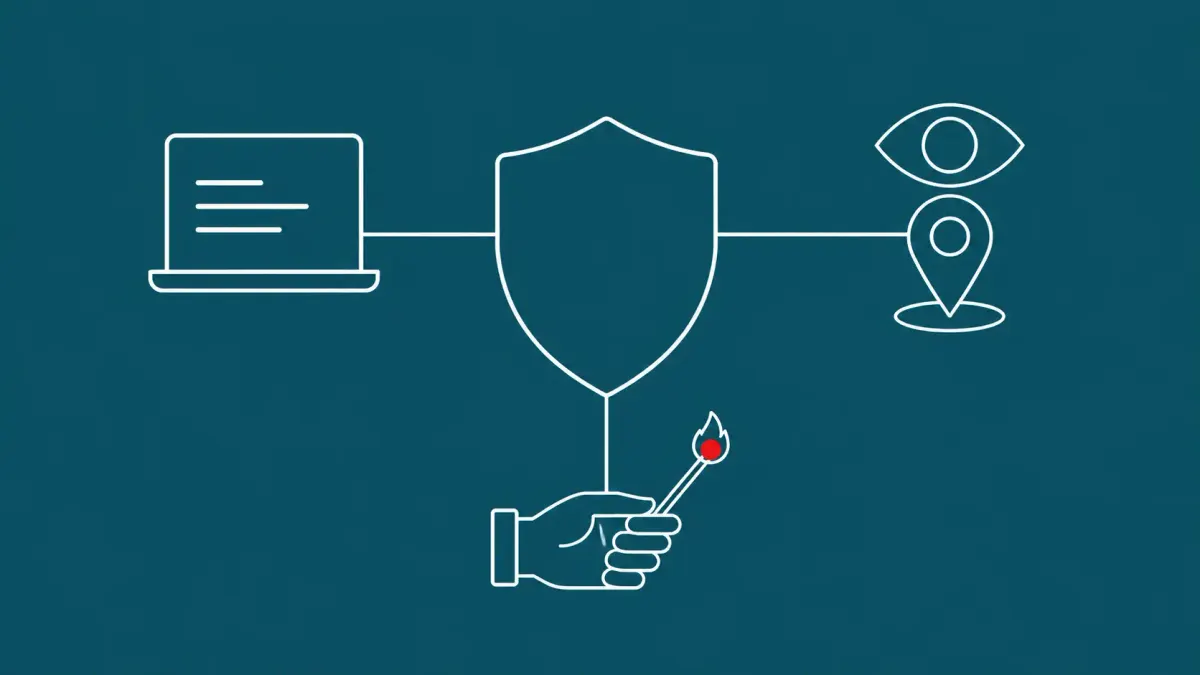
Handala built its name as a hacktivist brand that leaked data and posted it with political slogans. Recorded Future's finding is that Iran's intelligence service has turned that recognizable name into a recruiting banner for something far more dangerous — proxies willing to act in the physical world.
BOSTON — Iran's Ministry of Intelligence and Security has likely expanded its 'Handala' brand beyond the hack-and-leak operations that made it notorious, broadening it into an umbrella for physical and influence operations against US and Israeli interests, according to research that Recorded Future's Insikt Group published on June 2, 2026.
Insikt Group attributes four additional personas to MOIS and the Handala brand — with what it carefully frames as varying degrees of confidence — and assesses that they almost certainly share a common goal: soliciting individuals, for a financial reward, to conduct physical attacks, espionage and sabotage against personnel and assets tied to US and Israeli security services. The analysts stress this is an assessment of how Iran's external operations have shifted during the Iran War, not a claim of confirmed attacks.
What Happened
On June 2, 2026, Recorded Future's Insikt Group published an assessment that Iran's Ministry of Intelligence and Security has likely broadened the use of its 'Handala' brand to encompass external physical and influence operations targeting US and Israeli interests. The brand is best known for the Handala Hack Team, a prolific hack-and-leak persona that the US Department of Justice and researchers have tied to Void Manticore — an MOIS-linked threat cluster also tracked as TAG-145 and Banished Kitten. Since the start of what Insikt Group calls the Iran War, the analysts say they observed significant overlaps between Handala Hack Team, a newly created persona calling itself the Handala Popular Resistance Front (HPRF), and three influence-operations networks Insikt Group had previously identified. Based on frequent cross-posting and amplification among these entities, Insikt Group now attributes them to MOIS — and is explicit that it does so with varying degrees of confidence.
The four personas Insikt Group ties to the brand are HPRF, a purported network of physical-threat actors in Israel; VIPEmployment, a coordinated-inauthentic-behavior network that solicits proxies outside Iran to attack US and Israeli targets for financial rewards; MOISIRAN, a Telegram persona posting claimed surveillance footage of Israeli intelligence and military personnel; and Brave Israel, a largely inactive persona Insikt Group assesses with high confidence is part of the cluster and likely served as an early recruitment prototype. The analysts assess that HPRF and the three influence networks almost certainly share a modus operandi — their administrators solicit individuals to conduct physical attacks and espionage against US and Israeli entities, on behalf of Iranian intelligence, for pay — and that by uniting them under the globally recognized Handala name, MOIS likely seeks to amplify its solicitation and intimidation efforts.
From Hacktivist Cover Story to State-Run Umbrella Brand
The Handala persona first emerged in a Telegram channel in December 2023, taking its name from the iconic Naji al-Ali cartoon character to signal alignment with Palestinian resistance and present itself as an independent hacktivist group. Insikt Group's assessment is that, between 2023 and 2025, that pro-Palestinian framing almost certainly served as cover — preserving plausible deniability while MOIS ran strategic operations behind it. What the new research describes is the cover being dropped: MOIS now overtly deploys the Handala brand to amplify the psychological impact of its operations, with Iranian media openly calling it a 'strategic front of the Axis of Resistance' in the US-Iran conflict. Handala Hack Team itself has been one of the most prolific Void Manticore personas, with claimed operations against Israeli government, security and critical-infrastructure targets and, increasingly, US targets — including the doxxing of US Marines and a claimed breach of FBI Director Kash Patel's personal email. The brand's global recognition is precisely the asset MOIS is now reusing.
The Recruitment Economy Behind the Brand
The detail that gives the assessment its weight is the documented pay-for-action recruitment. Insikt Group describes VIPEmployment using Telegram bots to solicit individuals in dozens of countries to conduct espionage and physical attacks against US- and Israel-linked targets, with Arabic-language posts explicitly listing actions and promising rewards. Earlier MOIS-linked recruitment showed the same pattern at the low end: the 'Brave Israel' persona offered set fees — on the order of $100 for a photo, $40 for graffiti, and $1,000 to burn a car — which a Shin Bet official has described as a 'spray-and-pray' approach that makes many small investments hoping to develop a few real recruits. The model has produced at least one documented enforcement action: in August 2025, Israeli police arrested two people in Holon on suspicion of security offenses involving contact with Iranian intelligence, one reportedly in touch with VIPEmployment-linked individuals and paid in cryptocurrency. This is the same hybrid playbook The CyberSignal saw in the Handala leak of 2,379 US Marines' data and the WhatsApp threats that accompanied it — pressure aimed at people, not just systems.
Why the Cyber and Physical Sides Reinforce Each Other
Insikt Group's central strategic point is that combining these capabilities under one brand likely increases the impact of each. Its illustrative example is concrete: Handala Hack Team could breach the personal accounts of a senior official and hand the resulting information to Handala recruits and proxies to support physical attacks or surveillance. That is why the analysts assess the largest risk to most organizations very likely still comes from the hack-and-leak and wiper operations — the breaches are not just embarrassment, they are pre-attack intelligence. The MOIS attribution is consistent with the chain The CyberSignal has tracked across this cycle, from the Gambit Security work tying the LA Metro 'Ababil of Minab' persona to Iran's MOIS to the broader pattern of Iranian APT operations such as MuddyWater's false-flag activity. The thread is persona reuse: MOIS spins up independent-looking hacktivist and media brands with overlapping tradecraft, then adapts and consolidates them as geopolitics shifts — and the Handala umbrella is the most developed example yet.
Scope and Impact
It is important to be precise about what Insikt Group is and is not claiming, because the report itself is careful. This is an analytic assessment built on observed online overlaps — cross-posting, shared bots, reused operators — and the attributions are explicitly graded ('likely,' 'very likely,' 'almost certainly,' and in Brave Israel's case 'high confidence'), not presented as proven fact. The HPRF's April 26, 2026 claim to have set fire to a Shin Bet officer's car would, if accurate, be the first physical attack overtly claimed under the Handala name, but Insikt Group flags it as a claim. Likewise, MOISIRAN's surveillance footage and its claim to have recruited an Israeli police officer could not be definitively substantiated, though the analysts note the material appears authentic and consistent with prior Handala intimidation tactics. Preserving those hedges is the point: the responsible read is 'a credible intelligence firm assesses an expansion,' not 'Iran has confirmed a physical-attack network.'
Within that framing, the exposure is real and specific. Insikt Group names heightened risk for US and Israeli law enforcement, military and intelligence agencies and their personnel, and for energy, transportation and research organizations operating in the region. The geographic aperture has widened during the war: VIPEmployment's solicitations, once aimed mainly at Israeli audiences, have spread into job-seeker, student, and political Telegram channels across Europe, the Gulf, Australia and English-speaking countries. And Insikt Group is blunt that this activity sits below the threshold of armed conflict in Tehran's calculus, so it will almost certainly continue regardless of any ceasefire — meaning organizations should treat it as an enduring condition, not a wartime spike that will subside.
Response and Attribution
The defining response lesson, and the one Insikt Group's findings most strongly support, is that cyber-security and corporate- or physical-security functions can no longer operate in separate lanes for organizations with US-Israel-aligned exposure. The same breach that a SOC treats as a data-loss incident can become the targeting package for a physical operation, so incident response for a senior-executive or security-personnel account compromise should now include a physical-security and personnel-protection review. Insikt Group's own mitigations split along those lines: on the cyber side, prioritize patch and vulnerability management, enforce phishing-resistant MFA, harden email and endpoint defenses against the DLL-sideloading and PowerShell-abuse tradecraft these clusters use, segment and monitor R&D and manufacturing networks, maintain offline backups against wipers, and — notably — establish rapid workflows to verify or dismiss false hacktivist breach claims, since the FUD is part of the weapon.
On the physical side, Insikt Group recommends folding Iran-nexus physical-threat TTPs into tabletop exercises for physical-security teams, applying government facility-protection guidance around surveillance, lighting and security personnel, and limiting voluntary publication of facility layout, function and security-measure details beyond what regulations require. For organizations supporting US-Israel-aligned individuals — NGOs, universities, defense contractors, media — the proxy-recruitment vector is the hardest part to detect, because the operational layer is outsourced to recruits with little direct tie to Iranian infrastructure; the practical step is coordination with national-security law enforcement, which is the primary defense against that recruitment model. Throughout, the brand-evolution arc itself — a hacktivist persona maturing into a documented state-coordinated, multidomain umbrella — is a pattern worth recognizing when evaluating other 'independent' personas, and the appropriate posture is sober vigilance rather than alarm: act on the assessment, but represent it with the same care Insikt Group did.
The CyberSignal Analysis
Signal 01 — A Recognizable Name Is an Operational Asset
The strategic insight in Insikt Group's report is that MOIS is treating brand recognition the way a marketer would — as reach. Handala Hack Team spent two years building a global profile through high-visibility leaks; consolidating physical-threat and influence personas under that same name lets MOIS borrow that profile to advertise solicitations, intimidate targets, and attract recruits it could not reach with an unknown persona. For defenders, the lesson is that a notorious cyber brand is not just a hacking problem; it is a recruitment and intimidation platform whose notoriety is itself the capability. Tracking the brand's amplification network — who reposts whom, which bots appear in which channels — is, as Insikt Group demonstrates, one of the more reliable ways to map the larger operation.
Signal 02 — Hack-and-Leak Is Now Pre-Attack Intelligence
The most consequential reframing for security teams is that a Handala breach can no longer be scoped as a confidentiality incident alone. Insikt Group's example — using a breach of a senior official's personal accounts to support physical targeting or surveillance of that person — collapses the wall between a data leak and a physical threat. That is why the analysts assess the hack-and-leak and wiper operations very likely remain the biggest risk to most organizations even amid the physical-threat expansion: the cyber side feeds the physical side. The operational implication is that a high-value-individual account compromise should trigger a personnel-protection conversation, not just a password reset, and that executive-protection programs at exposed organizations now warrant specific Handala/MOIS threat profiling. One such Handala breach was the group's claimed wiper attack on US medical-device maker Stryker, which disrupted the company's corporate systems.
Signal 03 — Treat Graded Assessments as Graded
This story is also a test of editorial and analytic discipline. Insikt Group built its case on observed online overlaps and graded every attribution; the headline-friendly version — 'Iran runs an assassination network under its hacker brand' — overstates what the evidence supports and does the reader a disservice. The honest framing is that a credible firm assesses, with stated and varying confidence, that MOIS has expanded the Handala brand into hybrid operations, and that specific claims like the HPRF arson and MOISIRAN's surveillance footage remain unverified even where they appear authentic. Defenders should act on the assessment — the recommended cyber and physical mitigations are prudent regardless — while representing it with the same care the analysts used. Carrying the hedges forward is not timidity; it is accuracy, and it is what keeps a threat assessment useful rather than inflammatory.



