Group-IB Documents “HollowGraph” Malware Abusing Microsoft 365 Calendars for C2
A novel Microsoft 365 calendar-abuse malware framework — defender detection-engineering review this week.

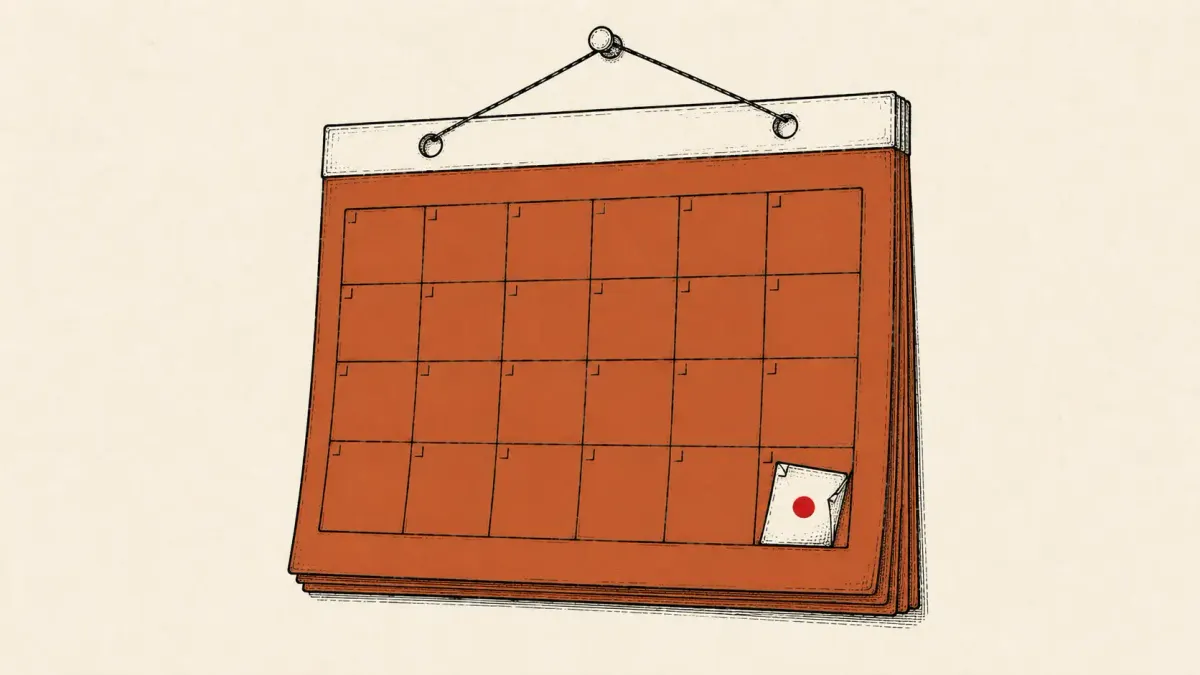
A newly documented espionage implant turns a trusted Microsoft 365 workflow into a covert command channel — and turns the defender conversation toward identity, application permissions, and behavioral detection.
SINGAPORE — Threat-intelligence firm Group-IB on July 20, 2026 documented a newly discovered espionage implant it named HollowGraph, which the firm says abuses a compromised Microsoft 365 account’s calendar as a two-way command-and-control (C2) dead drop. According to Group-IB, the malware hides operator tasking and stolen files inside calendar events dated far into the future — to the year 2050 — so the mailbox owner is unlikely ever to notice them, and it moves everything through legitimate Microsoft Graph API traffic so the activity blends into ordinary Microsoft 365 chatter.
Reporting from The Hacker News and SecurityWeek frames HollowGraph as a stealthy, identity-centric implant rather than a software exploit. There is no Microsoft vulnerability to patch here — the defensive work sits in identity, application permissions, and monitoring, which is where this coverage stays. The CyberSignal is deliberately not reconstructing the technique’s operational steps; what follows is the defender-relevant summary.
What Group-IB Documented
According to Group-IB, HollowGraph is a compact espionage implant built around a single idea: rather than contacting an attacker-owned server, it treats a compromised Microsoft 365 mailbox’s calendar as a shared drop box. Operators plant instructions as calendar events; the implant reads them, and it returns stolen data by creating its own events with encrypted attachments. Group-IB reports the payloads are protected with hybrid RSA and AES encryption, and that the malware relies on only two supported commands to fetch tasking and to send data.
The firm says it found the implant on at least 12 machines, roughly three of which were actively communicating with the operators during its analysis window, with observed victim traffic running from early June to July 9, 2026. Recovered indicators — including an Israeli mailbox used for exfiltration — point, in Group-IB’s assessment, to a focused interest in Israeli entities rather than broad, opportunistic compromise, and the firm reads that small, selective footprint as targeted espionage.
The Microsoft 365 Calendar-Abuse Technique in Defender Terms
Why the approach matters to defenders is less about a novel concept than about where it hides. Because tasking and exfiltration ride the Microsoft Graph API through an already-compromised account, the traffic looks like normal Microsoft 365 activity, and network controls tuned to attacker-owned destinations have little to flag. Calendar events dated to the year 2050 sit far outside any window a user or a routine review would scroll to, which is precisely the point of parking them there.
Group-IB also describes a secondary channel that keeps the account access alive, reportedly refreshing over DNS the Microsoft Entra ID (Azure AD) application credentials the implant uses to reach Graph. That detail reframes the defensive problem as one of identity and application-permission hygiene. As Group-IB and multiple outlets note, hiding C2 inside trusted Microsoft services is not new — prior campaigns have abused mailboxes, drafts, and cloud storage, including a China-nexus cluster The CyberSignal covered that ran C2 through OneDrive and Discord — and the calendar is simply the latest surface defenders had little reason to inspect.
The Cavern Framework Link
Group-IB ties HollowGraph to Cavern — a modular backdoor framework that Check Point documented earlier in July 2026 — with high confidence, on the basis of shared command syntax and matching internal tasking. Check Point attributed Cavern to an Iran-nexus actor it calls Cavern Manticore, a cluster it says overlaps with the known Iranian groups MuddyWater and Lyceum.
Crucially, Group-IB draws the firm link to the code, not to the crew. The firm explicitly declines to name the operator behind this campaign, citing only a low-confidence technical overlap with Lyceum, an OilRig subgroup. For defenders, that distinction is the point: a code-lineage match to a framework is useful for detection engineering, but it is not the same as attribution — a restraint that echoes prior CyberSignal coverage of MuddyWater tradecraft. Group-IB has not asserted a named operator, and this coverage does not either.
Defender Posture for Microsoft 365 Customers
Because HollowGraph rides a compromised account and legitimate Graph functionality, the highest-leverage responses are identity and application-permission controls rather than a patch. Group-IB’s guidance centers on the OAuth applications that can reach Graph with client credentials: restrict and audit them, alert on newly created client secrets, and rotate credentials. Standard Microsoft Entra ID hygiene — Conditional Access, credential rotation, and anomalous-token detection — applies directly, because the malware’s foothold is an application identity.
The identity layer is also where a compromise stays observable. Even when an application is operating with valid credentials, defenders retain signal in Microsoft Graph and mailbox audit logs: application-driven calendar changes, unusual OAuth grants, and anomalous token use are all detectable. HollowGraph lands amid a sustained run of Microsoft 365 identity threats The CyberSignal has tracked, from device-code phishing that turns Microsoft’s own login page against M365. The durable posture treats the mailbox and its calendar as a monitored asset, not a blind spot.
A Detection-Engineering Review of the Published Indicators
For detection engineers, Group-IB’s report offers concrete, defender-facing indicators to convert into analytics. The sharpest signals live in the calendar itself: events carrying a far-future date — Group-IB cites May 13, 2050 — subjects that are bare GUIDs or match the operator’s naming scheme, and attachments following a predictable file-name pattern. Those map to hunts for calendar events, attachments, and subject renames created by an application rather than by a person.
On the network side, the firm points to unusually frequent DNS AAAA queries and long, high-entropy subdomains aimed at a single domain, alongside a named C2 domain and an on-disk configuration file dressed up as a routine log. Group-IB stresses these are a starting point for coverage — with the full indicator set, including file hashes, in its report — not a static block list. Because the technique is reusable beyond this campaign, and reads as targeted espionage consistent with other implants The CyberSignal has documented such as Showboat, the more durable analytics are behavioral: application-driven calendar activity and identity anomalies, not any single domain.
Open Questions
Several questions remain open, and Group-IB is careful not to overstate them. The operator behind HollowGraph is unnamed; the total number of confirmed victim organizations beyond the machines Group-IB observed is not established; and it is not confirmed whether Microsoft has coordinated any customer advisory tied specifically to this activity. Whether other calendar-abuse variants are already circulating is likewise unknown.
What is assessable is direction. A technique that hides C2 in a high-trust workflow — and that Group-IB notes could be reused far beyond this one campaign — rewards defenders who instrument identity and application activity now rather than waiting for an advisory a workflow-abuse threat may never warrant.
The CyberSignal Analysis
The facts above are drawn from Group-IB’s research and the cited reporting; what follows is The CyberSignal’s editorial reading for defenders. None of the judgments below are new reported facts.
Signal 01 — The Abuse Is of Trust, Not a Flaw
The most important thing to hold onto is that HollowGraph exploits no Microsoft vulnerability. It rides a compromised account and the Graph API’s normal behavior, which is precisely why there is no patch and why the response is identity work — application-permission review, secret monitoring, and Conditional Access. Our reading is that teams should file this as an identity-and-SaaS-monitoring problem, not an endpoint one, and resource it accordingly.
Signal 02 — Trusted-Service C2 Is the Pattern to Watch
Hiding command-and-control inside trusted Microsoft services is a maturing trend, and the calendar is just the newest drop point after mailboxes, drafts, and cloud storage. Our assessment is that detection strategies keyed to attacker-owned infrastructure will keep losing ground to this class of abuse. The reliable backstop is behavioral: alerting on application-driven changes to mailbox and calendar objects, regardless of which specific service is abused.
Signal 03 — Attribution Restraint Is the Right Posture
Group-IB’s decision to link HollowGraph to the Cavern code with high confidence while declining to name an operator is, in our view, the model to emulate. A framework match sharpens detection; it does not establish a crew. Defenders lose nothing by acting on behavior and indicators now, and they avoid the cost of a premature attribution that later reporting may complicate or overturn.