Chrome Is Installing a 4GB AI Model on Your Machine Without Consent
Privacy researcher Alexander Hanff documented Chrome silently downloading a 4GB Gemini Nano model to user devices without consent.

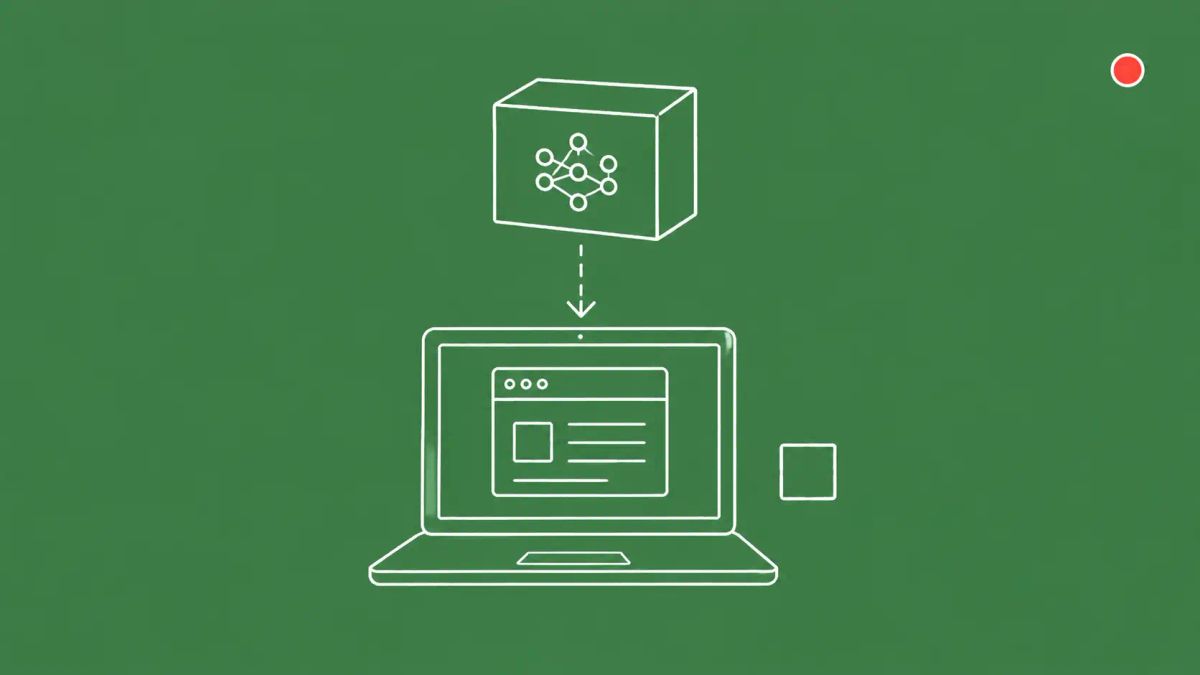
Two AI vendors. One pattern. Your machine is now treated as deployment surface for the vendor's product roadmap, with the user as a configuration variable rather than the legal authority on what runs there.
BRUSSELS — Privacy researcher Alexander Hanff, who publishes as That Privacy Guy, documented on May 4, 2026 that Google Chrome silently installs a roughly 4GB on-device AI model. The file is Google's Gemini Nano large language model, stored as a binary weights file in the OptGuideOnDeviceModel directory of the Chrome user data folder, with no user consent, notification, or clear opt-out option. The download triggers automatically when Chrome AI features are active, which is the default in recent Chrome versions on devices that meet hardware requirements.
Hanff's analysis was independently confirmed within 48 hours by Tom's Hardware, Malwarebytes, Cybernews, TechSpot, and Gizmodo. Google's response, communicated through Android Authority, says the file is tied to on-device AI features powered by Gemini Nano and that beginning in February 2026 Chrome rolled out a way for users to easily turn off and remove the model directly in Chrome settings. Once disabled, Google says the model will no longer download or update. The pattern lands alongside the broader rise of vendor-controlled AI infrastructure documented in the Hugging Face Boxter typosquat campaign and Anthropic's earlier Claude Desktop browser-bridge install.
What's downloaded and when
The file is a binary model weights file stored inside the Chrome user data directory under the OptGuideOnDeviceModel subfolder on Windows. The contents are model weights for Gemini Nano, the same on-device LLM family that powers AI features on Pixel phones. The on-disk footprint is roughly 4GB and updates with new model versions as Google publishes them. Hanff's documentation includes the directory path, the file size, and the absence of any visible user-facing prompt at any point in the install flow.
The trigger is the activation state of Chrome's on-device AI features. In recent Chrome versions on hardware that meets the model's compute and storage requirements, those features are on by default. Users on devices that do not meet requirements do not receive the download. Users on devices that do meet requirements receive the download silently the first time the relevant Chrome feature initializes. Google's February 2026 settings change added a user-visible toggle that, once disabled, halts future downloads and removes the model. Hanff and confirming reporters note the toggle is a remediation rather than a consent mechanism. The default behavior on a fresh Chrome install on capable hardware is still automatic download.
The Anthropic precedent and what it tells us about pattern
Hanff's earlier analysis on April 18, 2026 documented a structurally similar pattern in Anthropic's Claude Desktop application. Claude Desktop quietly installed a browser integration bridge across multiple Chromium-based browsers, including five browsers Hanff did not have installed, and reinstalled if removed. The technical mechanism is different — Anthropic's was a bridge component for browser integration, Google's is on-device model weights — but the consent architecture is the same. The vendor decides what gets installed on the user's machine to support the vendor's product. The user is not asked. The user can sometimes turn it off after the fact.
Two examples within four weeks is not a coincidence. It is a design pattern emerging across the AI tooling layer, where vendors increasingly need on-device components — model weights for inference, integration bridges for cross-application context, agent runners for task automation — and they default to installing those components without user consent because asking would create friction at scale. The same pattern will appear with more vendors, more components, and broader deployment surfaces in the next 12 months.
The GDPR and DPIA dimension
For EU-headquartered organizations, the silent-install pattern raises specific GDPR questions that DPOs need to address. Article 6 lawful basis: what is the lawful basis for installing a 4GB binary on a corporate endpoint? Consent has not been obtained, contract performance is a stretch for a feature that is incidental to the browsing function, and legitimate interest needs a balancing test that the organization has not conducted. Article 35 DPIA: silent install of vendor-controlled model weights that process user data on-device is a high-risk processing activity that triggers DPIA requirements. Article 25 data protection by design: a default-on configuration that downloads a 4GB model without notification fails the by-design test on its face.
None of these are settled questions, and Google's February 2026 toggle is a partial response. But the burden of analysis sits with the deploying organization, not the vendor. EU DPOs reading the Hanff documentation should treat it as a trigger for a new DPIA finding rather than a vendor advisory to acknowledge and file.
Why the consent architecture matters beyond this one model
The substantive concern is not that Gemini Nano is uniquely dangerous. The model runs on-device, does not appear to exfiltrate user data, and serves features that some users will find useful. The concern is the precedent. Once silent install of vendor-controlled binaries is normalized for one model from one vendor, the architecture is in place for the next model, the next vendor, and the next category of component. The threat model that compliance and security programs need to address is not the specific 4GB file, but the design pattern that allows any vendor with installed software to push any binary to the endpoint at any time without consent.
Enterprise endpoint controls were not designed for this. Software inventory tools track installed applications and their versions; they do not track binary asset downloads inside application user-data directories. EDR tools alert on process behavior and known-bad signatures; they do not alert on a vendor-signed model weight file appearing in a vendor application's normal directory. The detection and governance stack needs new instrumentation to keep up.
The CyberSignal Analysis
Signal 01. Silent install is now a documented AI vendor design pattern
The Anthropic and Google examples within four weeks of each other establish silent install of vendor-controlled binaries as a design pattern across at least two major AI vendors. Treat the pattern as the finding, not the individual incidents. The right organizational response is a vendor-class control update covering all AI vendors with installed software footprint, not a one-off remediation against Chrome or Claude Desktop.
Signal 02. DPIAs need to address vendor silent-install behavior as a new processing category
Vendor silent-install of model weights and integration components is now in scope as a finding for any DPIA covering Chrome, Claude Desktop, or comparable AI tooling at an EU-headquartered organization. The Article 35 DPIA does not need to wait for regulator guidance. DPOs can update DPIA templates immediately to include a section on vendor-installed AI infrastructure: what gets installed, when, by what trigger, with what user notification, with what user control, processing what data on-device.
Signal 03. Shadow AI infrastructure complements shadow AI usage
Most AI security programs scope their concerns to employee use of AI tools. Employees may not be using AI tools at all, but their browsers and applications are running AI models silently in the background. The two threat surfaces are different: shadow AI usage is about user behavior with vendor products; shadow AI infrastructure is about vendor behavior on user endpoints. The governance for shadow AI usage (AUP, training, DLP) does not catch shadow AI infrastructure. The latter needs endpoint detection rules, vendor security review changes, and procurement-level posture against silent-install behavior.
What to do this week
- Use Group Policy on Windows or MDM (Jamf, Intune, Kandji, etc.) to disable Chrome AI features fleet-wide if your organization has not already done so. The specific policy is GenAILocalFoundationalModelSettings, which can be set to disable Gemini Nano downloads. Document the policy decision and the rationale for compliance records.
- Run a fleet inventory on Chrome user data directories across endpoints, looking for the OptGuideOnDeviceModel subfolder. Document current exposure: how many endpoints have already received the download, on what date, in what Chrome version. The inventory is the baseline for the DPIA update.
- Update your AUP and AI vendor security review process to explicitly address silent-install patterns. Specifically, add procurement-level questions: does the vendor's software install any binary assets after initial install, and under what conditions; what user consent or notification accompanies those installs; what user controls exist to disable or remove them.
- For EU-headquartered organizations: brief your DPO on the Hanff documentation and treat it as a trigger for DPIA review of Chrome and any comparable AI-tooling vendors with installed software footprint. Coordinate with legal on Article 6 lawful basis analysis before relying on Google's February 2026 toggle as the remediation.