Cybersecurity 101
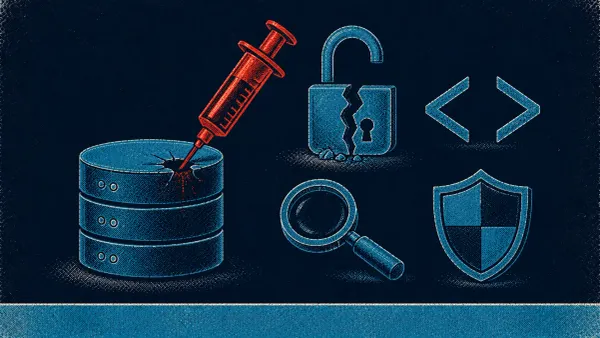
What Is SQL Injection (SQLi)?
A complete guide to SQL injection — how SQLi attacks work, the main types, what attackers can do with them, and the proven ways to prevent them.
This category focuses on the security lifecycle of software, from development and deployment to runtime behavior. Coverage includes vulnerability research, unauthorized persistence mechanisms (such as Launch Agents and Daemons), API security, and the risks associated with third-party software integrations. It serves as the primary resource for identifying how flaws or "hidden features" in applications can lead to system-wide compromise or data exfiltration.
Cybersecurity 101
A complete guide to SQL injection — how SQLi attacks work, the main types, what attackers can do with them, and the proven ways to prevent them.
Supply Chain Attack
Researchers found more than 700 malicious version tags published across the Laravel-Lang PHP project on May 22-23, 2026 — yet the official repositories were never modified. The attacker pointed Git tags at a fork they controlled to drop a credential stealer.
Vulnerabilities
CVE-2026-48172, a CVSS 10.0 flaw in the LiteSpeed User-End cPanel plugin, lets anyone with a valid cPanel account run code as root. LiteSpeed confirms it is being actively exploited. On shared hosting, one cheap account is now a path to every account on the server.
Supply Chain Attack
An automated campaign called Megalodon pushed 5,718 malicious commits to 5,561 GitHub repositories in six hours, hiding secret-stealing payloads inside CI/CD workflow files. It weaponizes the merge — the most routine action in software development.
Application Security
Microsoft's Digital Crimes Unit disrupted Fox Tempest on May 19 — a malware-signing-as-a-service operation that issued over 1,000 fraudulent code-signing certificates to ransomware crews including Rhysida, Vanilla Tempest, and three Storm clusters at up to $9,500 per signed sample.
Threat Intelligence
Verizon's 19th DBIR re-baselines the threat model: vulnerability exploitation hit 31% of breaches up from 20% — now the #1 vector. Credential abuse fell to 13%. AI is shrinking patching windows from months to hours. Third-party breaches up 60% YoY.
Application Security
InfoGuard Labs disclosed seven CVEs in SEPPmail Secure E-Mail Gateway including CVE-2026-2743 (CVSS 10.0 path traversal to full appliance takeover) and CVE-2026-44128 (unauthenticated Perl eval() RCE). Patched in 15.0.2.1, 15.0.3, and 15.0.4.
Application Security
Mini Shai-Hulud pushed ~42 malicious packages through a compromised @antv maintainer account on May 19 with valid Sigstore Fulcio certificates and Rekor entries. The green "verified" badge defenders have been trusting now sits on malicious code.
Application Security
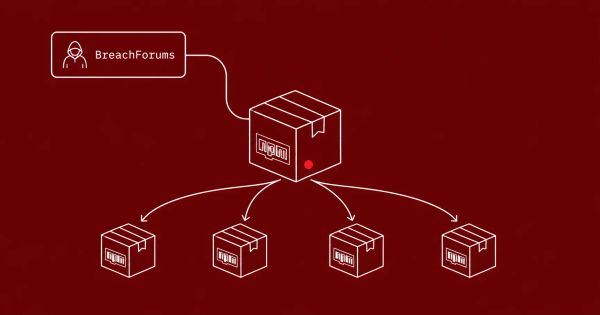
A single npm user account pushed four malicious packages, including a near-verbatim clone of the Shai-Hulud worm, within a week of TeamPCP open-sourcing the worm source on BreachForums. Mini Shai-Hulud has graduated from a campaign to an ecosystem capability.
AI Security
CrowdStrike extended Falcon AIDR to Kubernetes AI workloads with a 180-technique taxonomy and 99% sub-30ms benchmark — making AI runtime security a five-vendor category.
Cyber Attacks
Tycoon2FA is back six weeks after the Microsoft/Europol takedown — now phishing OAuth device-code consents against M365 via a Trustifi-laundered relay.
Cyber Attacks
Grafana caught a CoinbaseCartel breach via canary token, traced it to a pull_request_target Pwn Request, and refused to pay — the second Pwn Request hit in three weeks.