What Is Zero Trust Security? Core Principles & Pillars
Zero trust security replaces the old "trusted inside, hostile outside" model with a single rule: never trust, always verify. This guide covers the core principles, the NIST and CISA frameworks, the five pillars, ZTNA versus VPN, and how to implement it in stages.

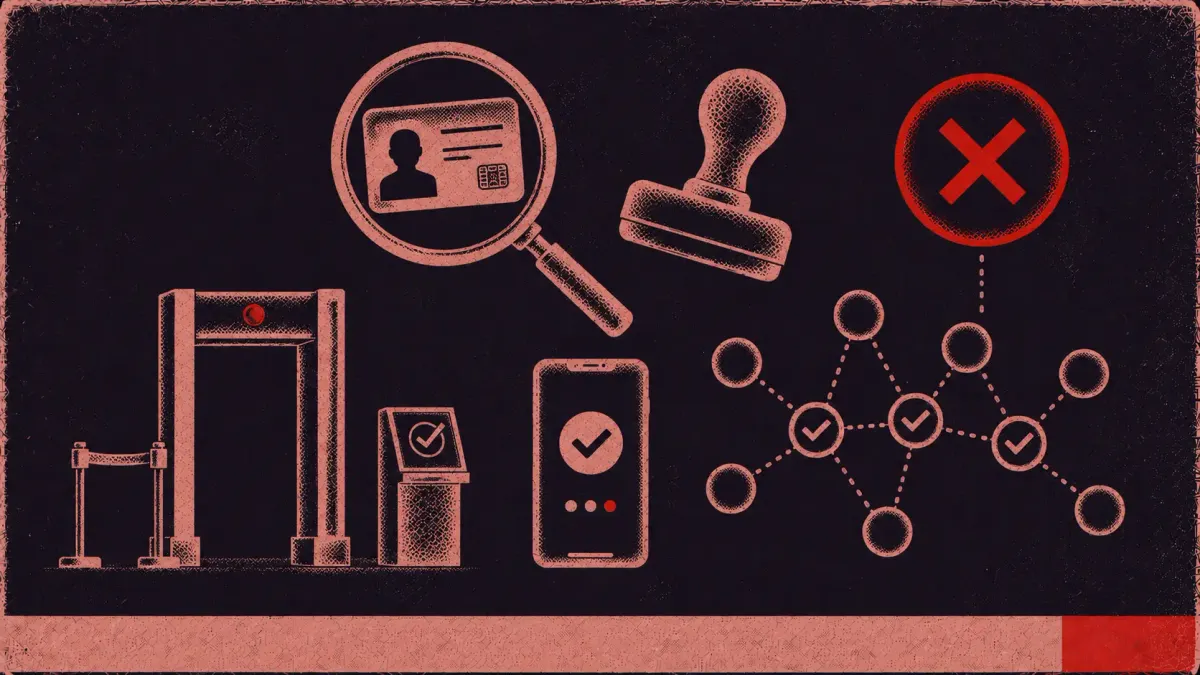
For two decades, network security ran on a single assumption: inside the firewall was safe, outside was hostile. Remote work, cloud infrastructure, contractor access, and attackers who quietly move sideways through compromised networks have all broken that assumption. Zero trust security is the architecture built for a world where location no longer implies trust — and in 2026 it is embedded in U.S. federal mandates, cyber-insurance checklists, and nearly every serious cloud roadmap.
Zero trust security is a model that treats no user, device, or network as trusted by default — even inside the corporate perimeter. Every request to access a resource is authenticated, authorized, and continuously validated against identity, device posture, and context before it is allowed. Its guiding maxim is simple: never trust, always verify.
The term was coined by Forrester analyst John Kindervag in 2010, then formalized by the U.S. National Institute of Standards and Technology in NIST SP 800-207, the reference definition most vendors and governments now align to. It is no longer a niche philosophy; it is the default blueprint for anything built today.
● ANATOMY OF A ZERO TRUST ACCESS DECISION Every request is verified explicitly — nothing is trusted because of where it comes from. |
1 · ACCESS REQUEST A user or device asks for one specific resource — an app, an API, a dataset. |
| ↓ |
2 · POLICY ENFORCEMENT POINT The request is intercepted at the resource. There is no trusted “inside” to fall back on. |
| ↓ |
3 · POLICY DECISION POINT Signals are scored together: identity + MFA, device posture, location, behavior, risk. |
| ↓ |
4a · GRANTED, NARROWLY Least-privilege access to that one resource — then continuously re-evaluated, not trusted for good. |
| ↓ |
4b · A SIGNAL FAILS Weak auth, non-compliant device, or anomalous behavior → access denied or stepped-up, and lateral movement stalls. |
Model: NIST SP 800-207 (policy engine / enforcement point); CISA Zero Trust Maturity Model 2.0. |
The Core Principles of Zero Trust
Different standards bodies use slightly different vocabulary, but zero trust rests on three ideas that reinforce one another.
- Verify explicitly. Every access decision uses all available signals — identity, device health, location, time, and behavior — not just a correct password. Strong, phishing-resistant multi-factor authentication (MFA) is the floor, not the ceiling.
- Use least-privilege access. Grant the minimum needed for a specific task, for as short a time as possible, then revoke it. This is the same principle that governs mature identity and access management (IAM) programs.
- Assume breach. Design as if an attacker is already inside. Segment aggressively, encrypt everywhere, and monitor continuously so that one compromised account cannot become a compromised enterprise.
Two further principles follow from these: trust is never permanent — sessions and permissions are re-evaluated continuously rather than granted once at login — and the blast radius of any single compromise is deliberately kept small.
How Zero Trust Works: The NIST SP 800-207 Architecture
Under the hood, NIST SP 800-207 describes zero trust as a control loop between two components. A policy decision point (PDP) — the policy engine plus its administrator — evaluates each request against policy and live signals, deciding whether to allow, deny, or step up authentication. A policy enforcement point (PEP) sits directly in front of the protected resource and carries out that verdict, opening or closing the connection.
The critical shift is that this decision happens on every request, per resource, with no standing trust in between. In a perimeter model, authenticating once buys broad access to everything behind the gate. In zero trust, reaching a second system means being re-verified for that system — which is precisely what makes lateral movement so much harder for an intruder who has stolen a single set of credentials.
The Five Pillars of Zero Trust
CISA's Zero Trust Maturity Model 2.0 (April 2023) organizes implementation across five pillars, each needing its own controls and telemetry:
- Identity. Phishing-resistant authentication, a central identity provider, and rigorous account lifecycle management. Consolidating logins through single sign-on (SSO) makes this both stronger and enforceable.
- Devices. Managed, patched, compliant endpoints, with device posture treated as a factor in every access decision.
- Networks. Micro-segmentation and encrypted traffic everywhere, with no implicit trust granted on the basis of network location.
- Applications and workloads. Access controls enforced at the application layer, including continuous authorization for API calls — not just at the network edge.
- Data. Classification, encryption, and access controls that travel with the data wherever it moves.
Cutting across all five are visibility and analytics, automation and orchestration, and governance — the telemetry and policy machinery that make continuous, dynamic enforcement practical rather than theoretical.
ZTNA vs. VPN: Replacing the Perimeter
The most common first step toward zero trust is retiring the VPN. A traditional VPN authenticates a user once and then drops them onto the internal network with broad reach — a design that hands an attacker the whole environment the moment one account is phished. Zero Trust Network Access (ZTNA) inverts this: instead of network-level access, it brokers access to individual applications on a per-request basis, with the user's device and identity re-checked each time.
In practice, ZTNA is usually delivered through an identity-aware proxy — products such as Google BeyondCorp Enterprise, Cloudflare Access, and Zscaler Private Access — that acts as the policy enforcement point in front of each app. Micro-segmentation complements it inside the data center, carving the network into small zones so that a foothold in one does not open the rest.
How to Implement Zero Trust: The CISA Maturity Model
Zero trust is an architecture, not a product you can buy and switch on. For most organizations it is a multi-year journey, and CISA frames that journey as movement through four stages of maturity — Traditional, Initial, Advanced, and Optimal — across each of the five pillars. The point is to advance incrementally, highest-impact areas first, rather than attempting a big-bang rebuild.
- Start with identity. Consolidate authentication into a strong central identity provider with phishing-resistant MFA. Nothing else in zero trust functions without this foundation.
- Inventory everything. You cannot protect identities, devices, applications, or data you have not catalogued. Visibility comes before enforcement.
- Replace the VPN with ZTNA. Move from broad network access to per-application access — often the single highest-impact early win.
- Add device posture to access decisions. Require managed, patched, compliant devices before granting access to sensitive resources.
- Segment progressively, then monitor and iterate. Break flat internal networks into smaller zones, build the telemetry, and tighten policy as you learn what normal looks like.
Why Zero Trust Security Matters in an Identity-First Era
The case for zero trust is not abstract. The dominant intrusion pattern of the last few years is identity-first: attackers log in with valid, stolen, or MFA-fatigued credentials rather than breaking through a firewall, then move laterally toward high-value systems. A perimeter model has almost nothing to say once the attacker is holding a real account — which is exactly the gap zero trust is built to close by re-verifying every hop.
That is also why zero trust has become central to defending critical infrastructure, where a single compromised remote-access path can reach systems that keep the lights on. Federal guidance, insurance underwriting, and cloud-native design patterns are all pulling the same direction. Organizations that plan for zero trust now will be meaningfully better positioned than those still patching a perimeter that no longer matches how work happens.
Frequently Asked Questions
What is zero trust security in simple terms?
Zero trust security is an approach that trusts no user, device, or network by default. Every request to reach a resource is verified — using identity, device health, and context — before access is granted, and that verification is repeated continuously rather than just once at login.
Is zero trust the same as ZTNA?
No. ZTNA (Zero Trust Network Access) is one implementation of a specific piece of zero trust — replacing VPNs with per-application access. Zero trust security is the broader architectural model that ZTNA helps deliver.
Is zero trust a product I can buy?
No single product delivers zero trust. It is assembled from building blocks — identity providers, MFA, device management, identity-aware proxies, ZTNA, and micro-segmentation — arranged around a consistent policy of verifying every request.
Where should an organization start?
Start with identity: a strong central identity provider and phishing-resistant MFA. Then replace VPNs with ZTNA, add device posture to access decisions, and progressively segment internal networks, following CISA's maturity stages.