Ransomware Forces West Pharmaceutical to Take Global Systems Offline
West Pharmaceutical Services disclosed a disruptive ransomware attack via SEC Form 8-K on May 7, took global systems offline, and engaged Palo Alto Unit 42. The pharma-packaging CI adjacency just became a documented sector risk.

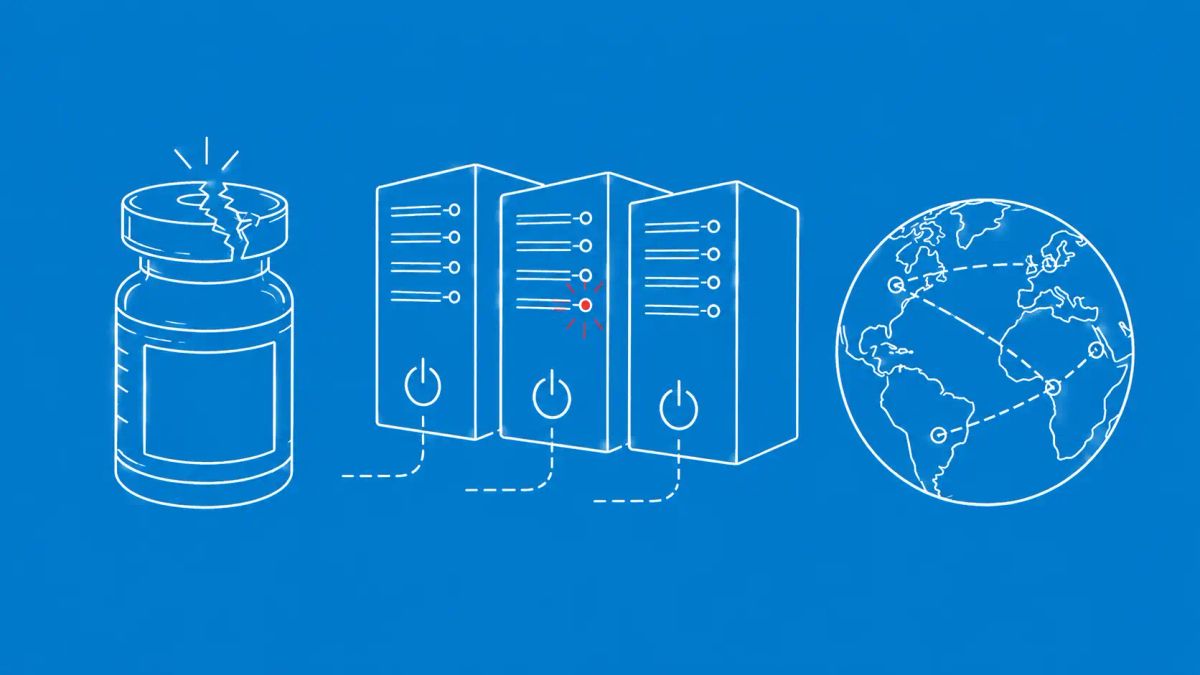
A disruptive ransomware attack on one of the world's largest pharmaceutical packaging suppliers just took global systems offline, engaged Palo Alto Networks' Unit 42, and exposed a critical-infrastructure adjacency the defender community has not been treating as such.
EXTON, PA — West Pharmaceutical Services disclosed on May 7, 2026 via SEC Form 8-K that it had been hit by a disruptive ransomware attack beginning May 4, 2026. The company proactively took on-premise infrastructure offline globally for containment, engaged Palo Alto Networks' Unit 42 for incident response, notified law enforcement, and confirmed that certain data was exfiltrated and certain systems encrypted. As of the May 11 update, core enterprise systems had been restored and critical shipping, receiving, and manufacturing processes had restarted at some sites — but the complete restoration timeline had not yet been finalized. The incident has temporarily disrupted West's global business operations.
West Pharmaceutical Services is one of the world's largest pharmaceutical packaging and delivery systems manufacturers, supplying vial closures, syringe components, and drug delivery systems to pharmaceutical, biotechnology, and generic drug makers. The disruption sits one supplier upstream from the vaccines, biologics, oncology drugs, and other pharmaceutical products that depend on West's components reaching pharma manufacturers on schedule. That positioning puts West Pharmaceutical's incident in the same operational risk class as the South Staffordshire Water Cl0p ransomware case — critical-infrastructure-adjacent organizations whose disruption produces downstream patient-safety and public-service consequences beyond the immediate corporate impact.
The Form 8-K Item 1.05 disclosure pattern
West's May 7 SEC filing is a textbook example of the current Item 1.05 disclosure framework. The intrusion was detected on May 4. The materiality determination was completed on May 7. The Form 8-K was filed shortly after — within the SEC's four-business-day requirement. The filing language is precise: "certain data was exfiltrated by an unauthorized party and certain systems were encrypted." The company added that it "proactively activated its incident response protocols, including proactively taking systems offline globally for containment purposes, notifying law enforcement, and engaging external cyber-forensic experts." The financial-impact disclosure is appropriately scoped: "The incident's material impact on the Company's financial condition and results of operations, if any, has not been determined at the time of filing."
West also publishes ongoing updates through company-controlled channels alongside the SEC filing — a pattern other public-company CISOs should emulate. The latest May 11 update confirms that core enterprise systems have been restored, shipping/receiving/manufacturing critical processes have restarted at some sites, and restoration at remaining sites is in progress. The framing acknowledges what is not yet known: timeline for complete restoration, the nature and full scope of the incident, and the financial impact. The transparency posture is operationally consistent with CISA's CI Fortify guidance on prolonged isolation scenarios — proactive containment, scoped disclosure, and an honest restoration timeline.
Why pharmaceutical packaging is the critical-infrastructure adjacency
The 16 federally-designated critical infrastructure sectors under Presidential Policy Directive 21 include healthcare and public health, but not pharmaceutical packaging specifically. The West Pharmaceutical case argues that the line is too narrow. A disruptive ransomware attack on a major pharmaceutical packaging supplier has the same downstream profile as an attack on a regulated CI sector entity: delayed deliveries to pharma manufacturers, potential drug-supply disruptions, downstream patient-safety implications if extended, and federal regulatory attention from FDA on drug supply continuity. The defender community should treat the West incident as the trigger to expand the working definition of CI-adjacent risk. Manufacturing disruption from cyberattacks is a recurring 2026 theme — see how a cyberattack forced toy giant Hasbro into a weeks-long recovery with shipping delays. Manufacturing sits in that same widening blast radius, as the Foxconn Nitrogen ransomware attack that exposed 11 million files tied to Apple and Nvidia demonstrated weeks later.
Customer organizations directly dependent on West Pharmaceutical Services should have already received supplier communications. If you haven't, the action is to engage West's procurement contact today and request a specific impact statement for your supplier relationship — not the generic global-disruption framing. The questions to ask: which of your specific products are affected, what is the projected delivery delay, what is the alternative-source contingency, and what is West's communication cadence going forward. The same questions should be asked by any organization sourcing pharmaceutical packaging from West's competitors (Becton Dickinson, Schott, AptarGroup, Stevanato Group) — not because those vendors are necessarily affected, but to verify your supplier risk register reflects current operational reality.
Pre-script the pharma CI ransomware scenario this quarter
For organizations operating pharma-adjacent infrastructure — drug manufacturers, biotech, generic drug makers, clinical trial logistics, cold chain providers, raw-materials suppliers — West Pharmaceutical Services is now the documented case study. Pre-script the scenario in your business continuity playbook. Regulatory implications: FDA notification may be required if drug supply is affected; drug shortage notifications may be required at the state and federal level. Insurance coordination: business interruption coverage specific to pharma sector dependencies. Supplier communications: pharma customers need accurate timing information from you when they ask. The broader pattern of critical infrastructure sector ransomware activity is now a documented 2026 baseline — water utilities, healthcare providers, pharmaceutical packaging, and other CI-adjacent organizations are all on the active target list.
The CyberSignal Analysis
Signal 01 — Critical-infrastructure-adjacent sectors need defender posture matching CI sectors
West Pharmaceutical Services is not on the federal critical infrastructure list, but the operational impact of its ransomware incident — global pharma supply disruption, patient-safety downstream risk, federal regulatory attention — looks identical to what a designated CI sector breach produces. CISOs at pharma-packaging, medical-device-component, pharma-raw-materials, and clinical-trial-logistics organizations should brief leadership that the operational risk class is CI-equivalent regardless of formal designation. Update business continuity plans, regulatory engagement plans, and insurance coverage to match. Engage your government affairs team on whether the West case may inform forthcoming CI sector definition updates.
Signal 02 — Item 1.05 disclosure plus company-controlled updates is the public-company breach communications standard
West's combination of SEC Form 8-K filing plus ongoing updates through a company-controlled incident notice page is the operationally appropriate posture for public-company breach communications in 2026. The SEC filing provides the regulator-required materiality disclosure with appropriate scoping caveats. The company-controlled updates provide the customer-facing detail that supplier-dependent organizations need to plan operationally. Other public-company CISOs should adopt the pattern. Pre-script the dual-channel template — what goes in the 8-K vs what goes on the incident notice page — before incident occurs, with general counsel sign-off in advance. Day-of-incident drafting under regulatory clock pressure produces communication errors.
What to do this week
- If your organization is a West Pharmaceutical Services customer, engage your procurement contact today for a specific impact statement for your supplier relationship. Document the projected delivery delay for your specific product line, the alternative-source contingency, and West's communication cadence going forward. Generic global-disruption framing is not sufficient for your operational planning.
- If your organization sources pharmaceutical packaging from West's competitors (Becton Dickinson, Schott, AptarGroup, Stevanato Group), audit your supplier risk register. Verify your incident-response posture for a comparable ransomware attack at any of those vendors. The West case raises the baseline expectation for sector resilience.
- Pharma manufacturers, biotech, generic drug makers: brief your business continuity team on the pharma-CI ransomware scenario. Pre-script FDA notification triggers, drug shortage notification triggers, and supplier-impact communications with downstream customers. The West case provides the working template.
- Public-company CISOs: review your Item 1.05 disclosure framework against the West template. Pre-script the SEC filing language with general counsel; pre-script the company-controlled incident notice page format; coordinate the dual-channel communications cadence in advance. Day-of-incident drafting under regulatory clock pressure produces communication errors.
- For broader CI sector defenders: treat the West incident as the trigger to expand your working definition of critical-infrastructure-adjacent risk. Pharmaceutical packaging, medical device components, pharma raw materials, cold chain logistics, and clinical trial supply chains all sit one supplier upstream from CI sector operations. Update your sector threat models accordingly.