South Staffordshire Water Just Got Fined Nearly 1 Million Pounds for a Cl0p Attack Hackers Hid In for 20 Months
The ICO fined South Staffordshire Water nearly GBP 1 million over a Cl0p attack that exposed 633,887 records. Hackers sat undetected for 20 months. Only 5 percent of the IT environment was monitored.

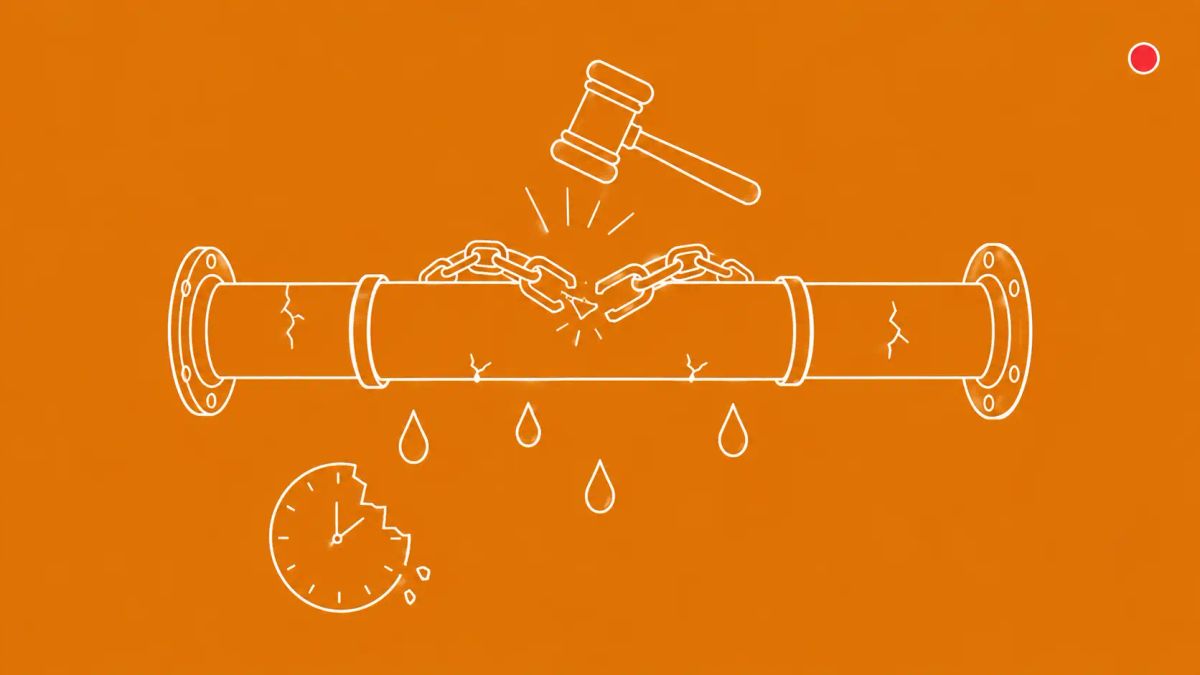
The fine is news. The 20-month dwell time is the lesson. Only five percent of the IT environment was being monitored when Cl0p walked in on a phishing email and stayed for nearly two years.
LONDON, UK — The UK Information Commissioner Office (ICO) fined South Staffordshire Plc and South Staffordshire Water Plc GBP 963,900 (approximately USD 1.3 million) on May 11, 2026, over a Cl0p ransomware attack that resulted in the personal data of 633,887 customers and employees being published on the dark web in August 2022. According to the penalty notice, initial access dates back to September 2020 — nearly two years before the attack was detected — when an employee opened a malicious phishing email attachment that installed software giving the attacker a foothold on the corporate network. The threat actor remained hidden until May 2022 before beginning lateral movement using a domain administrator account, the highest level of system access available.
The intrusion was only identified in July 2022 when IT performance issues prompted an internal investigation. Between August and November 2022, over 4.1 terabytes of data was published on the dark web, including names, addresses, dates of birth, National Insurance numbers for employees, bank account numbers and sort codes for customers, and information from which disabilities could be inferred for customers on the Priority Services Register. The fine represents a 40 percent reduction from the initial amount proposed, reflecting cooperation, early admission of liability, and mitigation steps taken after the breach. It pairs with the broader UK and EU critical infrastructure cybersecurity pressure documented in CISA CI Fortify push for critical infrastructure resilience and recent water-sector incidents globally.
The 20-month dwell time and what enabled it
The ICO penalty notice identifies a specific set of security failures that together allowed the attacker to remain undetected from September 2020 through May 2022 and then to escalate to domain administrator before discovery. The most striking is monitoring coverage: only five percent of the South Staffordshire IT environment was being actively monitored. Inadequate logging compounded the gap. The result is that an attacker with initial foothold on the corporate network had 20 months to map the environment, identify high-value targets, and prepare for lateral movement — without triggering an alert the organization could act on.
The technical debt findings round out the picture. South Staffordshire was running unsupported software, including Windows Server 2003 — an operating system that reached end of Microsoft support in April 2015 and was running in production seven years past end of life at the time of the breach. The ICO also found that critical systems were unpatched against known vulnerabilities, and that the company failed to regularly run internal or external security scans. Limited privilege controls allowed the attacker to escalate from initial foothold to domain administrator with the highest level of system access available on the network.
What Cl0p took and published
Between August and November 2022, more than 4.1 terabytes of data was published to the dark web. The data included full names, physical addresses, email addresses, dates of birth, gender, and telephone numbers for customers and employees alike. For employees specifically, HR information including National Insurance numbers was exposed. For customers, account information including usernames and passwords used to access South Staffordshire online services was published, along with bank account numbers and sort codes. For a smaller population of customers on the Priority Services Register — a UK utilities scheme for vulnerable customers — information from which disabilities could be inferred was also exposed.
The 633,887 person count represents customers and employees whose data was actually extracted and published. South Staffordshire held personal information on approximately 1.85 million current and former customers at the time of the breach, along with 2,791 current employees and at least 2,298 former employees. The Cl0p group originally misidentified the victim as Thames Water — a different UK water utility serving roughly 15 million people — and published a lengthy statement accusing Thames Water of ignoring them. The erroneous claim was widely repeated in UK media at the time, but the penalty notice makes no reference to any compromise of operational or water treatment systems at either utility.
The regulatory framing this case establishes
The fine itself is one of the largest data protection penalties issued against a British water utility, but the more durable consequence is the precedent the penalty notice sets for what the ICO considers a regulatory baseline for critical infrastructure operators. Comprehensive monitoring of the IT environment is now an enforced expectation, not a best-practice aspiration. Running end-of-life operating systems years past vendor support without compensating controls is a documented enforcement red flag. Failing to run regular internal and external security scans is a documented enforcement failure. Limited privilege controls that allow attacker escalation from initial foothold to domain administrator is a documented architectural gap.
None of these are new concepts in cybersecurity practice. The change is the ICO willingness to translate them into specific, enforceable regulatory consequences with a published rationale. Other UK GDPR-regulated organizations should expect similar enforcement patterns in 2026 and beyond — not just water utilities, but any operator of critical infrastructure or regulated industry where a long-dwell breach reflects an organizational monitoring failure rather than a technical inevitability.
The Cl0p access vector and what it says about phishing
Despite 2026 saturation with supply chain, zero-day, and AI-augmented attack coverage, the South Staffordshire attack started with a single successful phishing email opened by a single employee in September 2020. The malware installed via the attachment gave Cl0p — or an initial access broker operating on Cl0p behalf — persistent foothold without further attacker action for 20 months. It is unclear from the penalty notice whether Cl0p compromised South Staffordshire directly or obtained the access through an initial access broker, but for the defender perspective the distinction is academic. The attack vector was email; the attack succeeded because monitoring and detection failed.
The CyberSignal Analysis
Signal 01 — Long-dwell breach detection is now an enforced regulatory baseline
The ICO penalty notice essentially codifies that 20-month dwell time is a regulatory failure, not a technical inevitability. UK organizations with monitoring coverage below an industry-acceptable threshold — and the South Staffordshire figure of five percent is the documented floor of unacceptability — should expect enforcement consequence in the event of a breach. International regulators (Australia OAIC, EU national data protection authorities, US sector regulators) increasingly mirror this enforcement posture. Brief boards accordingly.
Signal 02 — End-of-life software in production is enforcement evidence
Windows Server 2003 running in production in 2022 is the operationally specific finding the ICO cited as evidence of inadequate security posture. Every organization has end-of-life software somewhere in its inventory; the defensible posture is documented compensating controls and an active migration plan, not the absence of either. Inventory all your end-of-life software this month. Budget for replacement, isolate what cannot be replaced immediately, and document the rationale for what stays in production.
Signal 03 — Privileged access escalation is the gap that turns breach into catastrophe
The attacker moved from initial foothold to domain administrator over the 20-month window because limited controls enabled the escalation. Modern IAM architectures should detect and prevent this pattern. If your IAM program cannot identify lateral movement attempts toward privileged accounts, or cannot prevent privilege escalation by an account that does not match its normal behavior profile, you face the same architectural gap. Review your privileged access management this quarter.
What to do this week
- Audit your detection coverage as a percentage of your IT environment. If you cannot quote the percentage, that is itself a finding. The South Staffordshire figure of five percent is the documented floor of regulatory unacceptability; aim for substantially more, with documented rationale for exclusions.
- Inventory your end-of-life software with confirmed Microsoft, vendor, or open-source maintainer end-of-support dates. For each item, document the compensating controls in place and the migration timeline. This becomes your evidence if regulators ask the question South Staffordshire could not answer.
- Verify your vulnerability management program is operating on a documented cadence. Establish evidence of monthly internal scans, quarterly external scans, and remediation SLAs for critical findings. The ICO specific finding was that South Staffordshire failed to regularly run internal or external security scans — not that the scans found nothing, but that they were not happening at all.
- For UK critical infrastructure operators specifically: brief your senior leadership team on the South Staffordshire penalty notice as a case study. The framing is concrete: long-dwell undetected breaches are now an enforced regulatory consequence, and the operational pattern that produces them is well documented.