Trend Micro Apex One Zero-Day CVE-2026-34926 Is Under Active Exploitation
Trend Micro's own Incident Response team discovered CVE-2026-34926, a directory-traversal zero-day in Apex One, while it was being exploited. CISA added it to the KEV catalog with a June 4 federal deadline. Its modest 6.7 CVSS score conceals an environment-wide blast radius.

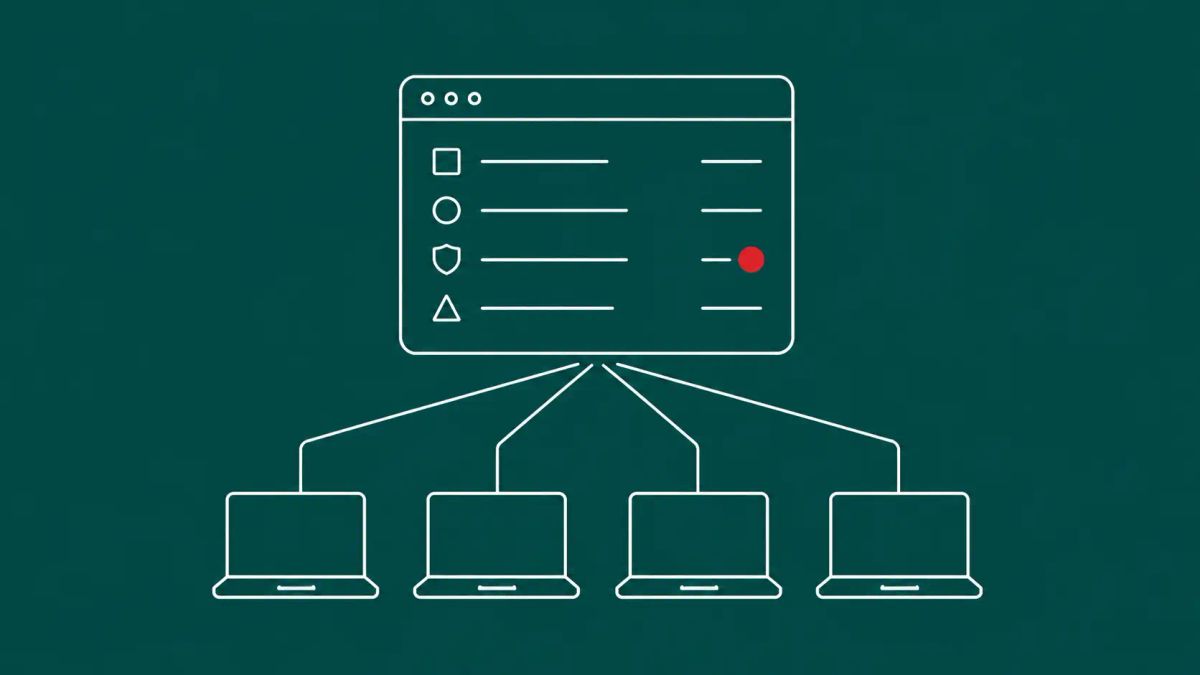
CVE-2026-34926 is not a routine medium-severity patch — it is a flaw that lets an attacker convert an endpoint-security server into a malware distribution channel for every host it manages, and a CVSS score of 6.7 is precisely the number that will cause organizations to miss that.
TOKYO — On May 21, 2026, Trend Micro disclosed and patched CVE-2026-34926, a directory-traversal zero-day in Apex One — its on-premises endpoint-security platform for Windows — that has been exploited in the wild. Trend Micro's own Incident Response team discovered and reported the flaw, and the company confirmed it had observed at least one exploitation attempt. CISA added CVE-2026-34926 to its Known Exploited Vulnerabilities catalog and set a federal remediation deadline of June 4, 2026. The vulnerability, classified as a relative path traversal (CWE-23), lets an attacker manipulate file paths to reach restricted directories on the Apex One server and — critically — modify a key database table, a change that allows malicious code to be injected and then distributed by the server to every connected endpoint agent. Its CVSS v3.1 score is 6.7, a modest figure that reflects one precondition: the attacker must already hold administrative credentials, obtained separately, before the traversal path can be exploited.
What Happened
Trend Micro's Incident Response team discovered CVE-2026-34926 by catching it being exploited — the kind of internal discovery that typically indicates an attacker had a meaningful head start. The company disclosed the vulnerability and released a patch on the same day, May 21, 2026, and confirmed observing at least one exploitation attempt in the wild. CISA moved quickly to add it to the Known Exploited Vulnerabilities catalog and set a June 4, 2026 federal remediation deadline. For federal agencies that deadline is binding; for all others it is an explicit signal that exploitation is not theoretical.
The vulnerability is a relative path traversal, classified CWE-23. Exploiting it requires administrative credentials obtained through a separate method — a phishing compromise of an admin account, a credential-stuffing hit, or lateral movement that reaches the management console. Once an attacker holds those credentials, the traversal flaw allows them to manipulate file paths to reach restricted directories on the Apex One server and modify a key database table. That database modification is the critical step: it allows malicious code to be injected and then distributed by the Apex One server down the trusted management channel to every endpoint agent connected to it.
A Zero-Day the Vendor Caught While It Was Being Used
There is a particular kind of bad news in a vulnerability that a vendor's own incident responders discover — it usually means they found it because it was already being used. That is the case with CVE-2026-34926. Trend Micro's Incident Response team discovered and reported the flaw, and the company has confirmed observing at least one exploitation attempt in the wild. The company disclosed the vulnerability and released a patch on May 21, 2026, and CISA moved quickly to add it to the Known Exploited Vulnerabilities catalog, setting a federal remediation deadline of June 4, 2026. A KEV listing means exploitation is not theoretical but observed, and the federal-deadline model — which The CyberSignal examined in detail when the Linux 'Copy Fail' flaw was added to KEV — is now the clearest public clock on urgency for any exploited vulnerability.
Why CVE-2026-34926's CVSS 6.7 Score Is the Risk
CVE-2026-34926 carries a CVSS v3.1 score of 6.7 — a number that, on most triage dashboards, lands well below the threshold that triggers an emergency patch. That score is not wrong, but it is misleading. The vulnerability is a relative path traversal (CWE-23), and exploiting it has a precondition: the attacker must already hold Apex One administrative credentials, obtained through some separate method. CVSS rewards that precondition with a lower score, because the flaw is not reachable by just anyone on the internet. But CVSS scores the difficulty of reaching a vulnerability, not the consequences of using it — and the consequences here are severe. The flaw is part of a broader 2026 pattern: the Verizon DBIR 2026 found that vulnerability exploitation just overtook credential theft as the number-one initial-access method, and attackers are increasingly targeting the tools organizations install to protect themselves. An organization that triages CVE-2026-34926 purely by its 6.7 rating will systematically under-prioritize a flaw that, once reached, is an environment-wide problem.
From Server Compromise to Every Endpoint: The Trust-Channel Exploit Chain
What the exploit actually does is the reason the low score is dangerous. Using the traversal flaw, an attacker can manipulate file paths to reach restricted directories on the Apex One server and — the critical step — modify a key database table. That database modification is what converts a server compromise into a fleet compromise: it allows malicious code to be injected and then distributed by the Apex One server to every endpoint agent connected to it. Apex One is a centralized endpoint-security platform, and every managed endpoint trusts the management server and accepts what it sends. CVE-2026-34926 turns that trust relationship into a delivery mechanism. The blast radius of a successful exploit is not the server — it is every endpoint the server manages. This makes CVE-2026-34926 structurally similar to the two actively exploited Microsoft Defender zero-days, UnDefend and RedSun, which were built specifically to disable endpoint protection — in both cases, the attacker's goal is to weaponize or neutralize the security tool rather than work around it.
Scope and Impact
A note on naming: In March 2026, Trend Micro rebranded its enterprise security business as TrendAI, and some outlets accordingly refer to the vendor as TrendAI. Trend Micro remains the corporate name, and the Apex One security bulletin and the product itself continue to carry the Trend Micro brand. Readers who encounter 'TrendAI' in other coverage should understand it as the same vendor.
CVE-2026-34926 does not stand alone. It is the latest entry in a pattern The CyberSignal has tracked through 2026: the security products organizations install to protect themselves are becoming a primary attack surface. In just the past two weeks that pattern produced a CVSS 10.0 flaw in Cisco Secure Workload that let unauthenticated attackers seize site-admin of the very tool built to contain threats and two actively exploited Microsoft Defender zero-days, UnDefend and RedSun, built specifically to disable the endpoint-protection tool itself — and earlier in the month, seven CVEs in the SEPPmail secure-email gateway, the worst letting anyone on the internet read email traffic. In the same KEV action that added CVE-2026-34926, CISA also added an exploited Langflow flaw, CVE-2025-34291 (a 2025 CVE added to KEV in 2026). The federal-deadline model itself, which The CyberSignal examined when the Linux 'Copy Fail' flaw was added to KEV with a hard patch mandate, is now the clearest public clock on exploited vulnerabilities.
Several specifics remain unconfirmed. Trend Micro has not identified the threat actor behind the exploitation, has not said how many organizations were compromised — only that it observed at least one exploitation attempt — and has not detailed how attackers are obtaining the administrative credentials the exploit requires. Whether any exploitation attempt succeeded in distributing malicious code to endpoint agents is also not stated, and the precise affected Apex One version ranges should be verified against Trend Micro's own bulletin before any remediation plan relies on them. Reporting specifies the on-premises edition of Apex One; whether cloud-hosted or SaaS deployments are affected is not addressed and should not be assumed either way. The flaw lands in the same crowded patch cycle as other actively exploited critical bugs, including the emergency 'highly critical' fix Drupal shipped for CVE-2026-9082 and the Ivanti EPMM zero-day CVE-2026-6973, also added to CISA KEV with a May 10 deadline — a reminder that the June 4 deadline competes for the same scarce remediation capacity as everything else on a security team's plate.
Response and Attribution
For organizations running Apex One on-premises, the action is immediate: apply Trend Micro's patch now. CVE-2026-34926 is actively exploited and on the CISA KEV list, and the June 4 federal deadline should be read as a floor, not a target. Do not let the 6.7 CVSS score justify a slower timeline — the impact is environment-wide malicious-code distribution to every endpoint agent, and it should be prioritized well above its numeric rating. Alongside patching, audit the Apex One server's database for unauthorized modifications to the table used for agent code distribution, review server file-system access logs for traversal patterns, and hunt connected endpoints for unexpected agent-delivered code dating from before the patch.
Because the exploit requires administrative credentials, also audit Apex One admin accounts for compromise: review admin logins, rotate admin credentials, and enforce phishing-resistant MFA on the management console. For SOC and incident-response teams, the framing matters — a compromised Apex One server is an environment-wide incident, not a single-host one, because the trust the endpoints place in the management server defines the blast radius. Hunt for the credential theft that precedes exploitation — the phishing, credential stuffing, or lateral movement that delivered the admin login — and add file-integrity monitoring and database-change alerting to the Apex One server.
For CISOs, CVE-2026-34926 is a prompt to re-baseline how security-tool vulnerabilities are prioritized. CVSS scores gated behind 'requires admin credentials' preconditions systematically understate real risk when the product is a centralized control plane. The 2026 run of flaws in Cisco Secure Workload, Microsoft Defender, SEPPmail, and now Apex One makes the same point: the security stack itself needs defense-in-depth, and endpoint protection should not be single-threaded on one vendor's management server. Trend Micro has not named a threat actor responsible for the observed exploitation.
The CyberSignal Analysis
Signal 01 — The 6.7 Score Is the Vulnerability's Best Disguise
Most coverage of CVE-2026-34926 will report, accurately, that Trend Micro patched an exploited zero-day. The detail that deserves the spotlight is the 6.7 CVSS score, because that number is how this flaw will hurt organizations that are otherwise doing patch management well. A disciplined security team triages by score; a 6.7, gated behind a 'requires admin credentials' precondition, sits comfortably below the line that triggers an out-of-cycle patch. But CVSS measures how hard a vulnerability is to reach, not how much damage it does once reached — and CVE-2026-34926, once reached, is a primitive for compromising every endpoint in the environment. The lesson generalizes well beyond this CVE: when the affected product is a centralized control plane, the CVSS score and the operational risk can diverge sharply, and the score is the one that will quietly cause the wrong call.
Signal 02 — A Management Server Is a Single Point of Catastrophic Trust
Centralized management is the entire value proposition of a platform like Apex One: one console, one server, every endpoint under consistent policy and protection. CVE-2026-34926 is a reminder that centralization is also a concentration of risk. Every endpoint agent trusts the management server and executes what it is sent; that trust is the feature. An attacker who compromises the server does not have to fight each endpoint individually — the architecture does the distribution for them. The defensive implication is not to abandon centralized management but to treat the management server as the crown-jewel asset it is: file-integrity monitoring, database-change alerting, tightly controlled and MFA-protected admin access, and an incident-response plan that treats 'the management server was compromised' as an environment-wide event from the first minute.
Signal 03 — In 2026, the Security Stack Is the Attack Surface
CVE-2026-34926 is not an isolated story; it is a data point in what has become a defining vulnerability pattern of 2026. Cisco Secure Workload, Microsoft Defender, SEPPmail, and now Trend Micro Apex One — in a matter of weeks, the products organizations buy specifically to defend themselves have each been the vulnerability. There is a grim logic to it: security products are high-privilege, widely deployed, and trusted by everything around them, which makes them an efficient target. Compromise the defender, and you inherit its reach. The takeaway for security leaders is uncomfortable but clear — the security stack cannot be a trust blind spot. It needs the same vulnerability management, the same network segmentation, and the same assume-breach scrutiny applied to everything else, and arguably more, because when a security tool fails, it fails toward the whole environment.



