Threat Intelligence and Threat Actors: The Complete Guide
A complete guide to threat intelligence and threat actors — the four types of CTI, the major actor categories, the intelligence lifecycle, and the frameworks defenders use.

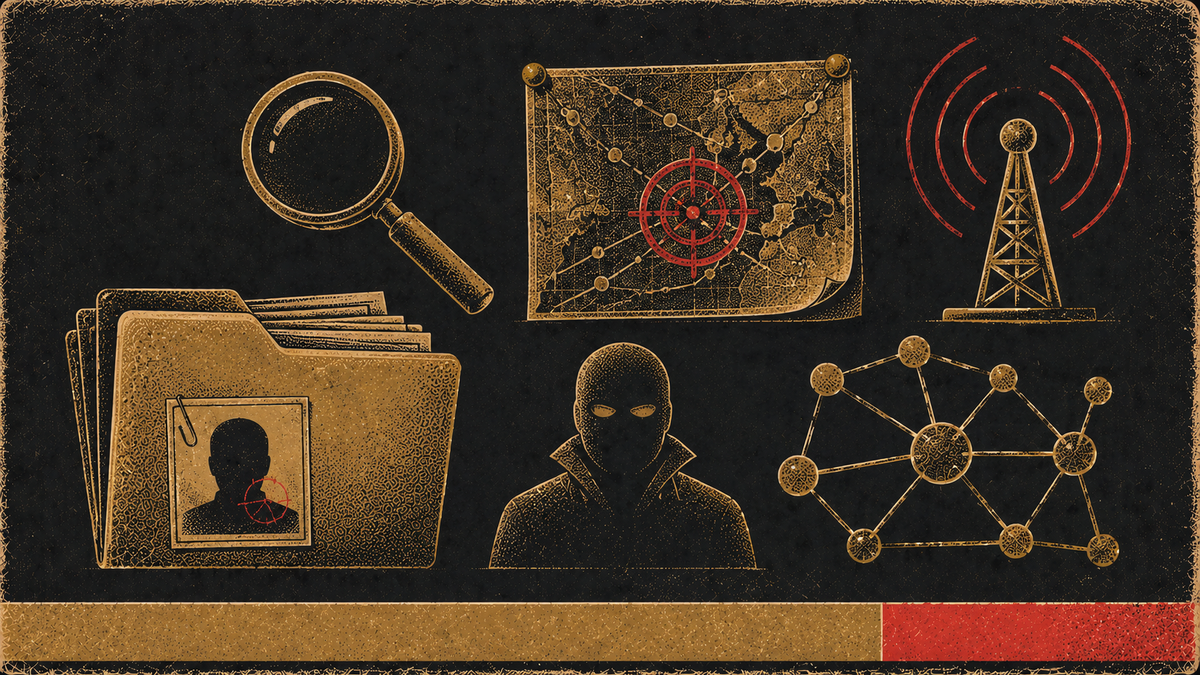
Cybersecurity is, at its heart, a contest between defenders and the humans trying to break into their systems. Knowing who those attackers are, how they operate, and what they want is what makes defense intelligent rather than reactive. That work has a name: threat intelligence.
Threat intelligence — and the related discipline of understanding threat actors — turns vague concerns about "hackers" into concrete, usable information. It tells security teams which adversaries are most likely to target them, which techniques those adversaries prefer, what telltale signs to watch for, and how to prepare. Without it, defense is reduced to blocking generic risks. With it, defense becomes specific, prioritized, and proactive.
This guide is a complete introduction to the field. It explains what threat intelligence is and how it is produced, the four types security teams work with, the major categories of threat actors and what motivates them, the frameworks defenders use to make sense of attacker behavior, and the practices that turn intelligence into action. Use the links throughout for deeper explainers on specific topics.
What Is Threat Intelligence?
Threat intelligence is evidence-based knowledge about existing or emerging threats — including the actors behind them, their motivations, and the techniques they use — that helps defenders make better security decisions. It is intelligence in the same sense the word is used in national security: information that has been collected, analyzed, and turned into something actionable.
The key word is actionable. A raw feed of suspicious IP addresses is data. A report that explains which threat group is targeting your industry this quarter, what tools they are using, and how to detect them is intelligence. Threat intelligence sits at the layer where raw information becomes operational knowledge a defender can use.
The Four Types of Threat Intelligence
Practitioners divide threat intelligence into four overlapping types, organized by the audience and the time horizon they serve.
Strategic threat intelligence is high-level information consumed by executives and board members. It covers long-term trends, geopolitical drivers of cyber risk, regulatory shifts, and the threat landscape facing a particular industry. Its purpose is to inform investment and policy decisions, not day-to-day defense.
Operational threat intelligence describes specific campaigns and the threat actors behind them — who they are, what they want, and how they operate. It is consumed by security leaders and incident response teams to anticipate where attacks may come from and prepare accordingly.
Tactical threat intelligence describes the techniques, tactics, and procedures (TTPs) that attackers use. It is consumed by defenders building detections, hardening systems, and writing playbooks. The MITRE ATT&CK framework is the most widely used taxonomy of tactical intelligence.
Technical threat intelligence is the most granular layer — the specific indicators of compromise (IOCs) such as malicious IP addresses, file hashes, and domain names. It is consumed by automated detection tools and SOC analysts hunting for known threats.
What Are Threat Actors?
A threat actor is an individual, group, or organization that conducts or is capable of conducting malicious cyber activity. Threat actors are categorized by their motivation, capability, and target preference, because all three shape how they operate and how to defend against them.
Two threat actors can use the same malware but represent very different risks. A financially motivated criminal will move quickly to monetize an intrusion and move on. A nation-state actor may stay quietly inside a network for years to collect intelligence. Recognizing which type is operating against you changes the entire response.
Categories of Threat Actors
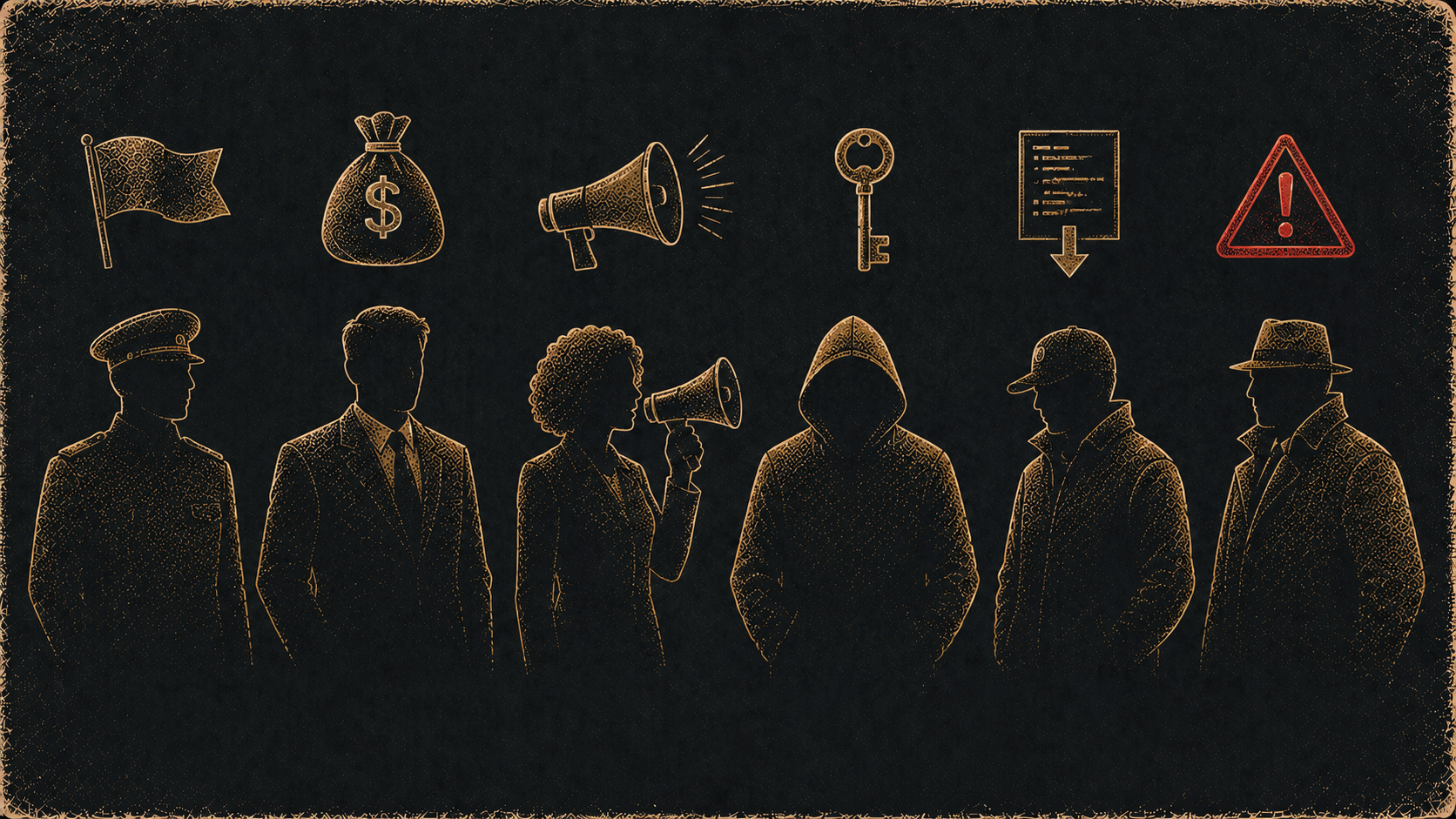
The security community generally recognizes the following major categories:
- Nation-state actors — government-backed groups conducting espionage, sabotage, or geopolitical operations. They are often well-resourced, highly skilled, and patient.
- Cybercriminals — financially motivated individuals and organized groups behind ransomware, business email compromise, banking trojans, and data theft for resale.
- Hacktivists — groups motivated by political, ideological, or social causes that use cyber operations to disrupt, leak, or embarrass their targets.
- Insider threats — current or former employees, contractors, or partners who misuse legitimate access. Insider threats can be malicious, negligent, or coerced.
- Script kiddies — less-skilled actors using prebuilt tools and tutorials. They are generally opportunistic but can still cause meaningful damage with the right tool in the wrong hands.
- Cyberterrorists — actors who use cyber operations to intimidate populations or governments. This category is small but increasingly tracked.
The lines between categories are not always clean. Nation-states sometimes hire criminal groups as proxies. Ransomware crews sometimes recruit insiders. Hacktivist tools are sometimes adopted by criminals. Categorization is useful, but defenders should think of these as overlapping profiles, not strict boxes.
Motivations and Capabilities
Each category of threat actor brings a different set of motivations and capabilities, and those drive how they choose targets and behave inside a network.
Nation-states are typically motivated by intelligence collection, geopolitical advantage, or pre-positioning for future conflict. Their capability is high — they have the resources for custom tooling, multi-year operations, and tradecraft to remain hidden. They prefer high-value targets in government, defense, critical infrastructure, and adjacent supply chains.
Cybercriminals are motivated by money. Their capability has risen sharply over the last decade as the criminal underground has professionalized into a service economy — initial access brokers sell footholds, ransomware-as-a-service operations rent out malware, and money-laundering networks handle the cash-out. They target whoever can pay, which in practice means a broad swath of mid-market and enterprise organizations.
Hacktivists are motivated by ideology. Their capability varies widely but is often lower than nation-states or major criminal groups. Their targets are chosen for symbolic value, and their preferred outcomes are visibility — defacement, denial of service, or data leaks — rather than long-term access.
Insiders are motivated by a mix of grievance, financial pressure, ideology, or coercion. Their capability is defined less by skill and more by the legitimate access they already hold, which makes detection harder and damage potentially severe.
The Threat Intelligence Lifecycle
Threat intelligence is not a product you buy once. It is a continuous cycle that turns raw information into action and then learns from the result. The lifecycle generally has six stages.
Direction sets the questions intelligence needs to answer. What threats matter most to this organization? Which assets need the most coverage? Without direction, collection becomes noise.
Collection gathers the raw material — from open sources (OSINT), commercial threat feeds, dark web forums, information-sharing communities (ISACs), internal logs, and partner reporting.
Processing normalizes that material into a usable form — deduplicating, translating, enriching, and structuring it.
Analysis turns processed information into intelligence. Analysts assess credibility, draw conclusions, identify trends, and produce briefings tailored to specific consumers.
Dissemination delivers intelligence to the right people in the right form — a one-line indicator into a detection tool, a brief into an executive's hands, or a playbook into an IR team.
Feedback closes the loop. Did the intelligence help? What was missing? Feedback steers the next cycle of direction and collection.
Frameworks for Understanding Attackers
Threat intelligence relies on shared frameworks so that defenders, vendors, and researchers can describe attacker behavior in the same language. Three are particularly important.
MITRE ATT&CK is a curated knowledge base of adversary tactics and techniques observed in real attacks. It organizes behavior into tactics (the why) and techniques (the how), giving defenders a shared vocabulary for everything from initial access to data exfiltration.
The Cyber Kill Chain, developed by Lockheed Martin, breaks an intrusion into seven sequential stages from reconnaissance through actions on objectives. It is older and less granular than ATT&CK but remains useful for high-level conversation about attack flow. For a deeper look, see our explainer on what the Cyber Kill Chain is.
The Diamond Model describes every intrusion as a relationship between four corners — adversary, capability, infrastructure, and victim — and is used heavily in threat actor tracking, because moving the lens across the four corners often reveals other attacks by the same actor.
Indicators of Compromise
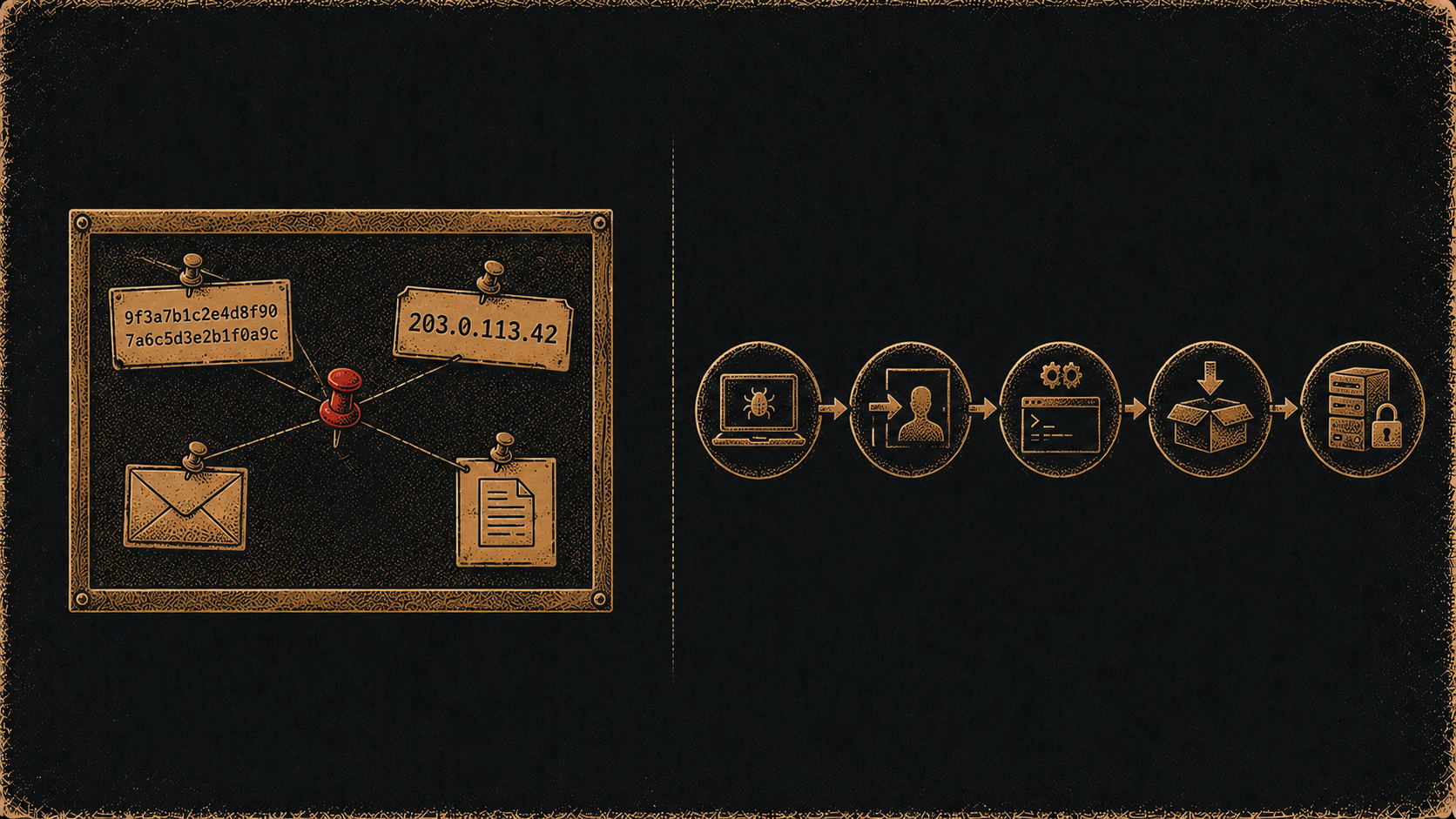
Indicators of compromise (IOCs) are the artifacts an attacker leaves behind — IP addresses, domain names, file hashes, registry keys, URLs, and patterns of activity. They are the most concrete form of threat intelligence and the lifeblood of automated detection.
IOCs are powerful but limited. They tell you that a specific known threat is present, not that an attacker is operating with new tools. That is why mature programs pair IOCs with indicators of attack (IOAs) — behavioral patterns that describe what an attacker is doing rather than which specific artifacts they leave behind.
Threat Hunting
Threat hunting is the proactive search for attackers who have evaded automated defenses. Rather than waiting for an alert to fire, hunters form a hypothesis — informed by intelligence about likely adversaries and their TTPs — and look for evidence of that activity in their environment.
A typical hunt starts with a question. "If an actor known for living-off-the-land techniques were inside our network, what would we see?" The hunter then queries logs, endpoint data, and network traffic for signs of that behavior, refining as they go. Hunts that find something feed incident response; hunts that find nothing still improve detection coverage and confidence.
Threat hunting depends on good threat intelligence. Without it, hunters are guessing. With it, they are searching for the specific behavior of the actors most likely to be targeting them.
Building a Threat Intelligence Program
Most organizations are not going to stand up an in-house intelligence team that rivals a government agency. They do not need to. A practical program comes down to a handful of priorities.
- Start with your threat model. Identify which industries, regions, and assets you operate in, and the actors most likely to target them.
- Subscribe to relevant intelligence sources. A mix of commercial feeds, free OSINT, and your sector's ISAC covers most organizations.
- Map intelligence to detection. Translate IOCs into automated detections and TTPs into engineering tasks for your SIEM or EDR.
- Operationalize the lifecycle. Set clear collection requirements, assign someone to analysis, and route the output to the right consumers — executives, SOC, IR, engineering — in the form they actually use.
- Measure what you produce. Track which intelligence led to detections, blocked attacks, or informed decisions. Drop sources that contribute nothing.
Conclusion
Threat intelligence and the study of threat actors transform cybersecurity from a generic defense against unknown risks into a targeted defense against specific, identifiable ones. Done well, it tells defenders which fights they are most likely to face, what those fights look like, and how to prepare.
The organizations that handle this well treat intelligence as a continuous discipline embedded in every layer of their security program — from board-level risk decisions down to detection rules in their SIEM. The result is not perfect prevention. It is a defense that is steadily harder to surprise, and that is the goal.
Frequently Asked Questions (FAQ)
What is threat intelligence?
Threat intelligence is evidence-based, analyzed information about cyber threats — including the actors behind them, their motivations, and the techniques they use — that helps defenders make better security decisions.
What are the four types of threat intelligence?
The four standard types are strategic (long-term, executive-facing), operational (specific campaigns and actors), tactical (TTPs and techniques), and technical (specific IOCs such as IPs and file hashes).
What is a threat actor?
A threat actor is any individual, group, or organization that conducts or is capable of conducting malicious cyber activity. Threat actors are categorized by motivation, capability, and target preference.
What is the difference between an IOC and an IOA?
An IOC (indicator of compromise) is a specific artifact left behind by an attacker, such as a file hash or IP address. An IOA (indicator of attack) is a behavioral pattern that describes attacker activity. IOCs identify known threats; IOAs help detect unknown ones.
What is MITRE ATT&CK?
MITRE ATT&CK is a knowledge base of adversary tactics and techniques observed in real-world attacks. It gives defenders a shared vocabulary for describing attacker behavior and is widely used to plan detection coverage and threat modeling.
Do small organizations need threat intelligence?
Yes, but at a scale appropriate to their size. Most small organizations do not need an in-house intelligence team — subscribing to a relevant ISAC, applying free OSINT feeds, and following the threats most relevant to their industry is enough to be meaningfully better defended than going without.