SentinelOne Details Suspected China- and India-Aligned Espionage Against Pakistan's Balochistan Police
A dual-attribution espionage disclosure targeting one Pakistani police force — a rare cross-nation-state analytical beat.

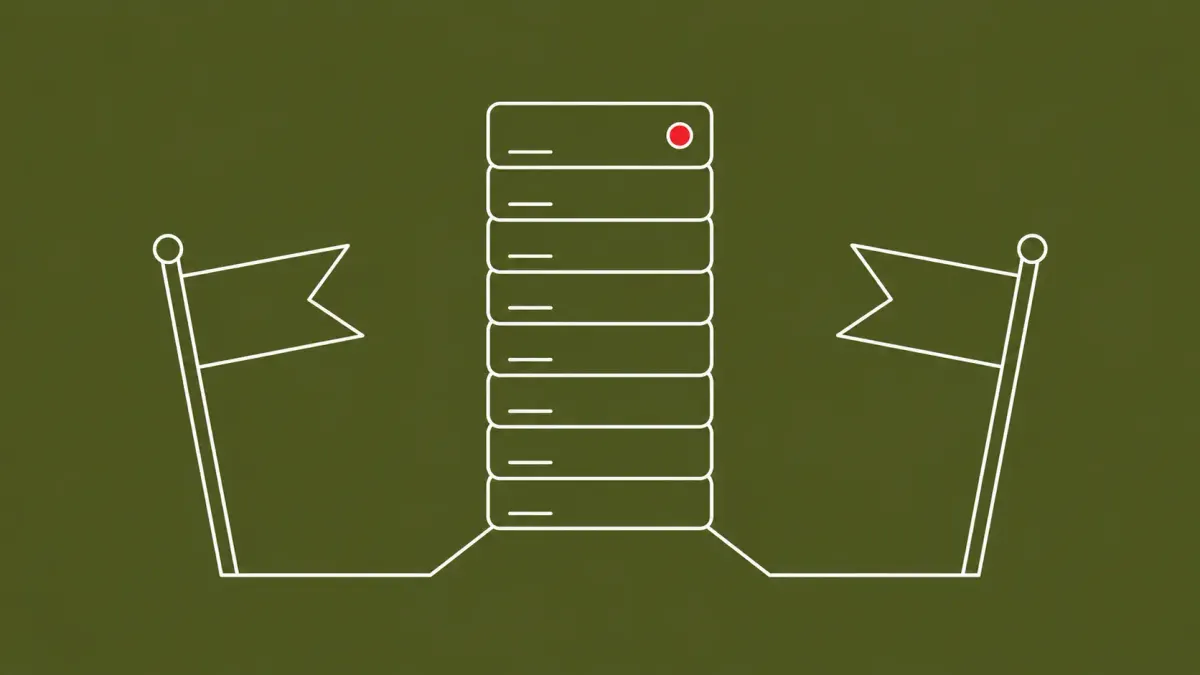
Two rival nation-state-aligned operations — one suspected China-aligned, one suspected India-aligned — independently converged on the same Pakistani police force over more than two years, SentinelOne says.
ISLAMABAD — SentinelOne's research team on or about July 11, 2026 published an analysis of sustained cyber-espionage activity directed at Pakistani law-enforcement organizations between February 2024 and April 2026, with the Balochistan Police the most heavily affected target. The research attributes the activity to two separate sets of operators — a suspected China-aligned actor and a suspected India-aligned actor — that pursued the same police force independently, producing an unusual case of dual nation-state attribution around a single victim.
The disclosure landed as a defender-facing intelligence report rather than a live incident-response advisory, and it drew rapid pickup across the security trade press. Reporting by The Hacker News framed the campaign as a multi-group weaponization of a Balochistan Police web portal serving both officers and citizens. SentinelOne's own framing is deliberately cautious: it preserves the 'suspected' qualifier around both attributions and stops short of naming definitive threat-actor clusters, presenting the dual attribution as an analytical convergence rather than a settled fact.
What SentinelOne Disclosed
SentinelOne said its researchers tracked a prolonged campaign of intelligence-gathering aimed at Pakistani law-enforcement organizations, with the Balochistan Police bearing the brunt of the activity across a window running from February 2024 to April 2026. The company frames the case as unusual not because of any single technique but because two distinct operations, which it assesses as separately aligned to China and to India, independently fixed on the same police force. In SentinelOne's telling, that convergence — a suspected partner of Pakistan and a suspected adversary of Pakistan targeting the same institution — is the story.
The research describes the Balochistan Police as operating internet-facing web applications that hold police and citizen data, and SentinelOne assesses that these systems were a focus of the suspected China-aligned activity. The company presents the finding at the level of targeting and intent rather than publishing a step-by-step account of how access was obtained, consistent with a defender-facing disclosure meant to inform rather than to enable. SentinelOne retains 'suspected' and 'aligned' language throughout and does not assert direct state direction as an established fact.
Alongside the Balochistan Police, SentinelOne's research references activity touching other Pakistani law-enforcement and public-safety bodies. The company does not publish a precise count of compromised systems, and it stops short of naming formal threat-actor clusters for either operation — a restraint that matters for how the report should be read, and one the trade coverage has generally respected.
Two Flags, One Target: Reading the Dual Attribution
What distinguishes this disclosure from the steady stream of single-actor espionage research is its dual attribution. The Record reported the finding as China and India running separate spying campaigns against the same Pakistani police force — two rival nation-state-aligned efforts that never coordinated but arrived at the same door. For analysts, that convergence is a reminder that a single high-value institution can sit at the intersection of multiple states' intelligence priorities at once.
SentinelOne assesses the two operations as distinct, with separate tooling and infrastructure, which is what allows it to describe them as parallel rather than joint. The company's language preserves the 'aligned' and 'suspected' qualifiers deliberately: it is describing an analytical judgment about likely sponsorship and interest, not a courtroom-grade attribution. That caution is appropriate given how often early attribution shifts, and defenders should carry the same qualifiers forward rather than collapsing them into flat statements of state guilt.
The practical significance of dual attribution is that it complicates the defender's mental model. A police IT team reasoning about one suspected state operation can weigh a single adversary's likely interests; facing two, with different motives and different collection goals converging on the same records, the calculus changes. It raises the value of the underlying data in the eyes of multiple actors, and it means remediation cannot assume a single point of entry or a single objective.
Balochistan's Geopolitics as Espionage Context
The targeting maps onto Balochistan's contested politics. Pakistan's largest province by area has long been shaped by a separatist insurgency and by the regional rivalries that insurgency has drawn in, which makes a provincial police force an intelligence target of interest well beyond ordinary law enforcement. SentinelOne situates the activity in that context rather than treating it as opportunistic.
SentinelOne assesses that the suspected China-aligned activity is most plausibly driven by Beijing's interest in the security of Chinese nationals working on regional infrastructure projects — personnel who have been targets of violence in the province — which makes local police visibility and citizen data relevant to protecting them. The suspected India-aligned activity, by SentinelOne's assessment, is oriented toward intelligence-gathering on the province itself, a recurring flashpoint between the two neighbors. Both motives are presented as assessments consistent with the observed targeting, not as confirmed intent.
For a defender, the geopolitical framing is not academic. It helps explain why an under-resourced provincial police force — not a national ministry or a defense contractor — became a sustained target for more than two years, and it echoes a pattern The CyberSignal has tracked in other suspected China-aligned operations, from the Showboat telecom-espionage cluster to the Webworm activity. Regional political salience, not organizational prominence, is what put these systems in scope.
Defender Takeaways for Law-Enforcement Organizations
For security teams at law-enforcement and public-safety agencies, the operational lesson has little to do with either flag and everything to do with the asset profile. A police force's web applications concentrate exactly the records a state intelligence service values: criminal and case data, personnel information, and citizen-identity records tied to public services. That concentration makes such portals standing targets — the same dynamic seen in suspected China-aligned campaigns against other data-rich sectors, such as the Shadow Earth 053 targeting across Asia and Europe and university mail systems in the suspected China-linked Roundcube espionage disclosure.
The defensive priorities that follow are familiar but worth restating for the sector. Internet-facing applications that serve both staff and citizens cannot be walled off from the public, so the work centers on strong authentication, tight authorization, and continuous monitoring of data-access patterns capable of surfacing slow, low-volume collection over months. The February-2024-to-April-2026 window is the salient number: sustained, patient access of that length is characteristic of espionage rather than smash-and-grab crime, and it rewards detection tuned to anomalous long-tail data egress over point-in-time alerts.
There is also an institutional lesson. Regional and provincial agencies frequently operate with thinner security budgets than national bodies, yet they can hold data of acute interest to foreign intelligence services — a mismatch between resourcing and threat exposure that this case illustrates sharply. The same lesson recurs in suspected-state operations against domestically focused targets, including OceanLotus / APT32 activity documented by ESET. Closing that gap is less about novel tooling than about baseline visibility, credential hygiene, and the ability to detect access that looks legitimate but persists far longer than any legitimate session should.
Scope and Impact
The precise scope of the campaign is, by SentinelOne's own account, not fully quantified in public. The company identifies the Balochistan Police as the most heavily affected organization and references activity touching additional Pakistani law-enforcement and public-safety bodies, but it does not publish a total count of compromised systems. That leaves the blast radius described qualitatively rather than numerically at the time of disclosure.
SentinelOne characterizes the targeted systems as web applications holding police and citizen data, which points to the potential exposure of sensitive records, but the company does not publish a definitive, itemized list of the specific data categories accessed. The impact is therefore best understood as intelligence value realized over a long dwell time rather than as a discrete, sized data-loss event. For the individuals whose records sit in these systems, the espionage framing carries its own risk profile: data collected for state intelligence purposes tends to be retained and correlated rather than dumped or monetized.
It is also unclear, from the public research, whether Pakistani authorities have issued any formal advisory or public response tied to the findings. SentinelOne's disclosure is the primary public account; corroborating trade coverage has largely restated its assessments rather than adding independent technical confirmation, which is normal for a freshly published intelligence report and a reason to treat the finer details as provisional.
Response and Attribution
On attribution, SentinelOne is measured. It assesses two separate operations — one suspected China-aligned, one suspected India-aligned — and grounds each in a plausible motive without asserting direct state control as established fact. The company does not attach named, formal threat-actor cluster designations to either operation in the material summarized here, and it keeps 'suspected' and 'aligned' as load-bearing qualifiers rather than rhetorical hedges.
That restraint is the responsible posture for a disclosure of this kind, where the geopolitical stakes are high and the cost of overclaiming is real. Attribution to nation-states shapes diplomatic and policy responses, and an intelligence report that preserves uncertainty leaves room for that uncertainty to be resolved through additional evidence rather than foreclosed by a premature label. Readers, including defenders building their own threat models, should carry those qualifiers forward intact.
As for institutional response, the public record at disclosure is thin. Neither a formal Pakistani government advisory nor a detailed remediation account is part of SentinelOne's published research, and whether affected agencies have completed containment is not established. What the report does deliver is a defender-useful conclusion: a single provincial police force became the shared object of two suspected state espionage efforts over more than two years, and the systems that made it a target are the ordinary, internet-facing applications that modern policing now runs on.
The CyberSignal Analysis
The reported facts above are SentinelOne's; what follows is The CyberSignal's editorial reading of what defenders should take from them. None of the judgments below are new reported facts, and all attribution qualifiers — 'suspected' and 'aligned' — carry forward.
Signal 01 — Dual Attribution Is the Rare Part, Not the Malware
The analytically interesting feature of this case is not any single implant or intrusion path — it is that two separate, rival state-aligned operations independently converged on one provincial police force. That convergence is what elevates the disclosure above routine espionage research. Our reading is that it reframes how defenders should score a target's risk: value is not set by an organization's own prominence but by how many distinct state interests intersect at its data.
The practical corollary is that a single institution can face parallel, uncoordinated collection efforts with different goals at the same time. Defenders modeling one adversary may miss a second operating on entirely different infrastructure and motives. We would treat multi-actor convergence as a distinct risk category, not a footnote to single-actor attribution.
Signal 02 — Patience Is the Signature Worth Instrumenting For
A window running from February 2024 to April 2026 is the number we would put at the center of any post-mortem. Espionage of this kind is defined by patience — slow, quiet, sustained access that extracts intelligence value over months rather than staging a single loud exfiltration. Detection tuned only to discrete events will systematically miss it.
For security operations at any records-rich institution, the actionable interpretation is to test detection against long-horizon, low-volume access that looks authenticated and legitimate. The defenders who bound this class of activity are the ones instrumented to notice a session or account that keeps quietly reading sensitive data long past any plausible business purpose — not only those watching for a spike.
Signal 03 — Under-Resourced Public Agencies Are Over-Exposed
The uncomfortable structural lesson is the mismatch between a provincial police force's likely security budget and the intelligence value of the data it holds. Regional public agencies rarely have national-tier defenses, yet, as this case shows, they can sit squarely in the collection plans of one or more foreign services. Our assessment is that this resourcing-to-exposure gap is where the sector is most vulnerable and least funded.
The forward-looking watch item is whether governments extend meaningful security support to sub-national law-enforcement bodies that hold citizen-identity and case data. We would treat provincial and municipal agencies as high-value targets on par with national ministries for planning purposes — and we expect suspected-state interest in such data-rich but soft institutions to keep growing.