NYC Health + Hospitals Just Lost 1.8 Million People's Fingerprints in a Third-Party Breach
NYC Health + Hospitals confirmed an intrusion through an unnamed third-party vendor exposed personal and medical data of at least 1.8 million individuals, including stolen biometric fingerprint records. The first major US public-hospital disclosure to confirm biometric loss.

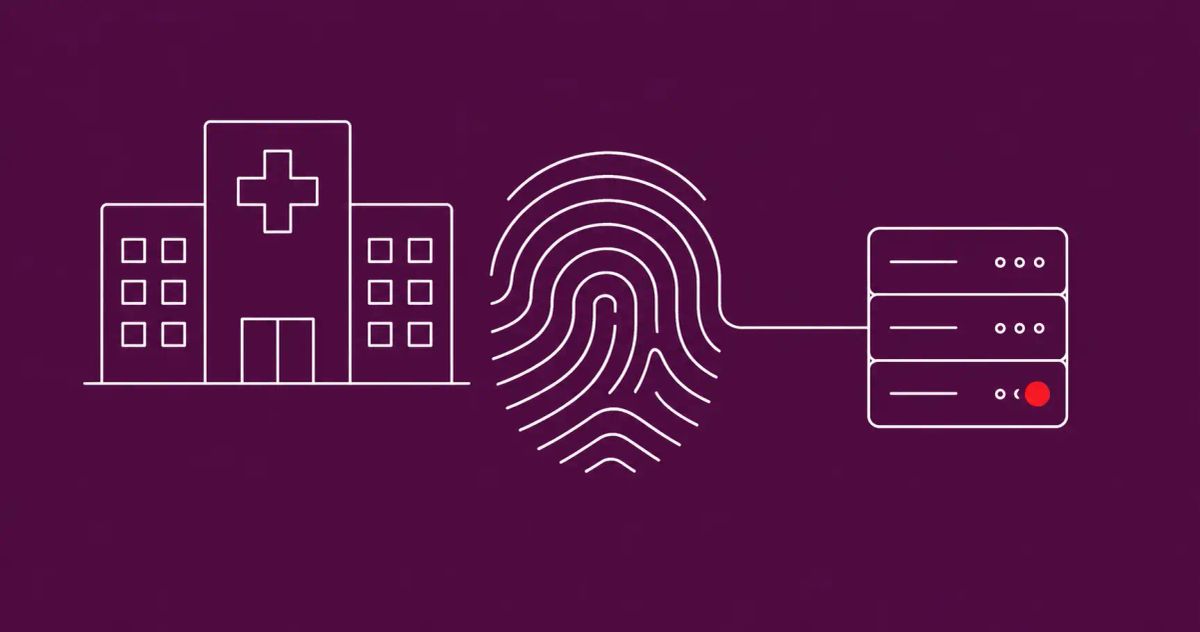
NYC Health + Hospitals — the largest US municipal public-hospital system — confirmed on May 18, 2026 that an intrusion through an unnamed third-party vendor exposed personal and medical data of at least 1.8 million individuals. The exposed data set includes names, Social Security numbers, driver's license numbers, taxpayer IDs, credit and debit card numbers, and stolen biometric fingerprint records. Discovery was February 2, 2026; the intrusion ran from November 25, 2025 to February 11, 2026. This is the first major US public-hospital disclosure to confirm stolen biometric fingerprint records, and biometrics are not rotatable like passwords.
NEW YORK, NEW YORK — On May 18, 2026, NYC Health + Hospitals — the largest municipal public-hospital system in the United States, serving roughly one million New Yorkers each year — confirmed that an intrusion that ran from November 25, 2025 through February 11, 2026 exposed the personal and medical data of at least 1.8 million individuals. The breach originated through a third-party vendor that NYC Health + Hospitals has not publicly named. The compromised data set includes names, health insurance information, medical information (disability codes, diagnoses, medications, test results, imaging, and treatment plans), claims and payment information, Social Security numbers, driver's license numbers, taxpayer identification numbers, credit and debit card numbers, online account credentials, and biometric fingerprint records. NYC H+H discovered the incident on February 2, 2026, engaged third-party cybersecurity and data-analytics firms to scope the exposure, and stood up a dedicated response line at (844) 403-4518 through at least June 23, 2026. Lorenzo Franceschi-Bicchierai at TechCrunch broke the disclosure beat on May 18.
What Happened
The Vendor Compromise
NYC Health + Hospitals has confirmed the entry point was a third-party vendor with access to the system's data, but has not publicly named the vendor in its initial disclosure or in the notice posted to its website. The vendor relationship gave the attackers access into the environment between November 25, 2025 and February 11, 2026 — roughly two and a half months of dwell time before NYC H+H's discovery on February 2, 2026 closed the window. The discovery preceded the end of the intrusion window by nine days, which means containment ran in parallel with active intrusion for the back half of the window. NYC H+H engaged third-party cybersecurity and data-analytics firms to scope the exposure and identify affected individuals.
What Was Taken
The exposed data set is unusually broad. NYC H+H's notice confirms that names, health insurance information, claims and payment data, and a comprehensive medical record set — disability codes, diagnoses, medications, test results, images, and treatment plans — were compromised. The notice also confirms Social Security numbers, driver's license numbers, taxpayer identification numbers, credit and debit card numbers, online account credentials, and biometric fingerprint records were exposed. The fingerprint records are the line item that separates this disclosure from every other large US public-hospital breach this cycle. Passwords can be reset. Card numbers can be reissued. Biometrics cannot.
The Notification Window
NYC H+H discovered the breach on February 2, 2026 and disclosed publicly on May 18, 2026 — a notification delta of roughly 105 days. The HIPAA Breach Notification Rule generally requires notification within 60 days of the date the covered entity determines there is risk of harm to individuals. NYC H+H's window sits at the slower end of what HIPAA tolerates for a breach of this size, especially given that the intrusion ran for more than 70 days before discovery. HHS Office for Civil Rights will scrutinize the discovery-to-notification timeline as part of any post-breach review.
Scope and Impact
NYC Health + Hospitals is the country's largest municipal public-hospital system. Its eleven acute-care hospitals, five long-term care facilities, and dozens of community clinics serve a patient population that skews heavily toward Medicaid recipients, undocumented New Yorkers, and people without other healthcare options. The blast radius of this breach therefore lands disproportionately on the population least able to absorb downstream identity-theft, fraud, and credential-reset costs. The biometric exposure compounds that asymmetry. A 1.8 million-person fingerprint set — once posted, sold, or referenced — sits in adversary hands permanently. There is no equivalent of a password reset.
The NYC H+H disclosure also lands inside a broader healthcare cycle CyberSignal has been tracking. Medtronic confirmed a 9-million-record breach earlier this quarter, OpenLoop Health disclosed a 716,000-patient telehealth breach, and HHS OCR levied $1.17M in HIPAA fines on prior covered entities whose security-rule failures enabled ransomware events affecting 427,000 patients. The shared signal across those four disclosures is that third-party and vendor-mediated access is the dominant vector for the cycle's largest healthcare breaches.
Response and Attribution
NYC H+H has not attributed the intrusion to a named threat actor or ransomware operator in its initial disclosure. There is no public claim from a leak-site operator and no public ransom demand. The system has engaged outside cybersecurity and data-analytics firms to complete forensics and notification, and stood up a dedicated response line — (844) 403-4518 — through at least June 23, 2026 to handle individual inquiries. NYC H+H is offering complimentary credit monitoring services to affected individuals.
The unnamed third-party vendor is the operationally important detail. Until NYC H+H names the vendor, neither downstream covered entities nor regulators can determine whether the vendor's other healthcare customers were also exposed. Law firm Edelson Lechtzin LLP has already announced an investigation on behalf of affected individuals, signaling that civil litigation will compress the disclosure timeline if NYC H+H delays naming the vendor much further. HHS OCR will independently review the breach as part of its Wall of Shame posting requirement for breaches affecting 500 or more individuals.
The CyberSignal Analysis
Signal 01 — Biometrics Are Now a Documented Healthcare Loss Category
The 1.8 million fingerprint records taken from NYC H+H are the first major US public-hospital disclosure to confirm stolen biometric data. Biometrics are unique among personal data categories because the affected individuals cannot rotate them — a compromised fingerprint stays compromised for life. Hospitals collect fingerprints for patient-identity verification, controlled-substance pharmacy workflows, and increasingly for badge access to clinical systems. Every covered entity that has implemented similar workflows now needs to audit which vendor relationships put those biometric records inside scope of a vendor compromise. The OCR HIPAA enforcement cycle is going to start asking specifically about biometric data handling in the next round of post-breach reviews.
Signal 02 — The Third-Party Vendor Is the Healthcare Sector's Front Door
NYC H+H's breach originated through a third-party vendor. So did the Medtronic 9-million-record incident at scale. So did OpenLoop Health's 716,000-patient telehealth disclosure. The vendor-mediated breach is now the dominant entry pattern for the cycle's largest healthcare exposures, and the operational gap is straightforward: covered entities have invested in internal security controls but have not invested in equivalent vendor-access governance. Until NYC H+H names the vendor and until OCR begins enforcement actions tied to vendor-access failures specifically — rather than to the downstream covered entity — the asymmetry persists. CISOs at any healthcare system should run an inventory of third-party vendors with read access to PHI, biometric stores, or identity systems this quarter.
Signal 03 — A 105-Day Notification Window Is the New Normal and Should Not Be
NYC H+H's discovery-to-disclosure window — February 2 to May 18, roughly 105 days — sits inside HIPAA's tolerance band but at the slow end. The breach affects 1.8 million people whose biometric and identity data have now been in adversary hands for between 90 and 175 days from initial access. Every additional day of delay increases the operational value of the stolen data: time to monetize cards, build synthetic identities, abuse online-account credentials, and seed downstream phishing. Covered entities responding to large vendor-mediated breaches should target the 60-day HIPAA floor, not the 90-to-120-day tolerance ceiling. The HHS OCR enforcement docket is already pressing on notification timing; biometric exposure should make that pressure sharper.