Cyberattack on Nichirei Logistics Disrupts KFC Japan and Cold-Chain Deliveries
A cold-chain cyberattack ripples into KFC Japan and supermarket supplies — supply-chain sector-advisory coverage this week.

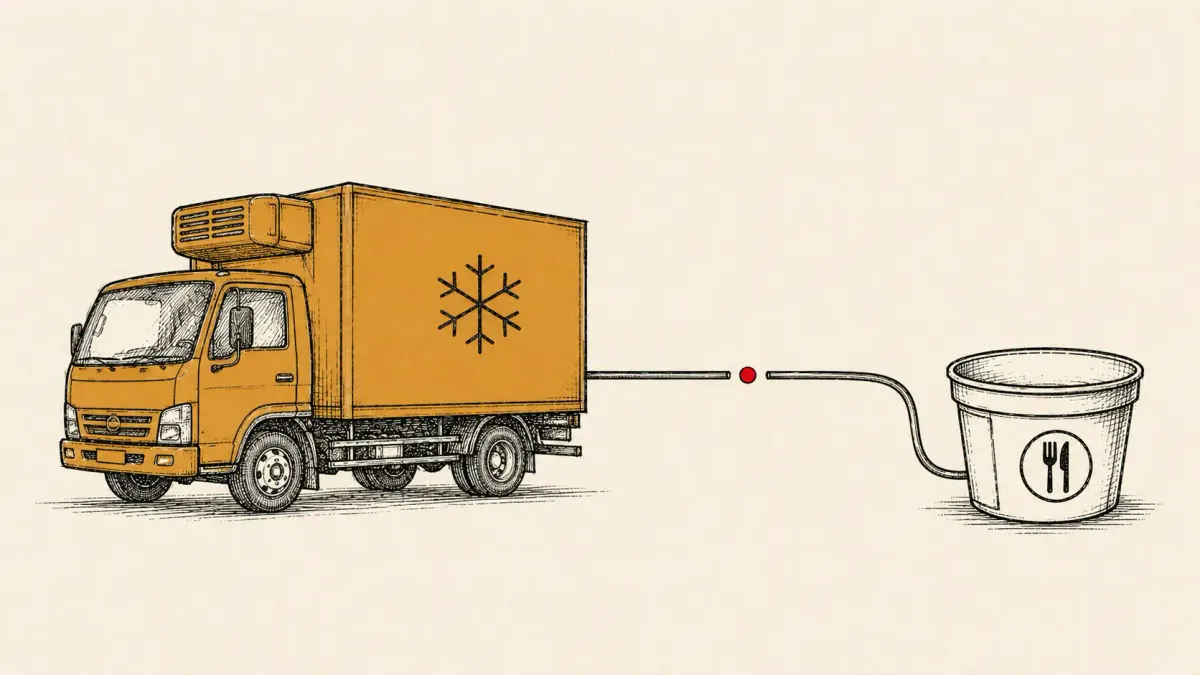
A cold-chain disruption that reaches the dinner table — a supply-chain sector-advisory moment for food logistics, not an attacker playbook.
TOKYO — A cyberattack on Nichirei Logistics Group, described in reporting as Japan's largest cold-chain logistics operator, reportedly disrupted refrigerated-warehouse operations in mid-July 2026 and rippled outward into the country's food supply chain, leaving Kentucky Fried Chicken (KFC) Japan short on ingredients and prompting delivery problems at other restaurant chains and supermarkets. Parent company Nichirei Corporation reportedly detected system failures on July 13, 2026 and established an emergency response headquarters the same day, according to reporting from The Record and The Register.
For defenders, the episode is less a breach narrative than a sector-advisory moment: a demonstration of how a single disruption inside a temperature-controlled logistics network can propagate rapidly to restaurants and grocery shelves that depend on it. The most durable lesson is about the fragility of tightly coupled, time-sensitive supply chains — not about how the intrusion was carried out, which has not been publicly detailed.
What Was Disrupted
According to reporting from The Record and The Register, Nichirei Corporation detected system failures on July 13, 2026 and established an emergency response headquarters the same day. The disruption reportedly affected Nichirei Logistics Group, the group's cold-chain arm and one of the largest temperature-controlled logistics operators in Japan, interrupting inbound and outbound activity at refrigerated warehouses and halting frozen-food shipments handled elsewhere in the group.
Cold-chain logistics is exacting in a way that makes disruption especially consequential. Perishable and frozen goods depend on unbroken temperature control and precisely scheduled movement; when the systems that coordinate warehousing, order intake, and dispatch go down, shipments cannot simply be paused and resumed at leisure without risking spoilage and cascading delays. That is why an incident at a single logistics operator can behave like an infrastructure event rather than a contained IT outage — a dynamic that national authorities increasingly treat as a matter of critical infrastructure resilience.
Nichirei reportedly moved to contain the incident and, according to Japanese reporting, planned to gradually resume affected operations from July 17, 2026 after implementing additional security measures. The company reportedly said that some affected servers contained personal information and submitted an initial report to Japan's Personal Information Protection Commission regarding the possibility of a leak, while stating that no evidence of external exposure had been confirmed. The operational-resilience questions the episode raises echo the warnings authorities have issued about hostile-state targeting of critical infrastructure, even where no attribution has been offered here.
The KFC Japan Downstream Impact
The clearest downstream effect landed at Kentucky Fried Chicken (KFC) Japan. According to reporting, the chain warned customers that deliveries of ingredients to its stores would likely be affected, paused ordering through its app and website, and cautioned that it might need to limit menu items and operating hours — with some outlets potentially closing depending on ingredient availability. For a quick-service restaurant that runs on predictable, just-in-time resupply, a break in the cold chain translates almost immediately into empty prep lines.
The impact reportedly extended beyond one brand. Other restaurant operators reported shipment delays, and at least one major retailer reported stock shortages tied to the disruption. That breadth is the point: a single cold-chain operator sits upstream of many independent businesses, so a problem in its systems surfaces simultaneously across restaurants and grocery shelves that have no direct connection to one another. The pattern rhymes with other recent operational-disruption incidents, from manufacturing to venue and events operations, where the harm is measured in halted throughput rather than stolen data.
Notably, the visible damage in this case is service availability, not confirmed data theft. Customers experienced paused ordering and the prospect of reduced menus and hours; the food itself, and the businesses that sell it, were the assets most immediately at risk. That reframes the incident away from a conventional breach story and toward a business-continuity one — the defining characteristic of attacks that strike operational and logistics infrastructure.
Sector-Advisory Implications for Supply-Chain-Dependent Industries
For any industry that runs on tightly coupled logistics, the Nichirei episode is a sector-advisory reference point. Food logistics shares the defining feature that makes such incidents systemic: many downstream businesses depend on a small number of specialized operators, and those operators run on time-sensitive processes with little slack. The same concentration risk shows up across sectors — in food and humanitarian aid distribution, in fuel and energy operational-technology monitoring, and in the broader critical-infrastructure warnings that governments have issued to national operators.
The useful questions for boards and resilience planners are therefore less about any one technique and more about structure. How quickly can operations resume after a forced systems outage? How many single points of failure exist between a logistics provider and the businesses that depend on it? Is there enough buffer — inventory, alternate suppliers, or manual fallback procedures — to absorb a multi-day interruption without cascading into shortages? The Nichirei case suggests the answer for time-sensitive cold-chain and food-logistics networks is often uncomfortably thin.
There is also a communications dimension worth flagging. KFC Japan's decision to warn customers, pause online ordering, and pre-announce possible menu and hour reductions is a model of demand-management under disruption: it set expectations rather than letting stores fail silently. For consumer-facing businesses downstream of a logistics incident, that kind of transparent, early guidance is part of resilience, not separate from it.
Open Questions
Several important points remain unconfirmed. It has not been established whether ransomware was a factor in the disruption, and the specific systems affected inside Nichirei's operations have not been publicly detailed. The full restoration timeline is likewise uncertain: reporting indicated a plan to resume affected operations gradually from July 17, 2026, but a return to normal throughput across the group's warehouses and shipping had not been confirmed.
The data picture is also open. Nichirei reportedly notified Japan's Personal Information Protection Commission of a possible personal-information exposure while stating that no external leak had been confirmed — a precautionary regulatory step rather than a confirmed breach outcome. Whether any information was ultimately accessed or removed, and the regulatory disposition that follows, remain to be seen.
What is firmly established is enough to take seriously: a disruption at a major cold-chain operator that reached KFC Japan restaurants and rippled into supermarket and restaurant supplies within days. For food-logistics and other supply-chain-dependent sectors, that reach is the durable lesson, and it stands regardless of how the technical and attribution details ultimately resolve. Days later, Nichirei reported operations returning to normal as an extortion group claimed responsibility.
The CyberSignal Analysis
The reported facts above are drawn from the sources cited; what follows is The CyberSignal's editorial reading of what defenders and resilience owners should take from them. None of the judgments below are new reported facts, and none assert anything the reporting has left unconfirmed.
Signal 01 — Availability, Not Data, Is the Loss That Bites
The visible harm in this incident is service continuity — paused ordering, threatened menu cuts and store closures, and shortages on shelves — not confirmed data theft. Our reading is that food-logistics and other just-in-time sectors are most exposed on availability, and security programs scoped mainly around data confidentiality are optimizing for the wrong failure mode. The asset that matters most here is the ability to keep temperature-controlled goods moving on schedule.
That reframing changes the planning questions. The right metrics are recovery time for logistics-coordination systems, the existence of manual fallback procedures for warehousing and dispatch, and how many hours of interruption the downstream businesses can absorb before shortages appear. When the dominant loss is stopped throughput, resilience of operations is the control that most directly bounds the damage.
Signal 02 — Concentration Risk Turns One Outage Into Many
A single cold-chain operator sits upstream of many unrelated restaurants and retailers, so a disruption in its systems surfaces simultaneously across businesses that share no direct link. Our assessment is that this concentration is the mechanism that turns a contained incident into a sector-level event, and it is a structural exposure that no individual downstream business can fully mitigate on its own.
For defenders and procurement owners, the practical implication is to map dependencies on specialized logistics providers as a shared risk rather than a vendor footnote. Knowing which single operators, if disrupted, would stop your own throughput — and what alternate routing or inventory buffer exists — is the kind of supply-chain due diligence that this episode rewards.
Signal 03 — Hedge the Cause Until Investigators Close It
Whether ransomware was involved, which systems were affected, and whether any data was exposed are all unconfirmed, and the responsible framing is to say so plainly rather than fill the gaps with assumption. Our posture is to treat the cause as provisional while the operator and Japanese authorities complete their work, and to note that a precautionary regulatory notification is not the same as a confirmed breach.
The reason to hedge is not doubt about the disruption — that is well reported — but the pattern that early technical narratives around operational incidents often shift. Anchoring a response or a lesson to an unconfirmed cause risks having to walk it back. Defenders lose nothing by drawing the resilience lessons now, which hold regardless of cause, and waiting on the forensic details before assigning one.



