Google Threat Intelligence Group Details Continued Disruption of Malicious Residential-Proxy Networks
Vendor-driven proxy-network disruption continues — defender teams review perimeter-detection posture this week.

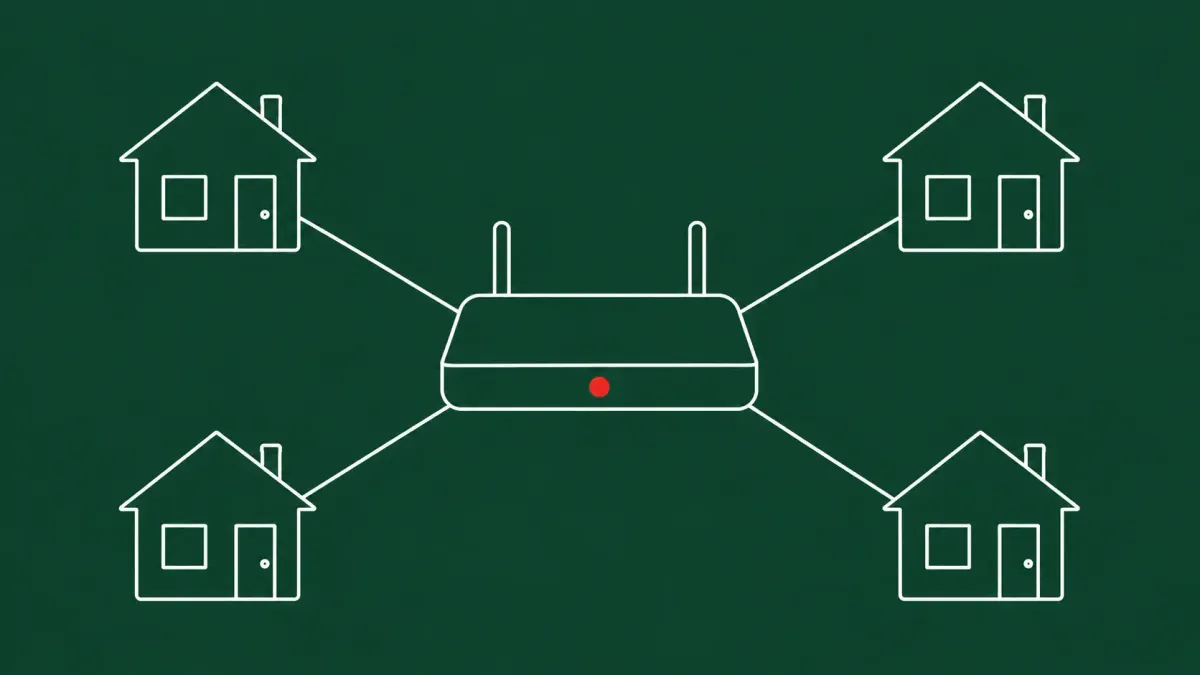
Google Threat Intelligence Group casts residential-proxy disruption as a continuing campaign — and hands perimeter teams a reason to re-examine how much they still trust source-IP reputation.
MOUNTAIN VIEW, CALIFORNIA — Google Threat Intelligence Group (GTIG) has published an analysis, dated on or about July 2, 2026, describing what it calls its continued disruption of malicious residential-proxy networks — the infrastructure that lets threat actors route their traffic through compromised or enrolled home devices so that it appears to originate from ordinary consumer internet connections. The Google Threat Intelligence blog post presents the work as an ongoing, vendor-led effort rather than a one-off takedown, and frames residential proxies as a durable obfuscation layer that a wide range of actors rely on to mask the true origin of malicious activity.
The disclosure is a defender-facing intelligence write-up, not an incident notification: no single victim organization is at its center, and the value for security teams lies in what it says about a technique rather than any one event. GTIG's core point is that residential-proxy abuse degrades a control many perimeter defenses still lean on — the assumption that source-IP reputation and geolocation are meaningful signals of trust. When an adversary can present as a residential connection in the same city as a target's real users, that assumption weakens, and the analysis arrives alongside a broader wave of proxy-focused disruption activity from both vendors and law enforcement.
What Google Threat Intelligence Group Published
In its analysis, Google Threat Intelligence Group (GTIG) describes an ongoing effort to disrupt malicious residential-proxy networks — services that route third-party traffic through IP addresses belonging to residential internet connections. The distinguishing feature of a residential proxy, as opposed to a datacenter proxy, is precisely that its exit IPs look like ordinary home users: they carry the reputation, geolocation, and internet-service-provider fingerprint of consumer broadband rather than of a cloud host. That property is exactly what makes the infrastructure attractive to threat actors who want their activity to blend into normal traffic.
GTIG frames its work as continued rather than concluded, characterizing residential-proxy disruption as a campaign it sustains over time rather than a single decisive action. The write-up treats the abuse of these networks as a standing problem in the threat landscape — one where individual services can be degraded but where the underlying demand, and the pool of enrolled or compromised devices, tends to persist. That framing matters for how defenders read the disclosure: it is presented as a status update on an ongoing defensive campaign, not a claim that a specific threat has been eliminated.
Several specifics that would sharpen the picture are not established in this coverage. GTIG's analysis, as reflected here, does not confirm the names of particular proxy networks disrupted, the total volume of infrastructure taken offline, or the identities of the actors relying on it. Nor does the analysis, as covered, confirm whether the effort was coordinated with law enforcement such as the FBI or Europol. Those gaps are noted here deliberately rather than filled in, and they define the boundary between what GTIG has published and what remains open.
Why Residential Proxies Erode Perimeter-Detection Assumptions
For perimeter-detection teams, the practical significance of GTIG's analysis is what residential proxies do to source-based trust signals. A great deal of conventional perimeter tuning rests on the idea that where a connection comes from tells you something about whether to trust it: datacenter and hosting-provider ranges draw scrutiny, unexpected foreign geolocations raise flags, and IP-reputation feeds down-rank addresses with a history of abuse. Residential proxies are designed to defeat all three of those heuristics at once. Traffic exits through a real consumer connection, so it inherits a clean residential reputation, a plausible geolocation, and an ISP fingerprint that looks like a legitimate customer.
The defender posture that follows is not to discard IP-based signals but to stop treating them as dispositive. Perimeter teams reviewing their detection stack this week can reasonably ask where a single source-reputation or geolocation check is the load-bearing control, and whether behavioral and identity-layer signals sit behind it — session anomalies, authentication patterns, device posture, and volumetric or timing signatures that do not depend on the exit IP looking suspicious. The core lesson GTIG's framing reinforces is that adversaries can now rent their way to a trustworthy-looking origin, so controls keyed to origin trust need a second line that assumes the origin may be clean by design.
This is a posture-review prompt rather than a patch-now emergency. There is no vulnerability to remediate here and no indicator list to block; the takeaway is architectural. Teams that already layer identity and behavioral detection behind perimeter checks will find the analysis confirms their approach, while teams still leaning heavily on IP reputation as a gate have a concrete reason, this week, to reassess how much weight that single signal is carrying.
Where This Sits in a Widening Proxy-Disruption Campaign
GTIG's analysis does not stand alone. It lands amid a run of proxy- and anonymity-focused disruption from both vendors and law enforcement, and it reads as part of a broader push against the infrastructure that launders malicious traffic. A sibling disruption being reported in the same window — an FBI-and-Google effort against the NetNut residential-proxy service — sits alongside this GTIG write-up, though whether the two are formally connected, or whether this analysis pre-figures that action, is not confirmed here. Earlier in the year, a Dutch police and NCSC takedown of the Asocks residential-proxy network tied to some 17 million devices demonstrated how large the enrolled-device pools behind these services can grow.
The pattern extends beyond residential proxies specifically to the wider market for anonymity infrastructure. Europol's first takedown of a VPN service marketed to cybercriminals signaled that law enforcement is increasingly treating obfuscation-as-a-service as a target in its own right, and the recurring theme across these actions is that the same infrastructure gets rented by many unrelated actors at once. A separate line of vendor activity has seen Google building out AI-assisted defensive tooling, including its AI threat-defense initiative spanning Gemini, Wiz, and CodeMender, which is the broader program context in which GTIG's threat-intelligence output is produced.
The through-line for defenders is that proxy abuse is being attacked from multiple directions at once — vendor disruption of the services, law-enforcement action against operators, and intelligence-sharing that helps the wider community recognize the traffic. None of those levers eliminates the technique, but together they raise the cost and shorten the lifespan of individual networks. GTIG's contribution to that effort is the intelligence layer: naming the problem, characterizing its persistence, and giving defenders a reason to reassess controls that assume a clean origin means a trustworthy one.
Scope and Impact
The direct scope of this disclosure is narrow and specific: it is an analysis of a defensive campaign, not a report of a breach or a live threat against a named organization. No customers are notified, no data is exposed, and no immediate action is demanded of any single company. The impact is instead diffuse and community-wide — it is the kind of intelligence that informs how defenders tune detections rather than the kind that triggers an incident-response playbook.
That said, the second-order impact is broad because the technique in focus is broad. Residential proxies are used across the threat spectrum, from commodity fraud and credential-stuffing to more targeted intrusion activity, precisely because a trustworthy-looking source IP is useful to almost every kind of adversary. Any organization whose perimeter or fraud controls lean on source-IP reputation, geolocation, or ISP fingerprinting is, in principle, within the blast radius of the problem GTIG describes, even though none is named. The practical impact is therefore best measured not in affected accounts but in the number of detection stacks that quietly over-trust origin signals.
It is worth stating plainly what the impact is not. This analysis does not establish that any particular network is permanently offline, does not quantify how much proxy capacity was removed, and does not claim a decisive win against the technique. GTIG's own framing — continued disruption — is a claim of ongoing pressure, not of resolution, and the honest read of its scope is that it advances a long campaign by one increment while documenting why the campaign has to continue.
Open Questions
Several questions remain open at the time of publication. GTIG's analysis, as covered here, does not confirm which specific residential-proxy networks were disrupted, nor does it quantify how much infrastructure was taken offline or for how long. Because these services frequently resell one another's capacity and re-enroll devices, the durability of any disruption is itself an open question — resilience, not permanence, is the usual outcome, and the analysis does not claim otherwise.
It is also unconfirmed whether this write-up is connected to, or pre-figures, the closely-timed NetNut residential-proxy disruption reported in the same window, and whether any of GTIG's effort was coordinated with law enforcement such as the FBI or Europol. The analysis as covered does not establish those links, and this piece does not assume them. Whether the July 2 publication and the July 3 takedown activity are two views of one operation or separate threads that happened to converge is a question the available material leaves unanswered.
Finally, the operational specifics that would let defenders act most concretely — indicators of compromise, exit-node characteristics, or detection signatures GTIG may share with partners — are not detailed in this defender-facing summary. What is established is the strategic message: residential-proxy abuse is a persistent problem, Google is applying continued pressure to it, and perimeter teams that trust origin signals too heavily should treat this as a prompt to review. The finer-grained technical picture, if GTIG releases it, would sharpen that message but does not change its direction.
The CyberSignal Analysis
The reported facts above are Google Threat Intelligence Group's; what follows is The CyberSignal's editorial reading of what defenders should take from them. None of the judgments below are new reported facts.
Signal 01 — Treat Source-IP Reputation as a Hint, Not a Verdict
The most actionable takeaway from GTIG's framing is a mindset shift about origin trust. Residential proxies exist to make a hostile connection wear a friendly IP, and they do it well enough that source reputation, geolocation, and ISP fingerprinting can all be spoofed simultaneously by design. Our reading is that any perimeter or fraud control where one of those signals is the deciding factor should be treated as already compromised in principle — not because it will always be bypassed, but because bypass is now a rentable commodity rather than an elite capability.
The constructive version of that pessimism is layering. The teams that weather residential-proxy abuse are the ones whose origin checks feed a decision rather than make it, with identity, device-posture, and behavioral signals sitting behind them. GTIG's analysis is best used internally as a forcing function to find every place a lone IP-reputation gate is doing load-bearing work, and to put a second, origin-independent control behind it.
Signal 02 — "Continued Disruption" Is an Admission That the Technique Persists
GTIG's own choice of words — continued disruption — is the most honest signal in the disclosure, and defenders should read it literally. It concedes that this is a campaign without a finish line: services get degraded, operators adapt, capacity gets resold, and devices get re-enrolled. Our assessment is that the durable defender posture is to assume residential-proxy capacity will always be available to adversaries, and to plan detection around that permanence rather than hoping any single takedown removes the threat.
That reframing has a practical upside. If the technique is permanent, then the right investment is in detections that do not depend on the proxy infrastructure being disrupted — behavioral and identity-layer controls that keep working whether or not a given network is online this week. Treating disruption as helpful but not sufficient is the posture GTIG's language quietly recommends.
Signal 03 — The Value Here Is Strategic Intelligence, Not an Indicator Feed
This disclosure is worth reading precisely because it is not an indicator dump. It offers no IOCs to block and no patch to apply; its value is that it tells defenders where a whole class of trust assumptions is failing. Our view is that intelligence of this kind is easy to under-use — it does not slot neatly into a ticketing queue — but it is exactly the input that should drive detection-engineering priorities rather than day-to-day triage.
The forward-looking watch item is whether GTIG follows the strategic write-up with sharable technical detail, and whether this analysis proves to be connected to the closely-timed proxy takedown activity reported the same week. Until that is established, the responsible read is to take the strategic message on board — origin trust is eroding, proxy abuse is persistent — without over-reading a formal link that the published material does not confirm.



