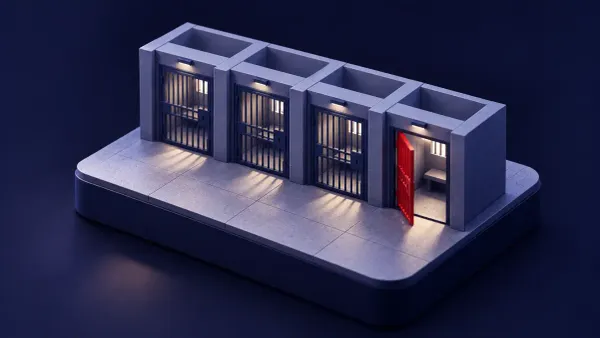
Three Unrelated Threat Actors Just Arrived at the Same Conclusion — Your Developers Are the Beachhead
Three unrelated threat actors arrived at the same conclusion in March and April: the developer workstation is the best ROI beachhead. CSO Online's framing — the Developer Credential Economy — is the editorial line CISOs should adopt this quarter.

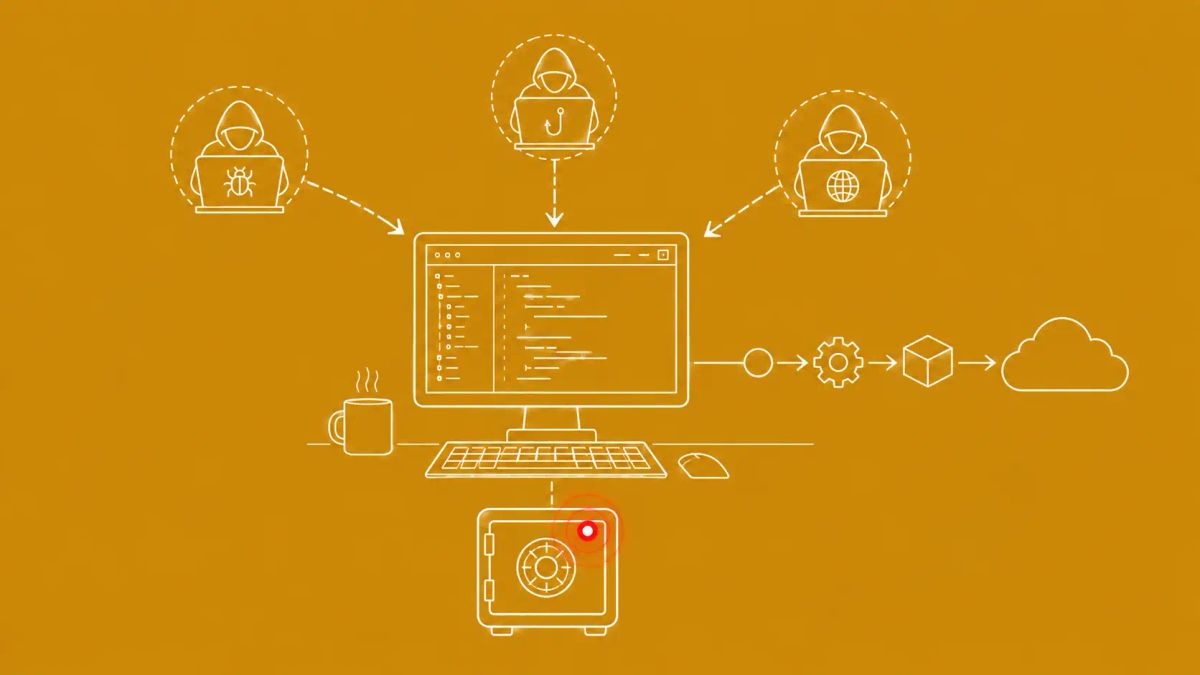
Three unrelated threat actors arrived at the same conclusion in March and April: the developer workstation is the best return-on-investment beachhead in the modern enterprise. That convergence is not coincidence. CSO Online's framing — the Developer Credential Economy — is the editorial line CISOs should adopt this quarter, because endpoint protection is not enough to secure the workstations that hold the keys to your production pipeline.
SAN FRANCISCO — CSO Online's John Leyden published an analysis this week making a strategic argument that has been quietly building across 2026: developer workstations are the new beachhead in enterprise breach campaigns. Three unrelated threat actors in March and April 2026 independently concluded that the developer workstation offers the best return-on-investment for initial access. Google's Cloud Threat Horizons report for the first half of 2026 documented the same pattern from a different angle — threat actors using trojanized applications to gain a foothold on a developer workstation, then leveraging authenticated sessions and available credentials to pivot into cloud resources. The strategic conclusion CSO Online draws from the convergence: compromising a single developer is now equivalent to a supply chain attack, without the complexity of compromising an upstream package registry. The access-to-effort ratio is simply better than attacking production infrastructure directly. Production systems have monitoring, network segmentation, and incident response playbooks. Developer workstations don't.
The Developer Credential Economy — what makes the price signal real
Security Boulevard's analysis of the March 2026 attack wave framed the dynamic as the Developer Credential Economy: a black market for highly privileged developer credentials, where the market price for developer access has risen because the downstream value of that access has risen. The framing makes sense of the convergence. If three unrelated threat actors look at the modern enterprise and independently arrive at the same target selection, that is a price signal — set by the gap between the value of developer credentials and the maturity of controls protecting them. The premium attackers will pay for developer access reflects what that access unlocks: production deployment pipelines, cloud infrastructure consoles, secret management systems, code signing capabilities, customer data through CI/CD-mediated database access, and the trust that downstream package consumers extend to the developer's published artifacts.
Socket's early-April report on the Contagious Interview campaign (North Korea attribution) made the operational scale visible. The campaign spread to npm, PyPI, Go modules, crates.io, and Packagist simultaneously — five ecosystems at once, operating since January 2025. The malware functions are exactly what developer-environment compromise economics predict: steal browser data, cryptocurrency wallet credentials, and password manager contents. CSO Online's framing was that the five-ecosystem expansion signals a "factory-model approach to developer targeting." Two additional concurrent campaigns documented in the same window — described in available coverage but not specifically named — round out the three-actor convergence pattern. The strategic conclusion lands in 80 words: production systems get the monitoring and segmentation. Developer workstations get implicit trust. Attackers move where defenders are not.
Why no single team owns the intersection — and why that's the actual problem
CSO Online's organizational diagnosis is the part that should land with CISOs and CIOs together. Developer environment security does not fit neatly into existing security team structures. It sits at the intersection of application security, endpoint security, identity management, and supply chain risk — and in most organizations, no single team owns that intersection. Application security teams focus on code vulnerabilities. Endpoint teams focus on malware detection. Identity teams focus on access governance. Nobody, as CSO Online frames it, is watching the IDE extension that just installed a Zig binary with full operating system access. The structural gap is what makes the developer workstation an unguarded high-value target.
The compounding factor is that developers get implicit trust because the people who use the workstations are trusted implicitly. Most organizations treat developer environment security as an extension of endpoint protection — same EDR agent, same patch management, same access controls as every other employee. Some organizations enforce code signing and require MFA for package registry access. Few treat the developer workstation as a distinct attack surface that requires its own security architecture, dedicated team ownership, and dedicated investment. The 2026 pattern — convergence of three independent campaigns plus Google's Cloud Threat Horizons documentation — argues that posture has to change.
How the developer-workstation attack chain composes 2026's other supply chain crises
The developer-workstation beachhead frame is the unifying lens for the supply chain attack patterns defenders watched intensify across the first half of 2026. TeamPCP's Mini Shai-Hulud worm demonstrated how compromised developer credentials become a self-propagating npm threat. TeamPCP's repeated Checkmarx Jenkins compromise demonstrated how a CI/CD-adjacent product compromise concentrates downstream risk across customer build pipelines. TrendMicro's QLNX Quasar Linux RAT disclosure documented the Linux-flavored equivalent targeting developer environments specifically. The Hugging Face Boxter typosquat campaign extended the pattern to AI model marketplaces. SentinelLABS' PCPJack cloud worm documented the cloud-resource-pivot leg specifically.
Read individually, each of those campaigns is a separate operational incident. Read together — through the developer-workstation-as-beachhead lens — they describe a single coordinated escalation against a specific organizational seam. The defender response cannot be five independent point solutions. It has to be a unified developer environment security posture with explicit cross-team ownership, dedicated tooling, dedicated investment, and board-level visibility. That is the structural shift CSO Online's framing argues for. The 2026 incident pattern argues that the shift is no longer optional.
The CyberSignal Analysis
Signal 01 — Developer environment security is now a distinct discipline, and your org chart should reflect that
The single most consequential action CISOs can take this quarter is to formalize cross-team ownership of developer environment security. Either create a dedicated role — a Developer Environment Security Lead reporting jointly to the CISO and CTO — or establish an explicit cross-team mandate with named accountable parties from AppSec, endpoint, identity, and supply chain risk. The diagnostic question is: who in your organization is personally accountable for the security posture of your developer workstations and the tooling installed on them? If the answer is unclear, the gap CSO Online describes is your gap. Close it before the next campaign lands. The operational work that follows — IDE extension allowlists, lifecycle script monitoring, just-in-time production access, trojanized application detection — only happens if someone owns the intersection.
Signal 02 — Treat developer credentials as production secrets, because that is what they have become
The developer credential is now functionally a production secret. It unlocks deployment pipelines, cloud consoles, code signing, and customer data through CI/CD-mediated database access. Update your secrets handling, rotation, and audit policies to reflect that. Implement just-in-time access for developer production access — no permanent admin grants on production resources. Add session monitoring for developer workstations accessing production systems. Audit OAuth tokens issued to developer-installed tools and IDE extensions specifically. Implement passkey-based authentication for development environment access where feasible. These are not new controls; they are existing controls applied to a population the security team has historically not classified as a high-value target. The CSO Online framing is correct: developer workstations have become the crown jewels. Your control posture should match.
What to do this week
- Inventory your developer workstations as a distinct crown-jewel asset class. Document who has admin access to production deployment pipelines, what IDE extensions are installed, what package managers are used, what AI development tools are configured. Treat the inventory as the foundation for everything downstream.
- Establish explicit cross-team ownership of developer environment security. Either appoint a Developer Environment Security Lead or document a named accountable party from each of AppSec, endpoint, identity, and supply chain risk teams. Without owned accountability, the intersection remains uncovered.
- Audit your developer tooling supply chain — every IDE extension marketplace, package registry, AI model repository, and AI coding assistant your developers use. Implement detection at the registry level (Socket, Snyk, npm audit signatures, etc.) and at the workstation level (lifecycle script monitoring, IDE extension behavior monitoring, trojanized application detection).
- Implement just-in-time access for production resources from developer environments. Eliminate permanent admin grants where feasible. Add session monitoring for production system access from developer workstations. Audit OAuth tokens issued to developer-installed tools and IDE extensions specifically.
- Treat developer credentials as production secrets in your handling, rotation, and audit policies. Implement passkey-based authentication for development environment access. Pre-script the "compromised developer" scenario in your IR playbook — including credential rotation, code review, deployment pipeline audit, and customer notification.
- Brief your board on the strategic shift. Developer environments are now front-line attack surfaces, not back-office endpoints. The Contagious Interview five-ecosystem expansion plus the broader supply chain trust crisis argue that developer environment security should receive proportional security investment and board-level visibility.