Critical Nginx UI Flaw Grants Unauthenticated Root Access to Web Servers

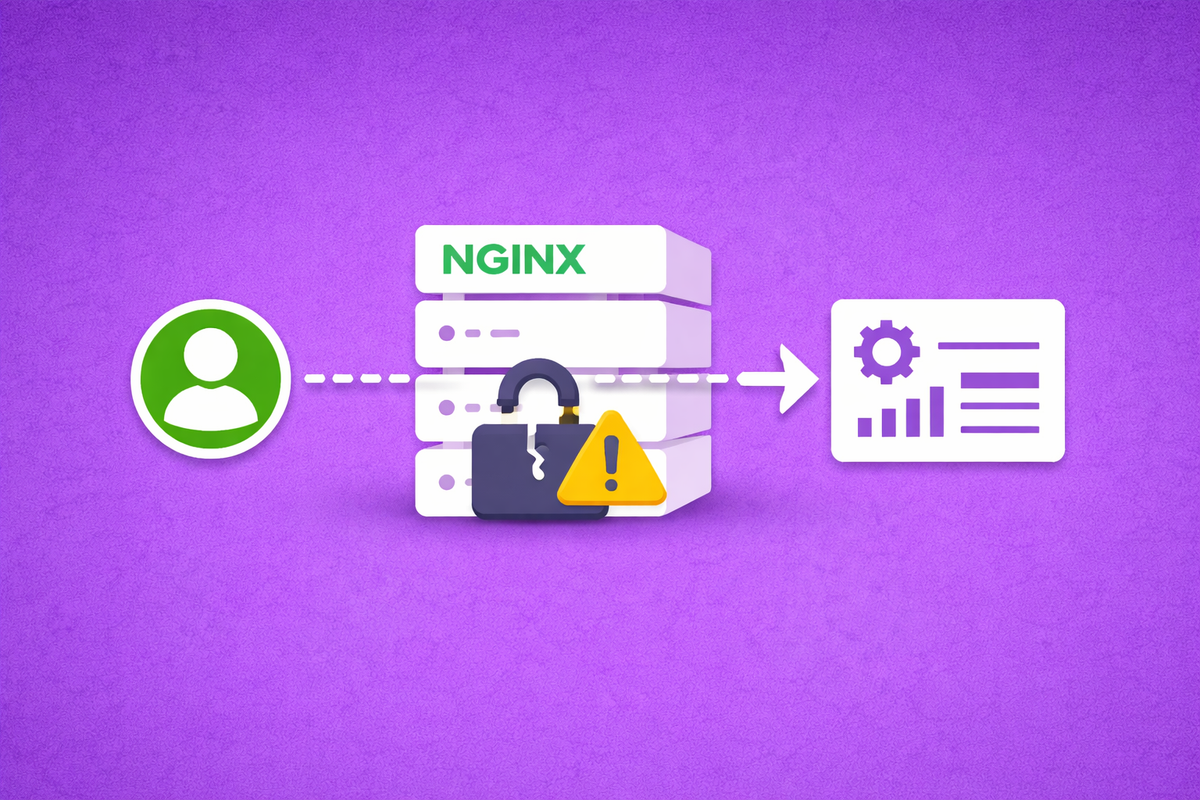
A severe vulnerability in the popular Nginx UI management tool is being actively exploited, allowing attackers to bypass authentication and gain full command execution on hosting infrastructure.
SAN FRANCISCO, CA — Security researchers have issued an urgent warning following the discovery of CVE-2026-33032, a critical vulnerability in Nginx UI — a widely used web-based interface for managing Nginx servers. The flaw, which carries a near-perfect CVSS score of 9.8, allows unauthenticated remote attackers to gain administrative access to the server, leading to full system compromise.
The vulnerability stems from a flaw in how the UI tool handles Model Context Protocol (MCP) integrations. According to reports from Security Affairs and The Hacker News, attackers can leverage this integration gap to bypass the login screen entirely, granting them the ability to modify server configurations, steal SSL certificates, and execute arbitrary code with root privileges.
The MCP Integration Gap
The "Nginx UI" project is an open-source management layer designed to simplify the configuration of Nginx proxies and websites. The vulnerability resides in a newly implemented feature meant to streamline AI-driven server management via MCP.
Because the UI tool often runs with elevated permissions to modify system-level Nginx configuration files, an attacker who gains access to the dashboard effectively gains control over the underlying Linux environment. Security firms have already observed "exploit attempts in the wild," with threat actors using automated scanners to identify exposed Nginx UI instances on port 9000.
A Growing Infrastructure Target
This incident follows a string of high-impact infrastructure vulnerabilities, including the recent SharePoint zero-day and the n8n automation abuse. The targeting of Nginx UI represents a shift toward attacking the management tools that sit on top of trusted software, rather than the core software itself.
"Management interfaces are the Achilles' heel of modern cloud deployments," noted one researcher on Dark Reading. "We spend millions securing the front door of the web server, but leave the 'admin' side door unlocked through a third-party UI tool."
The CyberSignal Analysis
Signal 01 — The Risk of "Quality of Life" Tools
Nginx UI is a community-driven project, not an official Nginx/F5 product. This distinction is critical for CISOs. Many engineering teams deploy third-party "helper" UIs to manage complex configurations, but these tools often lack the rigorous security auditing of the core software they manage. If you are using Nginx UI, it must be behind a VPN or protected by strict IP allow-listing.
Signal 02 — Automation as an Attack Vector
The fact that this flaw involves the Model Context Protocol (MCP) highlights a new trend: the "AI-ification" of DevOps tools is introducing fresh unauthenticated attack surfaces. As we move toward more automated, AI-driven server management, the protocols connecting these AI models to our servers are becoming high-value targets for unauthenticated RCE.