Confiant Documents "SourTrade" Malvertising Campaign Assembling Executables in the Victim's Browser
A novel malvertising delivery technique lands from Confiant — defender review for ad-tech and retail-trader-adjacent environments this weekend.

Key Takeaways
|
A browser-assembly malvertising technique lands from Confiant — the finished file is reportedly built on the victim's machine, so the usual "scan the download" reflex has less to grab onto.
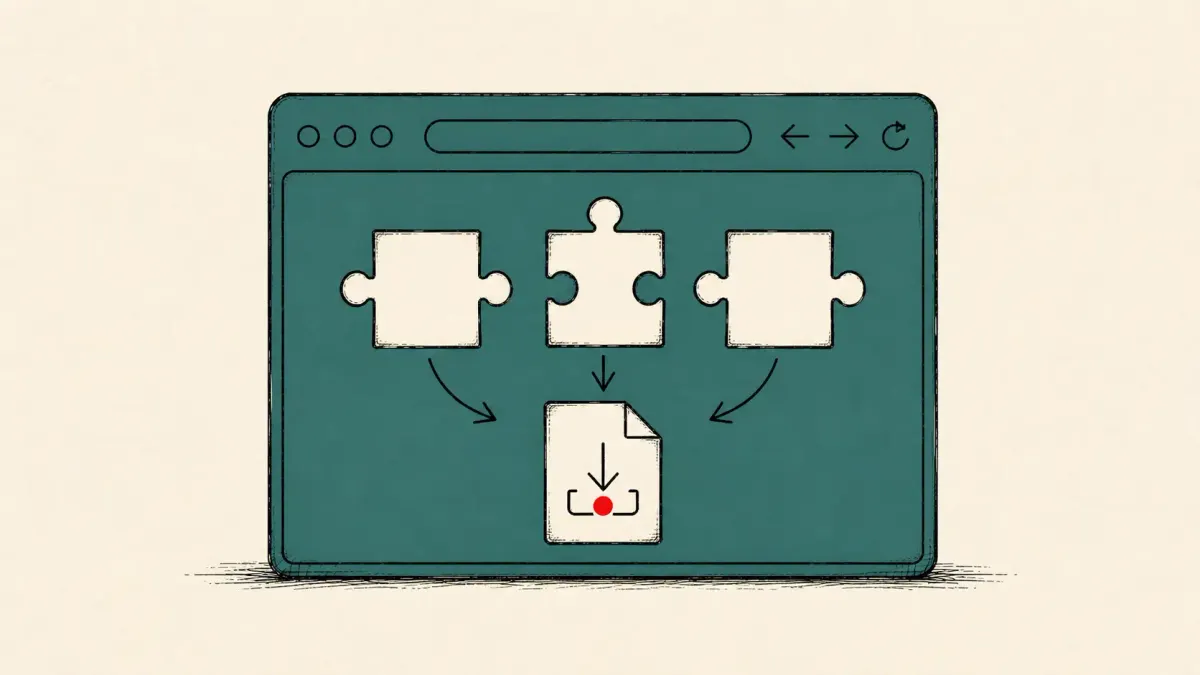
NEW YORK, N.Y. — Ad-security firm Confiant on July 23, 2026 documented a malvertising campaign it calls "SourTrade" that, according to reporting, does not serve one finished malicious file from a fixed web address. Instead it reportedly delivers instructions and components to the victim's browser and has the browser assemble the final Windows executable locally, using a legitimate Bun runtime — a JavaScript runtime comparable to Node.js — as the base it builds on.
The detail that makes SourTrade notable for defenders is where the assembly happens. As reported by The Hacker News, the campaign reportedly has run since late 2024 and impersonated TradingView, Solana, and Luno to reach retail cryptocurrency traders. This piece summarizes what Confiant documented and what remains unconfirmed, described in defender terms rather than as a build recipe.
| At a Glance | |
|---|---|
| Field | Details |
| What | Research disclosure of "SourTrade," a browser-assembly malvertising campaign |
| Who documented it | Confiant, an ad-security firm, per reporting |
| Disclosure date | July 23, 2026 |
| Reported technique | Windows executable reportedly assembled in the victim's browser using a legitimate Bun runtime |
| Reportedly active since | Late 2024 |
| Reportedly impersonated | TradingView, Solana, and Luno |
| Reported target audience | Retail cryptocurrency traders |
| Confirmed victim count | Not established in reporting reviewed — open question |
| Related coverage | CyberSignal malvertising and crypto-impersonation coverage |
What Confiant Documented
According to reporting from The Hacker News, Confiant — a firm that specializes in security for the online advertising ecosystem — documented SourTrade on or around July 23, 2026. The central finding, in defender terms, is a change in delivery model: rather than hosting one complete malicious binary at a stable URL where a scanner can fetch and fingerprint it, SourTrade reportedly hands the browser the ingredients and the instructions and lets the browser do the building on the endpoint.
Confiant reportedly found that the campaign has operated since late 2024 and that its landing pages screen incoming visitors — showing a benign page to suspected researchers and automated tooling while presenting a convincing lookalike of the impersonated service to selected targets. The base of the assembled file is reportedly a legitimate Bun runtime, pulled from separate infrastructure, so the raw material moving across the network can look like an ordinary developer download rather than a piece of prepared malware.
The CyberSignal is deliberately not reproducing the assembly mechanics. The defender-relevant facts are the class of the finding — malware built on the victim's machine from otherwise unremarkable parts — the impersonated brands, and the audience the campaign reportedly went after. Everything below restates the technique in those terms.
The Browser-Assembly Technique in Defender Terms
The phrase worth translating for a security team is "assembled in the browser." Most malware-delivery defenses assume there is a finished file to catch: a download lands, a scanner hashes it, compares that hash to known-bad lists, and blocks or allows. SourTrade reportedly sidesteps that whole workflow by not shipping a finished file at all. If the executable is stitched together locally, and if the pieces that cross the wire are individually unremarkable, then hash-based detection has far less to hold onto.
That reframes the problem from "recognize the bad file" to "recognize the bad behavior." A campaign that hands over a legitimate runtime and a set of components, then relies on the browser to produce the payload, is closer in spirit to the trusted-channel and fake-installer abuse The CyberSignal has tracked before — from a browser-delivered cluster abusing trusted commerce channels to fake software installers used to seed cryptojacking — where the individual moving parts each look permissible and the harm only appears once they are combined on the endpoint.
For defenders, the practical read is that per-file blocklists and static reputation are weaker leverage against this pattern than endpoint behavioral monitoring and controls on what browser-spawned processes are allowed to write and run. None of that is a patch; it is a posture.
Defender Posture for Retail-Trader-Adjacent Orgs and Ad-Tech Operators
Two audiences carry most of the practical weight here. The first is ad-tech operators and anyone running or buying programmatic advertising: because SourTrade is a malvertising campaign, exposure begins in the ad-delivery path, and the same fingerprint-evasion Confiant reportedly described also complicates after-the-fact detection. Confiant's core beat is ad-fraud and malvertising, and the useful step is treating creative review and demand-partner vetting as a live control, not a formality — the same lesson that ran through prior ad- and campaign-infrastructure abuse tied to crypto fraud coverage.
The second audience is organizations adjacent to retail traders — brokerages, exchanges, fintech support desks, and the communities around them — whose users are the ones being lured. Here the leverage is user education: retail traders should be reminded that a download reached through an ad, even one that appears to come from a familiar trading or crypto brand, deserves the same scrutiny as any unsolicited installer. That guidance rhymes with earlier warnings about fake-brand lures that quietly deliver infostealers, where the convincing front end was the whole point.
Neither audience is being told to respond to an active incident against their own systems; the reporting reviewed does not establish that. The framing is awareness and hygiene — browser-fleet controls on the operator side, and clear, repeated user guidance on the trader-facing side.
The Impersonation-Target Set
The brands SourTrade reportedly impersonated are worth reading as a set rather than a list. TradingView is where a retail trader analyzes markets; Solana sits in the blockchain-ecosystem layer where they hold or move assets; Luno is an exchange where they buy and cash out. Chosen together, the three reportedly span much of the lifecycle of a modern retail trader, which is what makes the impersonation efficient: whichever stage a target is at, there is a familiar name to imitate.
That set also sharpens who should be paying attention. The lure is crypto-adjacent by design, so the exposure concentrates among users who already interact with trading platforms and exchanges — a narrower, more identifiable population than a generic mass campaign, and one that trader-facing organizations are well placed to reach with targeted guidance.
Open Questions
Several specifics are unresolved at publication, and The CyberSignal is not filling them in. It is not established in the reporting reviewed how many victims have been confirmed, nor is a specific threat operator named — attribution is not settled, and the campaign name refers to the activity cluster, not a known group. Whether ad networks or demand partners have coordinated takedowns tied to SourTrade is likewise not confirmed here.
Other caveats come from the finding itself. Confiant reportedly documented the delivery technique and the impersonated brands; the broader questions of scale, total reach, and the full downstream payload behavior are the kind of detail that tends to sharpen as primary research, independent replication, or platform statements emerge. Until then, this is best treated as a defender-oriented research disclosure — a technique to understand and watch for, not a confirmed campaign against any specific organization.
The CyberSignal Analysis
The reported facts above come from Confiant's disclosure and its reporting; what follows is The CyberSignal's editorial reading. None of the judgments below are new reported facts.
Signal 01 — The File Is Built Where the Scanner Isn't Looking
The instinct with any malware story is to ask for the hash, and SourTrade reportedly frustrates that instinct on purpose. Our reading is that the durable point is architectural: when the finished executable is assembled on the endpoint from parts that are individually benign, the industry's most widely deployed control — file fingerprinting — has less to grab. That is not a clever trick so much as a deliberate bet against the shape of most detection.
The consequence for defenders is to lean on behavior over signatures where they can. Watching what browser-spawned processes do — what they write, what they execute — is more durable against this pattern than any blocklist of known-bad files, precisely because the technique is designed to keep the bad file from ever existing in transit.
Signal 02 — Malvertising Is a Delivery Channel, Not a Footnote
Our assessment is that the ad-delivery path deserves more standing than it usually gets in defender planning. SourTrade begins in advertising, and Confiant's involvement is a reminder that the ad supply chain is an attack surface with its own vetting failures. Organizations that buy or serve programmatic ads inherit some of that risk whether or not they think of themselves as ad-tech.
The useful move is to treat creative review, demand-partner vetting, and malvertising monitoring as live security controls. A campaign that reaches users through an ad they were shown on a legitimate site never touches the perimeter defenders spend most of their time guarding.
Signal 03 — Read It as Awareness, Not an Incident
The detail we find most important is the one easiest to over-read: this is a documented technique, not a confirmed breach of anyone's environment. The correct posture is calibrated attention — understand the browser-assembly model now, brief the teams and users it touches, and watch for it, without treating a research disclosure as an active emergency.
The organizations best positioned to act are the two the story already points at: ad-tech operators, who can tighten what runs through their pipes, and trader-facing businesses, who can reach the exact population being lured. Awareness delivered to those two audiences before the technique spreads is worth more than a scramble after it does.