What Is Cloud Security and Why It Matters

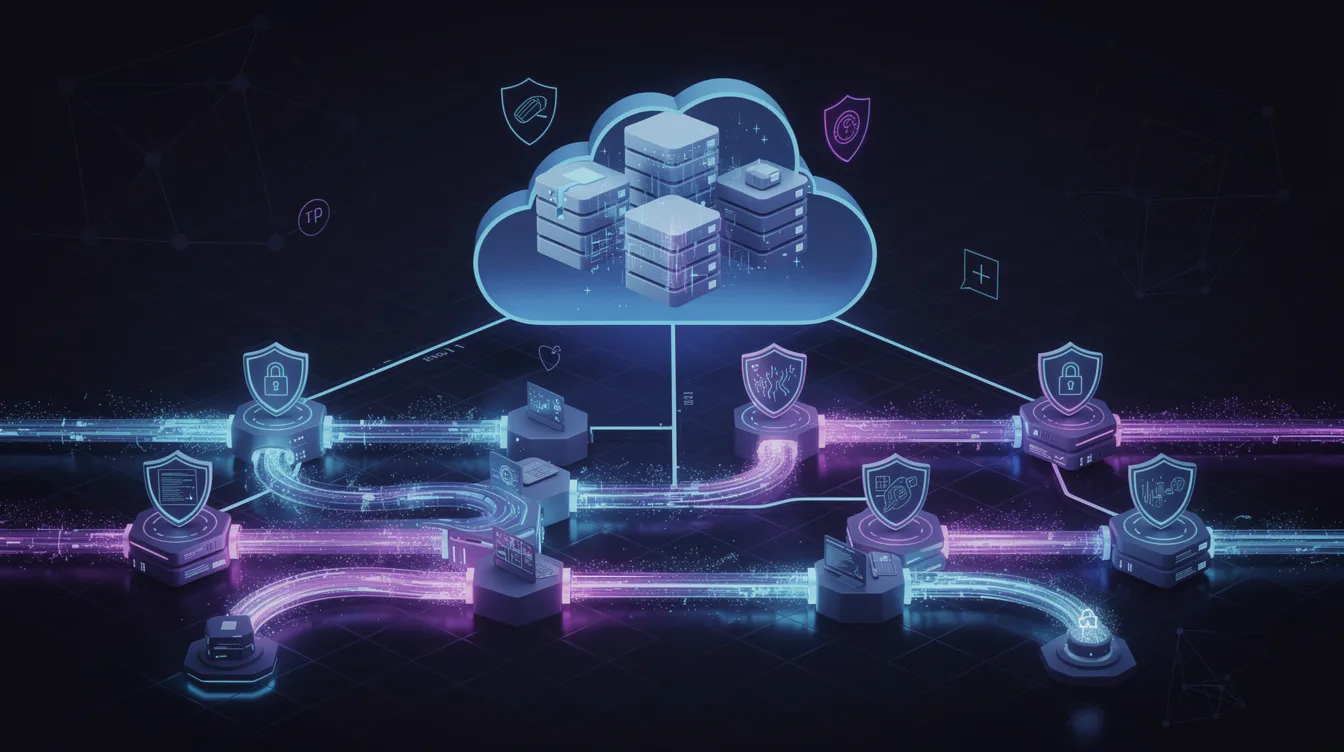
Cloud computing has transformed how organizations store data, run applications, and scale digital infrastructure. Businesses increasingly rely on cloud services to support everything from internal collaboration tools to mission-critical applications and data storage. Rapid cloud adoption is a key factor driving new cloud security challenges, as the complexity of managing security increases with broader use of cloud technologies. However, as organizations expand their use of cloud technologies, the need for strong cloud security becomes increasingly important.
Cloud security refers to the comprehensive set of measures, controls, and policies designed to protect data, applications, and infrastructure associated with cloud computing. As organizations migrate workloads into cloud environments, they must also protect sensitive data, manage user access, and detect potential threats that could compromise their digital assets. Cloud computing providers offer built-in security features such as access controls, encryption, and data loss prevention to help address these challenges.
Cloud security encompasses various strategies to safeguard cloud environments against unauthorized access, data breaches, and other cyber threats. A security breach in the cloud can result in significant legal and operational repercussions, making comprehensive security strategies essential for protecting sensitive information and maintaining business continuity while enabling organizations to benefit from the scalability and flexibility of cloud computing.
What Is Cloud Security
At its core, cloud security refers to the technologies, policies, and security practices designed to protect cloud infrastructure, cloud data, and applications hosted in cloud environments. Cloud security encompasses the comprehensive protection of digital assets operating within cloud computing environments.

Cloud security involves many technologies, protocols, and strategies to protect data, applications, and the infrastructure associated with cloud computing. These protections help prevent unauthorized access, mitigate cyber threats, and maintain the availability of cloud services. Organizations rely on cloud security solutions to monitor cloud environments, detect potential threats, and ensure that data and applications remain secure. Cloud security work is a combination of policies, processes, and technologies, often implemented through a shared responsibility model and advanced tools like CSPM, CWPPs, and AI-powered CNAPPs to proactively detect and mitigate risks across hybrid and multi-cloud setups.
Cloud security is also a specialized branch of cybersecurity focused on the challenges associated with hybrid and multi cloud environments. As organizations increasingly distribute workloads across different cloud providers, maintaining visibility and consistent security controls across these platforms becomes essential. Effective cloud security strategies rely on multiple security components — such as CNAPP, SIEM, XDR, IDPS, EPP, DLP, EDR, and SEM — working together to address varied threats.
There are also different types of cloud security solutions, each designed to provide comprehensive coverage and risk detection across cloud environments.
Why Data Security Is Critical in Cloud Computing
One of the most important aspects of cloud computing security is data security. Organizations store massive amounts of sensitive data in cloud environments, including customer information, financial records, intellectual property, and operational data. Protecting this data is essential to maintaining trust and avoiding financial or reputational damage.
Encryption is a fundamental component of cloud security, ensuring that cloud data remains confidential both in transit and at rest. Data Loss Prevention technologies also play a critical role by safeguarding sensitive information from unauthorized access, use, or transmission.
Organizations must establish clear policies for data access, storage, and sharing to ensure that security best practices are consistently followed. These policies help ensure that only authorized users can access cloud resources and that sensitive data is properly protected throughout its lifecycle.
Cloud security also helps organizations improve visibility into their cloud environments, enabling security teams to detect potential threats and recover quickly from disruptions. This visibility allows businesses to maintain continuous access to critical systems and minimize downtime when security incidents occur.
Securing Cloud Infrastructure
Protecting cloud infrastructure is essential for maintaining secure cloud computing environments. Cloud infrastructure includes the servers, storage systems, networking components, and virtual machines that power cloud services.
Security teams rely on multiple layers of security controls to protect cloud assets from threats. These protections include automated security testing, vulnerability management, network protection technologies, and continuous monitoring tools that help detect suspicious activity across cloud systems.
Cloud service providers offer secure infrastructure designed to protect underlying hardware and network components. In addition, cloud computing providers implement access controls, encryption, and data loss prevention to help safeguard cloud data. However, organizations must still implement their own security measures to protect applications, user access, and cloud data stored within those environments.
Effective cloud network security technologies monitor network traffic and identify malicious behavior before attackers can gain access to cloud resources. Continuous monitoring tools allow security teams to detect unauthorized configuration changes, suspicious API activity, and unusual user behavior.
Understanding the Shared Responsibility Model
A fundamental concept in cloud computing security is the shared responsibility model. Cloud service providers typically follow this model, which means that securing cloud systems is a shared effort between the provider and the customer.
In the shared responsibility model, the cloud provider is responsible for securing the underlying infrastructure that supports cloud services. This includes physical data centers, networking infrastructure, and core cloud systems. Customers, on the other hand, are responsible for protecting their own applications, data, and user access.
Understanding where your provider’s security responsibilities end and yours begin is critical for building an effective cloud security strategy. Misunderstanding the shared responsibility model can lead to dangerous security gaps that attackers may exploit.
Shared responsibility models can vary depending on the cloud provider and the type of cloud service being used. In many cases, the more services the provider manages, the greater their responsibility for protecting those systems.
The shared responsibility model is evolving from a simple division of duties into a more collaborative security partnership. Cloud providers are increasingly offering tools, guidance, and resources to help organizations maintain secure operations while managing their own responsibilities within the cloud environment.
Cloud Security Risks Organizations Face
As organizations expand their use of cloud computing, they must also address a variety of cloud security risks. These risks often arise from the complexity of cloud environments and the ease with which users can access cloud services from anywhere on the internet.
One of the most common causes of data breaches in cloud environments is misconfigured cloud security settings. A single configuration error can expose cloud storage or databases to the public internet, allowing attackers to access sensitive data.
Human error is another major contributor to cloud security vulnerabilities. Employees may accidentally grant excessive permissions or deploy applications with insecure settings, creating opportunities for attackers to gain access.
Organizations also struggle with limited visibility into cloud environments. Without the right monitoring tools, security teams may find it difficult to track user activity, detect suspicious behavior, or identify vulnerabilities across cloud resources.
Managing identity and access management IAM policies across multiple cloud services can also be challenging. Cloud environments often contain complex permission structures, making it difficult to ensure that users only have access to the resources they truly need.
Compliance and regulatory concerns further complicate cloud security efforts. Organizations must navigate regional data protection regulations while operating cloud infrastructures designed for global data mobility.
Why Cloud Security Is Important
Strong cloud security important for organizations that rely on digital infrastructure to operate their businesses. Without robust protections in place, organizations risk losing access to critical systems or exposing sensitive data to cybercriminals.
Cloud security helps organizations maintain customer trust by protecting confidential data and preventing security breaches that could damage their reputation. Effective cloud security measures also help prevent service disruptions that could interrupt operations or impact revenue.
In addition to protecting data, cloud security supports regulatory compliance. Organizations must ensure their cloud providers meet specific compliance requirements and implement appropriate controls to protect regulated cloud data.
Maintaining a strong cloud security posture allows organizations to reduce their attack surface and detect threats quickly. By implementing continuous monitoring and incident response capabilities, businesses can identify potential threats and respond before they escalate into major security incidents.
Cloud Security Posture and Continuous Monitoring
Maintaining a strong cloud security posture requires ongoing monitoring and proactive risk management. Security posture management tools help organizations detect vulnerabilities, misconfigurations, and compliance issues across cloud infrastructure.
Continuous monitoring allows security teams to identify suspicious activity and respond to potential threats in real time. Automated tools analyze network traffic, track user access patterns, and alert security teams when abnormal behavior occurs.
Compliance drift is a common challenge in cloud environments because organizations often treat compliance as a one-time event rather than an ongoing responsibility. To maintain strong security practices, organizations must treat compliance as a continuous process and regularly review their security controls.
Regular security audits, patch management, and automated monitoring tools help organizations maintain visibility across cloud environments and prevent potential security breaches.
Cloud Infrastructure Entitlement Management and Access Control
Managing user permissions is one of the most complex challenges in cloud environments. Cloud infrastructure entitlement management solutions help organizations monitor user permissions and enforce strict access control policies.
Identity and Access Management (IAM) is the cornerstone of cloud security, controlling who can access cloud resources and what actions they can perform. Implementing strong IAM practices helps prevent unauthorized access and reduces the risk of data breaches.
Organizations should enforce the principle of least privilege, ensuring that users only have access to the resources required for their roles. This approach minimizes the risk of insider threats and reduces the likelihood of accidental data exposure.
Companies must also address shadow IT by ensuring that all software used by employees is approved and secure. Without proper oversight, unauthorized applications can introduce significant security vulnerabilities.
Disaster Recovery and Business Continuity
A strong disaster recovery strategy is essential for protecting cloud systems and maintaining operational stability. Cloud environments must remain resilient in the face of cyberattacks, infrastructure failures, or unexpected disruptions.
Cloud-based disaster recovery solutions allow organizations to replicate critical workloads and quickly restore systems if disruptions occur. These capabilities help organizations maintain business continuity and minimize downtime during security incidents.
Integrating disaster recovery planning into cloud security strategies ensures that organizations can quickly recover from outages or cyberattacks while protecting their most valuable digital assets.
Building Robust Cloud Security Strategies
Developing robust cloud security strategies requires organizations to implement multiple layers of protection across their cloud environments. Security teams must combine technology, policies, and employee training to defend against evolving cyber threats.
Best practices for cloud security include implementing multi-factor authentication, enforcing strict least privilege access policies, encrypting data, and continuously monitoring cloud environments for suspicious activity.
Organizations should also invest in security awareness training to ensure employees understand cloud security risks and best practices. Educating employees about phishing attacks, misconfigurations, and safe cloud usage can significantly reduce the risk of security incidents.
Continuous runtime protection solutions provide visibility into active workloads, enabling security teams to detect and respond to threats as they occur.
Cloud Security Best Practices and Trends
The cloud security landscape shifts constantly, and organizations that fail to adapt their defensive strategies risk falling behind increasingly sophisticated threats. As enterprise cloud adoption reaches maturity, security teams are discovering that traditional approaches simply don't scale in dynamic, multi-cloud environments where infrastructure changes by the minute.

Cloud security posture management (CSPM) has emerged as a cornerstone technology for modern security operations. These platforms tackle one of the most persistent challenges in cloud security: the endless stream of misconfigurations that create attack vectors across sprawling infrastructure. Rather than playing defense after breaches occur, CSPM tools continuously scan environments, automatically flagging compliance violations and vulnerabilities before attackers can exploit them. The real value lies in their ability to provide instant visibility across complex cloud deployments while offering automated remediation that security teams desperately need.
The integration of artificial intelligence and machine learning into cloud security represents more than just technological evolution — it's becoming a necessity. Threat detection systems powered by these technologies can process massive data volumes and identify attack patterns that would overwhelm human analysts. As cybercriminals leverage AI for more sophisticated attacks, security teams need equally advanced detection capabilities. Machine learning algorithms excel at spotting anomalies in user behavior and network traffic, often catching threats that signature-based tools miss entirely.
Multi cloud environments have fundamentally changed how organizations approach security architecture. When companies spread workloads across AWS, Microsoft Azure, and Google Cloud simultaneously, managing security becomes exponentially more complex. Each platform brings its own security models, APIs, and monitoring tools, creating blind spots that attackers readily exploit. This reality has driven demand for unified security platforms capable of enforcing consistent policies and providing centralized visibility across disparate cloud infrastructures.
Building secure cloud environments requires a methodical approach that goes beyond deploying security tools. Strong identity and access management (IAM) forms the foundation, but implementation details matter enormously. Organizations must embrace least-privilege principles while regularly auditing permissions through cloud infrastructure entitlement management systems. Cloud workload protection platforms add another critical layer, monitoring runtime environments for malicious activity. Data encryption, continuous monitoring, and automated compliance checking round out a comprehensive security strategy that can adapt to evolving threats.
The cloud security vendor ecosystem has responded with increasingly sophisticated solutions spanning CSPM, workload protection, entitlement management, and advanced threat detection platforms. Success requires more than simply purchasing these tools — organizations need cohesive strategies that integrate multiple security layers while maintaining operational efficiency. Those who master this balance will maintain robust security postures even as the threat landscape continues its relentless evolution.
Multi Cloud Security Challenges
As organizations increasingly adopt multi cloud strategies, managing security across multiple cloud providers becomes more complicated. Each provider may offer different tools, security controls, and monitoring capabilities.
Maintaining consistent security policies across multiple cloud services can be challenging, especially when organizations rely on a combination of public cloud, private cloud, and hybrid cloud services.
To maintain visibility across complex cloud environments, organizations must deploy centralized monitoring platforms and security tools that provide unified insights into cloud systems.
Without standardized policies and monitoring, security gaps can emerge between providers, creating opportunities for attackers to exploit vulnerabilities across cloud environments.
Cloud Security Frameworks and Security Tools
Effective cloud protection relies on well-established cloud security frameworks and specialized security tools designed to address the unique risks of cloud computing environments.
Cloud Security Posture Management (CSPM) solutions allow organizations to identify risks, misconfigurations, and compliance violations within their cloud infrastructure. These tools help maintain a strong security posture by continuously scanning cloud environments for potential vulnerabilities.
Cloud Detection and Response technologies identify active attacks within cloud environments and provide security teams with the insights needed for effective incident response.
Cloud-Native Application Protection Platforms provide visibility across multi-cloud environments and identify risks throughout the entire technology stack.
Cloud Workload Protection Platforms focus on securing workloads within public cloud environments by detecting vulnerabilities and monitoring active applications.
Data Security Posture Management solutions detect sensitive data at risk and prioritize remediation efforts to address security vulnerabilities and compliance issues.
Security Information and Event Management platforms collect and analyze log data from cloud infrastructure, providing real-time monitoring and threat detection capabilities.
Common Cloud Security Threats
Organizations must prepare for common cloud security threats that target cloud environments. These threats include misconfigured cloud storage, stolen credentials, insecure APIs, insider threats, and ransomware attacks targeting cloud data.
Threat actors often exploit weak access controls or exposed cloud resources to gain unauthorized access. Continuous monitoring and automated threat detection tools help organizations identify suspicious behavior before attackers can cause significant damage. A security breach in the cloud can have severe legal, financial, and operational consequences for organizations.
Misconfigurations remain one of the most common causes of cloud security incidents. Organizations must implement automated configuration monitoring tools to ensure that security settings remain properly configured across cloud environments.
The Future of Cloud Security
Cloud security continues to evolve as organizations adopt more advanced cloud technologies and expand their digital infrastructure. AI-driven solutions are set to enhance and expand existing capabilities in cloud security, allowing organizations to detect and respond to threats faster than ever before.
Generative AI is becoming an important tool in cloud security by analyzing vast amounts of security data and identifying threats in real time. Emerging security platforms are also enabling organizations to monitor, detect, and remediate risks associated with their cloud providers’ AI services.
At the same time, AI innovation introduces new risks. Threat actors are increasingly leveraging AI to automate reconnaissance, accelerate attack development, and identify vulnerabilities across cloud systems.
The future of cloud security promises further innovation in both AI risks and security tools. As cloud environments become more complex, organizations must adopt advanced monitoring technologies and proactive security strategies to protect their digital assets.
Conclusion
As enterprises migrate critical workloads to the cloud at unprecedented rates, security has emerged as the defining challenge of this digital transformation era. Cloud security represents more than just another IT checkbox — it's become the cornerstone that determines whether organizations can harness cloud computing's full potential while protecting themselves against an increasingly sophisticated threat landscape.
The shared responsibility model that governs cloud environments creates a complex security dynamic that many organizations struggle to navigate effectively. While cloud service providers handle infrastructure-level protections, enterprises retain responsibility for securing their data, applications, and user access — a distinction that has led to costly misconfigurations and breaches across industries. Recent incidents involving misconfigured storage buckets and compromised IAM credentials underscore how quickly security gaps can expose sensitive data to threat actors scanning for vulnerable cloud assets.
Building effective cloud protection requires organizations to deploy layered security controls that address both traditional and cloud-native attack vectors. Continuous monitoring systems now serve as the early warning infrastructure that security teams need to detect anomalies in real-time, while automated threat detection capabilities help organizations scale their security operations to match cloud environments' dynamic nature. However, technology alone isn't sufficient — successful cloud security programs also demand comprehensive policies, regular security audits, and ongoing workforce education to address the human elements that attackers frequently exploit.
The organizations that thrive in cloud-first environments are those that treat security as an enabler rather than an obstacle to innovation. Industry leaders are increasingly adopting security-by-design principles, partnering with specialized vendors that understand cloud-native threats, and investing in disaster recovery capabilities that ensure business resilience. As cloud architectures continue evolving with serverless computing and edge deployments, the security strategies that succeed will be those that balance robust protection with the agility that makes cloud computing transformative for modern business operations.
FAQ
What is cloud security?
Cloud security refers to the technologies, policies, and controls designed to protect data, applications, and infrastructure within cloud computing environments.
Why is cloud security important?
Cloud security is important because organizations store sensitive data and run critical applications in the cloud. Effective security measures help prevent data breaches, protect sensitive information, and ensure business continuity.
What are common cloud security risks?
Common risks include misconfigured cloud storage, weak access controls, stolen credentials, insider threats, and insufficient monitoring of cloud environments.
What is the shared responsibility model in cloud security?
The shared responsibility model defines the security duties of cloud providers and customers. Providers secure the infrastructure, while customers protect their applications, data, and user access.
What tools are used for cloud security?
Common tools include Cloud Security Posture Management (CSPM), Cloud Detection and Response (CDR), Cloud Workload Protection Platforms (CWPP), Data Security Posture Management (DSPM), and Security Information and Event Management (SIEM).