What Is a Nation-State Cyberattack? Goals, Actors, Defense
A nation-state cyberattack is a state-sponsored operation for espionage, IP theft, or infrastructure pre-positioning. Here are the goals, the major actors — China, Russia, Iran, North Korea — the techniques, and how enterprises defend in 2026.

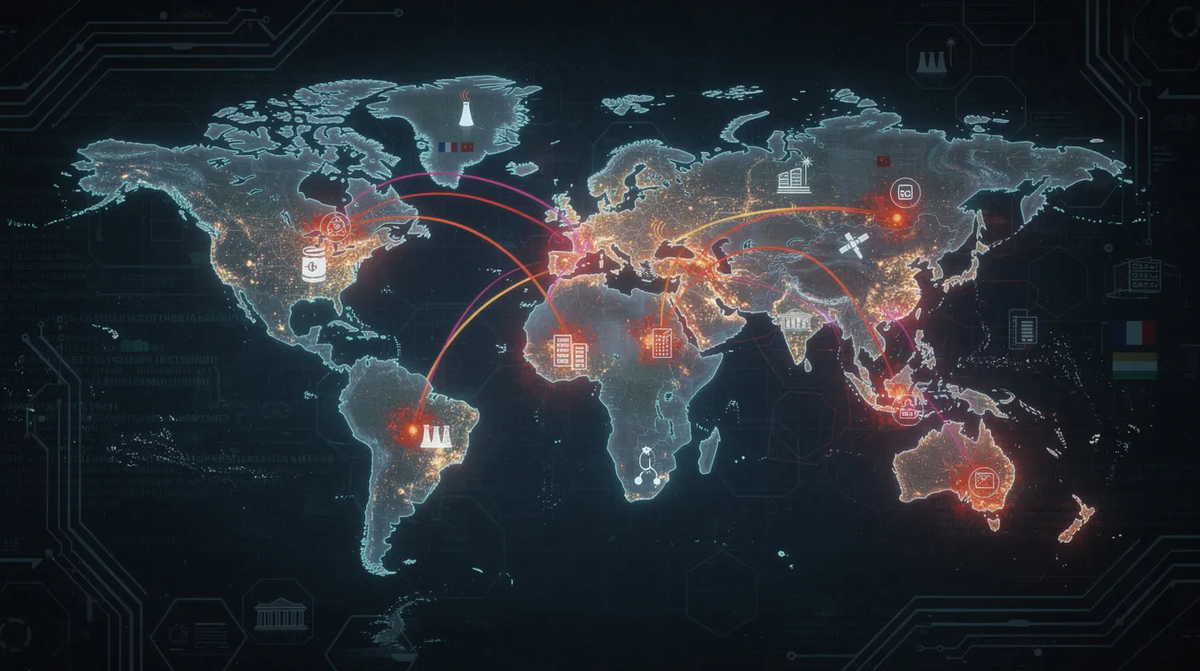
Most cyberattacks want your money. A nation-state cyberattack often wants something harder to price: your secrets, your source code, your negotiating position, or a quiet foothold inside the power grid it can switch on years from now. These are the best-resourced, most patient adversaries in cybersecurity, and in 2026 they are no longer a problem only for governments and defense contractors. Telecoms, water utilities, hospitals, universities, and software vendors are all now first-order targets.
What Is a Nation-State Cyberattack?
A nation-state cyberattack is a cyber operation conducted or sponsored by a government to advance its strategic interests — espionage, intellectual-property theft, sabotage, coercion, or influence. Unlike criminal hacking, it is not primarily about profit. It is state power projected through code, carried out by intelligence services, military units, or contractors acting on their behalf, and it is measured in geopolitical advantage rather than dollars stolen.
That backing changes everything about the threat. A ransomware crew moves on when a target gets hard; a state actor tied to a national objective does not. It can spend months on reconnaissance, buy or develop zero-day exploits, burn expensive access on a single high-value target, and sit undetected in a network for years. When researchers describe a long, stealthy intrusion as an advanced persistent threat (APT), a nation-state is usually the sponsor behind it.
What Nation-States Are Actually After
State cyber operations serve four broad goals, and a single campaign can pursue more than one:
- Espionage. The classic mission: steal diplomatic cables, defense plans, negotiating positions, and the communications of officials, dissidents, and journalists. Much of the activity tracked by threat intelligence teams is quiet, long-term collection that never surfaces publicly.
- Intellectual-property theft. Stealing R&D, manufacturing processes, and trade secrets to shortcut a rival's technological and economic edge — semiconductors, aerospace, pharmaceuticals, and, increasingly, AI research.
- Pre-positioning and disruption. Breaking into critical infrastructure not to spy but to plant access that can later be flipped to destructive effect during a crisis — the goal is a switch that can be thrown, not data to exfiltrate.
- Influence and revenue. Information operations that manipulate public opinion or elections, and — uniquely for North Korea — outright theft to fund the regime.
● THE PRE-POSITIONING PLAYBOOK How a state actor gets inside critical infrastructure and waits — the Volt Typhoon model. |
1 · QUIET ENTRY Break in through an unpatched edge device (router, VPN, firewall) — no malware, no noise. |
| ↓ |
2 · LIVING OFF THE LAND Use stolen admin credentials and built-in Windows tools, so activity blends into normal traffic. |
| ↓ |
3 · DWELL FOR YEARS Hold persistent access and steal nothing — CISA found some footholds lasted up to five years. |
| ↓ |
4 · TRIGGER ON CRISIS If a geopolitical conflict erupts, the pre-placed access is flipped to disrupt power, water, or comms. |
Source: CISA advisory AA24-038a on PRC state-sponsored Volt Typhoon activity. |
The Major State Actors in 2026
Four governments dominate the threat landscape, and each has a distinct signature that Western agencies now name openly.
China runs the largest and most active espionage program, organized into APT clusters that Microsoft tracks under “Typhoon” names. Salt Typhoon burrowed deep into U.S. and global telecommunications networks to reach call records and lawful-intercept systems, and in 2026 it pivoted toward energy targets. Volt Typhoon is the more alarming case: rather than stealing data, it has embedded itself in U.S. power, water, and communications infrastructure — CISA assessed that some of that access persisted for as long as five years — as pre-positioning for potential disruption during a future conflict over Taiwan.
Russia blends espionage with sabotage. Groups such as Sandworm (tied to the GRU) have caused real-world blackouts in Ukraine and unleashed the NotPetya wiper, while services like the SVR run patient intelligence collection — the SolarWinds supply-chain compromise is the defining example. In 2026, U.S. and allied agencies have repeatedly warned that Russian state-linked actors are targeting critical-infrastructure networking gear.
Iran is more opportunistic and destructive, favoring wiper malware, hack-and-leak operations, and attacks on industrial control systems — including strikes on Western water utilities via internet-exposed programmable logic controllers. North Korea is the outlier: its Lazarus Group operates as a revenue arm for a sanctioned regime. DPRK-linked actors were blamed for roughly two-thirds of all cryptocurrency stolen in the first half of 2026 and are tied to more than $6 billion in lifetime theft, run alongside a global fake-IT-worker scheme that plants operatives inside real companies' payrolls.
How Nation-State Attacks Work
The techniques are recognizable — what sets state actors apart is discipline and patience, not exotic magic.
- Living off the land (LOTL). Instead of dropping malware that antivirus can flag, operators use legitimate built-in tools and stolen credentials, so their activity looks like routine administration. This is Volt Typhoon's calling card and the reason it stayed hidden for years.
- Supply-chain attacks. Compromise one trusted software vendor or update mechanism and inherit access to thousands of downstream customers at once — the SolarWinds and repeated open-source package attacks are the model.
- Zero-day exploits. States hoard and deploy vulnerabilities unknown to the vendor, often against internet-facing edge devices — VPNs, firewalls, and email gateways — that sit outside normal endpoint monitoring.
- Prolonged, low-and-slow intrusion. The hallmark of an APT: establish persistence, escalate privileges, move laterally, and stay quiet for months or years while collecting or waiting.
Why Critical Infrastructure Is the Front Line
The sharpest shift of the last two years is the move from stealing information to threatening physical services. Pre-positioning campaigns treat power grids, water systems, pipelines, and telecom networks as terrain to be seized quietly in peacetime and held in reserve. In July 2026, CISA went so far as to press operators for pre-built, tested plans to isolate control systems from the internet — an implicit acknowledgment that Chinese and Iranian actors are already inside some U.S. networks. Defending critical infrastructure is now a national-security problem that lands squarely on private-sector operators, most of whom run the grid, the pipelines, and the water.
How Enterprises Can Defend Against Nation-State Threats
You will not out-resource a foreign intelligence service, but pre-positioning and living-off-the-land tradecraft have specific weaknesses. Focus on the fundamentals that raise the cost of a quiet, long-dwell intrusion:
- Patch internet-facing edge devices first. VPNs, firewalls, routers, and mail gateways are the preferred entry points; treat their vulnerabilities as emergencies, not maintenance.
- Assume breach and hunt for it. LOTL activity evades signature tools, so invest in behavioral detection and proactive threat hunting for anomalous use of legitimate admin utilities.
- Enforce phishing-resistant MFA and least privilege. Stolen and reused credentials are the connective tissue of these campaigns; hardware-backed MFA and tight privilege boundaries blunt lateral movement.
- Segment IT from OT. Keep operational-technology and control-system networks isolated and rehearse the isolation, so a corporate breach cannot reach the machinery that keeps the lights on.
- Vet your software supply chain. Track dependencies, verify update integrity, and monitor third-party access, because a single trusted vendor can become the whole attack path.
- Use threat intelligence to prioritize. Map your defenses to the specific actors and techniques — via frameworks like MITRE ATT&CK — most likely to target your sector.
Frequently Asked Questions
What is the difference between a nation-state attack and cybercrime?
Cybercriminals are motivated by profit and move on when a target becomes too costly. Nation-state actors pursue government objectives — espionage, sabotage, or strategic advantage — with far greater funding, patience, and tolerance for burning resources on a single target. The line blurs when states use criminal proxies or, as with North Korea, hack for revenue.
Which countries conduct the most cyberattacks?
Western intelligence agencies consistently name four: China (large-scale espionage and infrastructure pre-positioning), Russia (espionage plus sabotage), Iran (destructive and opportunistic operations), and North Korea (financially motivated theft to fund the regime).
What is pre-positioning?
Pre-positioning is when a state actor breaks into critical infrastructure and quietly maintains access without stealing anything, holding it in reserve so the intrusion can be turned into disruption — cutting power, water, or communications — during a future crisis. Volt Typhoon is the defining example.
Can a business be a nation-state target?
Yes. Telecoms, utilities, software vendors, manufacturers, healthcare providers, universities, and law firms are all routinely targeted for the data they hold, the infrastructure they run, or their value as a stepping stone to a higher-value victim through the supply chain.
Further Reading
- CISA — PRC State-Sponsored Actors (Volt Typhoon) Advisory AA24-038a
- CISA — China Cyber Threat Overview and Advisories
- MITRE ATT&CK — Groups (nation-state actor profiles)
- CyberSignal — Advanced Persistent Threats (APT): How They Work
- CyberSignal — Types of Threat Actors: From Cybercriminals to Nation-States