What Is AI Red Teaming?
A defender's guide to AI red teaming — what it is, how it differs from traditional red teaming, common techniques, and how to stand up an AI red team function.

Traditional cybersecurity has a well-established practice for finding problems before adversaries do: red teaming. A team of skilled attackers deliberately tries to break into a system, and the results feed back into stronger defenses. Applied to AI systems, that same idea takes a different shape — because AI systems fail in different ways, for different reasons, than traditional software.
AI red teaming is the practice of adversarially testing AI systems to find harms, vulnerabilities, and failure modes before they cause real damage. It has become a standard requirement for organizations deploying LLMs and other high-impact models, and it is showing up in regulatory guidance and voluntary industry commitments alike.
This guide explains what AI red teaming is, how it differs from traditional red teaming, the techniques teams use, and how to stand up an AI red team function inside an organization. Use the links throughout for deeper context.
What Is AI Red Teaming?
AI red teaming is the practice of using structured, adversarial evaluation to probe an AI system for vulnerabilities, harmful behavior, and failure modes. Red teamers act as skilled adversaries — crafting inputs, chaining attacks, and exercising the system in ways ordinary users would not — with the goal of surfacing problems the development team should fix before deployment.
The term now covers a broad range of activities, from security-focused testing of AI-powered applications to safety-focused evaluation of foundation models, to red teaming of the socio-technical systems that AI is embedded in. Different organizations scope it differently.
How AI Red Teaming Differs from Traditional Red Teaming
Traditional red teaming tests systems that fail deterministically. AI systems fail statistically, at scale, on inputs no one anticipated. Several practical differences follow.
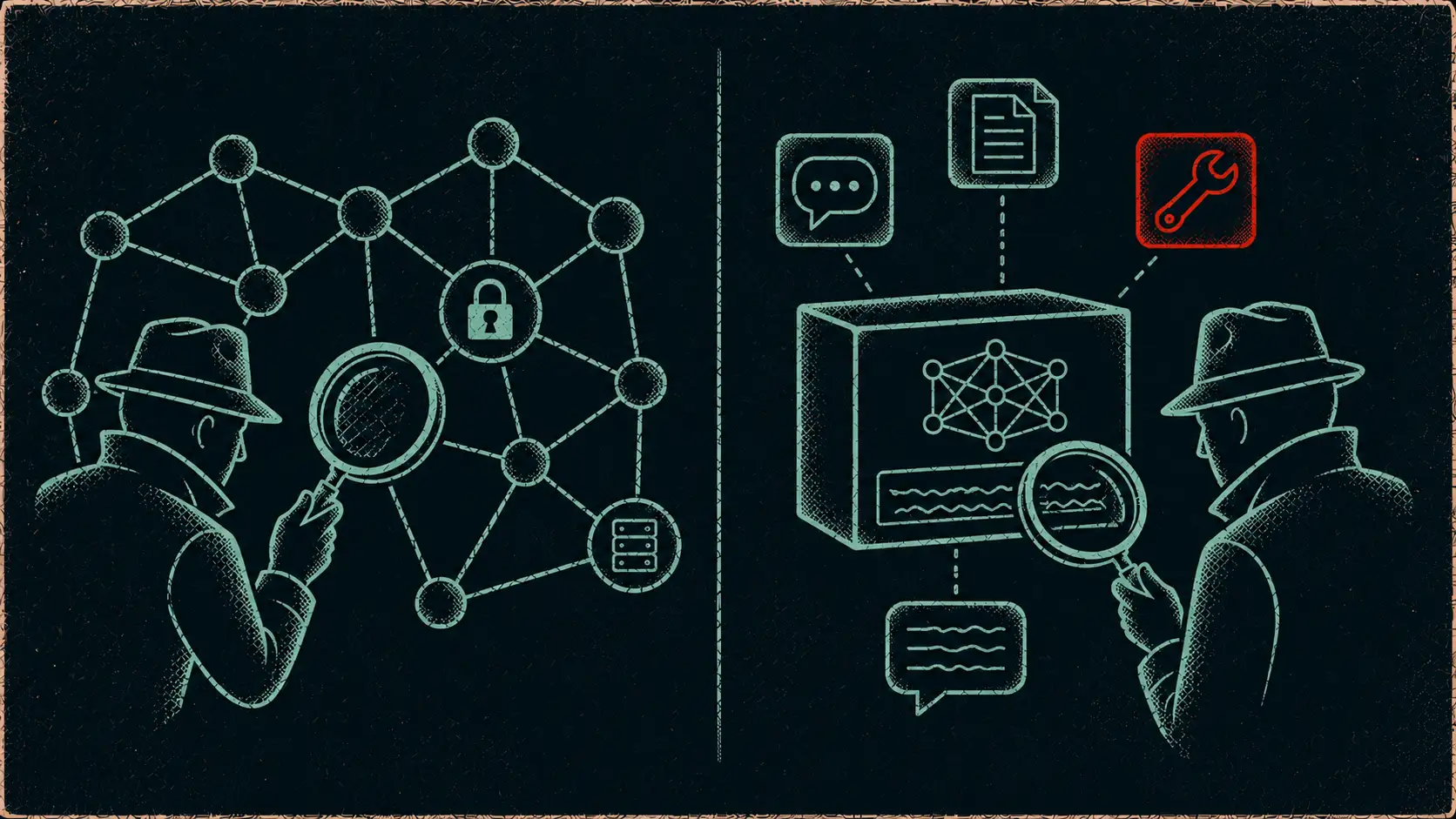
The attack surface is different. Traditional red teams probe networks, applications, and endpoints. AI red teams probe prompts, retrievals, tool calls, model outputs, and the behavior of the model itself.
Success looks different. Traditional red teams count breaches. AI red teams count categories of harmful output, jailbreak techniques that work, prompt injection paths that succeed, and vulnerabilities in tool integrations.
Testing is often social as well as technical. AI red teamers frequently need to think about how a system will be misused by ordinary people, not just adversaries — because unintended harms often arise from the many hands of many users.
Findings are rarely binary. A failed traditional red team engagement produces a clear list of unpatched vulnerabilities. AI red team findings often surface as patterns of concerning behavior that need judgment calls about severity and prioritization.
Common AI Red Team Techniques
Techniques vary by target system, but a mature AI red team draws on a shared toolkit.
Jailbreaking. Crafting prompts that induce the model to bypass its own safety training and produce content its developers told it to refuse.
Prompt injection. Planting instructions in prompts, retrieved documents, or tool outputs that hijack the model's behavior. See our guide on what prompt injection is.
Adversarial inputs. Crafting inputs — text, images, audio — designed to fool the model into misclassification or unwanted behavior. See our guide on adversarial machine learning.
Tool and plugin abuse. Probing AI agents to see whether they can be tricked into misusing connected tools — sending unauthorized email, executing code, calling paid APIs.
Data extraction probing. Testing whether the model can be induced to reveal training data, system prompts, or connected data sources.
Long-context manipulation. Exploring how model behavior changes across long conversations, multi-turn attacks, and slowly-escalating persuasion.
Real-world harms scenarios. Testing whether the system produces harmful output in the categories the deployer cares about — content policy violations, discriminatory outputs, unsafe recommendations.
What AI Red Teams Look For
The output of an AI red team engagement is usually a categorized list of findings tied to specific test scenarios. Common categories include:

- Safety failures — outputs that violate the deployer's own content policy.
- Security vulnerabilities — pathways to data exfiltration, unauthorized tool use, or downstream code execution.
- Prompt injection paths — direct and indirect injection techniques that succeed against the application.
- Robustness failures — cases where the model produces low-quality or dangerous output on adversarial inputs.
- Fairness and bias issues — patterns of output that behave differently across demographic groups or use cases.
- Novel failure modes — unexpected behaviors that were not on anyone's threat model before testing began.
Building an AI Red Team Function
Standing up AI red teaming inside an organization is a multi-phase effort. The following priorities recur across most successful programs.
- Scope explicitly. Decide whether the team focuses on security, safety, or both — and which categories of harm the organization cares about.
- Assemble diverse skill sets. Effective AI red teams combine ML expertise, traditional security expertise, and domain expertise in the areas the system is being deployed into. Cognitive diversity matters more than in traditional red teaming.
- Build a scenario library. Maintain a growing catalog of tested attack scenarios, jailbreak techniques, and injection patterns. Each engagement should extend the library.
- Automate the routine tests. Automated adversarial evaluation should catch regressions in every release. Human-driven red teaming should focus on the novel and complex.
- Feed findings into the development process. AI red teaming is only useful if findings become model updates, application changes, or new guardrails. Establish clear paths from finding to fix.
- Test continuously in production. Attack techniques evolve. So does the model. Continuous evaluation catches problems that a one-time pre-launch review will miss.
Conclusion
AI red teaming is one of the most practical defensive tools available for AI systems today. It surfaces problems before they become incidents, gives development teams concrete evidence about where their models fail, and provides accountability signals for executives and regulators. Done well, it is a critical ingredient in any serious AI security program. Explore the broader discipline in our complete AI security guide.
Organizations that treat AI systems as production-critical will benefit from adversarial evaluation the same way they benefit from traditional red teaming — by learning early what they would otherwise learn late, and in more painful ways.
Frequently Asked Questions (FAQ)
What is AI red teaming?
AI red teaming is the practice of using structured, adversarial evaluation to probe an AI system for vulnerabilities, harmful behaviors, and failure modes before they reach real users. Red teamers act as skilled adversaries and surface issues for the development team to fix.
How is AI red teaming different from traditional red teaming?
Traditional red teams probe deterministic systems for security breaches. AI red teams probe statistical systems for a wider range of failure modes — including safety issues, prompt injection, adversarial robustness, and unintended harms.
What techniques do AI red teams use?
Jailbreaking, prompt injection, adversarial inputs, tool and plugin abuse, data extraction probing, long-context manipulation, and structured scenarios for domain-specific harms.
Is AI red teaming required by regulation?
Increasingly, yes. The U.S. AI executive order, the EU AI Act, and voluntary industry commitments all reference adversarial evaluation. Specifics vary by jurisdiction and system category.
Who should be on an AI red team?
Effective AI red teams combine ML expertise, traditional security expertise, and domain expertise. Cognitive diversity — including people who use the system differently than the development team — is unusually valuable.
Can AI red teaming find every vulnerability?
No. AI systems have a large and evolving attack surface. Red teaming raises the baseline substantially but has to be paired with monitoring, incident response, and continuous evaluation after deployment.