Containment in Cybersecurity: Why Speed Defines Breach Impact
Containment in cybersecurity is the incident response phase where speed converts straight into damage avoided. A defender's guide to the strategies, the metrics that matter, and why minutes — not hours — define the blast radius of a breach.

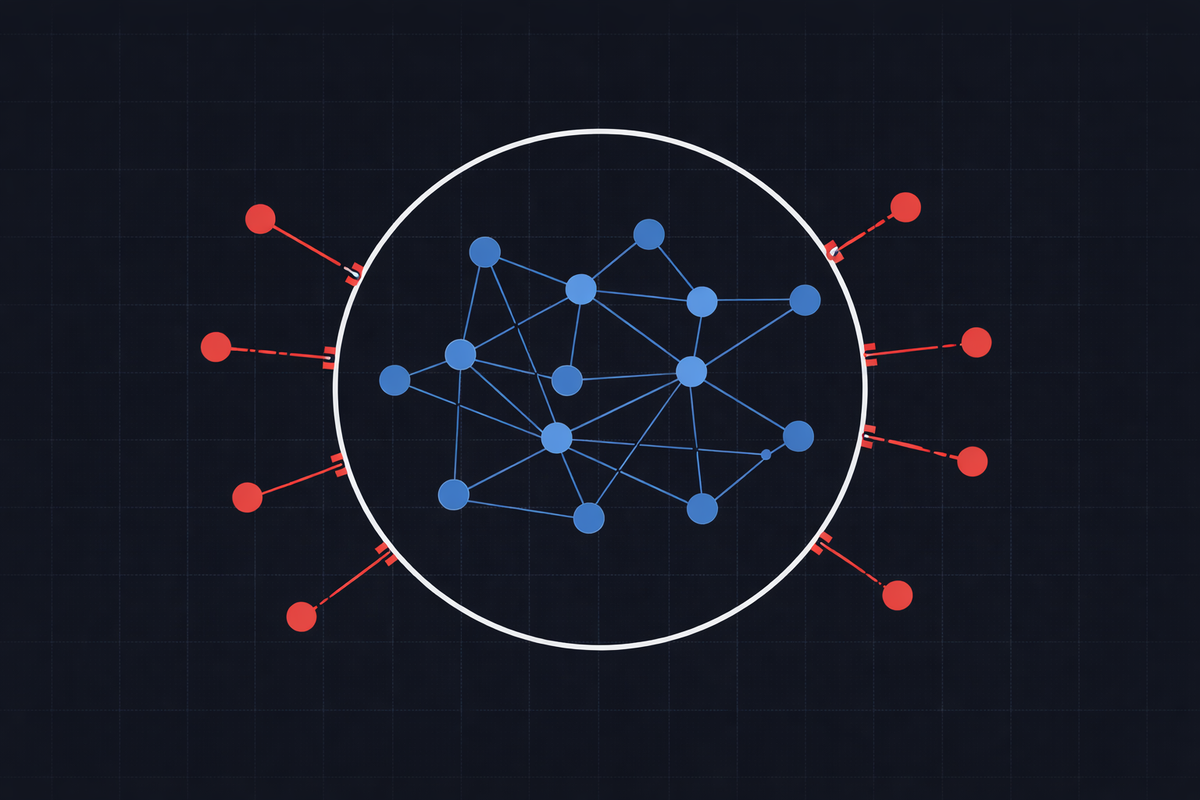
When an intrusion is caught, the outcome rarely turns on how sophisticated the attacker was. It turns on how fast the defender moved next. Containment in cybersecurity is the phase of incident response where speed converts directly into damage avoided: isolate the compromised host in the first few minutes and you are cleaning up one machine; wait an afternoon and you may be rebuilding a domain. In 2026, with intruders pivoting between systems in under a minute and ransomware crews scripting encryption to fire the moment they land, the window to contain has compressed to the point where it is the single variable that most defines breach impact.
Containment in cybersecurity is the set of actions a security team takes immediately after detecting an incident to stop it from spreading — isolating affected systems, cutting off attacker access, and blocking command-and-control traffic — while preserving evidence and keeping the business running. It is the phase that sits between detection and eradication in the incident response lifecycle, and its defining metric is time.
Where Containment Sits in Incident Response
Every major framework treats containment as a distinct stage, not a vibe. In NIST SP 800-61, the handling lifecycle runs Detection and Analysis into Containment, Eradication, and Recovery. The SANS PICERL model spells it out in the middle letter: Preparation, Identification, Containment, Eradication, Recovery, Lessons Learned. In both, containment is the hinge — the point where you stop studying the incident and start starving it. For the full arc around this phase, see our complete guide to incident response, and for the document that pre-authorizes these moves, our guide to the incident response plan.
The reason containment gets its own stage is that it demands a different posture than what surrounds it. Detection is about seeing; eradication is about cleaning; recovery is about restoring. Containment is about buying time — deliberately accepting an imperfect, partial fix (a host yanked offline, an account frozen) precisely because the perfect fix takes too long and the attacker is not waiting.
● THE CONTAINMENT WINDOW The minutes between detection and action decide the blast radius — and the bill. |
T+0 · DETECTION EDR or the SOC flags an intruder on a single host. The clock starts. |
| ↓ |
THE DECISION · HOW FAST YOU CUT IT OFF Isolate the host, disable the account, block the C2 channel. CrowdStrike has clocked adversary breakout — first host to second — at as little as 27 seconds. |
| ↓ |
FAST PATH · CONTAINED IN MINUTES One host quarantined. The attacker never reaches the domain. Small blast radius, recovery in hours. |
| ↓ |
SLOW PATH · CONTAINED IN DAYS Lateral movement, stolen credentials, ransomware detonation across the network. IBM pegs the average breach at 241 days to identify and contain. |
Sources: NIST SP 800-61; IBM Cost of a Data Breach 2025; CrowdStrike Global Threat Report. |
Why Minutes Matter: Breakout Time and Detonation Speed
The case for speed is not abstract. CrowdStrike's Global Threat Report tracks breakout time — the interval between an attacker compromising the first machine and moving to a second — and has watched it collapse, with the fastest observed breakout falling to 27 seconds and the average dropping to well under an hour. Once an intruder achieves lateral movement, the incident stops being about one endpoint and starts being about the network. Containment that arrives after breakout is chasing a threat that has already multiplied.
Ransomware compresses the timeline further because the payoff is instantaneous. Modern crews do their reconnaissance, credential theft, and staging in advance, then trigger encryption across every reachable system at once. Symantec has documented a strain nicknamed "Spirals" that reportedly locks systems in under 24 hours from initial access — and faster operators detonate in minutes. When the destructive action is a single scripted command, the containment window is whatever gap exists between your detection and their keystroke. Miss it and there is nothing left to contain; there is only recovery from backups.
Core Containment Strategies
Containment is a toolkit, not a single button. The right move depends on where the attacker is and what you can afford to disrupt. The workhorses:
- Isolate and quarantine the host. Cut the compromised endpoint off the network — physically, via a switch/VLAN change, or through EDR network containment that severs everything except the management channel. This is the fastest way to strand an intruder mid-operation.
- Segment the network. Where microsegmentation or internal firewalls already exist, tighten them to wall the affected zone off from the rest of the estate, denying the lateral paths an attacker needs to expand.
- Disable and reset accounts. Freeze the compromised identities, kill active sessions, and force credential resets. Because most intrusions run on stolen logins rather than malware, revoking access often contains more than pulling a cable.
- Block command-and-control. Sinkhole or firewall the C2 domains and IPs the malware beacons to, cutting the attacker's remote hands off the operation even before the host is fully cleaned.
- Preserve evidence as you go. Capture memory and disk images before wiping, so containment does not destroy the forensic trail eradication and legal teams will need.
Short-Term vs. Long-Term Containment
Practitioners split containment into two tempos. Short-term containment is the emergency tourniquet: unplug the machine, block the IP, disable the account — measures taken in minutes to stop the bleeding, even if they are disruptive or temporary. Long-term containment is the sturdier holding pattern that lets the business keep operating while eradication is planned: rebuilding a clean system to replace the isolated one, applying emergency patches, tightening firewall rules, and installing monitoring so that if the attacker still has a foothold, their next move is seen. The first tempo protects the network; the second protects the recovery.
The Metrics That Define Speed
If speed is the goal, these are the numbers a security team should be able to quote:
- Dwell time. How long an attacker goes undetected before discovery. Mandiant's M-Trends put the global median at 11 days — meaning the average intruder has a week and a half to work before containment is even possible.
- MTTD (mean time to detect). The average gap between compromise and detection. Containment cannot start until this clock stops, which is why detection speed is a containment problem.
- MTTR (mean time to respond/contain). The average time from detection to the threat being contained. This is the number containment programs are built to shrink.
- Breakout time. The attacker's own speed — how long before they move laterally. Your MTTR only limits damage if it beats their breakout time.
The economic case sits on top of these. IBM's Cost of a Data Breach 2025 reported that the average breach now takes 241 days to identify and contain — the lowest in nine years — and credited faster containment, partly AI-driven, for pulling the global average cost down to $4.44 million. Every metric above is a lever on that lifecycle, and the lifecycle is a lever on the bill.
Automation: When the Window Is Too Short for Humans
When breakout is measured in seconds, a human reading an alert, opening a ticket, and reaching for the isolate button is already too slow. This is the case for automated containment. EDR/XDR auto-isolation can pull a host off the network the instant a high-confidence detection fires, no analyst required. SOAR (security orchestration, automation, and response) platforms run playbooks that disable accounts, block indicators, and quarantine assets across many systems at once, applying the same response consistently in the time it would take a person to log in.
The trade-off is precision. An automated action that isolates a critical server on a false positive can cause its own outage, so mature teams scope auto-containment to high-fidelity signals and non-critical assets, and keep a human in the loop for consequential moves. Used well, automation does not replace the responder; it collapses the gap between detection and containment to something an attacker cannot outrun.
Frequently Asked Questions
What is containment in cybersecurity? It is the incident response phase where a security team stops a detected threat from spreading — by isolating systems, disabling accounts, and blocking attacker communications — while preserving evidence and keeping the business running.
What is the difference between containment and eradication? Containment stops the spread and buys time; eradication removes the threat entirely — deleting malware, closing the entry point, and eliminating persistence — after the incident has been walled off.
Why does containment speed matter so much? Because attackers move fast: breakout to a second system can happen in under a minute and ransomware can detonate in hours. Containing before the threat spreads is the difference between one cleaned host and a network-wide breach.
What are short-term and long-term containment? Short-term containment is the immediate emergency action (unplug, block, disable) to stop the bleeding; long-term containment is a durable holding pattern — clean rebuilds, patches, added monitoring — that keeps the business running until eradication.



