Microsoft Defender Experts Documents ACR Stealer Delivered via ClickFix Lures Targeting Browsers and Microsoft 365
Another named stealer joins the ClickFix pattern — a defender posture review across Microsoft 365 environments after Microsoft's published analysis this week.

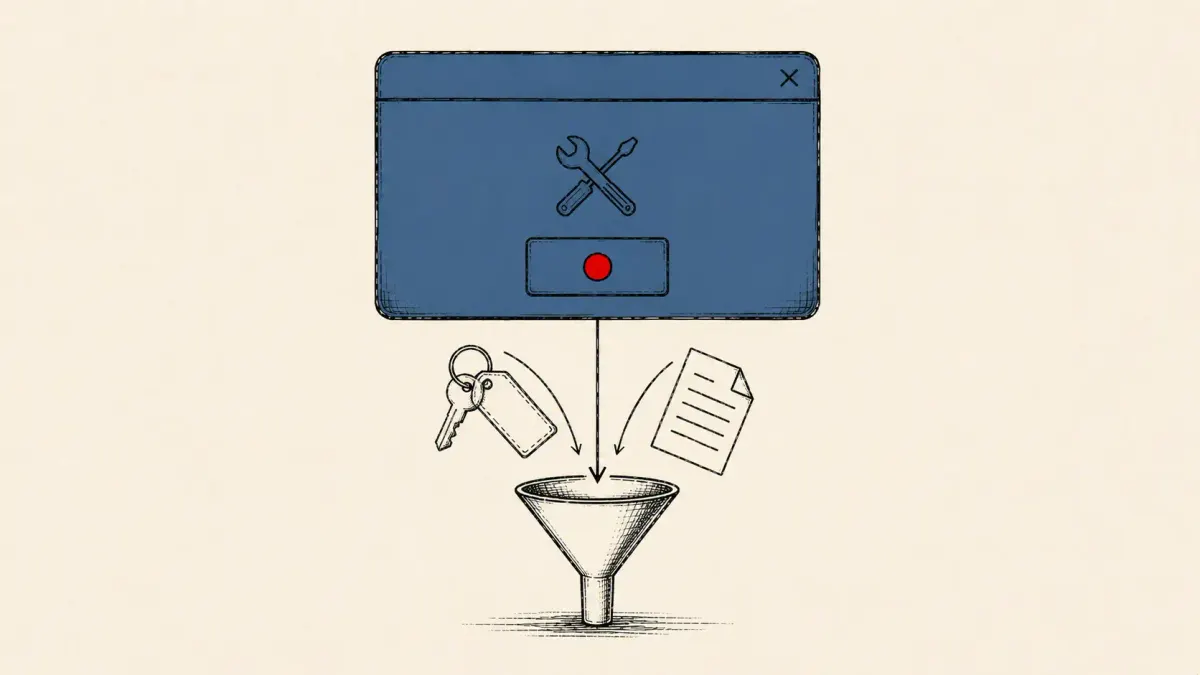
Another named stealer joins the ClickFix pattern — a defender posture review across Microsoft 365 environments.
REDMOND, WASH. — Microsoft's Defender Experts team on July 16, 2026 published a deep-dive analysis of ACR Stealer, an information-stealing malware family it says is being distributed through ClickFix lures and used to walk browser passwords, session tokens, PDFs, and Microsoft 365 documents out of enterprise environments. The company's managed detection arm framed the write-up as defender guidance: it documented what the stealer collects and how to hunt for it, published indicators and detection queries, and stopped short of naming who is operating the campaigns.
The analysis lands as ACR Stealer joins a lengthening list of commodity stealers reaching users through the same social-engineering front door. Microsoft said it observed increased ACR Stealer activity across customer environments from late April to mid-June 2026, and that the campaigns are “successfully using ClickFix lures to steal browser credentials, authentication tokens, and sensitive documents.” The full write-up appears on the Microsoft Security Blog, with coverage from The Hacker News noting that the targeted data includes files synced from OneDrive and SharePoint.
What Microsoft Documented
Microsoft's Defender Experts team, the company's managed detection and response service, said it watched ACR Stealer activity climb across customer environments between late April and mid-June 2026. The published analysis describes ACR Stealer as an infostealer that has been in circulation since 2024 and, in the observed campaigns, is delivered through ClickFix lures rather than through any software vulnerability. Microsoft characterized two observed intrusion chains at a high level — one that leaves more artifacts on disk and one that runs largely in memory — and centered its write-up on what the malware collects and how defenders can find it.
According to Microsoft's account, once ACR Stealer runs it reaches for the data infostealers are purpose-built to harvest: saved passwords and authentication cookies from Chromium-based browsers such as Chrome and Edge, live session tokens, PDFs, and Microsoft 365 documents — including files synchronized from OneDrive and SharePoint folders. As The Hacker News reported, that synced-file targeting is what makes the case notable for Microsoft 365 shops: a single endpoint infection can expose not just local credentials but whatever corporate documents the user's account keeps in sync locally.
Two points in the report are worth holding onto because they shape the defensive response. First, Microsoft ties the activity to ACR Stealer on observed behavior and post-exploitation tradecraft, and names no threat actor at all — a deliberate caution, given that the family has been renamed and may have changed hands since it was first marketed. Second, the company was explicit that its published indicators are representative rather than exhaustive: it shipped a set of hunting queries and 16 campaign domains, while cautioning that domains rotate and that additional infrastructure is likely active.
The ClickFix-Delivery Pattern in Continuation Context
ACR Stealer is the latest commodity payload to arrive by ClickFix, the social-engineering technique in which a user is convinced to paste a prepared command into a system dialog and run it themselves. The pattern has been the connective thread across a run of recent CyberSignal coverage: a macOS kill-loop stealer delivered through a fake fix-it prompt, a Sandworm CAPTCHA-and-PowerShell chain aimed at Ukraine, and earlier campaigns pairing ClickFix with the Vidar stealer against Australian infrastructure.
The through-line is the front door, not the payload. ClickFix has been observed carrying AppleScript-based lures on macOS and fake Cloudflare checks that fronted an infostealer, and it swaps the malware behind the prompt freely. What Microsoft's ACR Stealer write-up adds to that record is a well-instrumented, defender-oriented view of one such campaign from a managed-detection vantage point — the same lure family, documented with the telemetry to hunt it.
The reason the technique keeps recurring is that it sidesteps the controls organizations have spent years hardening. There is no exploit to patch and no malicious attachment to detonate in a sandbox, because the user supplies the execution. That is precisely why Microsoft's analysis is framed around detection and remediation rather than a fix: the defensive problem is behavioral, and it does not go away when the current batch of domains is burned.
Defender Posture for Microsoft 365 and Browser-Heavy Environments
For defenders, the most useful reading of this news is operational. A published analysis does not undo an infection, and because ClickFix runs with the privileges the signed-in user already holds, ACR Stealer inherits whatever that account can reach. Any organization that finds the stealer on an endpoint should assume that saved browser credentials, active session tokens, and locally synced Microsoft 365 content were collected before the host was isolated.
The single most important control here is token-aware remediation. Because ACR Stealer targets stored logins and — critically — live session tokens, password rotation alone is necessary but not sufficient: a stolen session cookie can be replayed to bypass a freshly changed password and to sidestep a multi-factor prompt that has already been satisfied. Microsoft's own remediation guidance reflects this, telling victims to revoke tokens, not just rotate passwords. On a suspected host, the durable sequence is isolate, rotate credentials, revoke and invalidate active sessions and tokens, and force re-authentication for any account that touched the machine.
For browser-heavy and Microsoft 365 estates specifically, the exposure surface is the point. Session-token theft has become one of the most reliable ways around modern identity controls — a pattern documented when a phishing kit turned Microsoft's own login flow against M365 tenants — and it sits alongside the broader shift, charted in the 2026 Verizon DBIR, toward credential and access abuse as a primary way in. Hardening the token-storage surface, shortening session lifetimes for sensitive applications, and folding stealer exposure into an incident-response program are the controls that outlast any one campaign.
Detection-Engineering Review per the Published Indicators
Microsoft shipped the analysis with material a detection team can act on directly: hunting queries for its Defender XDR product and 16 campaign domains, alongside a description of behaviors that are stable even as infrastructure rotates. The engineering task is to treat the domains as perishable and the behaviors as durable — block and alert on the indicators of compromise now, but build detections around the tradecraft that survives a domain change.
Several behavioral signals in the reporting translate cleanly into hunts. Scheduled tasks that masquerade as software updaters, files whose timestamps have been copied from legitimate system binaries to blend in, and cleared PowerShell command history are all housekeeping behaviors worth surfacing regardless of the family behind them. Watching for common Windows utilities launching internet-delivered content from user-writable locations, and for anomalous logins from credentials that may appear in stealer logs, gives coverage that does not depend on the specific domains Microsoft happened to observe.
The honest framing for a detection team is that indicator lists like this one are a slice, and Microsoft says so. Sixteen domains and a handful of queries are a starting point, not the family's full range; the value is in using them to validate that the underlying behaviors are visible in your own telemetry, then generalizing. A detection tuned only to the published domains will age out with them, while one anchored to the paste-and-run entry point and the post-execution housekeeping will keep catching the next stealer that rides the same lure.
Open Questions
Several points are unconfirmed, and Microsoft was careful not to overstate them. The company named no threat operator behind ACR Stealer, tying the activity to the family on behavior rather than to any actor by name; absent that attribution, it is safer to treat this as a documented campaign than as the work of an identified group. Microsoft also gave no count of affected organizations and no baseline for the increase it reported, so the scale of the activity — beyond “increased” across its customer base from late April to mid-June — is not quantified in the analysis.
It is likewise not established that this is a takedown or coordinated disruption; the published work is a detection-and-analysis effort, and nothing in it claims infrastructure was seized or actors were arrested. Readers should not infer enforcement action from a defender-facing write-up. What is firmly established is enough to act on: a managed-detection team observed a commodity stealer arriving by ClickFix, harvesting browser secrets, session tokens, and Microsoft 365 content, and published the indicators and remediation steps to find and contain it.
For organizations, the prudent reading is to treat the analysis as a prompt rather than a verdict. Check whether the published indicators appear in your environment, assume token theft where the stealer is seen, revoke sessions rather than only resetting passwords, and harden the paste-and-run pathway that every ClickFix campaign — this one included — depends on.
The CyberSignal Analysis
The reported facts above are Microsoft's; what follows is The CyberSignal's editorial reading of what defenders should take from them. None of the judgments below are new reported facts.
Signal 01 — The Lure Is the Story, Not the Stealer
The framing that matters here is not that another infostealer exists but that ACR Stealer is the latest interchangeable payload behind a stable delivery technique. ClickFix keeps working because it converts the user into the execution step, sidestepping the patch-and-sandbox controls organizations have invested in. Our reading is that treating this as “an ACR Stealer problem” misses the point; the durable exposure is the paste-and-run front door, and the specific malware behind it is a detail that will change by the next campaign.
That has a practical consequence for where defensive effort goes. Investment aimed at the entry point — user-facing friction on the run dialog, application control on the utilities these lures abuse, and awareness that a fix-it prompt is itself the attack — pays off across every stealer that uses the technique. Chasing each new payload one at a time does not.
Signal 02 — Revoke Tokens, Don't Just Reset Passwords
The most consequential line in Microsoft's remediation guidance is the quiet one: revoke tokens, not just rotate passwords. ACR Stealer's interest in live session tokens and authentication cookies means a compromised account can be reached even after its password changes, because a stolen session was already valid and a satisfied MFA prompt travels with it. Our assessment is that any response that stops at password resets leaves the actual foothold — the session — intact.
For Microsoft 365 and browser-heavy environments, that reframes the incident-response checklist. The gating step is invalidating active sessions and forcing re-authentication, not just credential rotation, and the supporting posture is shorter session lifetimes on sensitive apps so a stolen token has less time to be useful. Token-aware remediation is the difference between evicting the intruder and merely inconveniencing them.
Signal 03 — Treat Indicators as Perishable, Behaviors as Durable
Microsoft was unusually candid that its 16 domains and hunting queries are a representative slice, not the family's full range — and that candor is the useful part. Our reading is that the correct way to consume this analysis is to block the indicators today but build detections around the behaviors that outlast them: the paste-and-run entry, scheduled tasks posing as updaters, timestomped files, and cleared command history. A detection pinned only to the published domains will age out the moment they rotate.
The forward-looking watch item is whether defenders generalize or merely ingest. The value of a well-instrumented, defender-oriented write-up like this one is that it validates which behaviors are visible in your own telemetry. The teams that use it to confirm coverage of the tradecraft — rather than to tick off a domain list — are the ones who will still catch the next stealer that rides the same lure.



