16-Year-Old Linux KVM Flaw Lets Guest VMs Escape to Host on Intel and AMD x86
A long-standing KVM finding lands with cloud-provider implications — defender posture review this week.

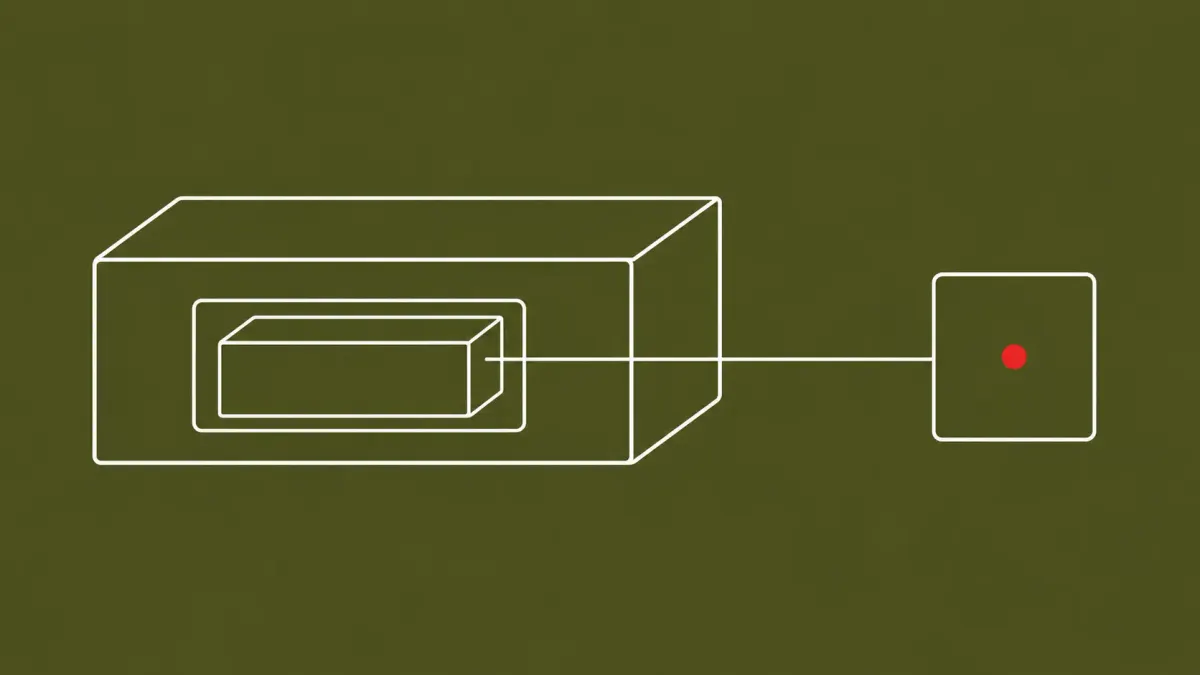
A 16-year-old flaw in Linux's KVM hypervisor reportedly lets a guest VM break out to the host on both Intel and AMD x86 — a research disclosure with a long tail for virtualized-Linux and cloud environments.
SAN FRANCISCO, CALIFORNIA — Security researchers on or around July 6, 2026 published findings on a long-standing vulnerability in the Kernel-based Virtual Machine (KVM) subsystem of the Linux kernel that, according to reporting, reportedly allows a guest virtual machine to escape to the underlying host on Intel and AMD x86 systems. As reported by The Hacker News, the flawed code has been part of the KVM codebase for roughly 16 years, making this one of the older virtualization-isolation defects to surface in a public research disclosure this year.
The significance is straightforward for anyone who runs virtualized-Linux workloads: KVM underpins a large share of Linux-based virtualization and public cloud infrastructure, and a guest-to-host escape defeats the isolation boundary separating one tenant's virtual machine from the host and from its neighbors on the same physical machine. That the reported issue affects both Intel and AMD x86 platforms — the two dominant server CPU families — widens the population of potentially exposed hosts rather than confining the concern to a single vendor's silicon. This piece summarizes what the research disclosed, why it matters to defenders operating virtualized-Linux fleets, and what remains unconfirmed at publication.
What the Research Disclosed
According to reporting from The Hacker News, researchers disclosed a vulnerability in the Kernel-based Virtual Machine (KVM) subsystem of the Linux kernel that reportedly allows a guest virtual machine to escape to the underlying host. The defect is described as long-standing, present in the KVM codebase for roughly 16 years, and the reported effect — a guest-to-host escape — is the specific class of failure virtualization is engineered to prevent. Where a typical vulnerability might expose data or crash a service, an escape reaches across the boundary between a guest VM and the host that runs it — the boundary multi-tenant hosting treats as its primary security control.
The reporting frames the issue as affecting Intel and AMD x86 systems — the two dominant x86 server-CPU families — rather than a single hardware vendor. For defenders, that breadth matters more than any single technical particular: the concern potentially touches the large installed base of x86 Linux hosts that rely on KVM for virtualization. The CyberSignal is deliberately not reproducing any exploitation detail; the defender-relevant takeaways are the class of the flaw (isolation-boundary escape), the platforms named (Intel and AMD x86), and its age (roughly 16 years in the codebase).
It is worth underscoring what the disclosure is and is not. It is a published research finding about a defect in a widely deployed open-source hypervisor subsystem — not, in the reporting reviewed, an account of active in-the-wild exploitation, and not accompanied by a confirmed CVE identifier, confirmed patched kernel versions, or a distribution-by-distribution patch matrix. Those gaps are addressed in Open Questions below rather than filled in with assumptions.
Defender Posture for Virtualized-Linux Hosting
For teams that operate virtualized-Linux hosting — an internal private cloud, a managed hosting estate, or self-managed instances on a public provider — the reported guest-to-host escape reframes the threat model around the hypervisor boundary itself. The working assumption in multi-tenant virtualization is that a compromised guest is contained to its own VM; a credible escape undermines that, so the immediate posture question is how much a host's other tenants depend on that boundary holding. Operators should inventory which hosts run KVM-backed virtualization on x86, identify which carry mixed-trust or multi-tenant workloads, and treat those as the priority population for patch tracking as fixes land.
The posture response does not require knowing the exploitation mechanics, and defenders should not wait on them. The durable controls are the familiar ones for hypervisor-adjacent risk: minimize the trust placed in any single guest, segment tenants so a host compromise has the smallest possible blast radius, and keep host kernels on a disciplined patch cadence so virtualization-subsystem fixes are applied quickly once released and validated. Where a host mixes tenants of different trust levels on the same physical machine, that mixing is exactly the configuration a guest-to-host escape most rewards — the first place to reconsider workload placement while patch status is established.
This disclosure also sits in a longer line of Linux kernel and virtualization-adjacent issues The CyberSignal has covered, and the defender playbook rhymes across them. Recent examples include a nf_tables kernel flaw in the coverage of the CVE-2026-23111 nf_tables one-character exploit, a CIFS key-request privilege-escalation issue in the CIFSwitch kernel disclosure, and a copy-path privilege-escalation flaw that reached CISA's Known Exploited Vulnerabilities catalog in the Linux copy-fail CVE-2026-31431 case. In each, the operational answer was the same: identify affected hosts, prioritize the ones with the highest exposure, and drive patches through a validated cadence rather than an ad hoc scramble.
Patch Verification Across Distributions and Cloud Providers
Because the affected code lives in the Linux kernel's KVM subsystem, the fix does not arrive as a single monolithic update. Kernel-level changes flow through the upstream kernel and then through each distribution's own packaging, backporting, and release cadence, so the practical question is not whether a patch exists upstream but whether it has landed in the specific distribution and kernel package a host actually runs. Mapping each host's distribution and running kernel to the corresponding fixed package is the work that turns an abstract advisory into a concrete remediation status.
The cloud dimension adds a second axis. Managed providers operate the host layer beneath customer instances, so for managed virtualization the host-side patch is the provider's responsibility, and the customer's job is to track provider advisories and confirm remediation rather than patch the host. Customers running their own KVM hosts on rented bare metal or self-managed instances, by contrast, own the host kernel and therefore own the patch. Sorting hosts into those two buckets — provider-managed versus self-managed — is a prerequisite for knowing which advisories to watch and which patches to apply directly.
Until confirmed patched kernel versions and per-distribution status are published and verified, defenders should treat unresolved specifics as tracking items rather than settled facts. That discipline — confirming a fix in the exact package a host runs, and confirming a provider's remediation for managed instances, before declaring a host remediated — is the same one The CyberSignal has emphasized in cross-distribution Linux coverage such as the PackageKit cross-distro local privilege-escalation case, where a shared component meant the remediation status genuinely differed from one distribution to the next.
Cross-Reference: Google's KVM Guest-to-Host Escape Bounty
This disclosure does not stand alone. It arrives in the same batch as The CyberSignal's coverage of Google's $250,000 bounty for a Linux KVM guest-to-host escape (#149), and the pairing is instructive. A top-tier bounty scoped to KVM guest-to-host escapes signals that the industry regards this exact failure class as among the highest-value defensive targets in cloud infrastructure, precisely because so much multi-tenant hosting rests on that boundary holding.
Read together, the two items describe the same threat surface from two directions: the disclosure shows a real, long-lived defect in that boundary can exist and reach public attention, while the bounty shows how much a major cloud operator will pay to have such defects found and fixed before they are weaponized. That long-lived-defect pattern is not unique to virtualization — The CyberSignal saw a comparable multi-year dwell in the Chinese APT Linux PAM backdoor found on an isolated network. For a defender, the combined message is not alarm but prioritization — KVM's guest-to-host boundary is a boundary the wider ecosystem is actively investing to harden, and fleet operators should mirror that prioritization in their own patch tracking and workload-placement decisions.
The cross-reference also frames the timeline realistically. Bounty programs and long-standing-flaw disclosures both reflect a security community systematically probing virtualization isolation, so defenders should expect a steady cadence of KVM and hypervisor findings rather than treating any single one as a one-off.
Scope and Impact
The reported scope is broad in one dimension and unquantified in another. Broad, because the flaw is described as affecting the KVM subsystem across Intel and AMD x86 systems and as having lived in the codebase for roughly 16 years, implying a wide population of hosts running kernels built from that code. Unquantified, because the reporting does not attach a confirmed count of affected hosts, a confirmed CVE, or a confirmed list of fixed kernel versions — so the true exposed population is a function of how many x86 KVM hosts run affected kernels, a figure only per-distribution and per-provider patch tracking can resolve.
The impact framing that matters for defenders is the isolation-boundary one. A guest-to-host escape is consequential because of what a host represents in multi-tenant virtualization: a shared substrate beneath multiple guests. When the guest-to-host boundary is the control that keeps tenants apart, a defect in it is a defect in the core assumption of the hosting model — which is why this disclosure reads as a posture-review prompt for virtualized-Linux and cloud operators rather than a routine single-service vulnerability. That said, impact should not be overstated: the disclosure is a published research finding, not, in the reporting reviewed, an account of active exploitation, and any host's practical exposure depends on its configuration, its trust model, and how quickly its kernel is patched once fixes are validated.
Open Questions
Several material specifics are unresolved in the reporting available at publication, and The CyberSignal is deliberately not filling them in. The precise CVE identifier is not confirmed. The exact patched kernel versions are not confirmed. The patch status across individual Linux distributions — which have shipped a fixed kernel package and which have not — is not confirmed. And the extent of coordination with cloud providers, including whether and how managed-host operators have remediated, is not confirmed.
Other questions follow from the nature of the finding. It is not established in the reporting reviewed whether the issue has been exploited in the wild, nor what the full set of preconditions is for the reported guest-to-host escape to be reachable in a given deployment. The relationship between this disclosure and the separately reported Google KVM bounty — same underlying defect, related defects, or simply the same failure class — is also not something The CyberSignal can assert from the material at hand.
These gaps are why the posture guidance above is framed around inventory, prioritization, and patch tracking rather than a specific version-to-version remediation instruction. As authoritative details are confirmed — a CVE, fixed kernel versions, per-distribution advisories, and cloud-provider statements — the remediation picture will sharpen, and defenders should watch their distribution and cloud-provider security channels for those confirmations rather than act on unverified specifics.
The CyberSignal Analysis
The reported facts above come from the research disclosure and its reporting; what follows is The CyberSignal's editorial reading of what defenders should take from them. None of the judgments below are new reported facts.
Signal 01 — The Isolation Boundary Is the Story, Not the Bug's Age
The headline number is 16 years, but the number that should drive defender action is zero — the count of trust boundaries between a guest VM and its host once an escape is possible. Our reading is that the age of the flaw is a reminder, not the risk itself. Long-lived defects in isolation code show how durable a subtle boundary failure can be, but the operational risk is defined by what the boundary protects: on a multi-tenant host, that boundary is the only thing keeping one tenant's compromise from becoming everyone's problem.
The practical consequence: size the response to the value of the boundary, not the novelty of the finding. A KVM host running a single trusted workload carries a very different risk profile from one that packs mixed-trust tenants onto shared silicon. Our assessment is that the second configuration is the one to reexamine first — not because exploitation is confirmed, but because it is where a guest-to-host escape converts directly into cross-tenant exposure.
Signal 02 — Patch Verification Is a Per-Distribution, Per-Provider Problem
A kernel-subsystem fix is not a single event; it is a fan-out. Our view is that the most common failure mode after a disclosure like this is not the absence of an upstream patch but the false confidence that an upstream patch implies a remediated fleet. The fix has to land in each distribution's kernel package and each provider's host layer, and a host is only remediated when the package it runs contains the fix — verified per distribution and per provider, not assumed from an upstream merge.
The actionable interpretation is to build the remediation map before the patches arrive. Sorting hosts into self-managed versus provider-managed, and mapping each self-managed host's distribution and kernel to the package that will carry the fix, is work a team can do now regardless of unconfirmed specifics. Defenders who do that groundwork confirm remediation quickly when fixed versions publish; those who skip it tend to declare victory on an upstream commit that never reached their running kernels.
Signal 03 — The Bounty Signal Says This Boundary Is Worth Standing Capability
The pairing of this disclosure with Google's $250,000 KVM guest-to-host escape bounty is, to us, the most useful context in the story. A quarter-million-dollar bounty scoped to exactly this failure class is a market signal: a major cloud operator is pricing guest-to-host escapes among the most valuable defects to surface early. Our assessment is that fleet operators should read that pricing as a prioritization cue, treating KVM's isolation boundary as a first-tier concern rather than one line item among many.
The forward-looking takeaway is that this will not be the last KVM or hypervisor disclosure, and the teams that fare best are the ones with standing capability rather than event-driven scrambles. An accurate KVM host inventory, a disciplined kernel patch cadence, and unambiguous ownership of provider-managed versus self-managed host patching are the durable investments — and we would treat this disclosure less as a discrete emergency than as a prompt to confirm those capabilities are already in place before the next one lands.



