Google Patches Actively Exploited Android Framework Zero-Day CVE-2025-48595
Google's June 2026 Android update fixes CVE-2025-48595, an Android Framework integer overflow that Google says may be under limited, targeted exploitation. Because the Framework is the API layer every app touches, the flaw can hand an attacker complete control of an unpatched device.

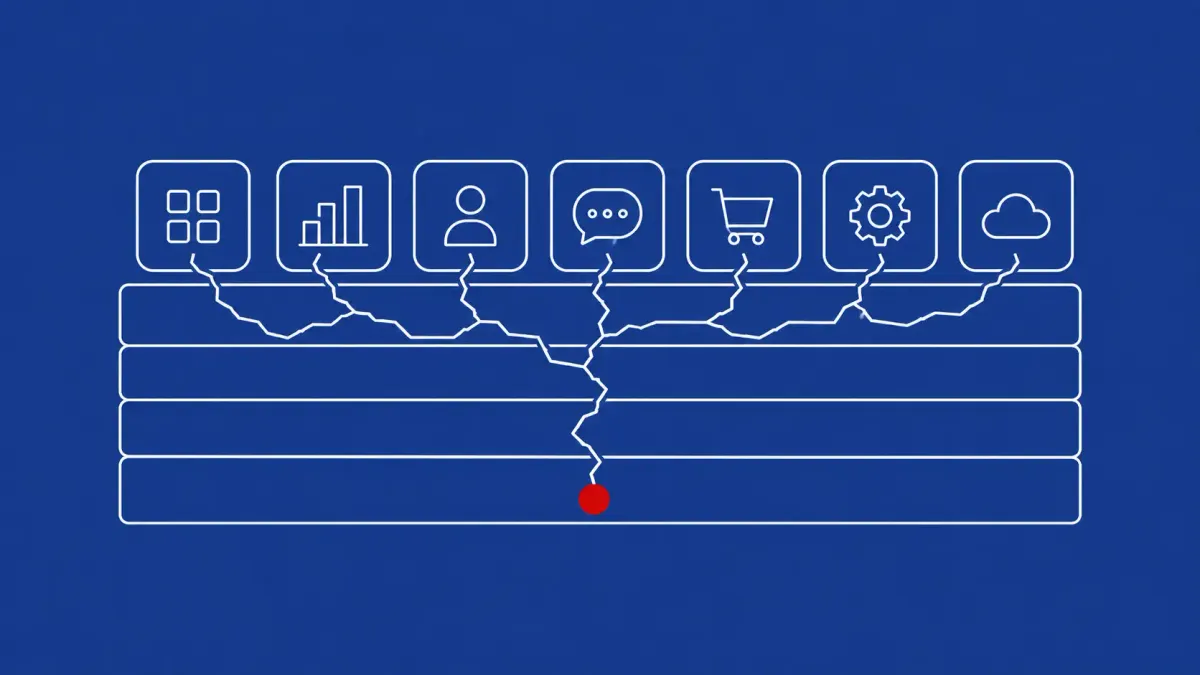
A flaw in an individual app is a contained problem; a flaw in the Android Framework is everyone's problem, because the Framework is the one layer no app can opt out of touching.
MOUNTAIN VIEW, Calif. — Google used its June 2026 Android security release, published June 2, to patch CVE-2025-48595, a high-severity integer-overflow vulnerability in the Android Framework that the company says 'may be under limited, targeted exploitation' — the wording Google reserves for flaws it has reason to believe are being used in the wild.
The fix arrived alongside scores of other patches in the same bulletin, but this is the one with an exploitation note attached. Successful exploitation lets an attacker escalate privileges and potentially take complete control of a device, and it requires no interaction from the victim.
What Happened
On June 2, 2026, Google published its June 2026 Android Security Bulletin, which fixes a large batch of vulnerabilities across the Android Framework, the System layer, Google Play system components, the Linux kernel and third-party chipset components. One of them, CVE-2025-48595, carries an exploitation note: Google says it 'may be under limited, targeted exploitation.' That phrasing is Google's house style for a flaw it has telemetry-backed reason to believe is being used against real targets, as distinct from one that is merely theoretically exploitable — and it is the reason this single CVE stands out from the rest of the bulletin.
CVE-2025-48595 is an integer-overflow vulnerability in the Android Framework, the set of APIs and system services that every Android app interacts with directly. According to Help Net Security's account of the bulletin, the flaw lets an attacker escalate privileges on a vulnerable device and potentially gain complete access to the device and the data it holds. Exploitation does not hinge on any user interaction, and the attack vector is local — which most likely means the vulnerability is reached through a malicious app that a targeted user has been persuaded to install rather than over the network. The bug is present across Android 14, 15, 16 and 16-QPR2, and the NVD description suggests there are several vulnerable code paths the patch needs to close.
Why a Framework-Layer Flaw Is the Worst Class of Android Bug
Android is built in layers, and where a flaw sits determines how much of the device it can compromise. The Android Framework is the layer of APIs and system services that sits between individual apps and the lower-level operating system; every app, regardless of who wrote it or what it does, calls into the Framework constantly. A privilege-escalation bug there is therefore not tied to any single app, chipset, or vendor feature — it is reachable from the common surface that all software on the device shares. That is what makes CVE-2025-48595 more serious than a flaw of the same severity buried in one application or one hardware driver: there is no narrow population of affected users, only the population of devices that have not yet taken the patch.
'Limited, Targeted Exploitation' and the Malicious-App Vector
Google's bulletin language deserves to be read precisely rather than inflated. The company says CVE-2025-48595 'may be under limited, targeted exploitation.' In Google's conventions, that hedged phrasing is what it uses when it has indications of real-world use against a small number of specific targets, typically the signature of commercial spyware or a state-aligned operation rather than mass cybercrime — but the word 'may' is Google's, and it is worth preserving rather than upgrading to a flat claim of widespread in-the-wild attacks. What the technical profile does tell defenders is how exploitation most plausibly works: with no user interaction required and a local attack vector, the realistic delivery path is a malicious app a target has been convinced to install, which then uses the Framework flaw to escalate from ordinary app permissions to full device control.
What Else the June 2026 Bulletin Fixes — and the OEM Patch Gap
CVE-2025-48595 is the headline, but the June 2026 bulletin also closes critical and high-severity holes across the System layer, Google Play system components, the Linux kernel and chipset components. Google splits the fixes across two patch levels: core Android OS fixes land at security patch level 2026-06-01, while devices on 2026-06-05 or later receive the full set, including the kernel and chipset patches. Google says it notifies its Android partners at least a month before publication and will push source patches to the Android Open Source Project within 48 hours of the bulletin. The practical catch is the same one that shadows every Android patch cycle: the gap between Google shipping a fix and a given handset actually receiving it. Samsung, Pixel, OnePlus, Xiaomi and others ship the patch on their own schedules, so the real-world exposure window is set by the slowest OEM in your fleet, not by Google's release date. That patch-deployment-versus-patch-availability gap is the same dynamic driving the year's broader exploitation trend, the one Verizon's 2026 DBIR captured when it found vulnerability exploitation had overtaken credential theft as the top initial-access vector.
Scope and Impact
The exposed population is, in principle, every Android device on versions 14 through 16-QPR2 that has not reached the June 2026 patch level — an enormous number, given how those versions span the active fleet. But the exploitation Google describes is 'limited' and 'targeted,' so the realistic near-term risk is concentrated on individuals who would attract a commercial-spyware or state-aligned operator: executives, journalists, dissidents, and people in sensitive government or defense roles. That distribution mirrors the active-exploitation cluster The CyberSignal has tracked across enterprise software this cycle, from the Palo Alto GlobalProtect authentication bypass under active exploitation to the FortiClient EMS flaw pushing the EKZ credential stealer — patched products being attacked precisely in the window before the patch is deployed.
The delivery mechanism widens the audience that should care. Because the most likely path is a malicious app rather than a network exploit, the same social-engineering tradecraft that drives consumer Android spyware applies — the fake-update and sideloading lures behind campaigns like the Morpheus Android spyware that hid behind fake updates and hijacked WhatsApp. A Framework privilege-escalation flaw turns any such app from a nuisance with limited permissions into a potential full-device compromise, which is why the malicious-app threat model and the CVE-2025-48595 threat model are, for practical purposes, the same conversation.
Response and Attribution
For organizations managing Android fleets, the response is a patch sprint plus a compensating control. Push the June 2026 update to every managed device, prioritizing the 2026-06-05 patch level so the kernel and chipset fixes land too, and treat any device still below 2026-06-01 as elevated-risk through the rollout. The lever that converts patch discipline into an actual security outcome is conditional access: configure your MDM so devices below the June 2026 patch level cannot reach corporate resources, which both protects the data and creates pressure to update. Because app-layer isolation does not mitigate a Framework flaw, lean on runtime-integrity signals such as the Play Integrity API as a secondary check, and treat BYOD Android the same way you would treat the enterprise-software exposure behind mandates like India's CERT-In six-hour incident-reporting and rapid-patch regime — as a patching obligation on the same urgency tier as your laptops.
On the threat-hunting side, the honest position is that the specifics are not public yet. Google has not named the actors, published indicators of compromise, or detailed the targets, and its own language stops at 'may be under limited, targeted exploitation.' Defenders should therefore hunt on behavior rather than signatures for now — anomalous privilege transitions on managed Android devices, unexpected app installs from outside trusted stores, and unexplained data egress — and watch for the IOC publication that typically follows in Google's or an OEM's later advisories. The discipline here matches the one The CyberSignal applied to Google's earlier disclosure of an AI-developed zero-day under mass exploitation: report the exploitation status in the vendor's own words, and resist turning a hedged 'may' into a certainty the evidence has not yet established.
The CyberSignal Analysis
Signal 01 — App Sandboxing Cannot Save You From a Framework Bug
The instinct when an Android flaw appears is to ask which app is affected and whether sandboxing contains it. CVE-2025-48595 defeats that instinct, and that is the point worth internalizing. The Framework is shared infrastructure that every app reaches into, so a privilege-escalation flaw there is below the level the app sandbox is designed to enforce. No amount of careful app-permission hygiene, no enterprise app-wrapping layer, and no per-app isolation saves a device whose Framework can be made to hand out elevated privileges. For security architects, the lesson generalizes: defense-in-depth at the application layer is necessary but not sufficient, and the controls that actually matter against a Framework bug are the ones below or beside the app layer — timely OS patching, device-integrity attestation, and conditional access keyed to patch level.
Signal 02 — 'Limited, Targeted' Is Google's Tell, but Keep the Hedge
When Google writes that a flaw 'may be under limited, targeted exploitation,' experienced readers correctly hear a signal that real-world use has been observed — the phrasing is Google's well-worn euphemism, and it usually points to commercial spyware or a state-aligned operator rather than commodity crime. That reading is useful and should inform prioritization. But the responsible move is to carry Google's hedge through rather than launder it into a flat 'actively exploited in mass attacks.' 'Limited' and 'targeted' are doing real work in that sentence: they tell defenders this is, for now, a precision instrument aimed at high-value individuals, not a broad campaign hitting every device. Treating it as the former sets the right response — patch urgently, protect likely targets first — without overstating what Google has actually confirmed.
Signal 03 — Mobile Patch Cadence Is Now Endpoint-Tier Urgency
Actively exploited Framework zero-days are no longer rare events on Android; they have become a recurring feature of the monthly bulletin. The organizational implication is that mobile-fleet patching deserves the same urgency tier as patching the laptops on the corporate network — not a lower one, as many patch-management programs still implicitly assume. The friction is real, because the OEM-update gap means an organization cannot fully control when a fix reaches a given handset. But that is precisely why conditional access on patch level is the load-bearing control: it is the one lever a security team can pull unilaterally to ensure that a device the attacker can still reach cannot also reach the crown jewels. The era in which a phone was a second-class endpoint for patching purposes is over.