Cellebrite Tooling Documented on Jailed Activist's iPhone After Stated Russia Cutoff
Cellebrite's stated sales-restriction practice gets fresh scrutiny via human-rights documentation, after researchers tied its forensic tooling to a jailed Russian activist's iPhone months after the company said it had pulled out.

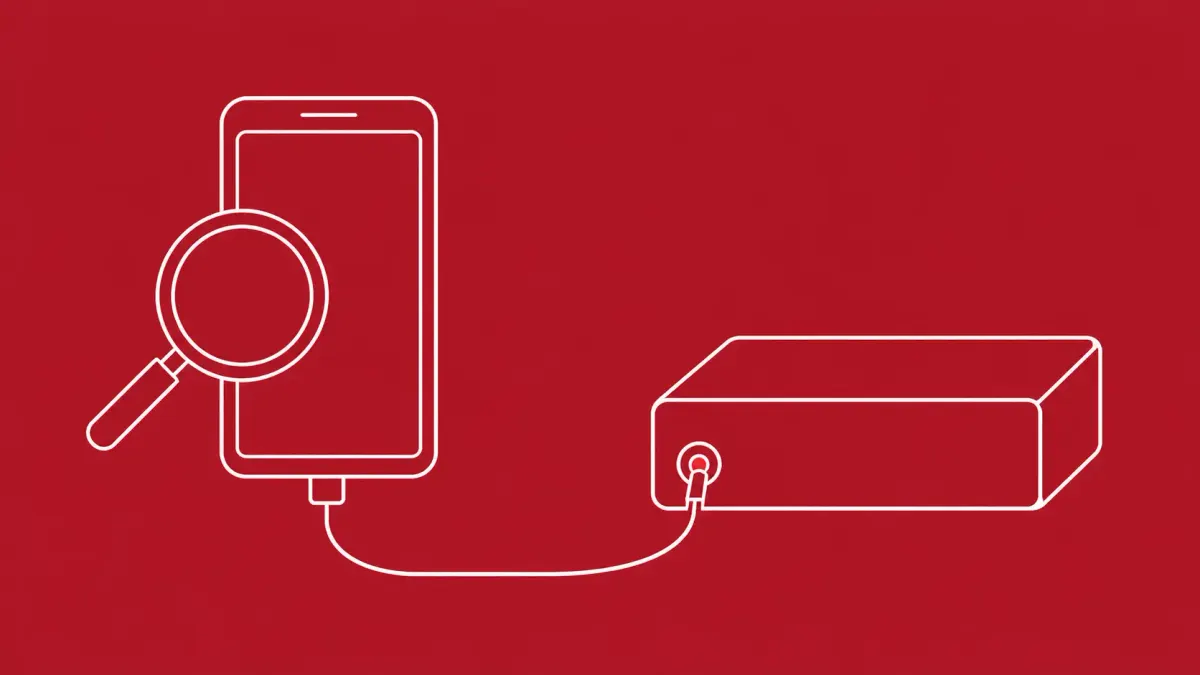
Cellebrite's stated sales-restriction practice gets fresh scrutiny via human-rights documentation.
TORONTO — Cellebrite's stated decision to stop selling its mobile-forensics technology in Russia drew fresh scrutiny on June 25, 2026, after researchers at the Citizen Lab published forensic evidence that Russian authorities used the company's UFED tooling against the iPhone of a jailed opposition activist roughly three months after that stated cutoff. The University of Toronto-based research group, with corroboration from the digital-rights organization Access Now, documented that the device of activist Andrey Pivovarov was accessed with Cellebrite's Universal Forensic Extraction Device on or around June 17, 2021, while it was in the custody of Russian investigators.
The finding lands as a regulatory and human-rights story rather than a software-vulnerability one. It does not allege a flaw in Apple's hardware or a new exploit; instead, it tests whether a vendor's stated sales-restriction practice actually keeps a powerful surveillance tool out of an authoritarian government's hands once the equipment is already fielded. The case adds to a growing body of documentation tying commercial surveillance and forensic tooling to the targeting of journalists, dissidents, and activists, a pattern also visible in litigation such as Meta's contempt motion against the NSO Group over WhatsApp targeting.
What the Published Research Documented
In a report titled "Russia Breaks Into Human Rights Activist's Phone With Cellebrite," the Citizen Lab laid out two independent lines of evidence that, the researchers said, rarely line up so clearly. The first comes from the device itself. According to the report, records on Pivovarov's iPhone that track the device's trusted USB pairings showed a connection on or around June 17, 2021 to a host whose fingerprint matched a Cellebrite signature the researchers had previously identified in a separate case. The researchers characterized this as high-confidence evidence that Cellebrite's UFED was used against the device.
The second line of evidence is documentary. The researchers cited an official Russian government report that, by their account, names Cellebrite products directly — including UFED Physical Analyzer and UFED 4PC — and describes their use to extract data from the phone, including messages from applications such as WhatsApp and Telegram. As WIRED reported, the two lines of evidence — the on-device pairing traces and the government's own paperwork — together form the basis for the attribution.
The timeline matters to the central claim. According to the reporting, Russian authorities detained Pivovarov and confiscated his iPhone 12 in May 2021; the documented forensic access followed in June 2021. That sequence places the use of Cellebrite's tooling after the company's stated March 2021 decision to wind down its Russian business — the gap that gives the report its regulatory weight.
The Cellebrite Stated-Sales-Restriction Practice in Context
Cellebrite, an Israeli digital-intelligence company whose UFED line is among the most widely deployed mobile-forensics platforms in law enforcement, said in March 2021 that it had stopped all sales and services to the Russian Federation, terminated existing licenses, and immediately began unwinding all legal contracts in the country. That stated cutoff is the practice the new research puts to the test.
The difficulty the report surfaces is not unique to Cellebrite, but it is acute for forensic hardware: a sales-and-service cutoff governs future business, while the installed base of devices already in police and intelligence offices can keep functioning. As The Register noted, much of the UFED toolset continues to operate offline long after a vendor ends support. A decision to stop selling, in other words, does not automatically retire the equipment already in the field — and the documented June 2021 access is presented as a concrete illustration of that gap.
That distinction reframes how a vendor's exit from a market should be read. The risk a stated cutoff addresses is the flow of new licenses, updates, and support; the risk it does not address is the continued use of tooling that has already been delivered. For an activist whose phone was seized weeks after the cutoff was announced, the practical question was not whether Cellebrite was still selling to Russia, but whether the tools already in-country still worked.
Cellebrite's Response and What to Watch For
Asked to comment, Cellebrite told the researchers that any use of its legacy hardware in Russia after March 2021 is "entirely unauthorized." The company's position draws a line between the equipment it sold and serviced before the cutoff and any subsequent use of that equipment by parties it no longer supports or sanctions. By that account, the documented June 2021 access would fall outside the company's authorized footprint.
That response leaves several questions open rather than closed. The report and the surrounding coverage do not establish how many UFED units remained operational inside Russian agencies after the cutoff, how often they were used in the years since, or what — if any — technical or contractual mechanisms a vendor could realistically use to disable fielded forensic hardware after ending a relationship. Those are the threads observers will watch as the documentation circulates.
It is also worth being precise about what the research does and does not assert. It documents the use of Cellebrite tooling against a specific device at a specific time, supported by on-device traces and a government document; it does not claim Cellebrite authorized that use, and the company expressly disavows it. The episode sits alongside other recent cases — including state-linked phishing operations against legislators — that keep the question of how democracies constrain surveillance and forensic tooling firmly on the policy agenda.
Export-Control-Policy Implications
Beyond the specifics of one activist's phone, the report feeds directly into an unresolved debate over how export controls and corporate human-rights commitments are enforced against dual-use surveillance technology, a framing echoed in CyberScoop's coverage. Mobile-forensics tools occupy an ambiguous category: legitimate in routine criminal investigations, yet readily repurposed against journalists, dissidents, and opposition figures when wielded by governments with poor rights records.
The Pivovarov case sharpens a recurring criticism of voluntary, vendor-led restrictions. A company can announce that it is exiting a market and still see its previously delivered tooling used there, because the announcement does not reach the hardware already in place. That gap is precisely where advocates argue binding export-control regimes, end-use monitoring, and post-sale accountability should operate — and where they say voluntary commitments alone fall short.
For policymakers, the documented time delta is the kind of concrete data point that tends to drive scrutiny: a stated cutoff in one month, documented use of the same vendor's tooling a few months later. Whether that prompts tighter licensing requirements, mandatory tracking of fielded units, or simply more disclosure, the case strengthens the argument that controlling the sale of surveillance technology is not the same as controlling its use.
Open Questions
Several points remain unconfirmed or unquantified. The report establishes that Cellebrite tooling was used against Pivovarov's iPhone around June 17, 2021, but it does not, in the available reporting, establish the full scope of how widely fielded UFED units continued to be used across Russian agencies after the March 2021 cutoff, nor whether any contractual or technical controls could have prevented that continued use.
Also worth tracking is whether the documentation prompts any formal response beyond Cellebrite's statement — from regulators in the company's home or export markets, from oversight bodies, or from the broader digital-forensics industry now on notice that fielded tools can outlast a publicized exit. The research is presented as forensic and document-based attribution rather than a vendor advisory, and how authorities and the company engage with it from here is not yet settled.
What is established is enough to frame the stakes. A widely used mobile-forensics platform was documented in use against a jailed activist's phone roughly three months after the vendor said it had pulled out of the country, the vendor calls that use unauthorized, and the underlying tension — that selling and using surveillance tooling are governed very differently — is now backed by a specific, dated case.
The CyberSignal Analysis
The reported facts above are the Citizen Lab's, corroborated by Access Now and the outlets cited; what follows is The CyberSignal's editorial reading of what defenders and policymakers should take from them. None of the judgments below are new reported facts.
Signal 01 — A Stated Cutoff Is a Sales Decision, Not an Enforceable Control
The most important distinction in this case is one the vendor's own framing makes explicit: Cellebrite's March 2021 announcement stopped sales and services, but the documented June 2021 access shows that stopping sales does not stop use. A stated cutoff governs the flow of new licenses, updates, and support; it does not reach the fielded hardware already inside an agency's building. Our reading is that a market exit announced this way should be read as a forward-looking commercial commitment, not as a technical guarantee that the tooling has gone dark.
That gap is not a Cellebrite peculiarity — it is structural to any forensic platform that, by design, must function offline to extract data from a seized device. Because the extraction workflow does not depend on a live connection to the vendor, there is no obvious kill switch a company can pull after ending a relationship. Defenders and buyers evaluating any dual-use tooling should assume that once a unit is delivered, its operational lifespan is decoupled from the vendor's sales relationship, and price the residual risk accordingly.
Signal 02 — Legacy Hardware Persists on the Gray Market Long After a Publicized Exit
The report documents one dated instance, but the more durable lesson is about the installed base behind it. Fielded UFED units continued to work inside Russian agencies after the cutoff, and the available reporting does not establish how many remained operational or how often they were used in the years since. That unquantified tail is the crux: a publicized exit removes the vendor from the storefront, not the device from the evidence room, and legacy forensic hardware can keep changing hands and running well past the moment support ends.
For anyone modeling the surveillance-tooling supply chain, the takeaway is to treat the secondary and legacy market as a first-class channel rather than a rounding error. Controls aimed only at first-sale — export licensing at the point of shipment, contractual clauses in active agreements — leave the persistence problem untouched. Our assessment is that the residual-use question, not the original sale, is where the real exposure sits, and it is the part least visible in public reporting.
Signal 03 — The Accountability Gap Is Between Selling and Using
Cellebrite calls the documented use "entirely unauthorized," and the research does not dispute that; it documents use of the tooling without claiming the vendor sanctioned it. That is precisely the accountability gap this case exposes: selling a forensic platform and using it are governed by very different mechanisms, and voluntary vendor commitments operate almost entirely on the first. When a company can credibly disavow a downstream deployment it can no longer see or control, the burden of preventing misuse falls into a space that neither the sales contract nor the export license currently covers well.
The forward-looking watch item is whether this dated data point moves any binding regime — post-sale tracking of fielded units, end-use monitoring, or disclosure obligations — beyond the voluntary commitments advocates say fall short. We would treat the Pivovarov case as a concrete test of that argument: a stated cutoff in one month and documented use of the same vendor's tooling a few months later is exactly the kind of specific, dated evidence that tends to shift a policy debate from principle to particulars.