Binarly Discloses Six New U-Boot Bootloader Vulnerabilities in Routers, Cameras, and Server Chips
A six-flaw U-Boot disclosure with cross-vendor device implications — defender posture review this week.

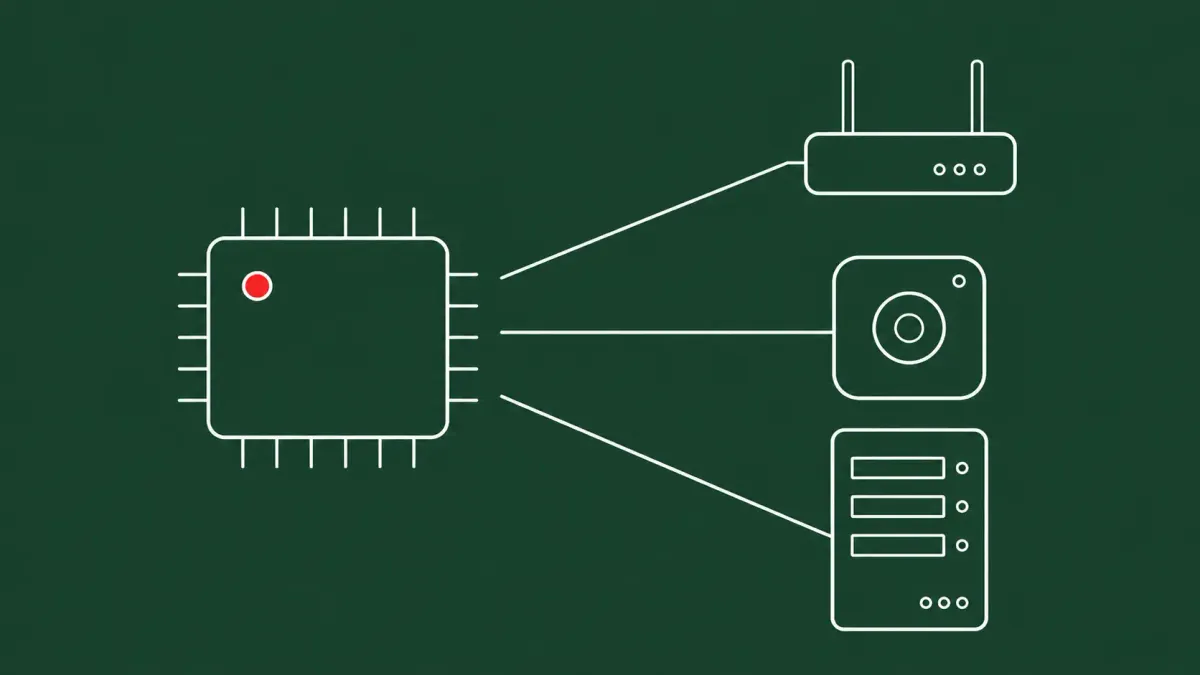
A six-flaw U-Boot disclosure with cross-vendor device implications — a defender posture review across an unusually broad and hard-to-inventory device base.
SANTA CLARA, CALIFORNIA — Firmware-security firm Binarly on or around July 10, 2026 published findings on six new vulnerabilities in U-Boot, the open-source bootloader used across an unusually broad device base — home routers, smart cameras, and the baseboard management chips that run inside data-center servers. Four of the flaws reportedly cause an affected device to crash, and two reportedly enable code execution at boot when the device handles a malicious image. Because U-Boot is a bootloader — the small program that brings up the hardware before the operating system starts — the disclosure lands one layer below where most security teams routinely look.
For defenders, the story is less about any single flaw than about where the flaws live and how many places that code has spread. U-Boot is a de-facto standard in embedded and appliance firmware, which means the same bootloader logic is reused, unmodified or lightly patched, across products from many different manufacturers. That reuse pattern is the recurring theme in this publication's firmware-and-boot coverage, from the usbliter8 BootROM research affecting Apple A12 and A13 chips to the industry-wide Secure Boot key-rotation deadline that put the pre-operating-system layer on defenders' agendas earlier this year.
What Binarly Disclosed
According to reporting by The Hacker News, firmware-security firm Binarly published findings on six previously undocumented vulnerabilities in U-Boot, the open-source bootloader that starts up hardware across a striking range of product types. U-Boot is not an obscure component: it is one of the most widely deployed bootloaders in the embedded world, and the same code that boots a consumer home router can also be found booting a smart camera or the management chip inside a data-center server. Binarly's report characterizes the six issues by effect — four of them can crash an affected device, and two could allow an attacker to run code at boot when the device processes a malicious image.
That split between denial-of-service and code execution is the practical shape of the disclosure. A crash in the bootloader is a reliability and availability problem: a device that will not complete boot is, for the moment, a brick. The two code-execution issues are the more serious of the set, because code that runs at boot runs before the operating system and before whatever endpoint protection, logging, or integrity checks that operating system would later start. Binarly frames the findings as a defender-relevant firmware-hygiene matter rather than an account of any active campaign, and this coverage treats it the same way — the value here is in scoping exposure and tracking fixes, not in the mechanics of exploitation.
Several facts that would normally anchor a patching decision are simply not established in the material available at disclosure. The six CVE identifiers, the specific U-Boot versions in which the issues are fixed, the downstream vendors and product lines that ship the affected code, and the per-device firmware-update timelines are all unconfirmed. That is not unusual for a fresh firmware disclosure — the upstream project and the many vendors who build on it move on their own schedules — but it does shape what defenders can do this week, which is to identify where U-Boot-derived firmware runs in their estate and open patch-tracking against the vendors responsible for each device.
Defender Posture Across U-Boot-Adopting Deployments
The first question for any security team reading this is deceptively simple and often hard to answer: where does U-Boot actually run in our environment? Because it is a bootloader baked into device firmware rather than an application a team installs, U-Boot rarely shows up in a software bill of materials or an endpoint inventory. It boots the appliance, and then it is invisible. The device categories Binarly names — home routers, smart cameras, and data-center server management chips — are precisely the ones that tend to fall between inventory systems: routers at the network edge or in remote and home-office settings, cameras and other embedded sensors managed by facilities rather than IT, and the out-of-band management processors that administer servers below the operating system.
For defenders, the useful posture is to treat this as an asset-visibility exercise before it is a patching exercise: enumerate the appliance and embedded fleet, identify which products are built on U-Boot-derived firmware, and confirm who owns the update path for each — the device vendor, a systems integrator, or in the case of consumer-grade routers, often no one with a maintenance contract at all. The two code-execution issues warrant particular attention on the highest-value hosts, and the baseboard management controllers inside data-center servers are the standout case: they administer the server beneath the operating system, so a flaw in their boot code sits in the layer many defenders implicitly trust as a root of control. None of this requires waiting for exploitation to act — restrict management-network access to the devices that expose these boot components, and be ready to apply vendor firmware updates when they land.
Vendor Patch-Tracking Across the Affected Device Categories
The hardest part of a shared-component disclosure like this is not the upstream fix but the downstream propagation. U-Boot is open source; when its maintainers accept a fix, that fix exists in the project's code. It does not, however, automatically exist in the thousands of shipped products whose vendors incorporated an earlier version of that code into their own firmware. Each of those vendors must pull the change, integrate it, test it against their hardware, and ship a firmware update — and then each device owner must actually install it. That multi-step chain is why a bootloader flaw disclosed once can take a very long time to disappear from the field, and why the affected-versions and downstream-vendor questions remain open.
This is the same downstream-propagation problem that surfaces whenever long-lived, widely reused code is found to be vulnerable. It echoes the cross-distribution scramble seen in Linux disclosures such as the pack2theroot cross-distro local-privilege-escalation flaw in PackageKit and the long-tail patch problem of the 18-year-old nginx rewrite-module vulnerability, where the fix was straightforward but the reach of the affected code made cleanup slow. For firmware, the effect is amplified: an appliance's update cadence is typically slower than a server's, and a meaningful share of the installed base — consumer routers in particular — may never receive a firmware update at all.
For defenders the practical takeaway is to build patch-tracking around the vendor, not the component. Because the CVE identifiers and fixed U-Boot versions are not yet confirmed here, the actionable move is to open a tracking item for each affected product family and monitor the responsible vendor's security advisories for a firmware release that references these issues. Where a device category cannot be patched on any reasonable timeline — end-of-life routers, unmanaged cameras — the mitigation shifts to network placement and access control rather than a firmware fix, the same fallback defenders reach for with any unpatchable embedded device.
A Continuation of the Firmware and Boot-Chain Research Thread
This disclosure is best read as the latest entry in a firmware-and-boot research thread that has been building through 2026. It follows the usbliter8 BootROM research affecting Apple's A12 and A13 chips, which drew attention to the read-only boot code beneath the operating system, and it sits alongside boot-chain work such as the YellowKey BitLocker-bypass technique targeting the Windows recovery environment and the Secure Boot key-rotation deadline facing Windows and Linux fleets. The common thread is that defenders are being pushed to reason about the layers that run before their monitoring does.
What ties the U-Boot findings to that thread is not a shared flaw but a shared lesson about long-lived, widely reused code. The recurring pattern this year — from a 15-year-old Linux root-and-container-escape flaw to a Linux copy-handling bug that landed on CISA's exploited-vulnerabilities list — is that foundational code accumulates reach faster than it accumulates scrutiny. A bootloader adopted across routers, cameras, and server management chips is a textbook example: its ubiquity is exactly what makes a newly found flaw a fleet-wide question rather than a single-product one. The research community is systematically working down the stack, from operating-system kernels to bootloaders to the mask-programmed boot code below them, and each step surfaces components that defenders have long trusted implicitly precisely because they sit beneath the tooling that would otherwise watch them.
Scope and Impact
The scope of this disclosure is defined by U-Boot's reach rather than by any one device. Binarly names home routers, smart cameras, and data-center server management chips, and that spread is the point: the same bootloader family touches consumer, physical-security, and enterprise-infrastructure hardware simultaneously. A defender cannot bound the exposure by looking at a single product; the relevant question is how many U-Boot-derived devices sit in the environment across all three categories, and which of them run the code paths the two code-execution issues affect.
The impact divides cleanly along the two effect classes Binarly describes. The four crash-inducing flaws are primarily an availability concern — a device that fails to boot is out of service until it is recovered — which matters most where a router or management chip sits on a critical path. The two code-execution-at-boot issues are the higher-severity end, because a foothold established before the operating system loads can be durable and hard to observe from the operating system above it. Even so, this remains a disclosure-and-hygiene story, not an active-exploitation one: there is no reported campaign attached to these findings, and the defender's job is to reduce exposure and track fixes before that changes. The durable, structural takeaway is that the appliance and embedded layer — routers, cameras, management processors — now needs the same inventory discipline and patch-tracking rigor long applied to servers and endpoints, because that layer is where an increasing share of newly disclosed exposure lives.
Open Questions
Several details that would normally scope a defender response are unresolved at the time of disclosure. The six CVE identifiers assigned to the vulnerabilities are not confirmed in the available material, nor are the specific U-Boot versions in which the issues are fixed. Without those two anchors, teams cannot yet map a precise before-and-after boundary for which firmware builds are affected, and must instead track fixes at the vendor level.
The downstream picture is equally open. Which specific device vendors and product lines ship the affected U-Boot-derived code, and on what schedule each will release corrective firmware, is not established. That downstream vendor-and-timeline question is the one that most determines real-world exposure, because the gap between an accepted upstream fix and an installed firmware update on a shipped device is where the risk actually persists. For consumer-grade and end-of-life hardware, whether a fix will ever reach the device is itself an open question.
Finally, the reporting at this stage rests on Binarly's publication and its coverage in outlets including The Hacker News. That single-firm-at-disclosure posture is normal for firmware research and is not a reason to doubt the core facts — six new U-Boot flaws, four causing crashes and two enabling code execution at boot, across routers, cameras, and server management chips — but it does mean the specifics may firm up as CVE identifiers are published, upstream fixes are confirmed, and individual vendors issue advisories. This coverage will follow the thread as those details resolve.
The CyberSignal Analysis
The reported facts above are from Binarly's disclosure as covered by The Hacker News; what follows is The CyberSignal's editorial reading of what defenders should take from them. None of the judgments below are new reported facts.
Signal 01 — Firmware Sits Below the Tools Most Defenders Watch
The most durable point in this disclosure is not any one of the six flaws but the layer they occupy. A bootloader runs before the operating system, which means it runs before the endpoint agents, logging, and integrity checks that a security team relies on to see what is happening on a device. Our reading is that the two code-execution-at-boot issues matter disproportionately for exactly this reason: a problem at the boot layer is a blind-spot problem, not merely a severity-score problem, because the tooling that would normally observe it has not started yet.
That reframes where attention should go. For the highest-value hosts — the baseboard management chips inside data-center servers most of all — defenders should treat boot-layer firmware as part of the trusted-computing base worth inventorying and patching deliberately, not as an appliance detail that takes care of itself. The controls that help here are asset visibility and vendor patch discipline, because there is no agent to deploy at a layer that runs before agents do.
Signal 02 — The Real Work Is Downstream Vendor Patch Propagation
Our assessment is that the outcome of this disclosure will be decided in the downstream, not the upstream. Fixing U-Boot itself is a bounded task; getting the fix into thousands of shipped products from many different vendors, and then onto devices in the field, is the open-ended one. The unconfirmed downstream-vendor and firmware-timeline questions are therefore the ones to watch, because they, more than any CVE score, determine how long the exposure persists in a real environment.
For security operations, the actionable interpretation is to build tracking around the vendor and the device family rather than waiting on a single component-level advisory. Open a patch-tracking item per affected product line, monitor the responsible vendor's security page for a firmware release referencing these issues, and pre-decide the fallback for device categories that cannot be patched on a reasonable timeline — network segmentation and management-access restriction for unpatchable embedded hardware, the same posture defenders reach for with any end-of-life appliance.
Signal 03 — Boot-Chain Research Is Becoming a Standing Beat
The third signal is about direction. Between BootROM research on mobile silicon, Secure Boot key-rotation deadlines, recovery-environment boot bypasses, and now six flaws in a ubiquitous embedded bootloader, the pre-operating-system layer has moved from a specialist curiosity to a recurring subject of mainstream security research. We read the U-Boot findings as confirmation that this is a standing beat, not a one-off, and that widely reused foundational code is where researchers are increasingly pointing their attention.
The forward-looking watch item for defenders is capability, not any single flaw: the teams that will handle the next boot-chain disclosure well are the ones that start now on the unglamorous groundwork — inventorying which firmware and boot components run in their estate, mapping the update path for each, and rehearsing how they would apply or compensate for a firmware fix. That preparation is what turns the next such disclosure from a scramble into a tracked, routine patch.



