Researchers Disclose Microsoft Azure DevOps MCP Flaw Enabling Hidden PR Comments to Hijack AI Review Agents
An MCP-server prompt-injection flaw hits Azure DevOps — defender review for AI-agent-heavy DevOps deployments this week.

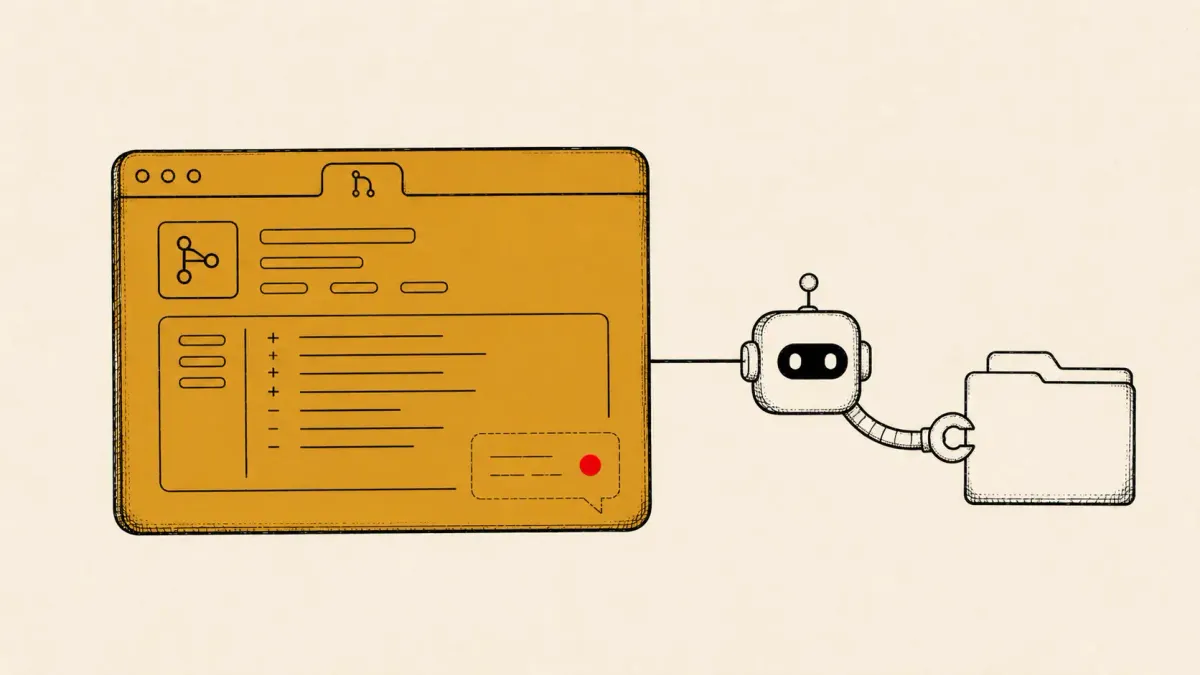
Key Takeaways
|
An MCP-server prompt-injection flaw surfaces in Azure DevOps — the exposure sits where an AI review agent trusts a pull request's text, and the defender move this week is a deployment-and-guardrail review.
REDMOND, WASHINGTON — Researchers on July 22, 2026 disclosed a flaw in Microsoft's official Azure DevOps Model Context Protocol (MCP) server that reportedly enabled a single invisible pull-request (PR) comment to hijack a reviewer's own artificial-intelligence (AI) coding agent, steering it into projects the attacker had no rights to reach.
The detail that makes the disclosure notable for defenders is where it lands: not a stolen password or malware on a build server, but a misuse of legitimate access at the seam where an AI review agent reads a pull request. As reported by The Hacker News, one of the server's tools reportedly returned PR descriptions without a prompt-injection guardrail that had already been applied to others, so instructions hidden from a human reviewer were reportedly passed straight to the agent. This piece summarizes what the disclosure documents and what remains unconfirmed, in defender terms, without reconstructing the technique.
| At a Glance | |
|---|---|
| Field | Details |
| What | Disclosed flaw in Microsoft's official Azure DevOps MCP server reportedly letting a hidden PR comment hijack a reviewer's AI coding agent |
| Who disclosed | Security researchers at Manifold Security, per reporting |
| Reported mechanism | One MCP tool reportedly returned PR descriptions without the prompt-injection guardrail applied to its siblings |
| Reported impact | The agent, using the reviewer's permissions, was reportedly driven into projects the attacker had no rights to reach |
| Disclosure date | July 22, 2026 (The Hacker News) |
| CVE | None assigned, per reporting |
| Patch status | Not confirmed in the reporting reviewed — open question |
| Observed in the wild | Not reported observed in the wild — open question |
| Related coverage | CyberSignal MCP, prompt-injection, and agentic-tooling disclosures |
What Researchers Documented
According to reporting from The Hacker News, researchers described a flaw in Microsoft's official Azure DevOps MCP server — the Model Context Protocol connector that lets an AI coding agent read and act on Azure DevOps work items, repositories, and pull requests. The central claim, in defender terms, is that one of the server's tools reportedly returned a pull request's description to the agent without the prompt-injection guardrail already applied to comparable tools, so text a human reviewer could not see was reportedly delivered to the AI review agent as trustworthy input.
The disclosure is credited to researchers at Manifold Security, who framed it as a confused-deputy problem: a legitimate agent, acting with the reviewer's own permissions, could reportedly be redirected to an attacker's ends. The CyberSignal is not reproducing the mechanics or the wording of any injected instruction. This is a research disclosure, not an observed incident — in the reporting reviewed, no production environment was reported attacked.
The Invisible-PR-Comment Technique in Defender Terms
The phrase that will travel fastest — an invisible comment that can steer an agent — is worth translating for a defender team. The problem is a trust mismatch: a human reviewer and the AI review agent were reportedly shown different things. What a person scrolling the pull request saw looked ordinary, while the text handed to the agent reportedly carried instructions the reviewer never noticed. Because the agent inherits the permissions of the person running it, a redirected agent is not confined to the repository under review — the reporting describes it reportedly reaching projects the attacker themselves could not touch. For defenders, that shifts the question from "which version do we patch" to "what is our review agent allowed to do, and on whose authority, once it starts reading untrusted text" — a monitoring-and-configuration problem before a patch-management one.
Continuation Context: The AI-Agent Prompt-Injection Thread
This disclosure does not stand alone; it extends a thread The CyberSignal has tracked across AI-assisted developer tooling. It rhymes with research on MCP tool-description poisoning, where the connector layer itself — the descriptions and outputs an agent implicitly trusts — became the untrusted input, and with GitLost, an agentic-workflow data-exposure finding on GitHub. The common pattern is an agent taking a consequential action from input a developer treated as inert: a tool description, a workflow, or, here, a pull request's text.
It also sits alongside prompt-injection research more broadly, including a Gemini voice-assistant notification prompt-injection finding, and coverage of agentic developer automation that vendors moved to fix, such as a Claude Code GitHub Action single-issue repository takeover that was reported and fixed. Read together, these mark a maturing beat: as agents gain the ability to act, the untrusted content they read becomes an input worth defending — and inconsistent guardrails across a tool's own surfaces become the weak seam.
Defender Posture for Orgs Using Azure DevOps MCP With AI Agents
For teams running AI review agents against Azure DevOps through the MCP server, the near-term steps are conventional review. Inventory where the Azure DevOps MCP server and AI coding agents are actually deployed, since these tools often arrive through individual developers or team pilots rather than a central rollout. Examine scope: what an AI review agent is permitted to do once triggered — which projects, pipelines, and wikis it can reach with the running user's permissions — because the reported exposure is precisely that inherited reach. And treat the content an agent ingests as untrusted: a pull request's description and comments come from whoever opened or edited them, so the defensible assumption is that any text an agent reads may be adversarial, and that prompt-injection guardrails should apply consistently across every tool that feeds the agent. The CyberSignal is not asserting a specific configuration is unsafe today — the specifics of any fix are unconfirmed — but the class of risk is a reasonable prompt for a broader review of AI-agent-heavy DevOps deployments this week.
Microsoft's Response and What to Watch For
The response picture is thin. It is not confirmed in the reporting reviewed whether Microsoft has shipped a patch, issued a formal advisory, or assigned a CVE identifier. The CyberSignal is not asserting any of those; the disclosure describes a missing guardrail on one tool relative to its siblings, which points toward a fix that would extend existing protection rather than invent a new one — but that is a reading of the described defect, not a confirmed remediation. What to watch for is concrete: an official Microsoft advisory, an assigned CVE that vulnerability-management tooling can track, and updated guidance on how the server handles pull-request text before passing it to an agent. Until those land, teams cannot rely on a version number as the marker of safety.
Open Questions
Several specifics are unresolved at publication, and The CyberSignal is not filling them in. It is not confirmed whether a specific CVE has been assigned, whether Microsoft has patched the flaw, whether the technique has been observed in the wild, or how many Azure DevOps installations are affected; the reporting frames the work as a research disclosure with a proof of concept, not an attack seen in production. What it does establish is the shape of the finding: an official MCP server that reportedly passed attacker-influenceable, human-invisible text to an AI review agent because a guardrail present elsewhere was reportedly absent on one tool. As a formal advisory, a CVE, affected-version detail, or independent replication emerge, the picture will sharpen; until then, the defensible reading is deployment awareness, scope review, and consistent guardrails, not alarm.
The CyberSignal Analysis
The reported facts above come from the disclosure and its reporting; what follows is The CyberSignal's editorial reading. None of the judgments below are new reported facts.
Signal 01 — The Weak Seam Is an Inconsistent Guardrail
The instinct with any disclosure is to ask which patch closes it; the more durable lesson here is about consistency. Our reading is that the story is not a novel technique but an uneven defense — a prompt-injection guardrail reportedly applied to some tools and not to one of their siblings. A protection that covers most of an attack surface but leaves one path open is, for planning purposes, the path an adversary looks for first. The move is to shift effort from patch-hunting to seam-mapping: know every tool through which an agent can receive external text, and confirm each applies the same guardrail. Uniform coverage across a tool's own surfaces is the control worth auditing.
Signal 02 — The Agent Inherits the Reviewer's Reach
Our assessment is that the load-bearing detail is the confused-deputy shape: a legitimate agent acting with a real reviewer's permissions. That is what turns a comment on one pull request into reported reach across projects the attacker could not otherwise touch — the exposure is not only the injected text but the scope the agent carries when it acts. The practical implication is to treat an AI review agent's permissions as a first-class control. Least privilege for agents — narrowing which projects, pipelines, and data a review agent can reach — limits the blast radius of any prompt-injection finding, this one or the next. The same tool-layer exposure hit maximum severity in the Ruflo RufRoot MCP-bridge flaw enabling rogue AI swarms.
Signal 03 — Read It as Awareness, Not an Incident
The correct posture, in our view, is calibrated attention rather than alarm. This is a research disclosure with a proof of concept, not an attack in progress, and key specifics — a CVE, a confirmed patch, evidence of exploitation — remain unconfirmed. Treating it as an emergency would misallocate effort; dismissing it because nothing has been seen in the wild would waste a useful early warning. The useful middle is to log the Azure DevOps MCP finding as a capability to understand now and track as vendor detail emerges. Defenders who understand the seam today — an AI agent trusting invisible text, acting with a human's permissions — will read the next MCP disclosure, or the first real-world attempt, far faster than those meeting it cold.



