Anthropic Releases Claude Fable 5, Its Most Powerful AI Yet, With Cyber Safeguards
Anthropic's Fable 5 launches with “cyber safeguards” baked in — a framing that would, days later, become the center of a precedent-setting US export-control action.

Key Takeaways
|
Anthropic ships a Mythos-class model to the public with cyber guardrails on, and a safeguard-lifted version to a vetted few — a split that quickly drew scrutiny.
SAN FRANCISCO, CALIFORNIA — Anthropic on June 9, 2026 released Claude Fable 5, which the company describes as its most powerful AI model yet and the first generally available model in a new “Mythos-class” tier of large language models. The release is notable less for raw capability than for how Anthropic chose to ship it: Fable 5 arrives with what the company calls “cyber safeguards” built in, alongside a separate, safeguard-lifted version — Claude Mythos 5 — made available only to a vetted set of cyber defenders and critical-infrastructure operators.
The framing matters. By naming a distinct class of model after its most capable cyber-relevant tier and describing the public version as deliberately constrained, Anthropic drew a bright line between what the general public can access and what a vetted few can. That same “cyber safeguards” language would, within days, sit at the center of a precedent-setting US export-control action — a sequence that turned a model launch into a policy event.
| At a Glance | |
|---|---|
| Field | Details |
| Vendor | Anthropic |
| Models | Claude Fable 5 (public); Claude Mythos 5 (vetted) |
| Released | June 9, 2026 |
| Tier | First generally available “Mythos-class” model |
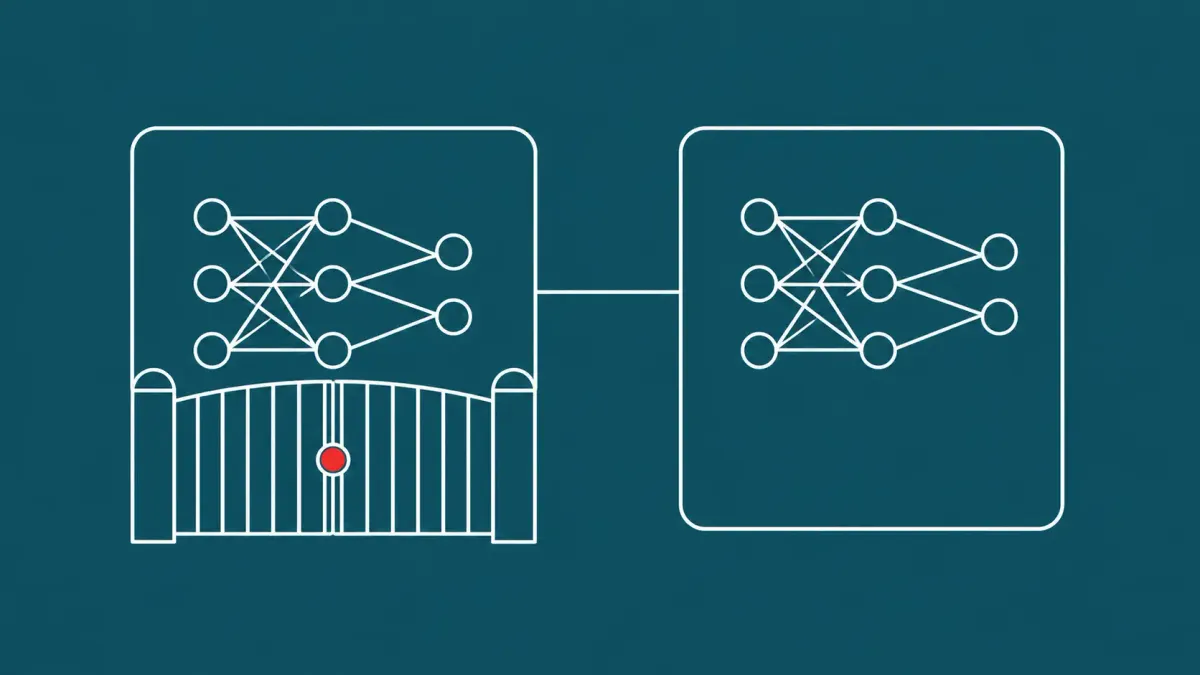
| Public safeguards | “Cyber safeguards” on — flagged requests routed to a weaker model |
| Mythos Upgrade | Same model, safeguards lifted; cyber defenders / critical-infrastructure only |
What “Mythos-Class” Means and Why It Matters
Anthropic positions Fable 5 as the first generally available member of a new “Mythos-class” tier — the hyphenated adjective the company uses to denote its most capable cyber-relevant models. According to Infosecurity Magazine, the Mythos-class designation marks a model band that Anthropic treats as carrying elevated cyber risk, and Fable 5 is the version of that band the company judged safe enough to make available to all.
The significance is structural rather than cosmetic. By creating a named class for its frontier cyber-capable models, Anthropic is effectively pre-committing to a tiered access model: the most powerful versions are not simply released and rate-limited, but split into a public edition with constraints and a restricted edition without them. That design choice is what makes the rest of the launch legible — and it is the lever the US government would later pull.
What specifically qualifies Fable 5 as Anthropic's “most powerful AI yet,” and which benchmarks or capabilities justify the claim, has not been independently verified and should be read as the company's own characterization rather than an established fact.
The “Cyber Safeguards” Framing
The phrase “cyber safeguards” is Anthropic's own, and it is doing real work. According to The Hacker News, Fable 5 ships with a layer of classifiers that watch for requests touching offensive cybersecurity — as well as biology, chemistry, and model distillation — and route those flagged sessions away from Fable to a weaker model rather than letting the frontier model answer. In practice, that means a high-risk cyber request does not get Anthropic's most capable response; it gets a deliberately degraded one.
Anthropic has said the safeguards are designed to trigger only on a small fraction of traffic, so that ordinary users rarely encounter them. The precise internal mechanics — exactly which behaviors are blocked, how the classifiers are tuned, and what the false-positive rate is in practice — are not fully established by independent reporting and should be treated as reported rather than confirmed.
The framing also slots into a broader arc Anthropic has been building. The company's Project Glasswing expansion to 150 critical-infrastructure partners and its Mythos-assisted discovery of more than 10,000 vulnerabilities both leaned on the idea that the same capabilities that aid defenders could aid attackers — the exact tension the cyber safeguards are meant to manage.
The Two-Track Release: Fable 5 for Everyone, Mythos Upgrade for Partners
The clearest way to understand the launch is as a single model on two tracks. Fable 5 is the generally available, public-facing edition with cyber safeguards switched on. Mythos 5 is the same underlying model with those safeguards lifted — what Anthropic frames as a “Mythos Upgrade” — made available only to a vetted group of cyber defenders and critical-infrastructure operators rather than the open market.
It is important not to read Mythos 5 as the “safe” version. It is the more permissive one: the safeguards that constrain Fable for the public are precisely what is removed for Mythos partners, on the theory that vetted defenders need unconstrained access to the model's full cyber capability to do their work. According to WIRED, Anthropic paired the public release with this broader-access, safeguard-lifted offering for partners, deploying it initially through its government-aligned defensive program.
Whether Mythos 5 was made available on exactly the same day as Fable 5 or shortly thereafter is treated carefully here; the available reporting points to the same release cycle, with both editions surfacing together around June 9.
Early Industry Reception
Initial coverage from The Hacker News, WIRED, and Infosecurity Magazine framed the launch as a milestone — the first time a model from this most-capable cyber tier was made broadly available, even in constrained form. Anthropic's own announcement leaned into the safeguards as evidence of responsible release.
That reception did not stay uniformly positive. In the days after launch, researcher criticism surfaced — questioning whether routing flagged requests to a weaker model meaningfully limits misuse, and whether a safeguard-lifted edition undercuts the public version's constraints. The scrutiny escalated quickly: within days, the “cyber safeguards” framing became the hinge of a US government response, culminating in a Commerce Department order targeting foreign-national access to Fable 5 and Mythos 5 and, days later, a decision to disable the models under US export controls. A capability launch had become a regulatory test case.
The trajectory echoes the policy debate Anthropic itself helped surface, including the Trump administration's executive order defining covered frontier models for cyber — a sign that frontier cyber models are now squarely a government concern, not just an industry one.
Open Questions
Much about Fable 5 remains unconfirmed. Anthropic has not detailed the specific cyber safeguards built into the public model, the capabilities or benchmarks that justify the “most powerful” claim, or pricing and access tiers beyond the broad public-versus-vetted split. Whether independent researchers had pre-release access is also unestablished.
What is clear is the shape of the decision: a single frontier model, released on two tracks, with a deliberate line drawn between constrained public access and unconstrained access for a vetted few. The questions that line raises — who counts as a trusted defender, how the safeguards hold up under real-world pressure, and who gets to decide — are exactly the ones that turned this launch into the opening move of a much larger policy fight.