US FCC Bans New Foreign-Made Humanoids, Robot Dogs, and Solar Inverters Over Cyber Risks
From robot dogs to rooftop solar, the FCC's new cyber-supply-chain ban lands this week, blocking new foreign-made humanoids, quadruped robots, and grid-connected inverters from the US market while existing installations stay put. The categories, the scope, and the open questions.

Key Takeaways
|
A US supply-chain ban on new foreign-made robots and grid inverters lands this week - the authority is the FCC's Covered List, and the stated reason is cyber risk.
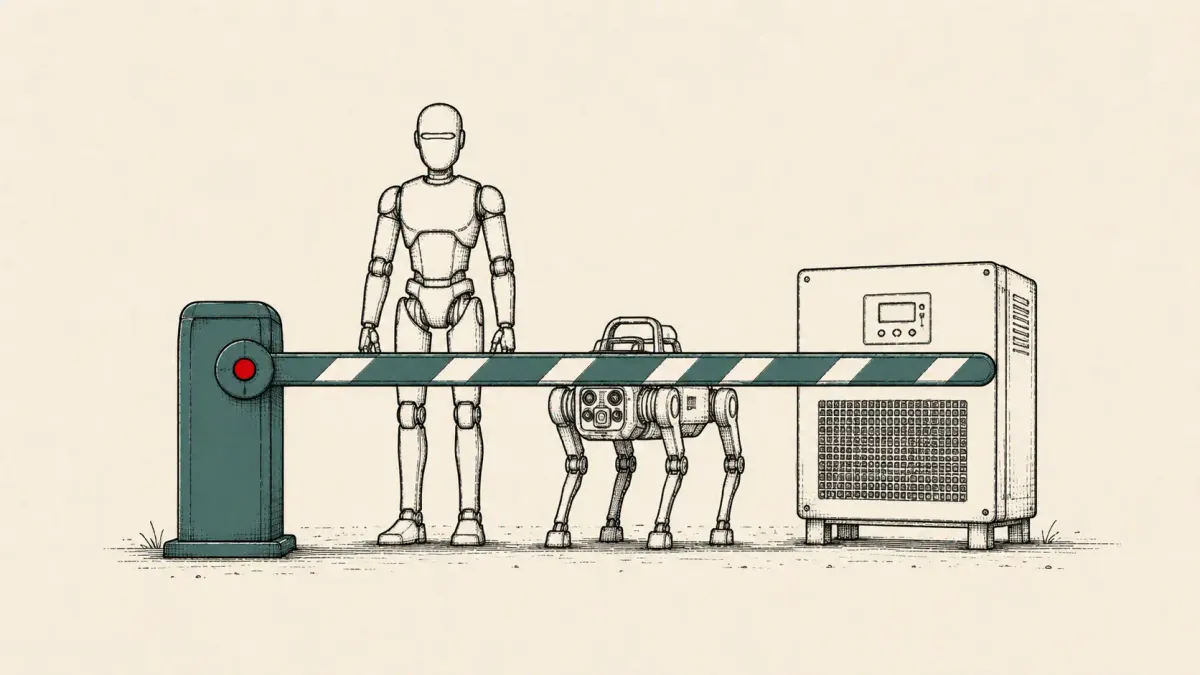
WASHINGTON, D.C. — The US Federal Communications Commission (FCC) has blocked new foreign-made humanoids, robot dogs, and grid-connected power inverters from the American market, adding the categories to the regulatory list it uses to keep equipment it deems a national-security risk from being imported, marketed, or sold. The agency framed the move around cyber and supply-chain risk, saying foreign-produced devices in these classes could be remotely controlled, used for surveillance, or drawn into cyberattacks.
The decision, taken on July 28, 2026, does not recall or seize anything already deployed; it closes the door to new units in the named categories. It is a policy action rather than an incident report, and this piece covers what the FCC ordered, how its terms are scoped, and what remains unconfirmed. As reported by The Hacker News, TechCrunch, and The Register, the measure follows a White House-convened interagency national-security determination and lands as the latest in a widening line of US restrictions on foreign-made connected hardware.
| At a Glance | |
|---|---|
| Field | Details |
| What | FCC added foreign-produced "advanced robotic devices" and connected power inverters to its Covered List |
| Authority | US Federal Communications Commission (FCC), Public Safety and Homeland Security Bureau |
| Categories | Humanoids and robot dogs (advanced robotic devices); grid-connected power and solar inverters |
| Action date | July 28, 2026 (interagency determination transmitted July 27, 2026) |
| Effect | New foreign-produced units denied FCC authorization to be imported, marketed, or sold in the US |
| Existing equipment | Not prohibited; installed devices unaffected; security updates allowed at least until Jan 1, 2029 |
| Stated reason | Cyber and supply-chain national-security risk |
| Exemptions | Conditional Approval via the Department of War (robots) or DHS (inverters) |
| Open questions | Specific manufacturers and countries; any CISA or Commerce role - reported as unconfirmed |
What the FCC Ordered
On July 28, 2026, the Federal Communications Commission (FCC) added two new categories of foreign-produced equipment to its Covered List: "advanced robotic devices" and connected power inverters. The Covered List is the FCC's roster of communications equipment and services judged to pose an unacceptable risk to US national security. Once a category sits on it, new products in that category are generally denied the FCC equipment authorization required to be imported, marketed, or sold in the United States. In practical terms, the agency did not seize or recall anything - it closed the front door to new foreign-made units in the named classes.
The measure did not originate solely inside the FCC. According to the agency, the additions followed a determination from a White House-convened Executive Branch interagency body with national-security expertise, transmitted to the Commission on July 27, 2026, after which the FCC's Public Safety and Homeland Security Bureau updated the list. The stated justification is framed around cyber risks: officials said foreign-made devices in these classes could be remotely controlled, used for surveillance, or drawn into cyberattacks, and that the exposure sits in the hardware supply chain rather than in any single disclosed flaw - an argument that echoes prior US warnings about foreign-made technology as a national-security question.
The Categories: Humanoids, Robot Dogs, and Inverters
The "advanced robotic devices" category is defined broadly as mobile robots, and reporting singles out two visible examples: humanoids - robots built to move like people - and robot dogs, the four-legged quadruped machines used for inspection and patrol work. Humanoids remain an early-stage market; roughly 15,000 were shipped worldwide in 2025, per reporting, with Chinese manufacturers accounting for most of them.
The second category is where terminology needs care. The FCC's language covers connected power inverters - the devices that convert direct current into alternating current and, when tied to the grid, govern how locally generated electricity is fed back into it. Solar inverters, which convert the direct-current output of solar panels for grid use, are the most common consumer example and the one most coverage foregrounds; they are a subset of grid-connected power inverters, not a separate device class, and reporting tends to use "solar inverter" and "power inverter" interchangeably. The distinction worth preserving is scope: the action targets grid-connected inverters of the kind that link distributed solar and other renewable systems to the wider power grid, not every stand-alone DC-to-AC converter.
The National-Security Supply-Chain Framing
The stated logic is a supply-chain one. The concern the FCC and the interagency determination describe is not a specific bug in a specific product but the possibility that a foreign producer - or a foreign government with leverage over it - could remotely control, monitor, or disrupt equipment already woven into US homes, businesses, and, in the case of inverters, the electricity grid. It rhymes with prior warnings about hostile-state interest in critical national infrastructure, and it extends a line of US policy - from earlier FCC bans on overseas-made consumer routers and Chinese surveillance-camera makers to broader federal cyber directives such as the post-quantum cryptography executive order - that treats foreign-made connected hardware as a national-security question in its own right.
Reporting frames China as the party most affected, given its dominance of the humanoid-robot and solar-inverter markets, and Beijing has objected to the move. The CyberSignal notes that framing without prejudging its geopolitical merits: the verifiable core is that the FCC acted, the categories it named, and the cyber-supply-chain rationale it gave.
What US Operators of Foreign-Made Equipment Should Watch For
For defenders and asset owners, the most important detail is scope. The FCC said the action applies to new equipment: it does not prohibit the import, sale, or use of models the Commission previously authorized, and it does not affect devices consumers have already purchased or installed. Solar inverters already running on US rooftops, and robots already in service, are not banned by this step. The agency also said previously authorized devices may continue to receive software and firmware updates that mitigate harm to US users at least until January 1, 2029.
There is also an off-ramp for manufacturers. The determination allows exemptions - designated Conditional Approvals - where the Department of War (for robotic devices) or the Department of Homeland Security (for power inverters) tells the FCC that a specific foreign-produced device does not pose a threat, with producers directed to apply through the Commission. For US operators, the near-term work is inventory and procurement: knowing which grid-connected inverters and robotic systems in a fleet are foreign-produced - the same asset-visibility discipline that critical-infrastructure guidance keeps returning to - and confirming that planned purchases can still obtain FCC authorization.
Open Questions
Several specifics remain unresolved or unconfirmed in the material reviewed. The full list of manufacturers and countries whose products are captured is not enumerated in the FCC's action itself; reporting infers a primarily Chinese impact from market share rather than from a published roster. The precise reach across the power-inverter market - how "connected" and "grid-tied" are drawn in practice - will matter to installers and utilities and is not fully spelled out.
It is also not established in the reporting reviewed whether agencies such as the Cybersecurity and Infrastructure Security Agency (CISA) or the Commerce Department have a defined role in enforcement or follow-on guidance; the roles named so far are the FCC, a White House-convened interagency body, and the Department of War and DHS through the exemption process. The CyberSignal will track the FCC's published order, its FAQ, and any implementing guidance as the picture sharpens.
The CyberSignal Analysis
The reported facts above come from the FCC's action and its reporting; what follows is The CyberSignal's editorial reading. None of the judgments below are new reported facts.
Signal 01 - The Lever Is Market Access, Not a Patch
The usual security story ends in a CVE and an update. This one does not: there is no disclosed flaw to fix and nothing to remediate on installed gear. Our reading is that the instrument here is regulatory - the FCC is using equipment authorization as a gate on new market entry, so the effect is felt in procurement and import channels rather than in patch cycles.
That makes the relevant response organizational, not technical. The teams best positioned to act are the ones who can answer, quickly, which robotic systems and grid-tied inverters in their estate are foreign-produced and whether replacements will still clear FCC authorization. The rule changes what you can buy next, not what is already bolted to the roof.
Signal 02 - "New Only" Is the Load-Bearing Word
The single most consequential detail is that the ban is prospective. Existing installations are untouched, and security updates are explicitly allowed to keep flowing at least through the start of 2029. Our assessment is that this narrows the immediate operational impact sharply while leaving the longer-term supply question open: the installed base ages under a clock, and the replacement market is where the constraint bites.
For defenders, the takeaway is to resist reading the headline as an emergency recall. Nothing installed is being switched off. The prudent move is to fold the authorization question into refresh planning and vendor selection now, before a hardware refresh forces the issue on a shorter timeline than anyone wanted.
Signal 03 - The Grid-Inverter Line Is the One to Watch
Robots draw the headlines, but the inverter provision is the part that touches critical infrastructure directly. A grid-connected inverter is a small computer sitting at the seam between distributed generation and the wider power system, and the policy's own framing - concern about remote control of gear embedded in the grid - lands hardest there. Our view is that this is where the cyber-risk argument is most concrete.
It is also where the terminology confusion matters most. Conflating every power inverter with a grid-tied solar inverter will over- or under-state who is covered, so the practical question for utilities and installers is a definitional one: exactly which connected inverters fall inside the Covered List's line. That boundary, more than the robot categories, is the detail worth reading the published order closely to pin down.