Two-Thirds of Brits Don't Trust Any Government With Their Encrypted Chats, Poll Finds
New polling commissioned by the Center for Democracy & Technology finds two-thirds of British adults won't trust the current government, or any future one, with access to their encrypted chats, as the UK presses tech firms for backdoor access under existing surveillance law.

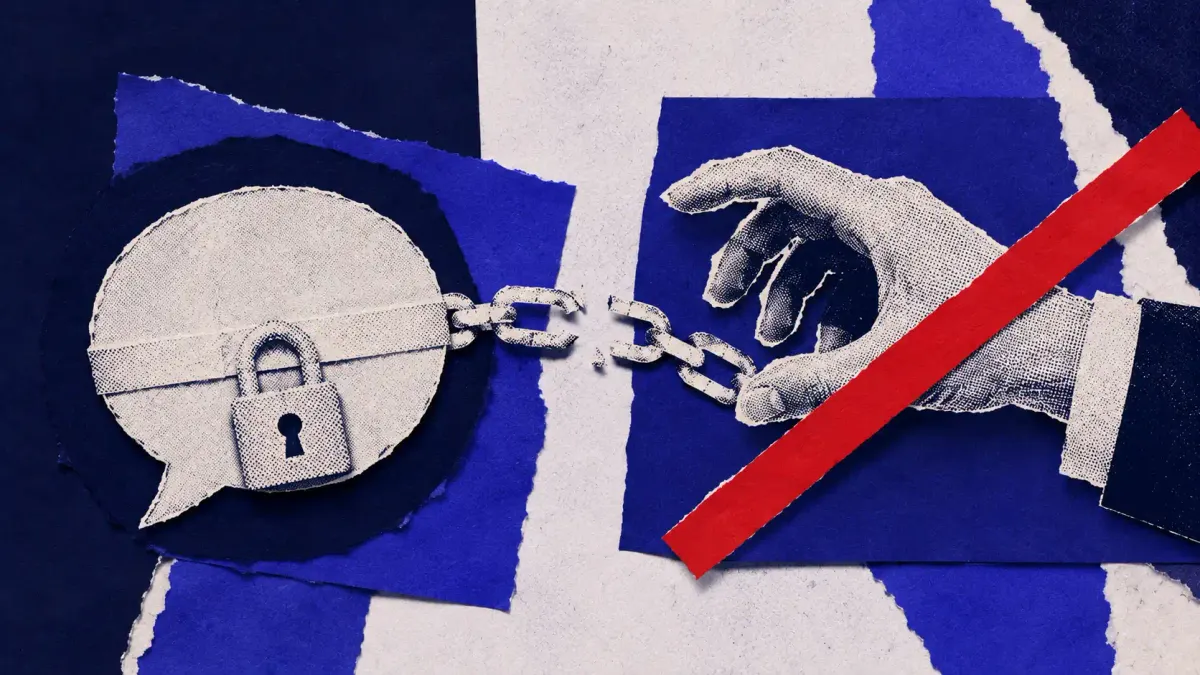
Two-thirds of British adults say they would not trust the current UK government, or any future one, with the power to read their encrypted chats. That verdict comes from new polling of 2,000 people, and it arrives while Westminster is actively pressing technology companies for close to that level of access.
The survey was commissioned by the Center for Democracy & Technology (CDT), a Washington-based digital rights group that campaigns for strong encryption, and the fieldwork was run independently by the pollster Public First. As The Register first reported, Public First surveyed 2,000 British adults aged 18 and over between April 20 and 27, 2026, weighted to reflect the wider population, with a margin of error of plus or minus 2.2 percentage points. CDT, which paid for the work, is open that it favors strong encryption, so the framing is not neutral. The underlying numbers, though, are striking on their own.
What the Poll Found
The distrust is broad rather than partisan. Ninety-three percent of respondents said they have a right to private conversations online, and 89% said nobody should be able to access their personal messages without a court order. On trust specifically, two-thirds would not hand either the current government or any future one the power to reach their encrypted messages.
That skepticism held across the 2024 general election electorate: 58% of Labour voters, 59% of Conservatives, 56% of Liberal Democrats, 69% of Greens and 75% of Reform voters said they would not trust any government with the power. Asked about secret orders, only 12% supported the government being able to quietly compel a company for access while barring it from disclosing the demand. A third said the government should not have that power at all, and 41% wanted public disclosure or parliamentary oversight attached to it.
On the core security-versus-safety trade, 53% said the risks of allowing access to encrypted messages outweigh the benefits to law enforcement, against 28% who took the opposite view. The reasons are familiar to anyone who has followed this debate: 84% worried that a mechanism to open encrypted messages could introduce vulnerabilities for hackers and criminals, and 82% were concerned the power could be abused. Surveillance also appears to change behavior. 65% said they would be more cautious about what they like, share or comment on, and 41% said they would self-censor criticism of public institutions or officials.
Why the Question Is Live Now
This is not an abstract survey. The UK already has two legal routes that touch encrypted communications. Under the Investigatory Powers Act 2016, the Home Secretary can issue a secret Technical Capability Notice (TCN) requiring a company to remove “electronic protection” from a service. Separately, the Online Safety Act 2023 gives the regulator Ofcom power to require “accredited technology” to scan for child sexual abuse material, a step critics say can only be delivered in practice through client-side scanning that weakens end-to-end encryption.
The TCN power moved from theory to headline when Apple withdrew Advanced Data Protection for UK users in early 2025 after receiving a secret notice, then challenged the order at the Investigatory Powers Tribunal in July 2026. Washington later said Britain had dropped its demand for access to Americans’ data, though reports point to a fresh TCN aimed at British users. Tellingly, 55% of those polled had not heard about the Apple notice at all until the survey described it to them.
Two Sides, Fairly Stated
Privacy and security researchers make a technical argument: a spare key cannot be reserved for the good guys. “The government persists with the myth that it can weaken encryption to target the bad guys only,” said Jim Killock, executive director of the Open Rights Group, in comments released with the poll. “Attacks on the security of our phones, security tools and messaging apps harm us all and make our democracy weaker.” Alan Woodward, a visiting professor at the University of Surrey’s cyber security center, put the engineering point plainly in the same materials: encryption cannot be weakened for criminals without being weakened for everyone.
The government and law-enforcement case rests on child protection and serious crime. The Home Office has long argued that the spread of end-to-end encryption blinds investigators to child sexual abuse material and terrorist planning, and it has funded projects, including a Tech Safety Challenge Fund, aimed at detecting such content inside encrypted environments. The Online Safety Act’s reporting duty for child sexual exploitation and abuse content came into force in April 2026. Ministers have also said the Act does not ban encryption and that scanning powers would be used only where technically feasible, a caveat that security experts counter is doing a lot of work, as The Record has documented. That same child-safety logic drives platform-level enforcement elsewhere, including Meta’s $17 billion kids-safety settlement with US state attorneys general.
|
● The Encryption-Access Debate, in Two Parts
Two UK legal routes to encrypted data, and the security cost that defenders warn about.
|
|
The Legal Levers
Investigatory Powers Act 2016: secret Technical Capability Notices can order a company to remove ‘electronic protection.’ Online Safety Act 2023: Ofcom can require ‘accredited technology’ to scan for child sexual abuse material.
|
|
The Security Tradeoff
Any access mechanism, a spare key or a client-side scanner, becomes a new target. In the poll, 84% worried it could help hackers and criminals, and 82% feared the power could be abused.
|
|
Sources: Center for Democracy & Technology / Public First poll (April 2026); Investigatory Powers Act 2016; Online Safety Act 2023.
|
Figure: The two UK legal routes to encrypted data, and the security cost defenders flag.
My Read
My read: this is an assessment, not a reported fact. The poll does not settle whether the government or the researchers have the better of the technical argument, and it is worth remembering the survey was paid for by a group that already opposes access mandates. What it does show is a trust deficit, and that shapes how this debate resolves. Surveillance powers tend to be durable only when the public accepts them, and these numbers suggest that acceptance is not there, not even among the governing party’s own 2024 voters. For security teams, the useful takeaway is not which side to root for. It is that legal pressure on encryption is real and unlikely to fade, so the sensible posture is to plan for a range of outcomes rather than assume today’s protections are permanent.
What Defenders Should Do
For secure-messaging and enterprise-communications teams, the concrete moves are less about politics and more about planning. Track UK legislative and regulatory developments on encryption access directly: TCNs issued under the Investigatory Powers Act are secret, but litigation like Apple’s and Ofcom guidance on “accredited technology” are public signals worth monitoring. Confirm, in writing, what end-to-end encryption commitments your messaging and collaboration vendors actually make, and understand which jurisdictions can legally compel them to change those defaults. Plan for jurisdictional divergence, because a provider may ship weaker protection in one country than another, and Apple pulling Advanced Data Protection from the UK while keeping it elsewhere is the working template. And treat any government-mandated access path as exactly what 84% of the public suspects it is: a new attack surface that belongs in your vulnerability management program, not a footnote in a policy debate.



